

Why Do Allergies Cause a Metallic Taste in Your Mouth? Post-Nasal Drip vs. Medication Side Effects
Written by: Dr. Muhammad Ihsan Ullah, PhD
Medically reviewed by: Dr. Ali Raza Dogar, MBBS, ENT
Last updated on September 26, 2026
Have you ever noticed a strange metallic, bitter, or “penny-like” taste in your mouth during allergy season? While many people associate allergies only with sneezing, congestion, and itching, allergic inflammation can also influence how you experience taste. A metallic taste, medically known as dysgeusia, occurs when normal taste perception becomes altered.

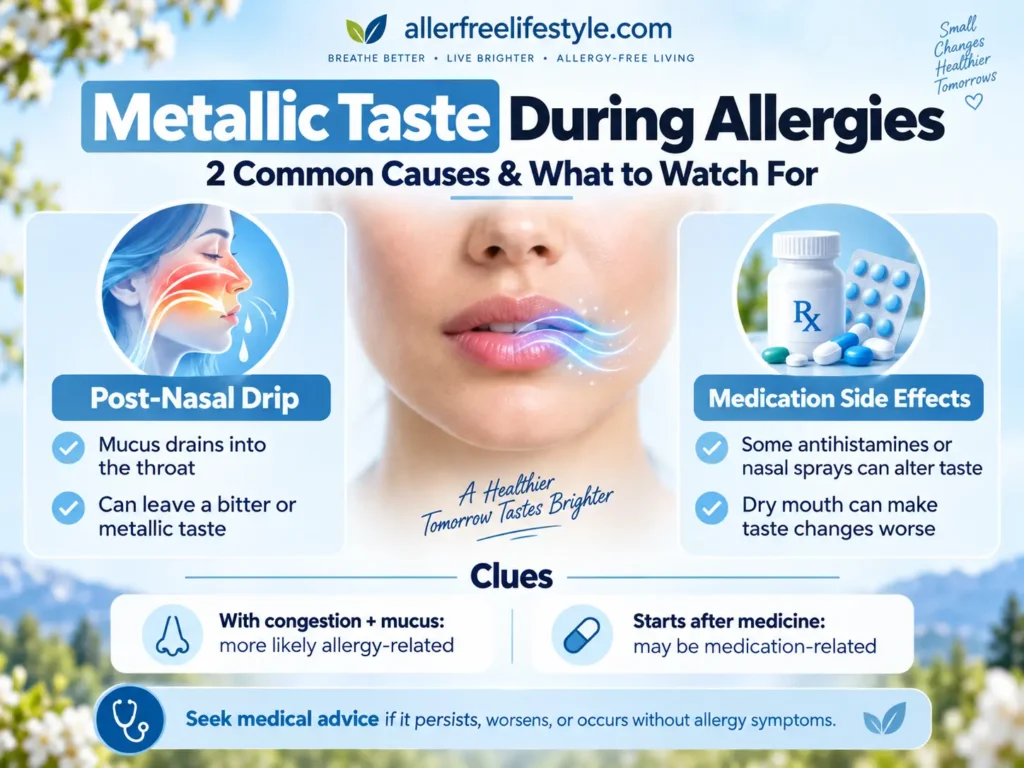
Allergies may contribute to this sensation through two main pathways: mucus drainage from post-nasal drip and taste changes related to allergy medications. Understanding whether the metallic taste is coming from allergic inflammation or a medication effect can help you identify the likely trigger and discuss appropriate solutions with a healthcare professional.
A metallic taste during allergy flare-ups can occur when inflammation in the nose and sinuses affects normal smell and flavor perception. Post-nasal drip may also leave an unusual taste in the mouth as mucus moves into the throat. In some cases, allergy treatments such as antihistamines or nasal sprays may contribute to taste changes as a medication-related effect.
Can Allergies Cause a Metallic Taste in Your Mouth?
Yes, allergies can cause a metallic taste in some people, although the allergy reaction does not usually damage taste buds directly. The effect is often related to inflammation in the upper airway and changes in smell perception.
During allergic rhinitis, exposure to allergens triggers immune activity and the release of inflammatory mediators such as histamine. This can lead to:
- Swelling of nasal tissues
- Increased mucus production
- Nasal congestion
- Reduced airflow through the nose
Because smell plays an important role in flavour perception, blocked nasal passages can change how the brain interprets taste signals. Some people may notice flavours becoming metallic, bitter, chemical-like, or unusual during allergy episodes.
Can Post-Nasal Drip Cause a Metallic Taste in Your Mouth?
Yes, post-nasal drip is a common reason people experience an unpleasant or metallic taste during allergy flare-ups.
Post-nasal drip occurs when excess mucus from the nasal passages moves down the back of the throat. Allergic rhinitis can increase mucus production and make this drainage more noticeable.
Mucus drainage may contribute to taste changes because it can:
- Leave an unpleasant coating sensation in the mouth and throat
- Carry inflammatory substances from the nasal passages
- Affect the way taste and smell signals are processed
People often describe this sensation as a bitter, salty, or metallic taste that becomes more noticeable when nasal congestion and mucus production increase.
Why Does My Mouth Taste Like Metal When I Have Allergies?
A metallic taste during allergies often results from the close relationship between smell and taste.
The tongue detects basic tastes such as sweet, salty, sour, bitter, and umami. However, much of what we identify as “flavor” comes from odor signals traveling through the nose.
When allergies cause nasal blockage or inflammation, the brain receives reduced smell information. This altered sensory input can make normal foods taste different and may create sensations such as:
- Metallic flavor
- Bitter aftertaste
- Reduced ability to enjoy food
- Chemical-like taste sensations
This altered taste perception is called dysgeusia (1).
Can Allergy Medicine Cause a Metallic Taste?
Yes, some allergy medications may contribute to a metallic or unpleasant taste.
Medication-related taste changes can occur through different mechanisms, including reduced saliva production, changes in oral sensation, or direct contact of medication with taste pathways (2).
Common allergy treatments that may be associated with taste changes include:
- Antihistamines such as cetirizine, loratadine, and fexofenadine
- Certain nasal sprays
- Medications that contribute to dry mouth
Dry mouth can affect how taste molecules dissolve and interact with taste receptors, which may make flavors seem abnormal.
Does Nasal Spray Cause a Bitter or Metallic Taste?
Yes, some allergy nasal sprays can leave a bitter or metallic taste in the mouth, especially when medication travels from the nasal passages into the throat.
This is more likely with sprays that drain backward after application. For some people, the taste appears immediately after using the medication and disappears after a short time.
To reduce unpleasant taste from nasal sprays:
- Keep your head slightly tilted forward during application
- Aim the spray slightly outward toward the ear rather than the nasal septum
- Avoid forcefully sniffing after spraying
Azelastine nasal spray, for example, is known to cause taste disturbance in some users.
Metallic Taste From Allergies vs. Medication Side Effects: How Can You Tell the Difference?
A metallic taste can have different causes. The timing of symptoms often provides an important clue.
Feature | Allergies and Post-Nasal Drip | Allergy Medication Side Effect |
Main trigger | Allergy flare-up, congestion, mucus drainage | Starting or changing allergy medication |
Timing | Appears with seasonal allergies or nasal symptoms | Begins after medication use |
Associated symptoms | Sneezing, blocked nose, throat clearing, mucus sensation | Dry mouth, bitter medicine taste, unusual aftertaste |
Main mechanism | Inflammation, mucus changes, altered smell perception | Medication effects on saliva or taste sensation |
Improvement pattern | Improves as allergy symptoms settle | May improve after medication adjustment under medical guidance |
If the metallic taste appears alongside nasal congestion and mucus drainage, post-nasal drip may be contributing. If it begins soon after starting a new medication, the treatment may be involved.
How Long Does Metallic Taste From Allergies Last?
The duration depends on the underlying cause.
When the metallic taste is related to allergic inflammation, congestion, or post-nasal drip, it often improves as the allergy flare-up becomes controlled.
If medication is contributing, the taste change may continue while taking the medication and improve after discussing alternatives with a healthcare professional.
Persistent taste changes that continue after allergy symptoms improve may require evaluation for other possible causes, including oral health conditions, nutritional issues, or other medical factors.
How Can I Reduce a Metallic Taste Caused by Allergies?
Managing the underlying allergy problem is usually the most effective approach.
Helpful strategies may include:
- Maintaining good hydration to support saliva production
- Managing allergic rhinitis appropriately
- Practicing good oral hygiene
- Using nasal sprays with correct technique
- Rinsing the mouth after unpleasant medication taste
- Discussing persistent medication-related taste changes with a healthcare professional
Do not stop prescribed allergy medications without medical advice.
When Should You Seek Medical Advice for a Metallic Taste?
A temporary metallic taste during allergy season is usually not serious. However, medical evaluation may be appropriate if the taste change:
- Persists for several weeks
- Occurs without allergy symptoms
- Causes significant appetite changes
- Appears with other unexplained symptoms
- Develops after starting a new medication and does not improve
A healthcare professional can help determine whether the cause is related to allergies, medication effects, or another underlying condition.
Final Takeaway
A metallic taste during allergy flare-ups is often linked to post-nasal drip, nasal inflammation, and altered smell perception. Allergy medications can also contribute, particularly when they cause dry mouth or leave an unpleasant aftertaste.
The timing of the symptom provides a useful clue: a metallic taste occurring with congestion and mucus drainage is more consistent with allergy-related changes, while a taste disturbance beginning after a new medication may suggest a drug-related effect.
Understanding the difference can help you manage the symptom more effectively and discuss appropriate options with your healthcare provider.
Medical Disclaimer
This article is for informational and educational purposes only and does not replace professional medical advice, diagnosis, or treatment. Individual symptoms and medication effects can vary. Consult a qualified healthcare professional for persistent, worsening, or unexplained taste changes or before making changes to prescribed medications.
Frequently Asked Questions
Can allergies cause a metallic taste in your mouth?
Yes. Allergies can contribute to a metallic taste by causing nasal inflammation, post-nasal drip, and changes in smell perception that affect flavor.
Can post-nasal drip cause a metallic or bitter taste?
Yes. Mucus draining into the throat during allergy flare-ups can leave an unpleasant metallic, bitter, or unusual taste.
Can allergy medicine cause a metallic taste?
Yes. Some antihistamines and nasal sprays may contribute to taste changes through dry mouth or medication-related taste effects.
How can I tell if my metallic taste is from allergies or medication?
A metallic taste with congestion and mucus drainage is more likely allergy-related, while a taste change after starting a new medication may be medication-related.
How long does a metallic taste from allergies last?
It often improves as allergy inflammation and post-nasal drip decrease. Persistent taste changes should be evaluated by a healthcare professional.
References
- Rademacher WMH, Aziz Y, Hens CJ, et al. Oral adverse effects of drugs: Taste disorders. Oral Diseases. 2020;26(2):213-223. doi:10.1111/odi.13250.
- Schiffman SS. Influence of medications on taste and smell. World Journal of Otorhinolaryngology – Head and Neck Surgery. 2018;4(1):44-52. doi:10.1016/j.wjorl.2018.02.005.