

What Causes Allergic Rhinitis (Hay Fever)? Triggers & Risk Factors
Written by: Dr.Muhammad Ihsan Ullah, PhD
Medically reviewed by: Dr. Muhammad Mudassar Hassan Bhatti, MD
Last updated on May 11,2026
Many people searching for what causes allergic rhinitis (hay fever) want to understand why they develop frequent sneezing, nasal congestion, and runny nose. Allergic rhinitis occurs when the immune system overreacts to common allergens such as pollen, dust mites, pet dander, and mold, which are often searched as common triggers of hay fever symptoms. In some cases, environmental irritants, genetics, and lifestyle factors also play a role, leading users to look for why allergic rhinitis happens and what triggers nasal allergies. Understanding these causes is important for identifying exposure risks and managing symptoms effectively.
The condition develops when the immune system overreacts to normally harmless airborne substances known as allergens. These triggers can originate from outdoor environments, indoor spaces, occupational settings, genetic predisposition, or modern lifestyle factors.
When a sensitive individual inhales allergens such as pollen, dust mites, pet dander, or mold spores, the immune system produces immunoglobulin E (IgE) antibodies. These antibodies trigger the release of histamine and other inflammatory mediators, leading to swelling and irritation of the nasal lining. This immune-mediated reaction is responsible for typical allergy symptoms such as sneezing, nasal congestion, itching, and watery eyes.Identifying specific allergic rhinitis triggers is an important step in symptom prevention and control.
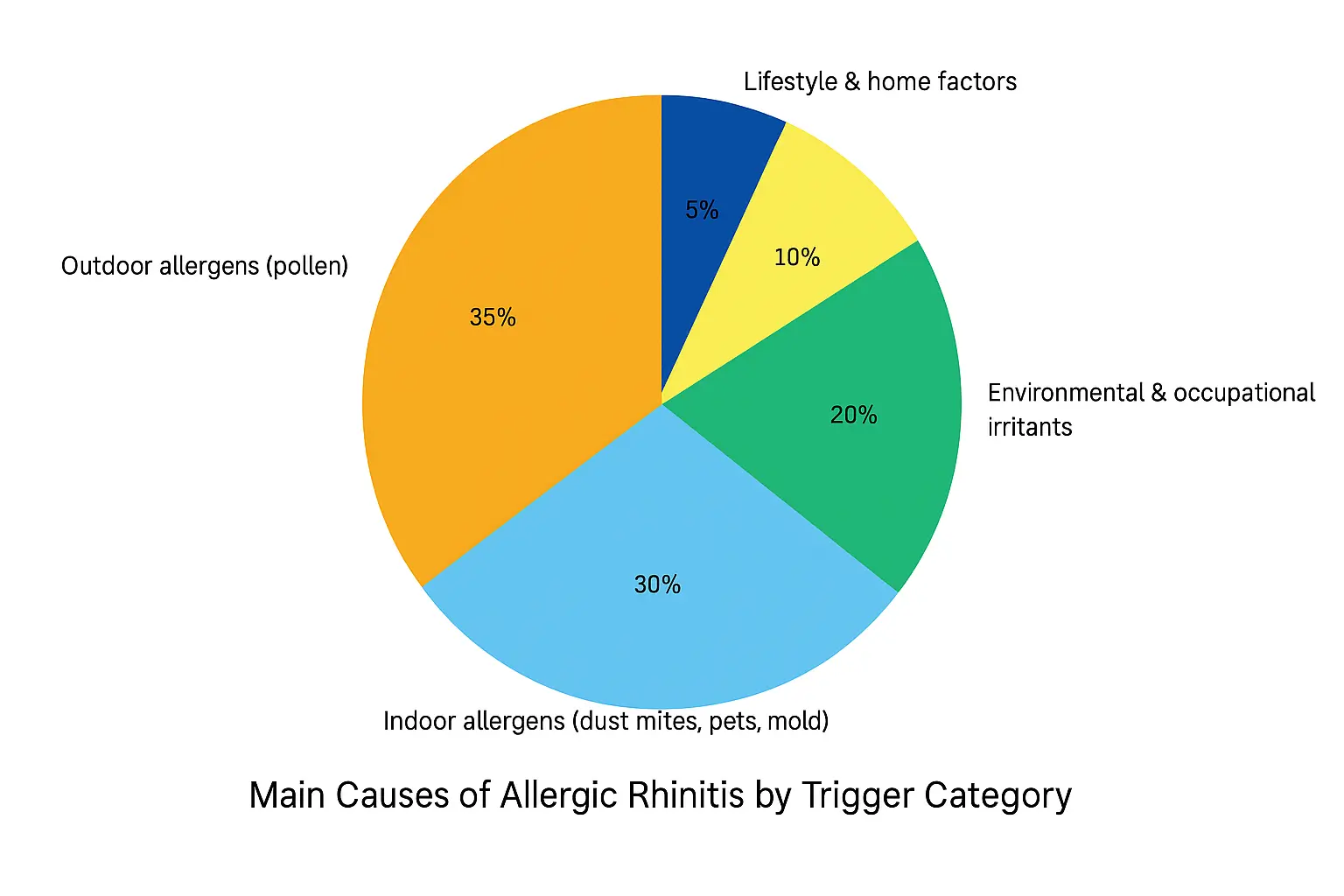
Major Causes of Allergic Rhinitis: Outdoor Allergens
Outdoor allergens are among the most common causes of allergic rhinitis, particularly pollen released from trees, grasses, and weeds. The pollen from tree sources such as oak, birch, and cedar is most common in the spring season; the pollen from grasses increases in the summer; and the ragweed pollen remains the main cause of allergic rhinitis during the latter part of summer and the beginning of fall. These airborne spores can easily enter the mouth, nose, and eyes, producing mucous membrane inflammation. Certain people only get hay fever during specific seasons of the year because of seasonal variation.
Indoor Allergens That Cause Perennial Allergic Rhinitis
Perennial allergic rhinitis is a persistent condition mostly brought on by indoor exposures. One of the main causes is house dust mites, which flourish in upholstered furniture, carpets, and mattresses. Their body flakes and small waste particles cause allergies. Pet dander, which is made up of small skin cells, fur, or saliva from dogs, cats, or other animals, may cause long-lasting symptoms, particularly if pets are housed together. Other indoor causes include mold, cockroach remains, and mold spores, especially in moist spaces like basements or bathrooms. Nasal stuffiness, sneezing, sinus congestion, and occasionally ear disorders or conjunctivitis (eye allergies) might result from inhaling these irritants.Continuous exposure to these indoor allergens often leads to persistent nasal symptoms and is a major cause of perennial allergic rhinitis.
Environmental and Occupational Irritants that Trigger Symptoms
In addition to true allergens, environmental and occupational irritants can worsen allergic rhinitis symptoms in susceptible individuals.Contrary to traditional allergies, chemical irritants can exacerbate symptoms in some people. Frequent exposure to latex, wheat dust, wood dust, perfumes, cleaning supplies, or industrial pollutants irritate nasal tissues and cause an allergic-like inflammatory reaction. Active and passive cigarette smoke is a well-known irritant that exacerbates allergic inflammation and impairs the body’s natural mucociliary defense. Similarly, air pollution, smells, and volatile organic compounds (VOCs) in home items exacerbate symptoms and enhance airway sensitivity.
Why Some People Are More Sensitive: Genetics and Immune Factors
Genetic predisposition plays a significant role in allergic rhinitis. Individuals with a family history of allergies, asthma, or eczema are more likely to develop nasal allergies.
Early-life exposure patterns, immune system development, and repeated allergen contact increase sensitivity over time, making some individuals more prone to persistent or severe symptoms.These factors together represent key risk factors for allergic rhinitis development.
Lifestyle and Home Factors That Increase Allergy Risk
Living in an urban area nowadays increases exposure to irritants, including synthetic chemicals, vehicle exhaust, and poor indoor air quality. Allergen loads are increased by poor ventilation, high humidity, and dust buildup in bedding and carpets. Nasal sensitivity can also be made worse by scents from cleaning products or perfumes. On the other hand, these problems can be managed by keeping a clean, properly ventilated home, utilizing HEPA filters, and reducing indoor humidity.Modern lifestyle patterns, including increased time spent indoors and reduced ventilation, further contribute to rising allergy risk.
Medical Review Disclaimer
This article is for informational and educational purposes only and does not constitute medical advice. The content is written by a qualified healthcare professional and medically reviewed for accuracy. However, it should not be used as a substitute for professional medical diagnosis, treatment, or advice. Always consult a licensed healthcare provider regarding any medical condition or health concern.
Frequently Asked Questions (FAQs)
Hay fever is triggered by exposure to allergens such as pollen, dust mites, pet dander, and mold.
2. Can indoor allergens cause year-round allergic symptoms?
Yes. Dust mites, pets, and mold can trigger symptoms all year.
3. Why are my allergies worse in certain seasons?
Different pollens peak in spring, summer, and fall.
4. Can pollution or smoke trigger allergic rhinitis?
Yes. Pollution and smoke irritate the nasal lining and worsen symptoms.
5. Is allergic rhinitis genetic?
Yes. Family history increases the likelihood of developing allergies.
6. Do pets increase allergic rhinitis symptoms?
Yes. Pet dander and saliva can trigger nasal allergies.
7. Can occupational exposures cause rhinitis?
Yes. Chemicals, dust, and cleaning agents can irritate nasal tissues.
8. Do mold spores cause nasal allergies?
Yes. Mold in damp indoor areas releases spores that can trigger year-round symptoms