

How Allergic Rhinitis Affects School Performance in Children
Written by: Dr.Muhammad Ihsan Ullah, PhD
Medically reviewed by: Dr. Muhammad Sohail,FCPS
Last updated on May 16,2026
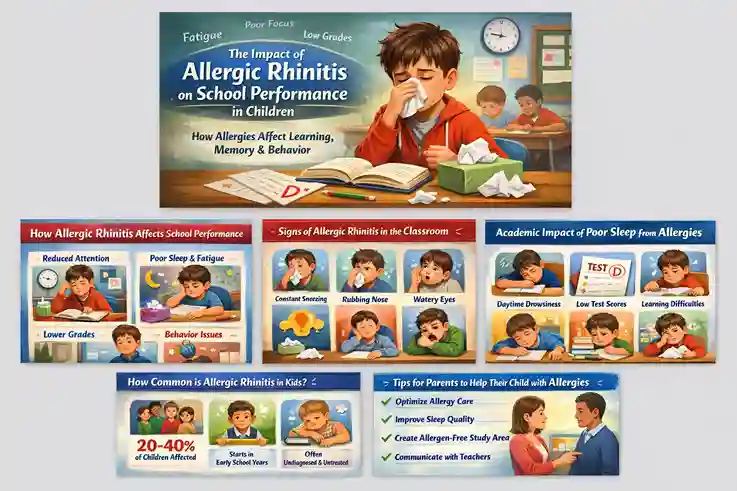
Allergic rhinitis, commonly known as hay fever, is a widespread condition that can significantly impact school performance in children. Persistent nasal congestion, sneezing, poor sleep, and fatigue can interfere with a child’s attention, focus, and overall academic success. Many children with allergic rhinitis struggle with reduced classroom participation, memory issues, and frequent school absenteeism, all of which can affect their learning abilities.
This article explains how allergic rhinitis impacts a child’s academic achievement and provides insights on improving school performance through effective allergy management.
How Common Is Allergic Rhinitis in School-Age Children?
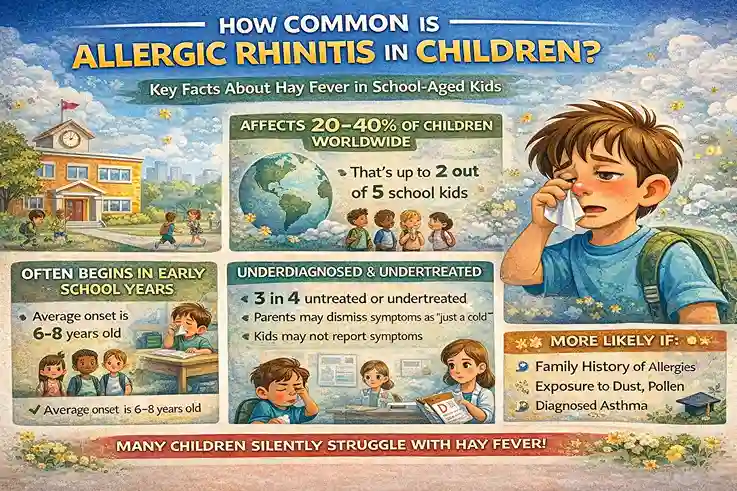
- Affects 20–40% of children worldwide
- Often begins in early school years
- Frequently underdiagnosed or undertreated
Many children attend school daily with uncontrolled symptoms, silently affecting learning.
How Allergic Rhinitis Affects School Performance
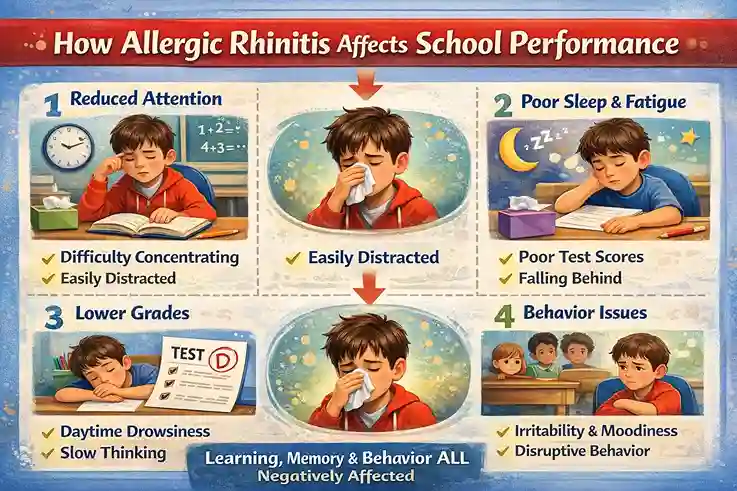
🧠 1️⃣ Reduced Attention and Concentration
Children with allergic rhinitis often struggle to focus due to:
- Nasal blockage
- Itching and sneezing
- Constant discomfort
📌 Result:
- Easily distracted
- Difficulty following lessons
- Reduced classroom participation
Studies show allergic inflammation and discomfort directly reduce sustained attention span in children.
😴 2️⃣ Poor Sleep Quality → Daytime Sleepiness
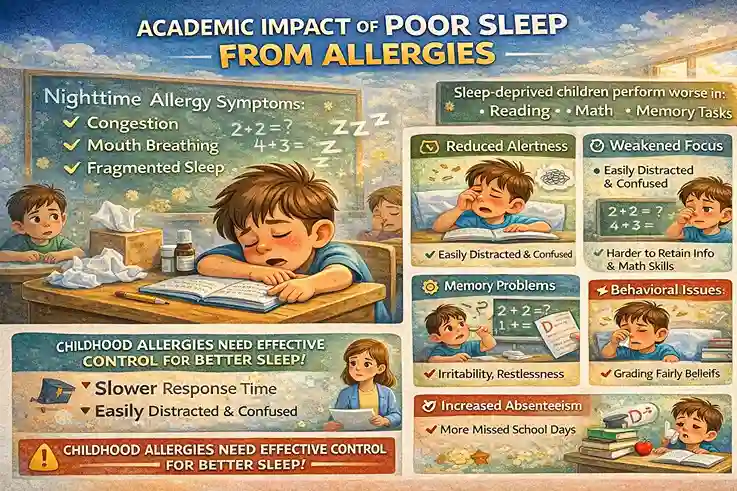
Nighttime symptoms include:
- Nasal congestion
- Mouth breathing
- Snoring
- Fragmented sleep
📌 Result in school:
- Daytime fatigue
- Slower thinking
- Reduced alertness
- Increased absenteeism
Sleep-deprived children perform worse in:
- Reading comprehension
- Mathematics
- Memory-based tasks
📉 3️⃣ Lower Academic Achievement
Children with moderate-to-severe allergic rhinitis show:
- Lower test scores
- Slower cognitive processing
- Reduced exam performance
Seasonal allergy peaks often coincide with exams, worsening outcomes.
🧩 4️⃣ Memory and Learning Difficulties
Inflammation + poor sleep affects:
- Short-term memory
- Information retention
- Learning speed
📌 Teachers may report:
- “Not paying attention”
- “Forgets instructions”
- “Needs repetition”
🧒 5️⃣ Behavioral & Emotional Effects
Allergic rhinitis can cause:
- Irritability
- Mood swings
- Anxiety
- Frustration
Children may appear:
- Restless
- Disruptive
- Withdrawn
⚠️ These behaviors are sometimes misinterpreted as ADHD or behavioral problems.
🏫 6️⃣ Increased School Absenteeism
Due to:
- Symptom flares
- Doctor visits
- Recurrent sinus infections
- Poor sleep
📌 Missing school leads to:
- Learning gaps
- Lower grades
- Reduced confidence
Impact of Allergy Medications on School Performance
❌ Sedating Antihistamines (Important!)
First-generation antihistamines can cause:
- Drowsiness
- Slowed reaction time
- Poor concentration
📌 Result:
Even if symptoms improve, learning may worsen.
✔ Second-generation (non-sedating) antihistamines are preferred for school-going children.
Signs Teachers & Parents Should Watch For
✔ Frequent yawning
✔ Difficulty concentrating
✔ Rubbing nose or eyes constantly
✔ Falling asleep in class
✔ Poor exam performance despite effort
✔ Behavioral changes during allergy seasons
Can Treating Allergic Rhinitis Improve School Performance?
✅ YES — significantly
Research shows that proper management:
- Improves sleep quality
- Enhances attention and memory
- Reduces absenteeism
- Improves grades and classroom behavior
Children often show rapid academic improvement once symptoms are controlled.
How Parents Can Help Improve Academic Outcomes
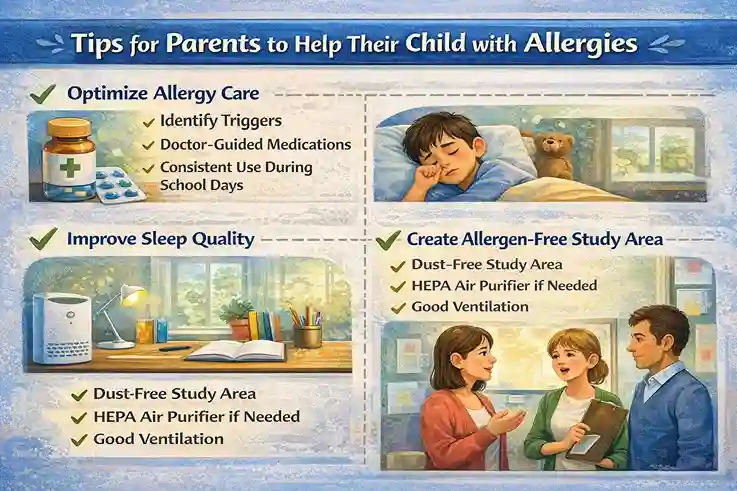
🟢 1️⃣ Optimize Allergy Control
- Identify triggers
- Use appropriate medications (doctor-guided)
- Maintain consistency during school days
🟢 2️⃣ Improve Sleep Hygiene
- Treat nighttime congestion
- Elevate head during sleep
- Keep bedroom allergen-free
🟢 3️⃣ Allergy-Friendly Study Environment
- Dust-free study area
- HEPA air purifier if needed
- Good ventilation
🟢 4️⃣ Communicate With Teachers
- Inform school about allergy diagnosis
- Explain seasonal symptom flares
- Request seating away from dust or chalk
🟢 5️⃣ Avoid Sedating Medications During School Days
Always prefer non-drowsy options unless advised otherwise by a physician.
Key Takeaways for Parents
✔ Allergic rhinitis is not a minor condition in children
✔ It affects sleep, attention, memory, and behavior
✔ Poor control leads to lower academic performance
✔ Proper treatment improves school success
✔ Early recognition prevents long-term educational impact
Medical Review Disclaimer
This article is for informational and educational purposes only and does not constitute medical advice. The content is written by a qualified healthcare professional and medically reviewed for accuracy. However, it should not be used as a substitute for professional medical diagnosis, treatment, or advice. Always consult a licensed healthcare provider regarding any medical condition or health concern.
Frequently Asked Questions( FAQs)
1. Can allergic rhinitis affect a child’s school performance?
Yes. It can reduce attention, memory, sleep quality, and classroom participation.
2. How does allergic rhinitis impact learning?
Nasal congestion and poor sleep lead to fatigue, reduced focus, and slower learning.
3. Can allergies cause behavior problems at school?
Yes. Irritability, restlessness, and poor concentration are common during allergy flares.
4. Do allergy medications affect school performance?
Sedating antihistamines can impair focus; non-sedating options are preferred on school days.
5. Can treating allergic rhinitis improve grades?
Yes. Proper allergy control often improves sleep, attention, and academic performance.