

How to Improve Breathing in Allergies and Asthma Naturally
Written by: Dr.Muhammad Ihsan Ullah, PhD
Medically reviewed by:Arifa Sarfaraz,DPT & Dr. Jamal Ud Din Khan,FCPS
Last updated on May 28,2026
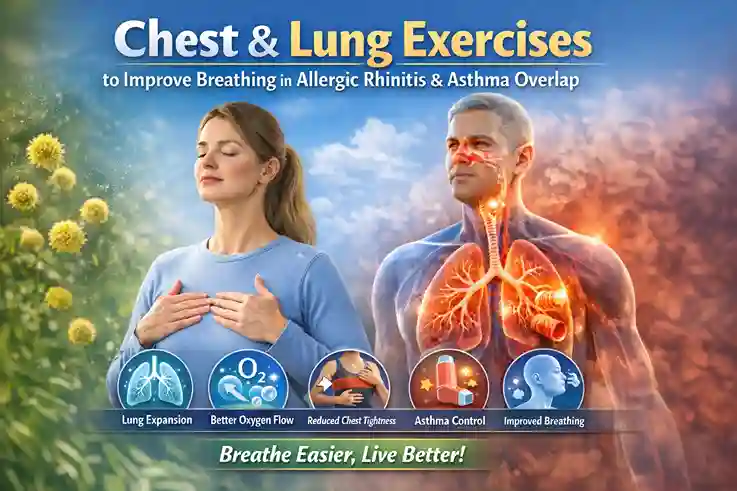
Breathing problems linked to allergic rhinitis and asthma can go beyond the nose, often causing chest tightness, shallow breathing, and reduced lung comfort. Many people search for how to improve breathing in asthma and allergies naturally and look for chest and lung exercises for better breathing that can support daily relief. While medications remain essential, simple techniques can help improve airflow, lung expansion, and breathing efficiency. Learning breathing exercises for asthma and allergic rhinitis can make it easier to breathe and improve overall respiratory comfort.
What exercises help improve breathing in allergies and asthma?
Chest and lung exercises that can help improve breathing in allergies and asthma include chest expansion breathing, diaphragmatic breathing, thoracic mobility exercises, pursed-lip breathing, and gentle arm-lift breathing. These techniques support lung expansion, improve airflow efficiency, and reduce chest tightness when practiced regularly alongside medical treatment.
Why Chest & Lung Exercises Matter in Allergic Rhinitis
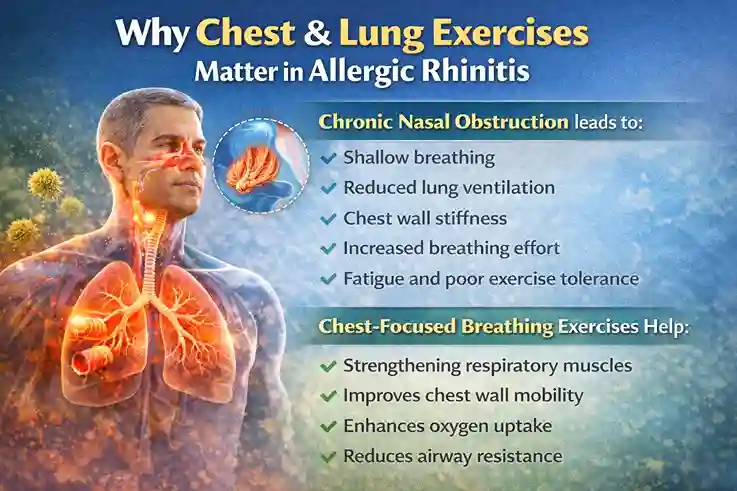
Chronic nasal obstruction leads to:
- Shallow breathing
- Reduced lung ventilation
- Chest wall stiffness
- Increased breathing effort
- Fatigue and poor exercise tolerance
Chest-focused breathing exercises improve respiratory muscle function, chest wall mobility, and ventilation efficiency, as documented in respiratory rehabilitation literature (Courtney, 2009).
Foundational Safety Rules (Read Before Starting)
- Always breathe slowly and gently
- Prefer nasal breathing where possible
- Stop if dizziness, chest pain, or wheezing occurs
- Asthma patients should keep rescue inhaler nearby
- Exercises support treatment — they do not replace medications
Step-by-Step Chest & Lung Exercises
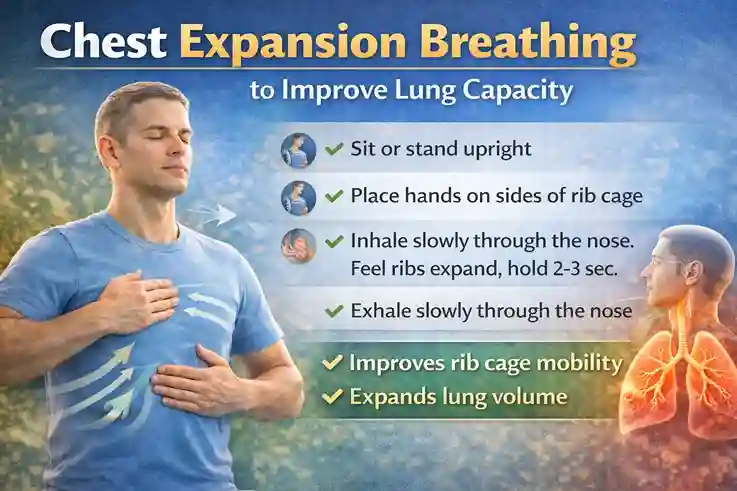
1. Chest Expansion Breathing
Best for:
Chest tightness, restricted breathing, poor lung expansion
How to Do It
- Sit or stand upright
- Place hands on the sides of your rib cage
- Inhale slowly through the nose
- Feel ribs expand outward
- Hold gently for 2–3 seconds
- Exhale slowly through the nose
- Repeat 8–10 times
Why It Helps
- Improves rib cage mobility
- Enhances lung volume
- Reduces restrictive breathing patterns
📌 Clinical relevance: Chest expansion improves ventilation distribution and reduces respiratory muscle stiffness (Courtney, 2009).
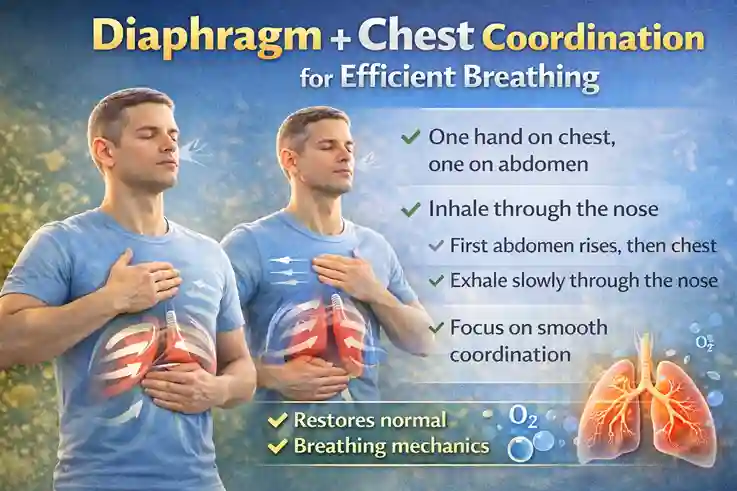
2. Diaphragm + Chest Coordination Breathing
Best for:
Shallow breathing, fatigue, anxiety-related breathlessness
How to Do It
- One hand on chest, one on abdomen
- Inhale through the nose
- First abdomen rises, then chest
- Exhale slowly through the nose
- Focus on smooth coordination
- Continue for 5–10 minutes
Why It Helps
- Restores normal breathing mechanics
- Improves oxygen efficiency
Reduces over breathing
3. Thoracic Mobility Stretch With Breathing
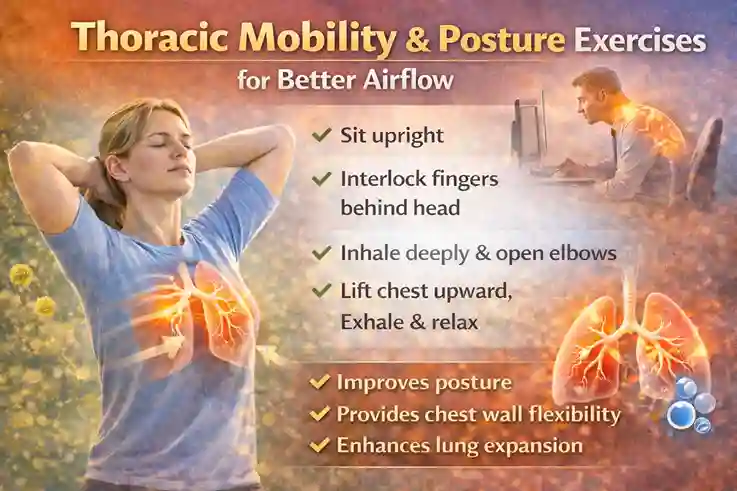
Best for:
Stiff chest, desk workers, posture-related breath restriction
How to Do It
- Sit upright
- Interlock fingers behind head
- Inhale deeply and gently open elbows
- Lift chest upward
- Exhale and relax
- Repeat 6–8 times
Why It Helps
- Improves posture
- Increases chest wall flexibility
- Enhances lung expansion
4. Pursed-Lip Breathing for Lung Control
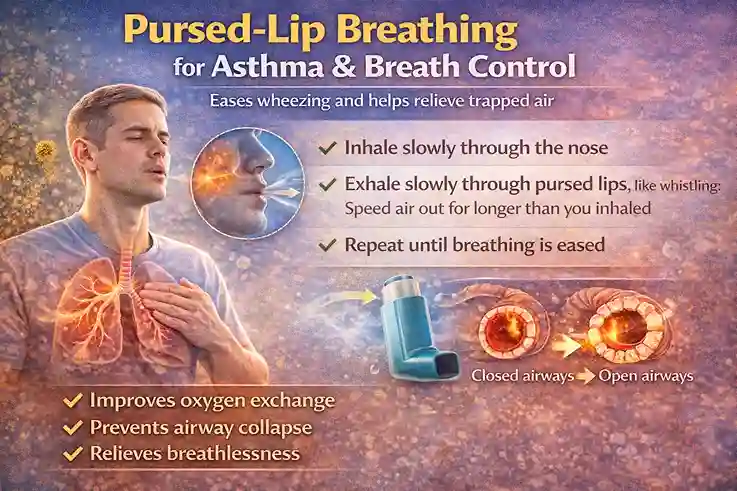
Best for:
Asthma overlap, wheezing, shortness of breath
How to Do It
- Inhale slowly through the nose
- Purse lips (as if blowing a candle)
- Exhale slowly (twice as long as inhale)
- Repeat for 5 minutes
Why It Helps
- Keeps airways open longer
- Reduces air trapping
- Improves breathing control
📌 Widely used in asthma and COPD rehabilitation.
5. Seated Arm-Lift Lung Expansion Exercise
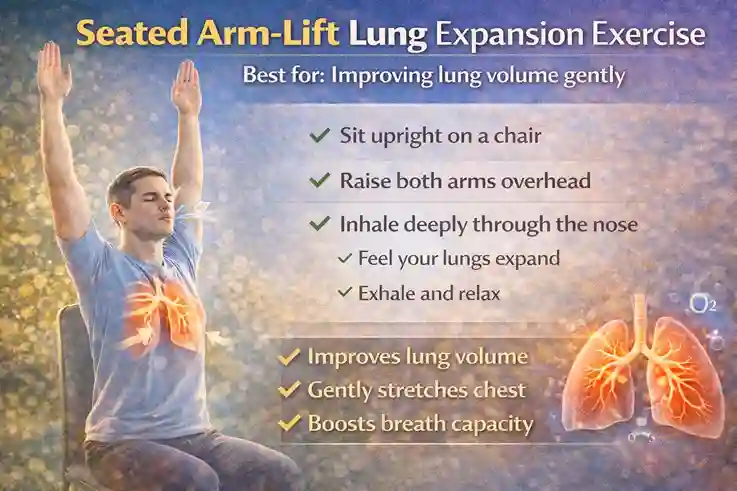
Best for:
Improving lung volume gently
How to Do It
- Sit comfortably
- Inhale while raising arms overhead
- Expand chest fully
- Exhale while lowering arms
- Repeat 8–10 times
Why It Helps
- Encourages deep inhalation
- Improves upper lung ventilation
- Reduces breathing restriction
Daily Chest & Lung Exercise Routine (10–15 Minutes)
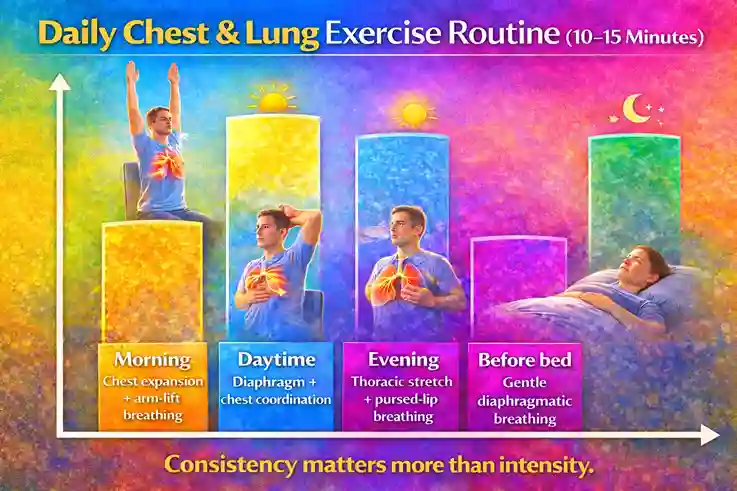
Time | Exercise |
Morning | Chest expansion + arm-lift breathing |
Daytime | Diaphragm + chest coordination |
Evening | Thoracic stretch + pursed-lip breathing |
Before bed | Gentle diaphragmatic breathing |
Consistency matters more than intensity.
Chest & Lung Exercises for Allergic Rhinitis + Asthma Overlap
When allergic rhinitis and asthma coexist:
- Nasal inflammation worsens lung symptoms
- Poor breathing mechanics increase flare risk
Benefits in overlap cases:
- Improved asthma control
- Reduced chest tightness
- Better sleep quality
- Reduced rescue inhaler use (supportive role)
Breathing exercises are recommended as adjunct therapy in asthma management to improve symptom control and reduce breathlessness (Thomas et al., 2013).
When Chest Exercises Are Most Helpful
They work best when combined with:
- Nasal saline care
- HEPA air purification
- Proper allergy medications
- Trigger avoidance
- Breathing exercises for nasal airflow
This integrated approach aligns with ARIA and respiratory guidelines (Bousquet et al., 2020).
Medical Review Disclaimer
This article is for informational and educational purposes only and does not constitute medical advice. The content is written by a qualified healthcare professional and medically reviewed for accuracy. However, it should not be used as a substitute for professional medical diagnosis, treatment, or advice. Always consult a licensed healthcare provider regarding any medical condition or health concern.
Frequently Asked Questions (FAQs)
1. Can chest exercises improve breathing in allergic rhinitis?
Yes. They improve lung expansion and breathing efficiency, especially when nasal congestion affects breathing patterns.
2. Are these exercises safe for asthma patients?
Yes, when performed gently and alongside prescribed asthma treatment.
3. How long before results appear?
Many people notice improved breathing comfort within 1–2 weeks of regular practice.
4. Can children do these exercises?
Yes, under supervision and with age-appropriate guidance.
References
Bousquet, J., Schünemann, H. J., Togias, A., Erhola, M., Hellings, P. W., Zuberbier, T., … Papadopoulos, N. G. (2020). ARIA guidelines 2019: Treatment of allergic rhinitis in the context of asthma. Allergy, 75(6), 1202–1221. https://doi.org/10.1111/all.14101
Courtney, R. (2009). The functions of breathing and its dysfunctions and their relationship to breathing therapy. International Journal of Osteopathic Medicine, 12(3), 78–85. https://doi.org/10.1016/j.ijosm.2009.04.002
Thomas, M., McKinley, R. K., Freeman, E., & Foy, C. (2013). Breathing exercises for asthma. Cochrane Database of Systematic Reviews, (5), CD001277. https://doi.org/10.1002/14651858.CD001277.pub3