

Why Nasal Congestion Gets Worse at Night
Written by: Dr.Muhammad Ihsan Ullah, PhD
Medically reviewed by: Dr. Jamal ud Din Khan, FCPS & Dr Ali Raza Dogar ,MBBS,ENT
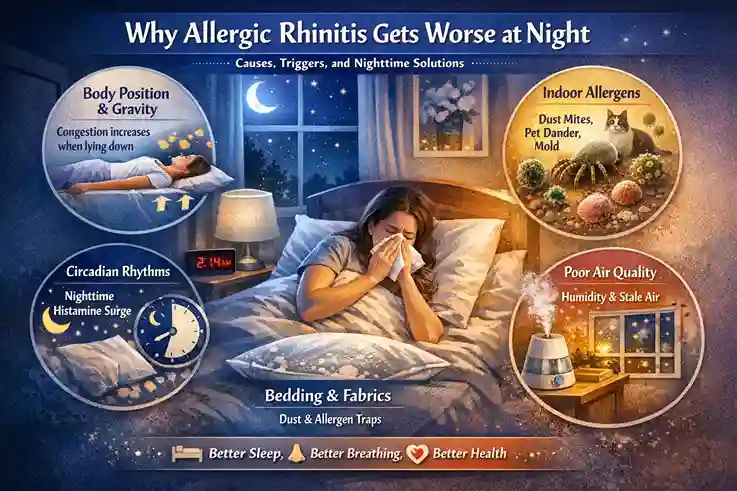
Many people notice that their allergy symptoms get worse at night, especially when lying down to sleep. A stuffy or blocked nose at night, sneezing, and postnasal drip can become more intense, making it difficult to breathe comfortably and sleep well. People often search for why nasal congestion gets worse at night or why allergies are worse when lying down. This nighttime worsening is not random—it is caused by a combination of body position, indoor allergen exposure, and natural changes in the immune system during sleep.
Why do allergies get worse at night?
Allergies often get worse at night due to lying down, increased exposure to indoor allergens like dust mites, and natural body changes such as higher nighttime histamine levels and lower cortisol. These factors can increase nasal congestion, mucus buildup, and airway irritation, making symptoms more noticeable during sleep.
Why Do Allergic Rhinitis Symptoms Get Worse at Night?
Nighttime allergy symptoms are driven by multiple overlapping mechanisms, not just one cause.
1. Body Position and Gravity Effects
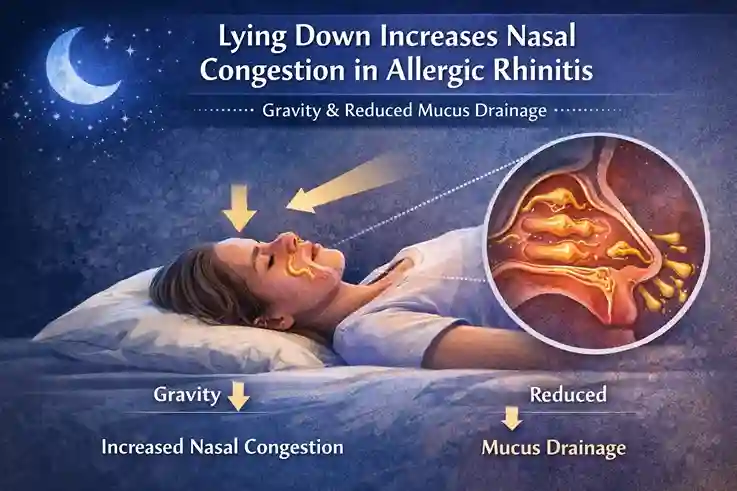
2. Lying down increases nasal congestion in allergic rhinitis due to gravity and reduced mucus drainage
- Increased nasal congestion
- Sinus pressure
- Post-nasal drip
- Mouth breathing and snoring
In people with allergic inflammation, swollen nasal tissues block airflow even more when lying flat.
4. Increased Exposure to Indoor Allergens at Night
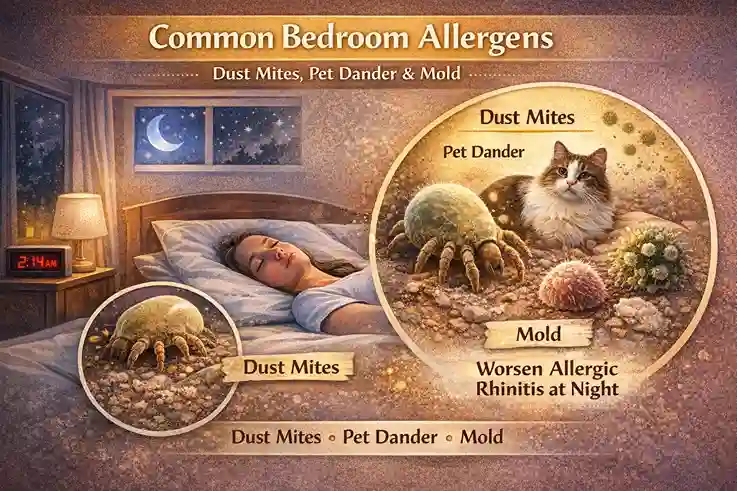
Nighttime is when you are closest to indoor allergens for the longest duration.
Common bedroom allergens include:
- Dust mites in mattresses, pillows, and bedding
- Pet dander carried on fabrics
- Mold spores in humid rooms
- Dust particles trapped in carpets and curtains
Because you spend 6–8 hours in the bedroom, even low-level exposure can significantly worsen allergic rhinitis symptoms overnight.
4. Circadian Rhythm and Histamine Release
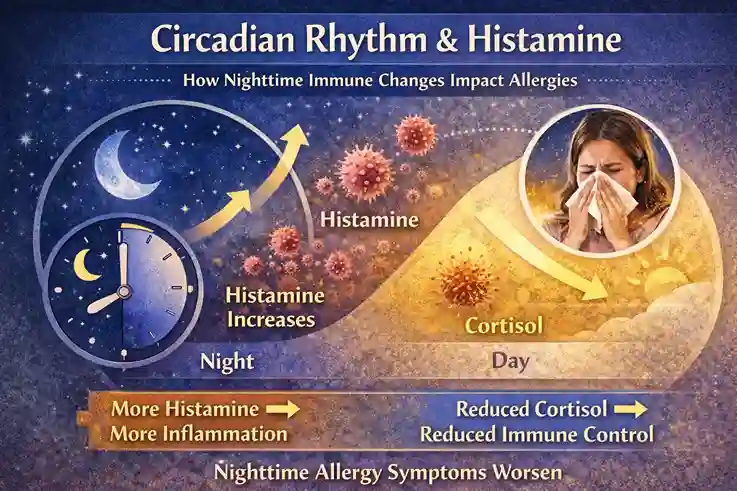
The immune system follows a circadian rhythm. Research shows that histamine release increases at night while cortisol, a natural anti-inflammatory hormone, decreases during sleep. This imbalance promotes inflammation, leading to worse sneezing, nasal blockage, and itching at night (Bousquet et al., 2020).
5. Bedroom Air Quality and Humidity
Poor nighttime air quality contributes to symptom worsening:
- High humidity encourages dust mite growth and mold
- Dry air irritates nasal mucosa and thickens mucus
- Poor ventilation traps allergens in enclosed spaces
Both extremes—too dry or too humid—can aggravate nighttime nasal symptoms.
6. Bedding Materials and Fabric Triggers
Pillows, blankets, and mattresses can act as reservoirs of allergens, especially if they are:
- Old or uncovered
- Made of materials that trap dust
- Not washed regularly
Direct contact between your face and allergen-laden bedding can trigger nasal itching and congestion within minutes.
Common Nighttime Symptoms of Allergic Rhinitis
People with nighttime-worsened allergic rhinitis often report:
- Severe nasal blockage after lying down
- Continuous sneezing fits at bedtime
- Post-nasal drip causing throat irritation or cough
- Difficulty breathing through the nose
- Frequent awakenings during sleep
- Morning headaches or dry mouth
Persistent nighttime symptoms are a major cause of poor sleep quality and daytime fatigue.
How to Reduce Nighttime Allergic Rhinitis Symptoms
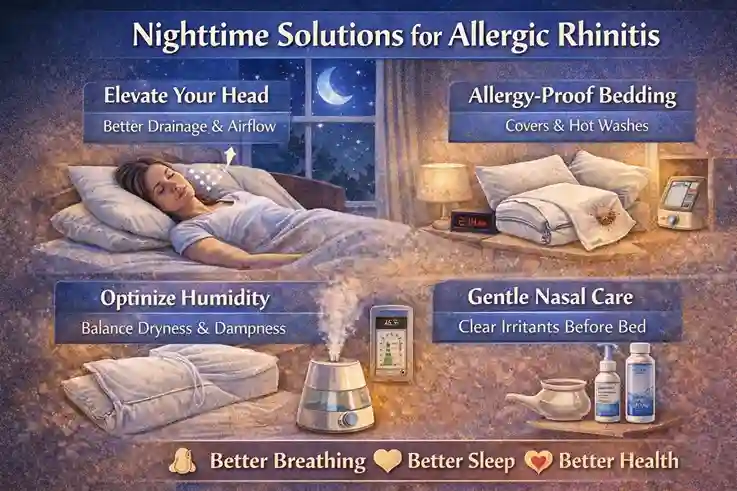
The goal is to reduce allergen exposure, improve nasal airflow, and support healthy sleep physiology.
1. Improve Sleeping Position
Sleeping position plays a surprisingly important role.
Best practices:
- Sleep with your head slightly elevated using an extra pillow
- Avoid sleeping completely flat
- Side-sleeping may reduce post-nasal drip in some people
Elevation helps mucus drain and reduces nasal tissue swelling.
2. Create an Allergy-Friendly Bedroom Environment
Reducing allergen load in the bedroom is one of the most effective long-term strategies.
Key steps include:
- Using allergen-proof mattress and pillow covers
- Washing bedding weekly in hot water (≥130°F / 54°C)
- Removing unnecessary carpets, heavy curtains, and fabric clutter
- Keeping pets out of the bedroom
These measures significantly lower nighttime exposure to dust mites and pet allergens.
3.Optimize Bedroom Air Quality
Cleaner air at night means fewer symptoms.
Helpful strategies:
- Keep windows closed during high-pollen seasons
- Maintain indoor humidity around 35–50%
- Ensure proper ventilation
- Use air filtration in sleeping areas if possible
Improving air quality reduces inhaled allergens during sleep.
4. Perform Gentle Nasal Care Before Bed
Clearing allergens from the nose before sleep can reduce nighttime congestion.
Options include:
- Saline nasal sprays
- Saline irrigation (used safely and correctly)
- Gentle nasal hygiene to remove pollen and dust
This reduces inflammatory triggers before lying down.
5. Avoid Nighttime Triggers
Certain habits worsen nighttime symptoms.
Try to:
- Shower and change clothes after being outdoors
- Avoid strong fragrances, incense, or sprays in the evening
- Avoid smoking or secondhand smoke exposure
- Clean bedroom surfaces regularly using damp cloths
Small lifestyle changes can have a noticeable impact on nighttime comfort.
When to See a Doctor
Medical evaluation is recommended if nighttime symptoms persist for weeks, sleep disruption becomes frequent, sinus infections recur, or allergic rhinitis overlaps with asthma or wheezing. Evidence-based medical management combined with lifestyle adjustments offers the best long-term outcomes (Dykewicz et al., 2020).
Key Takeaways
- Allergic rhinitis often worsens at night due to body position, allergen exposure, and circadian immune changes
- Bedrooms are major allergen environments for dust mites, pet dander, and mold
- Improving sleeping position, air quality, and bedding hygiene can significantly reduce nighttime symptoms
- Gentle nasal care before bed supports better breathing and sleep quality
- Addressing nighttime symptoms improves both allergy control and overall well-being
Medical Review Disclaimer
This article is for informational and educational purposes only and does not constitute medical advice. The content is written by a qualified healthcare professional and medically reviewed for accuracy. However, it should not be used as a substitute for professional medical diagnosis, treatment, or advice. Always consult a licensed healthcare provider regarding any medical condition or health concern.
Frequently Asked Questions (FAQs)
1. Why does my nose block as soon as I lie down?
Lying flat increases blood flow to nasal tissues and reduces mucus drainage, worsening congestion in allergic rhinitis.
2. Are dust mites worse at night?
Dust mites are present all the time, but nighttime exposure is higher because of prolonged contact with bedding.
3. Can sleeping position really affect allergies?
Yes. Head elevation and side-sleeping can reduce nasal congestion and post-nasal drip.
4. Is nighttime congestion a sign of sinus infection?
Not always. Persistent congestion without fever or pain is more commonly allergic rhinitis, but medical evaluation is advised if symptoms worsen.
5. Can improving my bedroom help daytime allergies too?
Yes. Reducing nighttime inflammation often leads to better daytime symptom control.
References
Bousquet, J., Klimek, L., Togias, A., Zuberbier, T., Agache, I., Ansotegui, I. J., … Wallace, D. V. (2020). Next-generation allergic rhinitis and its impact on asthma (ARIA). Journal of Allergy and Clinical Immunology, 145(3), 895–909. https://doi.org/10.1016/j.jaci.2019.12.898
Dykewicz, M. S., Wallace, D. V., Baroody, F., Bernstein, J., Craig, T., Finegold, I., … Portnoy, J. (2020). Rhinitis 2020: A practice parameter update. Journal of Allergy and Clinical Immunology, 146(4), 721–767. https://doi.org/10.1016/j.jaci.2020.07.007