

Why Are Allergies Worse in the Morning or Evening?
Written by: Dr.Muhammad Ihsan Ullah, PhD
Medically reviewed by: Dr. Jamal ud Din Khan, FCPS
Why Allergic Rhinitis Feels Worse at Certain Times of the Day
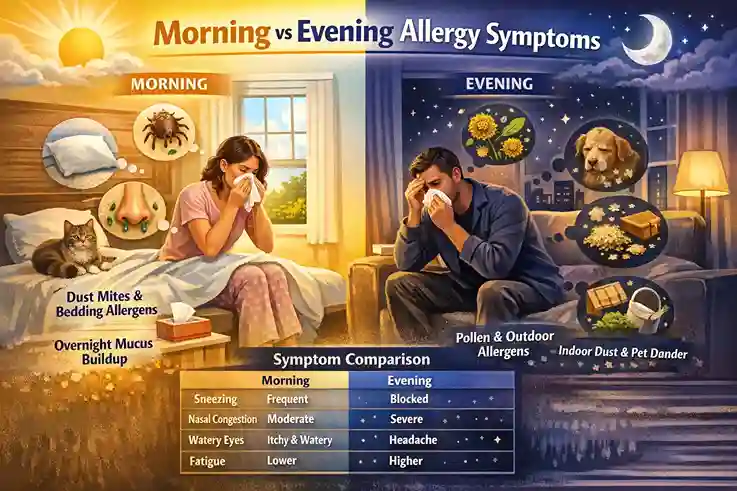
Many people notice that their allergy symptoms are worse in the morning or evening, but the pattern can feel confusing. Some wake up with sneezing, a runny nose, or a stuffy nose in the morning, while others experience more nasal congestion at night or in the evening. It’s common to wonder why allergies are worse at certain times of the day or what causes these daily changes. In reality, allergic rhinitis symptoms can shift throughout the day due to a mix of allergen exposure, body rhythms, and everyday habits.
Are allergy symptoms worse in the morning or evening?
Allergy symptoms can be worse in either the morning or evening, depending on triggers and daily exposure. Morning symptoms are often caused by dust mites, bedding allergens, and overnight mucus buildup, while evening symptoms are usually linked to accumulated allergens, indoor air quality, and fatigue. Understanding your pattern helps manage symptoms more effectively.
Why Are Allergies Worse in the Morning?
Allergies can feel worse in the morning because you spend several hours breathing close to bedding, pillows, mattress fibers, dust mites, pet dander, and indoor particles while you sleep. When you wake up, the nose may already be irritated, swollen, and full of mucus.
Morning symptoms are often stronger when your bedroom contains common allergy triggers such as:
- dust mites in pillows, mattresses, blankets, and carpets
- pet dander on bedding
- pollen carried indoors on hair, clothes, or open windows
- mold in damp bedrooms or bathrooms
- dry air that irritates the nasal lining
- overnight post-nasal drip
This is why some people wake up sneezing, congested, or with a runny nose even before they go outside. The problem is not always the morning air itself. Often, it is overnight exposure plus mucus buildup from lying down for several hours.
Morning Rhinitis: What It Means
Morning rhinitis means nasal allergy or irritation symptoms that are strongest after waking up. It can include sneezing, blocked nose, runny nose, itchy nose, throat clearing, watery eyes, or post-nasal drip in the first part of the day.
Morning rhinitis is commonly linked with allergic rhinitis, dust mite allergy, pet dander exposure, pollen brought into the bedroom, or non-allergic triggers such as dry air, cold air, smoke, fragrance, or indoor air pollution.
If symptoms improve after getting out of bed, showering, rinsing the nose, or leaving the bedroom, the trigger may be inside the sleeping area. If symptoms continue all day, seasonal pollen, mold, chronic rhinitis, sinus problems, or poorly controlled allergies may also be involved.
Why Allergy Symptoms Change During the Day
Allergic rhinitis severity varies because of three main factors:
- Circadian rhythm (your internal biological clock)
- Timing of allergen exposure
- Environmental and lifestyle habits
These factors interact differently in the morning and evening.
Morning Allergy Symptoms: Why Are They So Common?
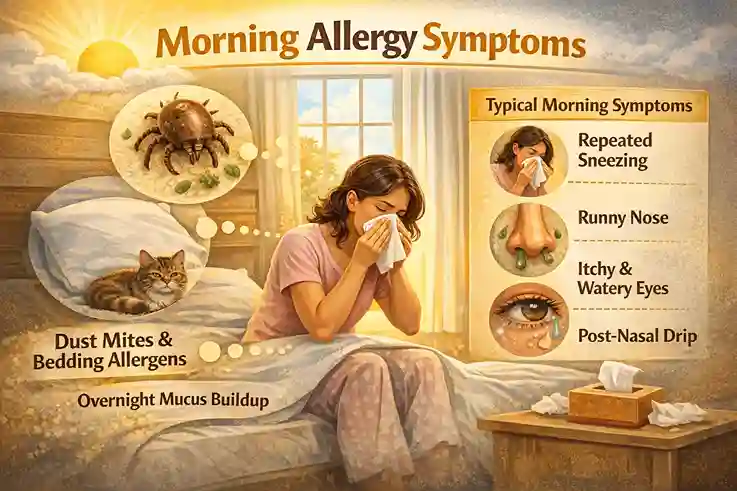
Morning allergy symptoms are extremely common in allergic rhinitis.
Typical Morning Symptoms
- Repeated sneezing after waking up
- Runny or blocked nose
- Itchy nose and eyes
- Post-nasal drip
- Head pressure or heaviness
Causes of Morning Allergy Symptoms
1. Overnight Allergen Exposure
During sleep, you spend many continuous hours in close contact with:
- Dust mites in bedding
- Pillow and mattress allergens
- Pet dander on sheets or blankets
This prolonged exposure triggers inflammation that becomes noticeable upon waking.
2. Mucus Accumulation During Sleep
When lying down, mucus drainage slows. Overnight mucus buildup leads to:
- Morning nasal congestion
- Throat irritation
- Post-nasal drip
Once you wake up and sit upright, symptoms may temporarily worsen before improving.
3. Morning Immune Response
Cortisol, a natural anti-inflammatory hormone, is lowest during the night and rises in the early morning. This shift can briefly unmask inflammation, making symptoms more noticeable upon waking.
Waking Up Sneezing Every Morning: Is It Allergies?
Waking up sneezing every morning is often linked with allergic rhinitis, especially when sneezing comes with itchy eyes, itchy nose, clear runny nose, or nasal congestion. Dust mites, pet dander, pollen, and mold are common triggers.
Sneezing after waking may happen because allergens irritate the nasal lining overnight. When you sit up, move around, or start breathing more deeply, the nose reacts by sneezing to clear the irritation.
Common causes include:
- dust mites in bedding
- old pillows or mattresses
- pets sleeping in the bedroom
- pollen on hair or pillowcases
- mold or dampness
- sleeping with windows open during pollen season
- strong fragrances or cleaning products near the bed
If sneezing happens every morning, do not only treat the symptom. Check the bedroom environment first. Bedding, pillows, humidity, pets, carpets, curtains, and open windows can all keep morning symptoms active.
Waking Up With a Stuffy Nose: Morning Allergy or Dry Air?
Waking up with a stuffy nose can happen because of allergies, dry air, indoor irritants, or overnight mucus buildup. If the stuffy nose comes with sneezing, itchy eyes, watery eyes, or a clear runny nose, allergies are more likely.
A morning blocked nose may be allergy-related when:
- symptoms are worse in bed or after waking
- symptoms improve after showering or leaving the bedroom
- you also have sneezing or itchy eyes
- symptoms worsen during pollen season
- pets, carpets, old pillows, or dust are present in the bedroom
Dry air can also make the nose feel blocked, especially in air-conditioned, heated, or low-humidity rooms. In that case, the nose may feel dry, crusty, irritated, or blocked without much sneezing or itching.
If morning congestion is persistent, severe, one-sided, linked with facial pain, thick mucus, fever, or poor sleep, medical advice is needed to rule out sinus infection, nasal polyps, deviated septum, or other causes.
Evening Allergy Symptoms: Why Do Symptoms Flare Later in the Day?
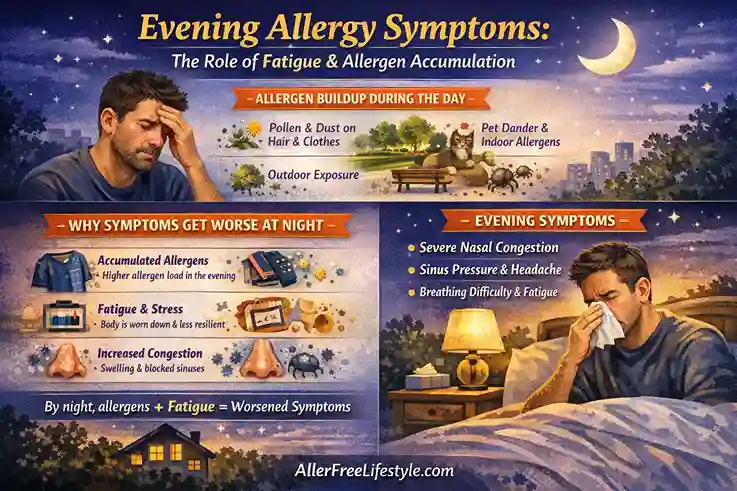
Some people experience worse allergic rhinitis symptoms in the evening rather than the morning.
Typical Evening Symptoms
- Increasing nasal blockage
- Sinus pressure
- Headache
- Fatigue-related symptom worsening
- Difficulty breathing through the nose
Causes of Evening Allergy Symptoms
1. Daytime Allergen Accumulation
Throughout the day, allergens build up on:
- Hair
- Skin
- Clothes
- Shoes
By evening, exposure load is higher, especially if you spent time outdoors or in dusty environments.
2. Indoor Allergen Exposure
Evenings are often spent indoors, increasing exposure to:
- Dust mites
- Mold spores
- Pet allergens
- Poor indoor air circulation
This indoor exposure contributes significantly to evening congestion.
3. Fatigue and Reduced Immune Regulation
As the day progresses:
- The body becomes more fatigued
- Inflammatory responses become more noticeable
- Nasal tissues feel more swollen
Fatigue does not cause allergies, but it amplifies symptom perception.
Why Are Allergies Worse at Night?
Allergies can feel worse at night because indoor allergens collect in the bedroom and lying down can make nasal congestion and post-nasal drip more noticeable. Dust mites, pet dander, mold, and pollen on bedding can continue irritating the nose while you sleep.
Night allergy symptoms may include:
- blocked nose when lying down
- post-nasal drip
- coughing from drainage
- itchy throat
- mouth breathing
- poor sleep
- waking up congested
Evening and nighttime symptoms are often worse when pollen enters the bedroom through open windows, clothes, hair, pets, or bedding. Dust mites are also a major bedroom trigger because they collect in mattresses, pillows, blankets, carpets, and fabric furniture.
If allergies disturb sleep regularly, the problem needs more than occasional symptom relief. Improving the bedroom environment, washing bedding, controlling humidity, removing pollen before bed, and treating nasal inflammation consistently can make a major difference.
When Is Pollen Worse: Morning or Evening?
Pollen timing can vary by plant, weather, season, and location. Some pollen levels may rise in the morning, while other exposure can feel worse later in the day because pollen collects on clothes, hair, skin, shoes, pets, and indoor surfaces.
For many people, the practical problem is not only when pollen is highest outside. It is how much pollen follows them indoors and reaches the bedroom by evening.
Pollen-related symptoms may worsen when:
- windows are open during pollen season
- clothes worn outside are kept in the bedroom
- hair is not washed before sleep
- bedding is dried outdoors
- pets bring pollen inside
- wind spreads pollen through open doors or windows
If pollen allergies are worse in the morning, check whether pollen is entering the bedroom. If symptoms are worse in the evening, check outdoor exposure during the day and whether pollen is being carried indoors.
Morning vs Evening Allergy Symptoms: Comparison Table
Feature | Morning Symptoms | Evening Symptoms |
Main trigger | Bedding allergens | Accumulated daily exposure |
Sneezing | Very common | Less frequent |
Nasal congestion | Moderate to severe | Often severe |
Post-nasal drip | Common | Common |
Eye symptoms | Common | Mild to moderate |
Fatigue impact | Lower | Higher |
Sleep disturbance | Less | More |
Is Morning or Evening Worse for Allergic Rhinitis?
There is no single worst time for everyone. Patterns vary depending on:
- Primary allergens (dust mites vs pollen)
- Home environment
- Outdoor exposure
- Sleep habits
Some people experience a bimodal pattern—symptoms in both the morning and evening.
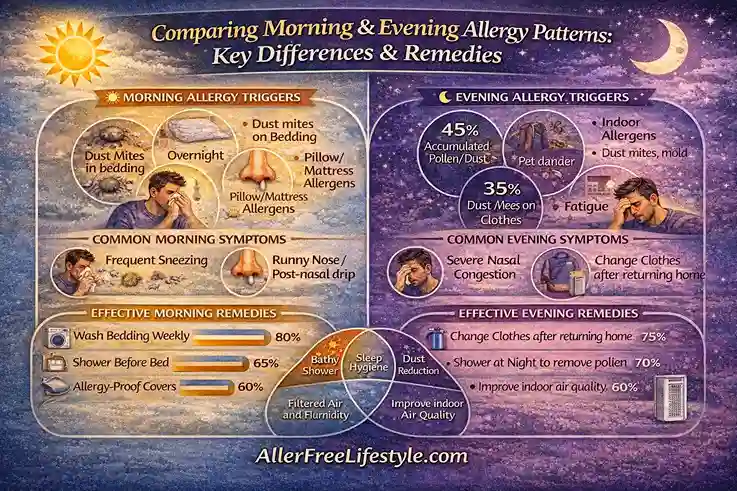
How to Reduce Morning Allergy Symptoms
Helpful strategies include:
- Washing bedding weekly in hot water
- Using allergen-proof mattress and pillow covers
- Showering before bed to remove allergens
- Improving bedroom air quality
- Performing gentle nasal care in the morning
Reducing overnight exposure often leads to calmer mornings.
Morning Allergy Routine: What to Do After Waking Up
A simple morning allergy routine can reduce sneezing, congestion, and post-nasal drip after waking. The goal is to clear overnight mucus, reduce allergen contact, and calm nasal irritation before symptoms build up.
Try this routine:
- Sit upright instead of staying flat in bed.
- Drink water to help loosen throat mucus.
- Rinse your face and eyelids if your eyes feel itchy.
- Use saline spray or saline rinse if your nose feels blocked or irritated.
- Shower in the morning if pollen, dust, or pet dander may be on your skin or hair.
- Avoid making the bed immediately if dust exposure triggers sneezing.
- Keep bedroom windows closed during high-pollen periods.
- Use allergy medicine or nasal spray exactly as advised on the label or by a clinician.
If symptoms happen every morning, the bedroom is usually the first place to investigate. Change pillowcases more often, wash bedding weekly, use allergen-proof covers, reduce carpets and fabric clutter, and keep pets out of the sleeping area if pet dander is a trigger.
How to Reduce Evening Allergy Symptoms
Effective steps include:
- Changing clothes after coming home
- Showering in the evening to remove pollen
- Keeping windows closed during high-pollen seasons
- Improving indoor ventilation
- Managing indoor humidity
Evening routines play a major role in symptom control.
When to Seek Medical Advice
Consult a healthcare professional if:
- Symptoms are severe at all times of day
- Sleep is consistently disrupted
- You experience asthma symptoms
- Nasal congestion persists despite lifestyle changes
Key Takeaways
- Allergic rhinitis symptoms vary between morning and evening due to immune rhythms and allergen exposure
- Morning symptoms are often linked to bedding and overnight mucus buildup
- Evening symptoms are commonly caused by accumulated allergens and fatigue
- Identifying your personal pattern helps optimize prevention strategies
- Lifestyle adjustments can significantly reduce time-specific flare-ups
Medical Review Disclaimer
This article is for informational and educational purposes only and does not constitute medical advice. The content is written by a qualified healthcare professional and medically reviewed for accuracy. However, it should not be used as a substitute for professional medical diagnosis, treatment, or advice. Always consult a licensed healthcare provider regarding any medical condition or health concern.
Frequently Asked Questions (FAQs)
Why are my allergies worse in the morning?
Morning allergies are often worse because of overnight exposure to dust mites, bedding allergens, pet dander, pollen, mold, or mucus buildup while lying down. Symptoms may become more obvious after waking, sitting up, or moving around.
What is morning rhinitis?
Morning rhinitis means sneezing, runny nose, stuffy nose, itchy nose, watery eyes, or post-nasal drip that is strongest after waking up. It may be caused by allergic rhinitis, dust mites, pet dander, pollen, mold, dry air, or other indoor irritants.
Why do I wake up sneezing every morning?
Waking up sneezing every morning is commonly linked with dust mites, old pillows, pet dander, pollen on bedding, mold, or dry indoor air. If sneezing comes with itchy eyes, itchy nose, and clear mucus, allergies are more likely.
Why do I wake up with a stuffy nose?
A stuffy nose after waking may happen because of allergies, overnight mucus buildup, dry air, sinus congestion, or bedroom irritants. If it happens often, check bedding, pillows, carpets, pets, humidity, and window exposure.
Are allergies worse in the morning or at night?
Allergies can be worse at either time. Morning symptoms are often linked with bedding allergens and overnight mucus buildup. Night symptoms are often linked with indoor allergens, lying down, post-nasal drip, and pollen carried into the bedroom.
Why are allergies worse at night?
Allergies may feel worse at night because lying down can worsen congestion and post-nasal drip, while bedroom allergens such as dust mites, pet dander, mold, and pollen continue irritating the nose and airways.
Can pollen make morning allergies worse?
Yes, pollen can make morning allergies worse if it enters the bedroom through open windows, clothes, hair, pets, or bedding. Showering before bed, changing outdoor clothes, and keeping windows closed during pollen season can help reduce exposure.
What helps morning allergies?
Morning allergies may improve with clean bedding, allergen-proof pillow and mattress covers, saline nasal care, bedroom dust control, closed windows during pollen season, showering before bed, and consistent allergy treatment when needed.
Why do my allergies get worse in the evening?
Evening allergies may worsen because pollen, dust, mold, and pet dander build up during the day. Fatigue, indoor air quality, and time spent inside the home can also make congestion and post-nasal drip feel stronger.
When should I see a doctor for morning or night allergies?
See a doctor if symptoms disturb sleep, cause wheezing or shortness of breath, keep returning despite home changes, include facial pain or thick mucus, or require frequent medicine without good control.