

Best HEPA Air Purifiers for Allergic Rhinitis and Pet Dander in 2026
Written by: Dr.Muhammad Ihsan Ullah, PhD
Medically reviewed by:Dr Ali Raza Dogar,MBBS,D-LO & Dr. Muhammad Muzamil Khan, PhD
Last updated on May 28,2026
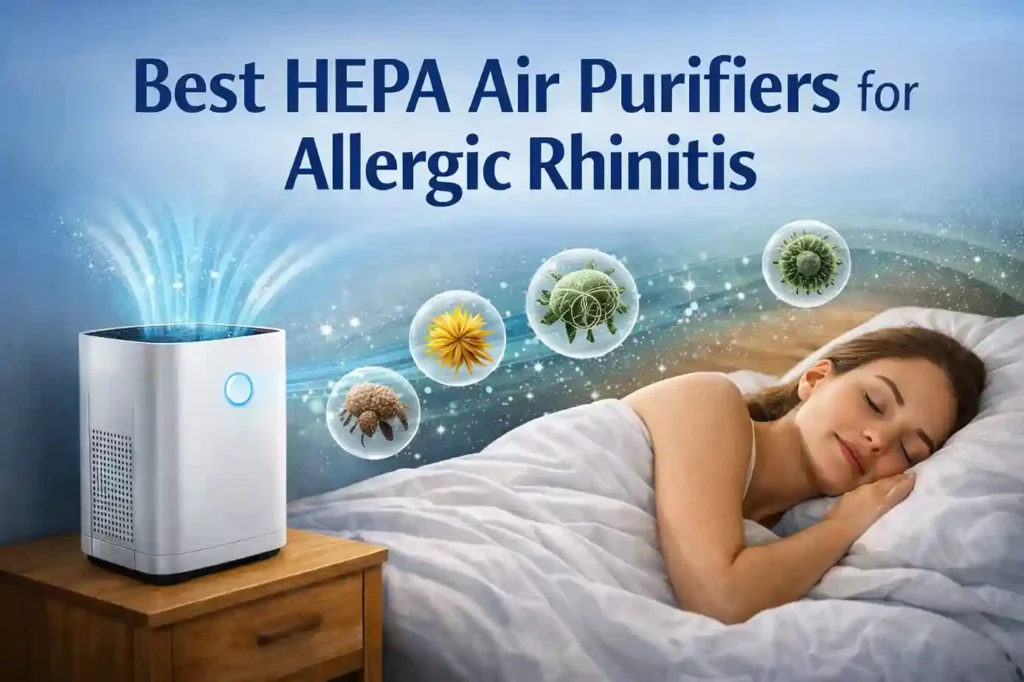
Allergic rhinitis (hay fever) affects millions of people worldwide and is a leading cause of chronic nasal congestion, sinus pressure, sneezing, post-nasal drip, and poor sleep quality. While medications remain a key part of treatment, indoor allergens such as dust mites, pet dander, and mold spores contribute significantly to ongoing symptoms. Among non-drug strategies, true HEPA air purifiers for allergies are among the most clinically studied and effective solutions for reducing airborne allergens, improving air quality, and providing relief for allergy symptoms indoors.
Do HEPA air purifiers help with allergic rhinitis?
Yes, HEPA air purifiers are highly effective for reducing airborne allergens like dust mites, pet dander, and pollen, which are common triggers for allergic rhinitis. True HEPA filters capture at least 99.97% of particles as small as 0.3 microns, helping to alleviate symptoms like nasal congestion, sinus pressure, and sneezing. Using a HEPA air purifier consistently, especially in bedrooms, can improve air quality, reduce allergen exposure, and provide relief from indoor allergies.
Do HEPA Air Purifiers Help Allergic Rhinitis?
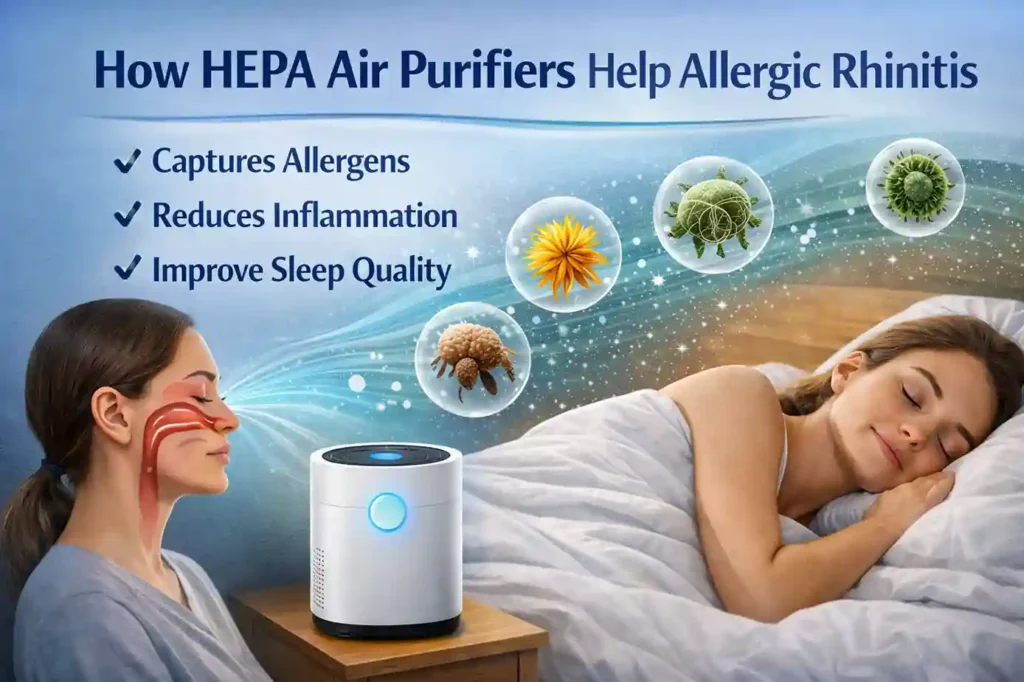
Yes. True HEPA air purifiers reduce airborne allergen exposure and can improve symptom control in people with perennial allergic rhinitis, particularly when indoor allergens are the primary triggers.
Controlled clinical studies show that HEPA filtration significantly reduces concentrations of:
- Pollen fragments
- Dust mite debris
- Pet dander allergens
- Mold spores
- Fine particulate matter (PM2.5)
Reduced airborne allergen exposure is associated with less nasal congestion, fewer sneezing episodes, and improved sleep quality, especially when purifiers are used consistently in bedrooms (Reisman et al., 1990).
📌 Important clinical clarification:
HEPA air purifiers do not cure allergic rhinitis. They lower daily allergen burden, which supports long-term symptom control alongside standard medical therapy.
A Clinically Common Scenario
Many patients with allergic rhinitis report a consistent indoor symptom pattern.
For example, a middle-aged adult with perennial allergic rhinitis experiences mild symptoms outdoors but develops worsening nasal congestion, sneezing, and post-nasal drip within hours of being at home—particularly at night. Allergy testing later confirms sensitization to dust mites and pet dander, both common indoor allergens.
Despite appropriate use of intranasal corticosteroids, nighttime symptoms remain disruptive. After adding a true HEPA air purifier in the bedroom and running it continuously overnight, the patient reports:
- Reduced nighttime nasal blockage
- Fewer early-morning sneezing episodes
- Improved sleep continuity
Symptoms do not resolve completely but become more stable and predictable, requiring fewer rescue medications.
📌 Clinical takeaway
This reflects a well-recognized clinical pattern—reducing cumulative indoor allergen exposure, especially during sleep, supports better symptom stability in allergic rhinitis (Bousquet et al., 2020).
How HEPA Air Purifiers Work in Allergic Rhinitis
Allergic rhinitis is driven by IgE-mediated inflammation of the nasal mucosa. Repeated inhalation of allergens sustains mucosal swelling, mucus overproduction, and nasal hyperreactivity.
True HEPA air purifiers help by:
- Removing ≥99.97% of particles ≥0.3 microns
- Reducing continuous airborne allergen recirculation
- Lowering nighttime allergen exposure
- Supporting gradual reduction in inflammatory load
International allergic rhinitis guidelines recognize environmental allergen reduction as an important adjunct to pharmacologic therapy (Bousquet et al., 2020).
What Makes a HEPA Air Purifier Effective for Allergic Rhinitis?
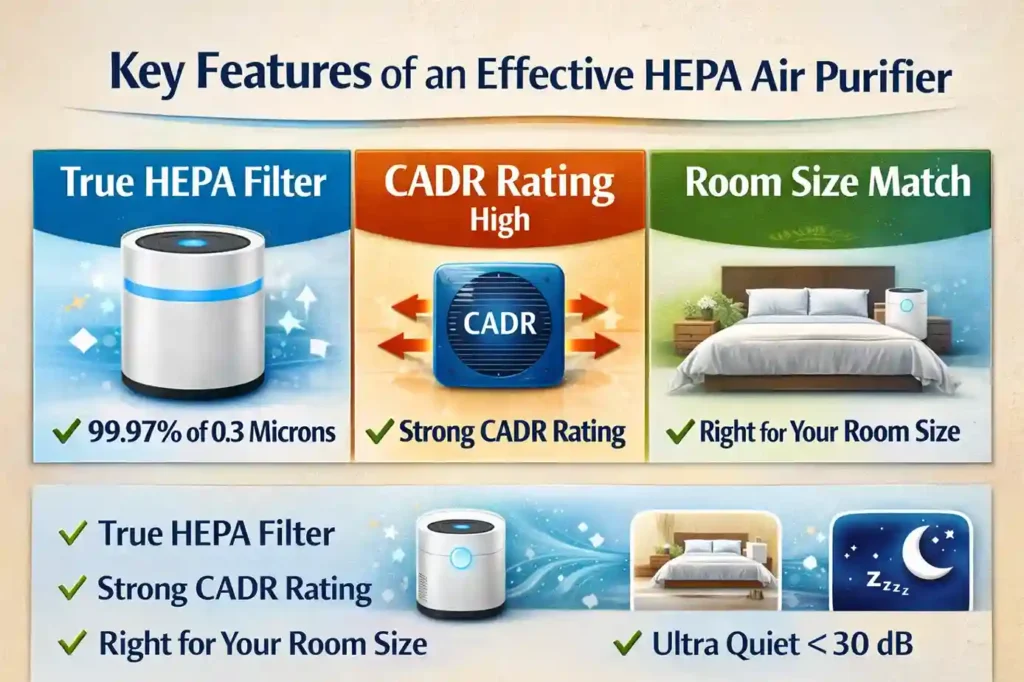
Not all air purifiers provide meaningful clinical benefit. The following features directly influence effectiveness.
1.True HEPA Filter (Essential Requirement)
Look for:
- “True HEPA” or HEPA H13
- Certified removal of ≥99.97% of particles ≥0.3 μm
Avoid:
- HEPA-like
- HEPA-style
- HEPA-type
These terms are marketing labels and do not meet medical HEPA standards.
2.CADR Rating (Clean Air Delivery Rate)
CADR reflects how quickly purified air is delivered into a room.
Recommended CADR for allergy relief:
- Bedroom: ≥200
- Living room: ≥300
- Large or open spaces: ≥400
Higher CADR is necessary for larger rooms to maintain allergen reduction.
3.Room Size Coverage (Accuracy Matters)
Always match purifier capacity to actual room size.
- Bedrooms (120–250 sq ft): Small-to-medium unit
- Living rooms (300–600 sq ft): Larger unit
Undersized purifiers provide minimal symptom benefit.
4.Quiet Operation for Nighttime Symptoms
Allergic rhinitis symptoms often worsen at night.
Prioritize:
- ≤30 dB on low mode
- Dedicated sleep or night mode
Excessive noise reduces adherence and long-term effectiveness.
5.Filter Replacement Cost (Long-Term Consideration)
Check before purchase:
- Filter lifespan (6–12 months ideal)
- Availability from manufacturer
- Annual replacement cost
Low upfront cost with expensive filters often increases long-term expense.
Best HEPA Air Purifiers by Use Case
Best HEPA Air Purifier for Allergic Rhinitis (Overall)
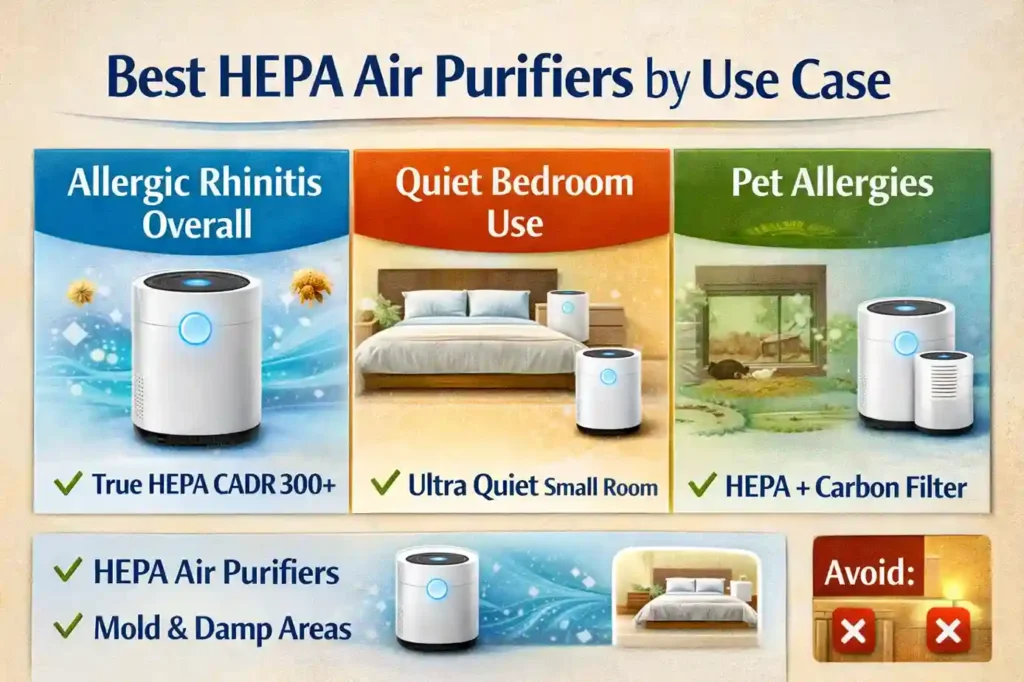
✔ True HEPA (H13)
✔ CADR ≥300
✔ Quiet sleep mode
✔ Reliable filter availability
Ideal placement: Bedroom first, living area second.
Best HEPA Air Purifier for Bedroom & Night Symptoms
Best for:
- Nighttime nasal congestion
- Post-nasal drip
- Sleep disruption
✔ Ultra-quiet operation
✔ Optimized for small-to-medium rooms
Place 6–10 feet from the bed with adequate airflow clearance.
Best HEPA Air Purifier for Pet Allergies
Pet dander is a potent indoor allergen.
✔ HEPA + activated carbon filter
✔ High airflow
✔ Washable pre-filter for hair
Air purifiers reduce airborne dander but do not replace pet allergen control measures.
Best HEPA Air Purifier for Mold-Prone Homes
Recommended for:
- Basements
- Bathrooms
- Poorly ventilated spaces
✔ HEPA + carbon filtration
✔ Pair with a dehumidifier to limit mold growth
Best Budget HEPA Air Purifier
✔ Certified True HEPA
✔ Basic controls
✔ Small room use
Avoid unbranded units without filtration certification.
Where to Place a HEPA Air Purifier for Maximum Benefit
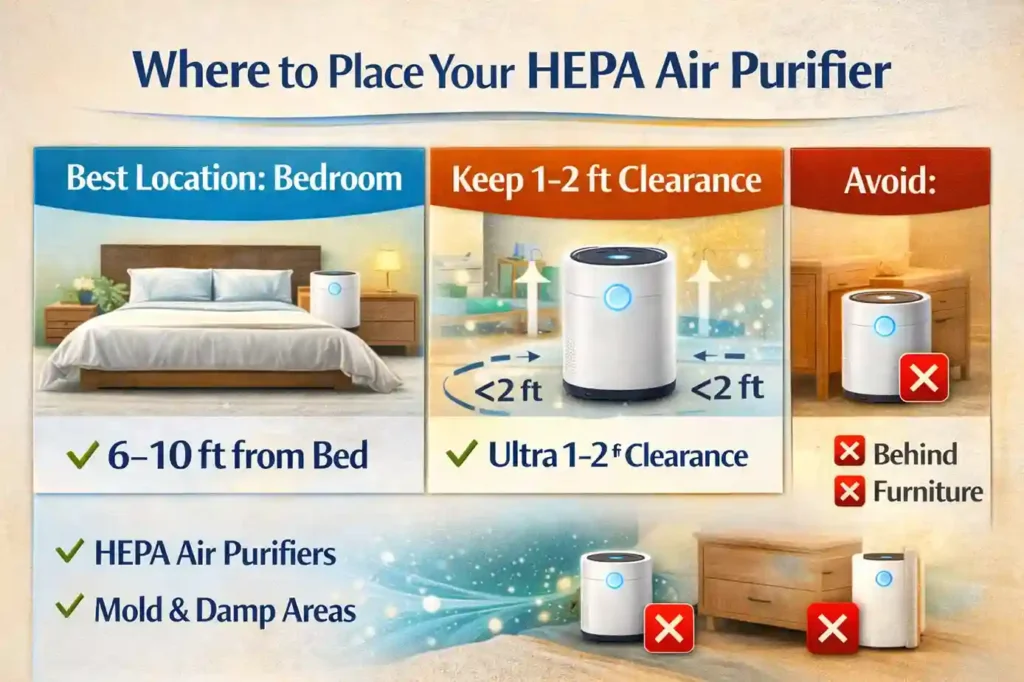
Best locations:
- Bedroom (highest priority)
- Living room
- Near allergy trigger sources (pets, windows)
Avoid corners, furniture obstruction, and wall-flush placement.
Maintain 1–2 feet of clearance around the unit.
Common Mistakes That Reduce Effectiveness
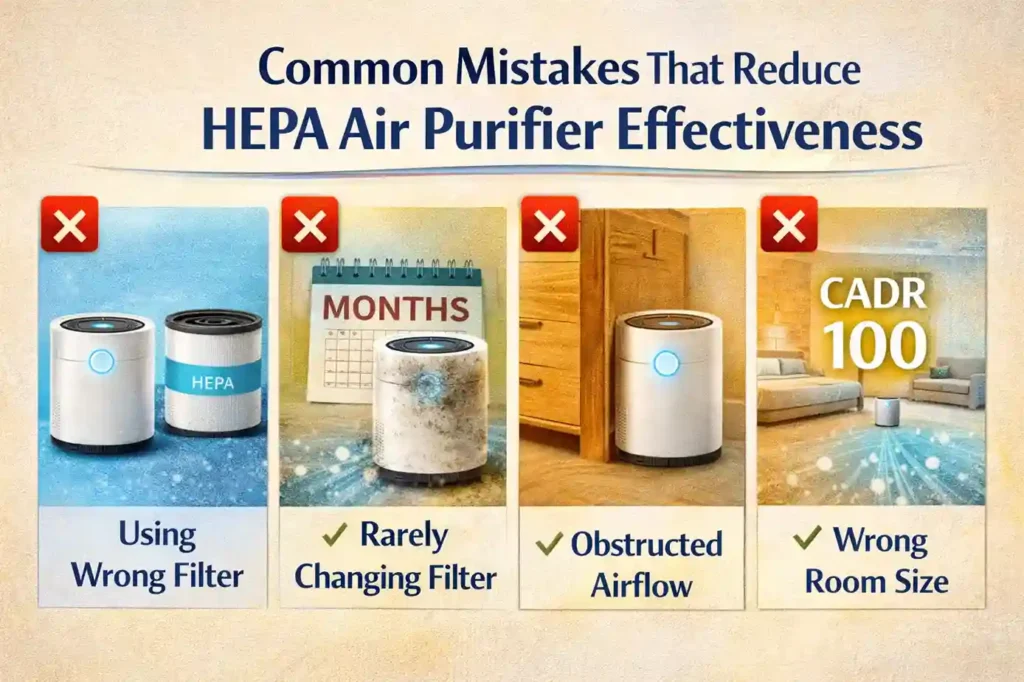
- Buying HEPA-like filters
- Running purifier intermittently
- Choosing incorrect room size
- Delaying filter replacement
- Expecting a cure rather than support
Consistency is more important than brand.
HEPA Air Purifiers vs Other Allergy Interventions
Method | Relative Effectiveness |
HEPA air purifier | ⭐⭐⭐⭐ |
⭐⭐⭐⭐ | |
⭐⭐⭐⭐ | |
Pharmacologic therapy | ⭐⭐⭐⭐⭐ |
Ionizers alone | ⭐⭐ |
Essential oil diffusers | ❌ Not recommended |
Guidelines emphasize combination strategies rather than single interventions (Klimek et al., 2024).
Are HEPA Air Purifiers Safe?
Medical-grade HEPA air purifiers are safe for:
- Children
- Pregnant individuals
- Asthma patients
Avoid ozone-producing ionizers and fragrance-based systems.
Who Should Consider a HEPA Air Purifier?
- Perennial allergic rhinitis
- Dust mite or pet allergy
- Nighttime nasal congestion
- Poor indoor ventilation
- Asthma with allergic triggers
- Urban air pollution exposure
Key Takeaways
- HEPA purifiers reduce allergen exposure, not allergies
- True HEPA + correct CADR delivers real benefit
- Bedroom placement offers maximum symptom relief
- Daily, consistent use is essential
- One effective unit outperforms multiple weak devices
Medical Review Disclaimer
This article is for informational and educational purposes only and does not constitute medical advice. The content is written by a qualified healthcare professional and medically reviewed for accuracy. However, it should not be used as a substitute for professional medical diagnosis, treatment, or advice. Always consult a licensed healthcare provider regarding any medical condition or health concern.
Frequently Asked Questions (FAQs)
1. Do HEPA air purifiers really help allergic rhinitis?
Yes. True HEPA air purifiers reduce airborne allergens like dust mite debris, pet dander, and pollen fragments.
2. How long does it take to notice improvement after using a HEPA purifier?
Most people notice symptom improvement within 1–2 weeks of consistent daily use.
3. Should I run my HEPA air purifier all day or only at night?
Continuous low-speed use is ideal, especially during sleep when symptoms often worsen.
4. Can a HEPA air purifier replace allergy medication?
No. Air purifiers support treatment by lowering allergen exposure but do not replace medications.
5. Do HEPA air purifiers remove dust mites completely?
They remove airborne dust mite particles, not mites living in bedding or carpets.
6. Are HEPA air purifiers safe for children and asthma patients?
Yes. Medical-grade HEPA purifiers are safe when they do not produce ozone.
7. Where should I place a HEPA air purifier for best results?
Place it in the bedroom first, at least 6–10 feet from the bed, with proper airflow clearance.
References
Bousquet, J., Klimek, L., Togias, A., Zuberbier, T., Agache, I., Ansotegui, I. J., … Wallace, D. V. (2020). Next-generation allergic rhinitis and its impact on asthma (ARIA). Journal of Allergy and Clinical Immunology, 145(3), 895–909.
Reisman, R. E., Mauriello, P. M., Davis, G. B., Georgitis, J. W., & DeMasi, J. M. (1990). A double-blind study of the effectiveness of a HEPA air filter in allergic rhinitis. Journal of Allergy and Clinical Immunology, 85(6), 1050–1057.
Klimek, L., Bousquet, J., Pfaar, O., Bachert, C., Hellings, P. W., & Agache, I. (2024). Current management of allergic rhinitis. Journal of Allergy and Clinical Immunology: In Practice, 12(2), 215–229.