

Can allergies cause brain fog and fatigue
Written by: Dr.Muhammad Ihsan Ullah, PhD
Medically reviewed by: Dr. Jamal ud Din Khan, FCPS

Have you ever noticed that during allergy season, your brain just doesn’t feel the same? You sit down to work, but your focus drifts, and your thinking feels slower. Even simple decisions take more effort. This is what many people describe as allergy brain fog — a frustrating mix of mental fatigue, poor concentration, and reduced cognitive clarity. If you suffer from seasonal allergies or allergic rhinitis, this cognitive dysfunction is all too familiar. Allergy-related brain fog can make it harder to stay productive, think clearly, or concentrate on tasks, especially when allergic reactions trigger inflammation that impacts brain function.
Can Allergies Cause Brain Fog?
Yes, allergies can cause brain fog. During allergy flare-ups, your immune system releases inflammatory chemicals like histamine, which can impair cognitive function. This leads to symptoms such as mental fatigue, difficulty concentrating, and slowed thinking. Allergy brain fog is especially common in people with seasonal allergies or allergic rhinitis. It may worsen during pollen season and can be aggravated by poor sleep or sinus congestion. While it doesn’t directly cause fever, it can make everyday tasks feel mentally exhausting.
Can Allergies Cause Fatigue Too?
Yes, allergies can cause fatigue. Allergy fatigue can happen when your immune system stays activated, your nose remains congested, your sleep becomes disturbed, or your body spends extra energy dealing with inflammation.
Allergy-related fatigue may feel like:
- low energy
- heavy eyes
- poor motivation
- daytime sleepiness
- body heaviness
- reduced productivity
- needing more rest than usual
This fatigue is common in allergic rhinitis because nasal congestion, post-nasal drip, itchy eyes, sneezing, and poor sleep can drain the body over time. Even if you sleep for many hours, the sleep may not feel refreshing if congestion keeps disturbing your breathing or waking you up.
Allergy fatigue is more likely during pollen season, dust mite exposure, mold exposure, pet allergy flares, or when symptoms are not well controlled.
Why Allergy Brain Fog Happens
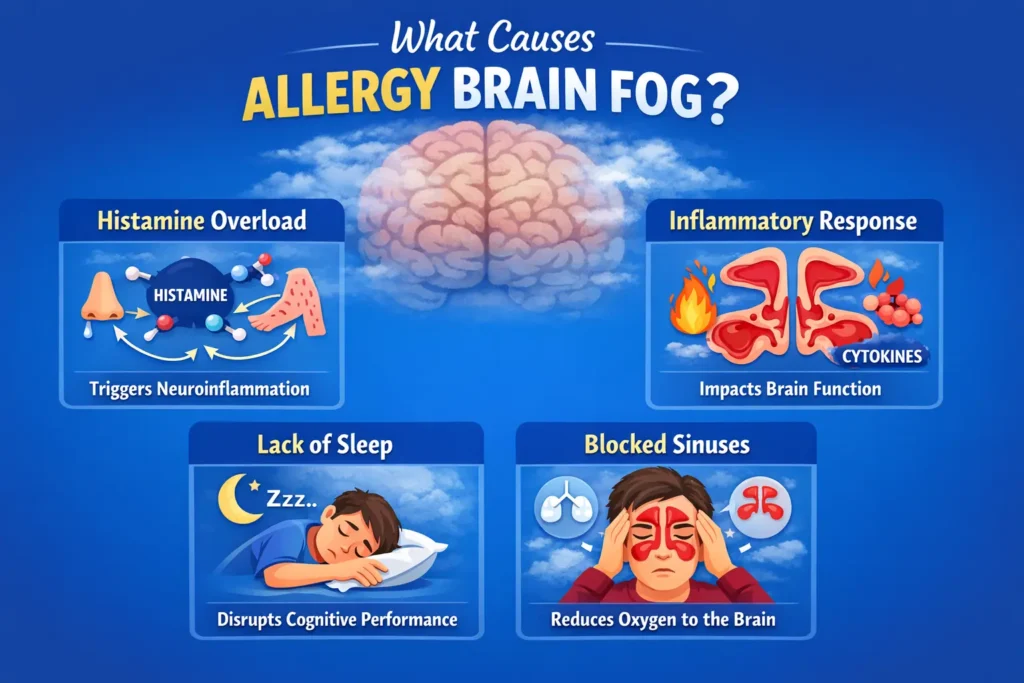
To truly outperform existing content, it’s essential to understand — and clearly explain — the underlying mechanisms.
1. Neuro Inflammation and Immune Activation
Allergic reactions trigger a cascade of inflammatory signaling.
This includes:
- Cytokines (IL-1, IL-6, TNF-α)
- Prostaglandins
- Leukotrienes
These mediators can influence the brain through:
- Blood-brain barrier signaling
- Neuroimmune communication pathways
- Microglial activation
The result is neuroinflammation, which is known to impair:
- Synaptic signaling
- Cognitive processing
- Memory formation
👉 Chronic inflammatory signaling is strongly associated with cognitive impairment and reduced mental performance (Saramak, K., et al. 2025).
2. Histamine Dysregulation in the Brain
Histamine plays a dual role:
- Peripheral mediator of allergy
- Central neurotransmitter in the brain
It regulates:
- Wakefulness
- Attention
- Learning
- Executive function
During allergic reactions:
- Excess histamine alters neuronal signaling
- Disrupts cortical processing
- Impairs attention networks
👉 Histamine pathways are directly involved in cognitive control and attention regulation (Ferretti, A., et al. 2023).
3. Cognitive Performance Declines During Allergen Exposure
One of the most important — and clinically relevant — findings:
👉 Cognitive impairment is not subjective — it is measurable.
During allergy flare-ups:
- Reaction time increases
- Processing speed decreases
- Accuracy declines
👉 Experimental studies show significant reductions in cognitive performance during seasonal allergic rhinitis episodes (Marshall, P. S., et al. 2000).
This explains why patients often report:
👉 “I feel mentally slow when my allergies are bad.”
4. Sleep Disruption as a Major Amplifier
Sleep plays a critical role in brain function.
Allergy symptoms such as:
- Nasal congestion
- Airway obstruction
- Nocturnal symptoms
Lead to:
- Fragmented sleep
- Reduced REM sleep
- Daytime fatigue
This creates a compounding effect:
👉 Poor sleep → worsened cognition → increased brain fog
👉 Sleep disturbance in allergic patients is strongly associated with fatigue and cognitive impairment (Tamm, S., et al. 2018).
5. Medication-Induced Cognitive Effects
A critical — and often overlooked — contributor.
First-generation antihistamines:
- Cross the blood-brain barrier
- Block central H1 receptors
- Impair acetylcholine signaling
This leads to:
- Sedation
- Reduced alertness
- Memory impairment
👉 These medications significantly reduce attention and cognitive performance (Kay, G. G., et al. 2000).
Can Antihistamines Cause Brain Fog?
Yes, some antihistamines can cause brain fog, especially older sedating antihistamines. These medicines can cross into the brain more easily and may cause drowsiness, slower reaction time, poor concentration, and memory problems.
Sedating antihistamines may make you feel:
- sleepy
- mentally slow
- less alert
- foggy
- forgetful
- less focused during work or study
Second-generation antihistamines such as loratadine, fexofenadine, and cetirizine are generally less sedating than older antihistamines, but some people can still feel tired or foggy, especially with cetirizine or higher sensitivity.
If allergy medicine makes brain fog worse, do not simply stop all treatment if symptoms are severe. Ask a clinician or pharmacist about a less sedating option, nasal treatment, saline rinse, or better timing of medication.
6. Sinus Congestion and “Head Pressure” Effect
Severe nasal congestion and sinus inflammation can create:
- Pressure sensation in the head
- Reduced airflow
- Perceived “heaviness”
This contributes to:
- Mental sluggishness
- Reduced alertness
- Difficulty focusing
Even though oxygen levels remain normal, the subjective sensation of blocked breathing affects cognition.
Can Sinus Allergies Cause Brain Fog?
Yes, sinus and nasal allergy symptoms can contribute to brain fog. When allergic rhinitis causes congestion, sinus pressure, post-nasal drip, and head heaviness, it can make thinking feel slower and more difficult.
This does not usually mean the brain is damaged. More often, the problem is a combination of:
- nasal inflammation
- blocked airflow sensation
- sinus pressure
- poor sleep
- fatigue
- distraction from constant symptoms
- medication side effects
People often describe sinus-related brain fog as a heavy, cloudy, pressure-like feeling in the head. It may be worse in the morning, during pollen season, after dust exposure, or when congestion is untreated.
If sinus pressure comes with fever, severe facial pain, thick discolored mucus, worsening symptoms after initial improvement, or symptoms lasting more than 10 days, a sinus infection or another condition may need medical evaluation.
What Allergy Brain Fog Feels Like
Recognizing symptoms is key.
Cognitive Symptoms
- Difficulty concentrating
- Slowed thinking
- Forgetfulness
- Trouble multitasking
- Reduced productivity
Mental and Emotional Effects
- Irritability
- Low motivation
- Mental exhaustion
- Reduced clarity
Physical Overlap
- Nasal congestion
- Sinus pressure
- Head heaviness
- Fatigue
👉 Patients often describe it as:
“My brain is awake, but not working at full capacity.”
Allergy Fatigue vs Brain Fog: What’s the Difference?
Allergy fatigue and allergy brain fog often happen together, but they are not exactly the same.
Allergy fatigue mainly affects energy. You may feel tired, sleepy, weak, or physically drained.
Allergy brain fog mainly affects thinking. You may feel mentally slow, forgetful, unfocused, or less sharp than usual.
A simple difference:
- Fatigue = “I feel exhausted.”
- Brain fog = “I cannot think clearly.”
- Both together = “I feel tired and mentally slow.”
Allergies can cause both because inflammation, histamine release, congestion, poor sleep, and sedating medicines can affect energy and concentration at the same time.
If fatigue is severe, persistent, or not linked with allergy flares, other causes such as anemia, thyroid problems, vitamin deficiency, depression, sleep apnea, chronic infection, or medication side effects should also be considered.
Seasonal Allergies and Brain Fog During Pollen Season
Seasonal allergies can cause brain fog during pollen season, especially when pollen exposure is high and symptoms are not controlled. Tree pollen, grass pollen, weed pollen, and ragweed can trigger sneezing, congestion, itchy eyes, post-nasal drip, and sleep disruption.
During pollen season, brain fog may feel worse when:
- pollen counts are high
- you spend time outdoors
- windows are open
- pollen gets on hair, clothes, or bedding
- congestion affects sleep
- eye itching and sneezing interrupt focus
- medication causes drowsiness
Many people notice that their concentration improves when pollen exposure drops or allergy treatment becomes more consistent. Helpful pollen-season steps include checking pollen forecasts, keeping windows closed on high-pollen days, showering after outdoor exposure, changing clothes before sitting on the bed, washing hair before sleep, and using allergy treatment as directed before symptoms become severe.
How to Fix Allergy Brain Fog Fast

Now let’s focus on what matters most:
👉 Rapid, evidence-based strategies to restore mental clarity
1.Reduce Allergen Exposure Immediately
This is the fastest intervention.
- Monitor pollen counts
- Stay indoors during peaks
- Use HEPA filtration
- Shower after outdoor exposure
Even modest reduction can improve symptoms quickly.
2.Use Non-Drowsy Antihistamines
Preferred options:
- Loratadine
- Cetirizine
- Fexofenadine
These:
- Block histamine
- Maintain alertness
- Preserve cognitive function
3.Treat Nasal Inflammation Directly
Use:
- Intranasal corticosteroids
- Saline irrigation
Benefits:
- Reduced inflammation
- Improved airflow
- Better sleep
4.Optimize Sleep Quality
Critical for recovery.
- Treat congestion before sleep
- Elevate head
- Keep bedroom allergen-free
Even short-term sleep improvement can enhance cognition.
5.Maintain Hydration and Electrolyte Balance
Hydration supports:
- Cerebral blood flow
- Cognitive performance
- Energy levels
6.Avoid Cognitive Suppressors
Avoid:
- Sedating antihistamines
- Alcohol
- Sleep deprivation
How to Get Rid of Allergy Brain Fog: Daily Action Plan
To get rid of allergy brain fog, focus on controlling the allergy trigger, improving sleep, clearing nasal congestion, and avoiding medicines or habits that worsen mental sluggishness.
Morning steps:
- Check pollen levels if you have seasonal allergies.
- Use saline spray or rinse if your nose feels blocked.
- Drink water to support hydration and mucus clearance.
- Use prescribed allergy treatment consistently.
- Avoid sedating medicines before work, school, or driving unless advised.
Daytime steps:
- Keep windows closed during high-pollen periods.
- Wear sunglasses outdoors to reduce eye irritation.
- Avoid smoke, perfume, incense, and strong cleaning smells.
- Use a HEPA air purifier if indoor allergens are a major trigger.
- Take short breaks if allergy symptoms are affecting focus.
Evening steps:
- Shower after outdoor exposure.
- Change clothes before sitting or lying on the bed.
- Keep pets away from pillows and bedding if pet dander triggers symptoms.
- Use bedroom dust control if symptoms are worse in the morning.
- Treat nighttime congestion so sleep quality improves.
Brain fog usually improves when the allergy flare, congestion, poor sleep, and medication drowsiness are controlled together.
Best Long-Term Solutions for Persistent Allergy Brain Fog
1. Identify and Control Triggers
Testing options:
- Skin prick testing
- Serum-specific IgE
2. Optimize Pharmacological Management
May include:
- Antihistamines
- Nasal corticosteroids
- Leukotriene receptor antagonists
3. Consider Immunotherapy
For long-term control:
- Subcutaneous immunotherapy (SCIT)
- Sublingual immunotherapy (SLIT)
These modify immune response at the root level.
4. Address Chronic Neuroinflammation
Emerging evidence suggests:
👉 Persistent allergic inflammation may influence long-term neurological pathways (Saramak, K., et al. 2025).
This highlights the importance of early intervention.
5. Support Brain Health Holistically
- Anti-inflammatory diet
- Regular sleep
- Stress reduction
- Physical activity
How Long Does Allergy Brain Fog Last?
It varies:
- Acute exposure → hours to days
- Chronic exposure → persistent
Symptoms often persist as long as allergen exposure and inflammation continue.
When Brain Fog May Not Be From Allergies
Brain fog during allergy season is common, but not every case of brain fog is caused by allergies. Other health problems can also affect focus, memory, energy, and mental clarity.
Brain fog may need medical evaluation if it is:
- severe
- sudden
- worsening
- unrelated to allergy exposure
- lasting for weeks despite allergy control
- associated with confusion
- associated with fainting, weakness, or neurological symptoms
- accompanied by severe headache
- linked with fever or infection symptoms
- affecting daily safety, driving, school, or work
Other possible causes include poor sleep, stress, anxiety, depression, anemia, thyroid disease, vitamin B12 deficiency, vitamin D deficiency, dehydration, medication side effects, sleep apnea, chronic infection, long COVID, migraine, or other medical conditions.
If brain fog does not follow your usual allergy pattern, it should not be blamed on allergies automatically.
When to Seek Medical Advice
Consult a doctor if:
- Brain fog is severe
- Symptoms persist despite treatment
- You experience:
- Memory problems
- Confusion
- Extreme fatigue
Medical Disclaimer:
This content is for educational purposes only and is not a substitute for professional medical advice, diagnosis, or treatment. Always consult a qualified healthcare professional for personal medical concerns or persistent symptoms.
Frequently Asked Questions (FAQs)
1. Can allergies really cause brain fog?
Yes. Allergies can trigger inflammation, histamine release, poor sleep, and congestion, all of which may reduce focus and mental clarity.
2. What does allergy brain fog feel like?
It often feels like slow thinking, trouble concentrating, forgetfulness, mental fatigue, and a heavy or “cloudy” feeling in the head.
3. How can I fix allergy brain fog fast?
The fastest steps are reducing allergen exposure, using a non-drowsy antihistamine, clearing nasal congestion, staying hydrated, and improving sleep quality.
4. Can allergy medicine make brain fog worse?
Yes. Some older, sedating antihistamines can cause drowsiness and worsen mental sluggishness.
5. How long does allergy brain fog last?
It can last for a few hours to several days, depending on how long allergen exposure and inflammation continue.
References
- Gao, Z., et al. (2021). Changes in resting-state brain activity in allergic rhinitis. Frontiers in Neuroscience. https://doi.org/10.3389/fnins.2021.687879
- Papapostolou, G., et al. (2020). Cognitive dysfunction during pollen season in allergic children. Pediatric Allergy and Immunology. https://doi.org/10.1111/pai.13166
- Saramak, K., et al. (2025). Allergic diseases and neurological disorders: A systematic review. Neurology International. https://doi.org/10.3390/neurolint5020018
- Ferretti, A., et al. (2023). Histamine and neurological pathways: A mechanistic link. Journal of Clinical Medicine. https://doi.org/10.3390/jcm12103566
- Marshall, P. S., et al. (2000). Effects of seasonal allergic rhinitis on cognitive function. Annals of Allergy, Asthma & Immunology. https://doi.org/10.1016/S1081-1206(10)62443-7
- Tamm, S., et al. (2018). Allergy, fatigue, sleep disturbance, and cognition. Brain, Behavior, and Immunity. https://doi.org/10.1016/j.bbi.2017.10.024
- Kay, G. G., et al. (2000). Antihistamines and cognitive performance. Journal of Allergy and Clinical Immunology. https://doi.org/10.1067/mai.2000.106561