

Can Allergies Cause a Sinus Infection? Allergy vs Sinus Infection
Written by: Dr.Muhammad Ihsan Ullah, PhD
Medically reviewed by: Dr Ali Raza Dogar ,MBBS,ENT
Last updated on May 29,2026
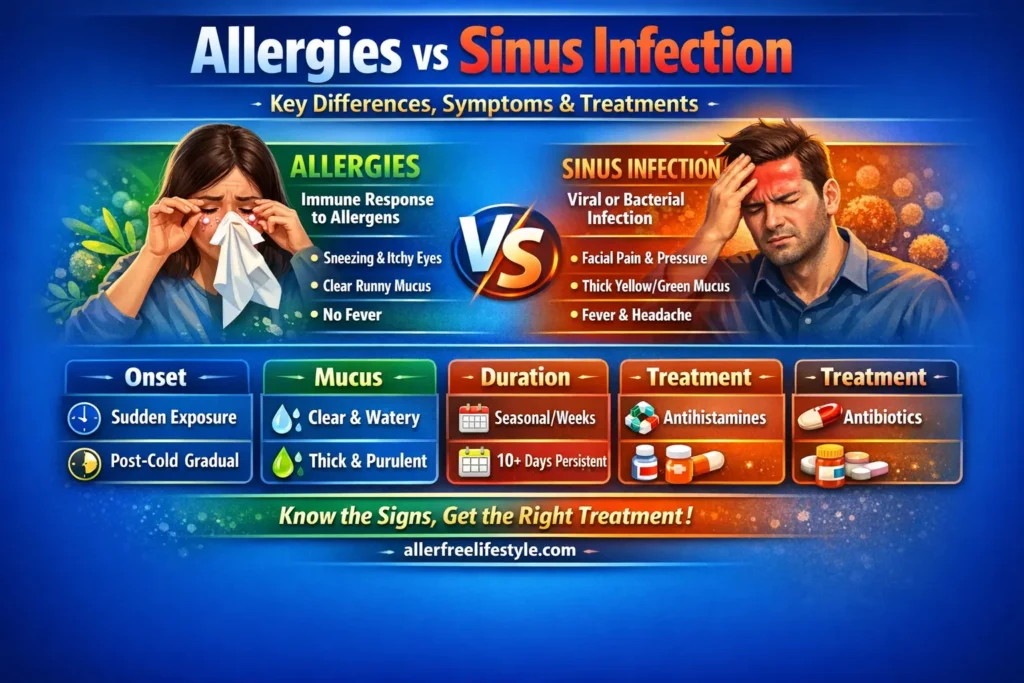
If you’re experiencing nasal congestion, sinus pressure, or a blocked nose, you might be asking yourself: Is it allergies or a sinus infection? Both of these conditions share similar sinus symptoms, which often leads to confusion. However, while allergic rhinitis (commonly known as allergies) and sinus infections (or sinusitis) may appear alike, they have distinct causes. Allergies are triggered by an overreaction of the immune system to harmless substances like pollen or dust mites, whereas a sinus infection typically occurs due to a bacterial or viral infection in the sinuses. Understanding the difference between allergy symptoms and a sinus infection is key to determining the right treatment and preventing unnecessary complications, such as misdiagnosis or incorrect medications.
What Is the Difference Between Allergies and a Sinus Infection?
A blocked nose, sinus pressure, constant congestion—these symptoms overlap so much that even experienced clinicians sometimes need careful evaluation.
But here’s the critical truth:
👉 Allergies and sinus infections are fundamentally different diseases with different causes, mechanisms, and treatments.
- Allergies are an immune system overreaction to harmless substances.
- Sinus infection (sinusitis) is an infection of the sinus cavities caused by viruses, bacteria, or rarely fungi.
In Allergic rhinitis, the Immune system mistakenly identifies harmless particles as threats. This triggers release of Histamine, leading to classic allergy symptoms.
In contrast, Sinusitis involves:
- Pathogen invasion
- Mucosal swelling
- Blocked sinus drainage
- Accumulation of infected mucus
👉 Clinical Bottom Line:
- Allergies = immune-mediated inflammation
- Sinus infection = infection-driven inflammation
Global epidemiological data shows allergic rhinitis affects up to 30–40% of the population, making it one of the most common chronic conditions (Voelker, R. 2024).
Why This Confusion Happens
Patients frequently ask the clinicians about:
- “sinus infection or allergies how to tell”
- “difference between sinus infection and allergies”
The confusion occurs because both conditions share:
- Nasal congestion
- Postnasal drip
- Headache
- Fatigue
However, misdiagnosis can lead to:
- ❌ Unnecessary Antibiotics
- ❌ Persistent symptoms
- ❌ Increased healthcare costs
👉 From a pharmacological perspective, this distinction is critical.
Allergies vs Sinus Infection Symptoms (Side-by-Side Comparison)
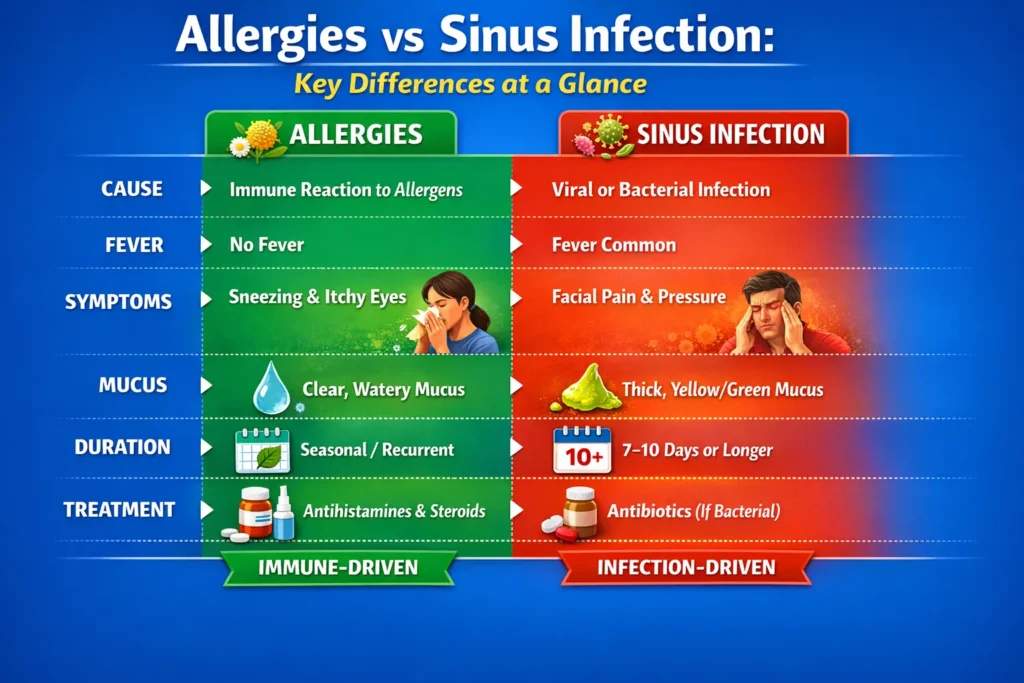
Symptom Comparison Table
Symptom | Allergies | Sinus Infection |
Nasal congestion | ✔ | ✔ |
Sneezing | ✔ | ❌ |
Itchy eyes | ✔ | ❌ |
Facial pain | ❌ | ✔ |
Thick yellow/green mucus | ❌ | ✔ |
Fever | ❌ | ✔ |
Postnasal drip | ✔ | ✔ |
Tooth pain | ❌ | ✔ |
Deep Clinical Interpretation of Symptoms
Let’s go beyond surface-level comparison:
1. Itching (Highly Specific for Allergy)
- Caused by histamine stimulation of sensory nerves
- Rare in infections
2. Facial Pain and Pressure
- Caused by sinus blockage and pressure buildup
- Strong indicator of infection
3. Nasal Discharge Quality
- Clear → allergy
- Thick/purulent → infection
4. Systemic Symptoms
- Fever and malaise → infection
- Absent in allergies
These distinctions are supported by modern clinical frameworks (Yırgın, K., et al. 2025).
How to Tell If It’s Allergies or a Sinus Infection
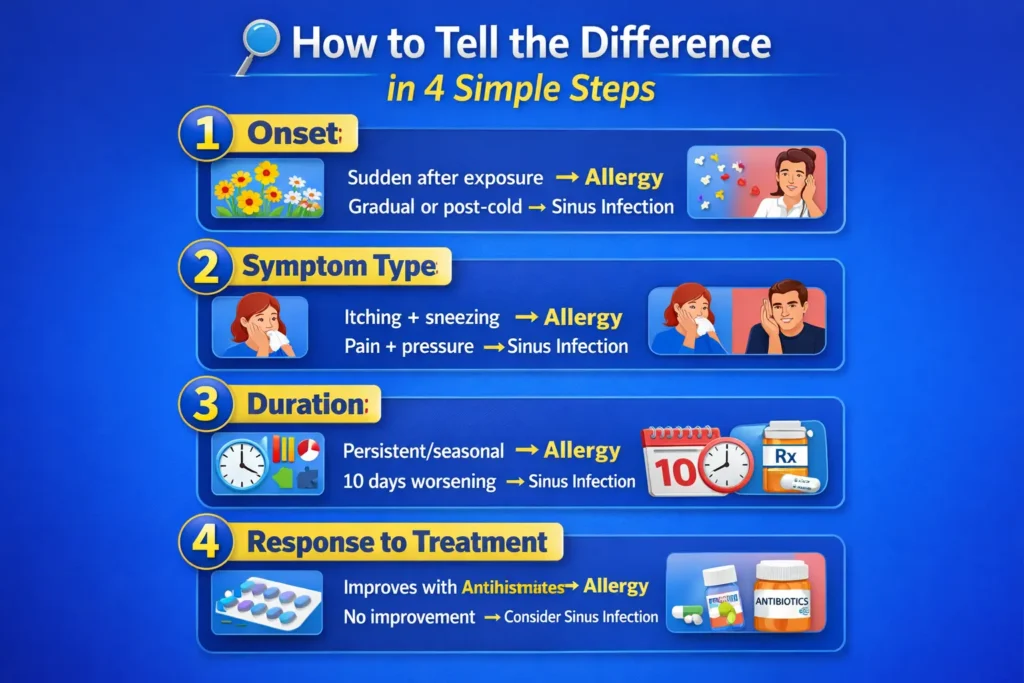
Step-by-Step Diagnostic Thinking (Clinical Framework)
Step 1: Onset
- Sudden after exposure → allergy
- Gradual or post-cold → infection
Step 2: Symptom Type
- Itching + sneezing → allergy
- Pain + pressure → infection
Step 3: Duration
- Persistent/seasonal → allergy
- 10 days worsening → infection
Step 4: Response to Treatment
- Improves with Antihistamines → allergy
No improvement → consider infection
Duration: How Long Do Allergies vs Sinus Infections Last?
Allergies
- Last as long as exposure continues
- May persist for weeks/months
- Often recurrent
Sinus Infection
- Viral: 7–10 days
- Bacterial: >10 days or worsening
👉 Duration is one of the most reliable clinical differentiators.
Key Differences Between Allergies and Sinus Infection (Quick Summary)
- Cause: immune vs infection
- Fever: absent vs present
- Itching: common vs rare
- Pain: minimal vs severe
- Mucus: clear vs thick
- Duration: persistent vs limited
Mechanism Difference: Allergy vs Infection (Advanced Clinical Insight)
Allergy Mechanism (Immunopathology)
- Allergen exposure
- IgE antibody activation
- Mast cell degranulation
- Histamine release
- Cytokine cascade
👉 Leads to:
- Sneezing
- Itching
- Vasodilation
Latest ARIA guidelines emphasize this pathway (Sousa-Pinto, B., et al. 2025).
Sinus Infection Mechanism (Pathogenesis)
- Viral infection damages mucosa
- Mucociliary clearance impaired
- Sinus ostia blocked
- Bacterial overgrowth occurs
👉 Leads to:
- Pressure
- Pain
- Infection persistence
Treatment Differences: Allergies vs Sinus Infection
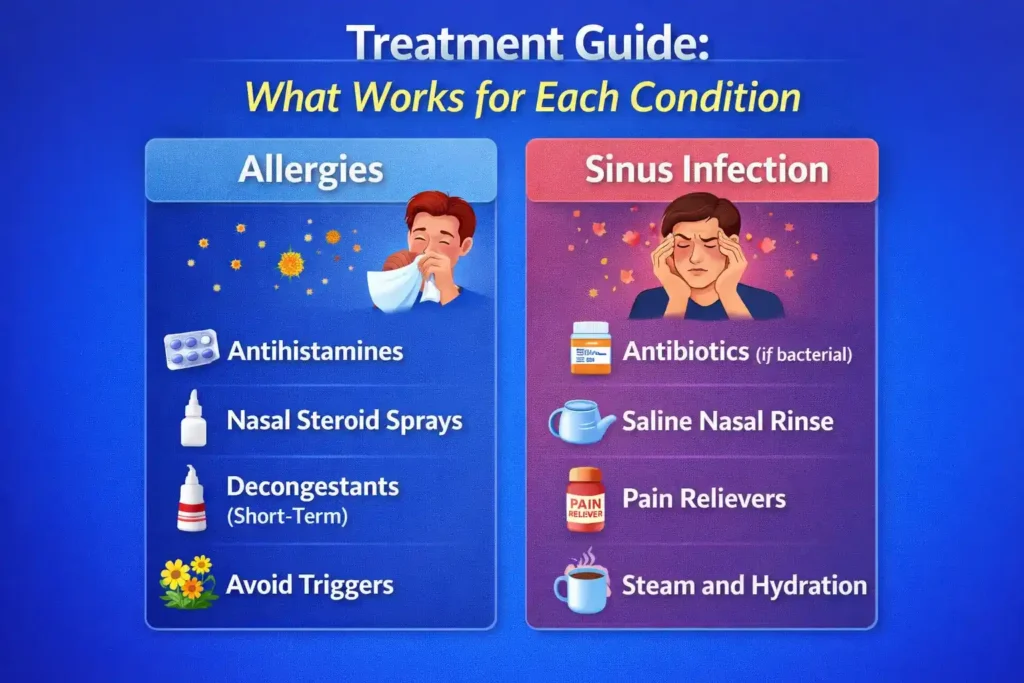
What Works for Allergies Only
- Antihistamines
- Corticosteroids
- Leukotriene receptor antagonists
- Immunotherapy
📌 Intranasal corticosteroids are first-line therapy (Sousa-Pinto, B., et al. 2025).
What Works for Sinus Infection Only
- Antibiotics (only if bacterial)
- Analgesics
- Saline irrigation
👉 Most cases are viral and self-limiting.
Treatments That May Overlap
- Decongestants
- Hydration
- Steam inhalation
Pharmacological Deep Dive
Antihistamines
- Block H1 receptors
- Effective only in allergies
Corticosteroids
- Suppress inflammatory cytokines
- Effective in both conditions
Antibiotics
- Target bacterial pathogens
- Ineffective in viral infections and allergies
Decongestants
- Vasoconstriction of nasal vessels
Provide temporary relief
Can allergies cause a sinus infection?
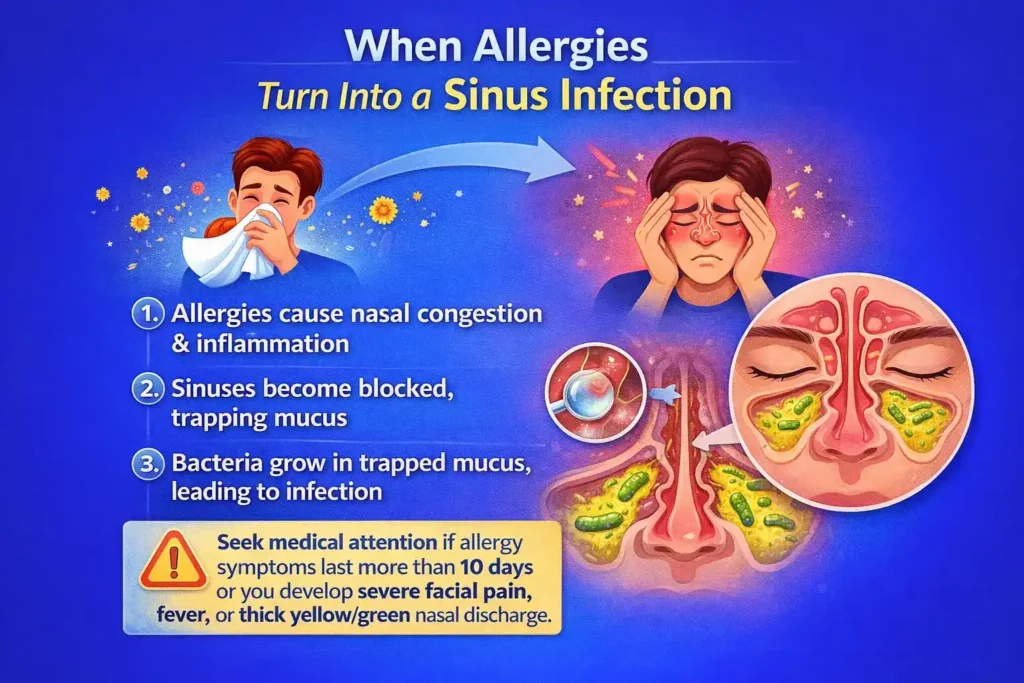
Yes, untreated allergies can lead to a sinus infection. When allergens trigger inflammation in the nasal passages, it can block sinus drainage, causing mucus to build up. This trapped mucus can become infected, leading to sinusitis. Chronic allergic rhinitis increases the risk of developing sinus infections, especially if nasal congestion persists for an extended period.
Risk Factors That Increase Diagnostic Confusion
- Chronic allergies
- Smoking
- Air pollution
- Structural nasal abnormalities
- Weak immune response
Complications of Misdiagnosis
If Allergies Are Misdiagnosed as Sinus Infection
- Unnecessary antibiotics
- Drug resistance
- Side effects
If Sinus Infection Is Missed
- Chronic sinusitis
- Orbital complications
Intracranial spread (rare but serious)
When to See a Doctor
Seek medical care if:
- Symptoms persist >10 days
- High fever
- Severe facial pain
- Vision changes
- Recurrent infections
Quick Self-Check: Allergy or Sinus Infection?
✔ Sneezing + itching → allergy
✔ Pain + fever → sinus infection
✔ Trigger exposure → allergy
✔ Worsening symptoms → infection
Emerging Trends (2025–2026)
- Biologic therapies for severe allergies
- Precision medicine approaches
- Reduced antibiotic prescribing
- Increased focus on evidence-based care
Recent updates emphasize targeted therapy (Sousa-Pinto, B., et al. 2025).
Clinical Pearls for Better Diagnosis
- Itching is the strongest indicator of allergy
- Fever strongly suggests infection
- Duration >10 days → suspect bacterial sinusitis
- Antibiotics are not first-line in most sinus infections
- Antihistamines do not treat infections
Expert-Level Diagnostic Flow (Quick Guide)
If:
- Itching + sneezing + no fever → Allergy
If:
- Pain + fever + thick mucus → Sinus infection
If unsure:
- Monitor duration + response to treatment
Conclusion
Understanding the difference between allergies and sinus infections is essential for:
- Accurate diagnosis
- Effective treatment
- Avoiding complications
👉 Final takeaway:
- Allergies = immune-driven
- Sinus infection = infection-driven
With proper evaluation and evidence-based management, both conditions can be effectively controlled.
Medical Disclaimer
This content is provided for educational and informational purposes only and is not intended as medical advice, diagnosis, or treatment. Always consult a qualified healthcare professional for any medical concerns or before starting or changing any treatment. Do not disregard professional medical advice or delay seeking care based on information provided here.
Frequently Asked Questions (FAQs)
1. How can I tell if I have allergies or a sinus infection?
If you have itching, sneezing, and watery eyes without fever, it’s likely allergies.
If you have facial pain, thick nasal discharge, and fever, it’s more likely a sinus infection.
2. What is the main difference between allergies and a sinus infection?
Allergies are caused by an immune reaction to allergens, while a sinus infection is caused by a viral or bacterial infection in the sinuses.
3. Do allergies cause sinus infections?
Yes, untreated allergies can block sinus drainage and increase the risk of developing a sinus infection.
4. How long do allergies last compared to a sinus infection?
Allergies can last as long as exposure to triggers continues, while most sinus infections resolve within 7–10 days (longer if bacterial).
5. Can antihistamines treat a sinus infection?
No, antihistamines are effective for allergies but do not treat sinus infections. Sinus infections may require supportive care or antibiotics if bacterial.
References
- Voelker, R. (2024). What is allergic rhinitis? JAMA, 332(19), 1682. https://doi.org/10.1001/jama.2024.14237
- Sousa-Pinto, B., Bousquet, J., et al. (2025). ARIA-EAACI guidelines for allergic rhinitis treatment. Allergy. https://doi.org/10.1111/all.70131
- Yırgın, K., & Celiksoy, M. H. (2025). Allergic rhinitis: Pathophysiology and management. IntechOpen. https://doi.org/10.5772/intechopen.1012804
- Okubo, K., et al. (2025). Practical guideline for allergic rhinitis management. Auris Nasus Larynx. https://doi.org/10.1016/j.anl.2025.05.005