

Can Weather Changes Trigger Allergies? How Temperature, Humidity, and Pollen Affect Symptoms
Written by: Dr.Muhammad Ihsan Ullah, PhD
Medically reviewed by: Dr. Jamal ud Din Khan, FCPS
Last updated on May 30,2026
Weather changes don’t just influence your daily routine — they can significantly affect how your body responds to environmental allergens.
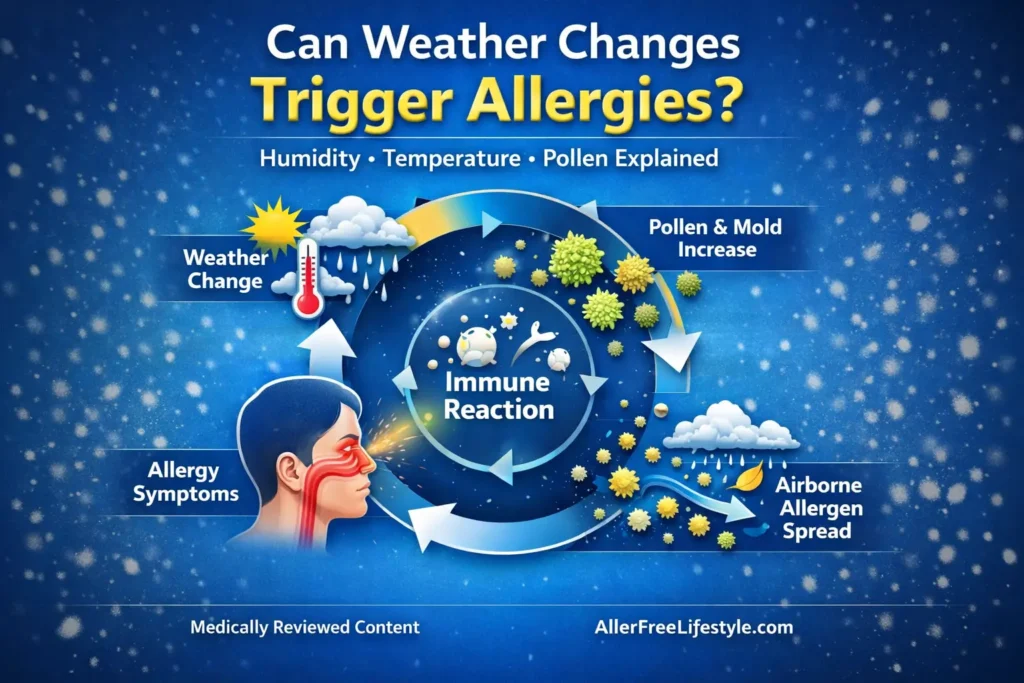
If you’ve ever noticed sneezing, nasal congestion, or irritation when seasons shift or temperatures fluctuate, you’re not alone. Many people ask:
- Can weather changes trigger allergies?
- Does humidity make allergies worse?
- Why do allergies get worse when the weather changes?
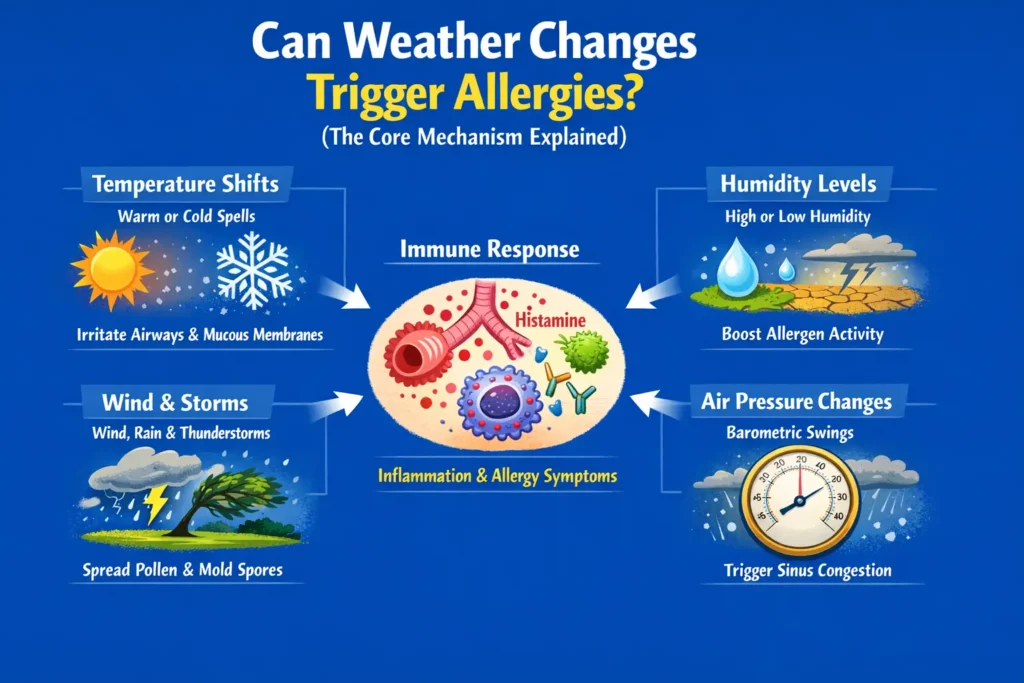
Modern research confirms that weather does not directly cause allergies, but it plays a critical role in modifying allergen exposure and symptom severity (Ziska, L. H., et al. 2019).
Can Weather Changes Really Trigger Allergies — Or Just Make Them Worse?
Weather itself is not an allergen. However, it directly influences how allergens behave in the environment.
👉 It changes pollen production
👉 It alters airborne allergen spread
👉 It increases mold growth and indoor allergens
👉 It can irritate the nasal lining
This leads to a key clinical insight:
Weather changes act as amplifiers of allergen exposure, not the root cause.
Scientific evidence shows that meteorological variables such as temperature, humidity, and atmospheric conditions significantly influence allergic disease patterns (D’Amato, G., et al. 2020).
How Temperature Changes Affect Pollen and Allergy Flare-Ups
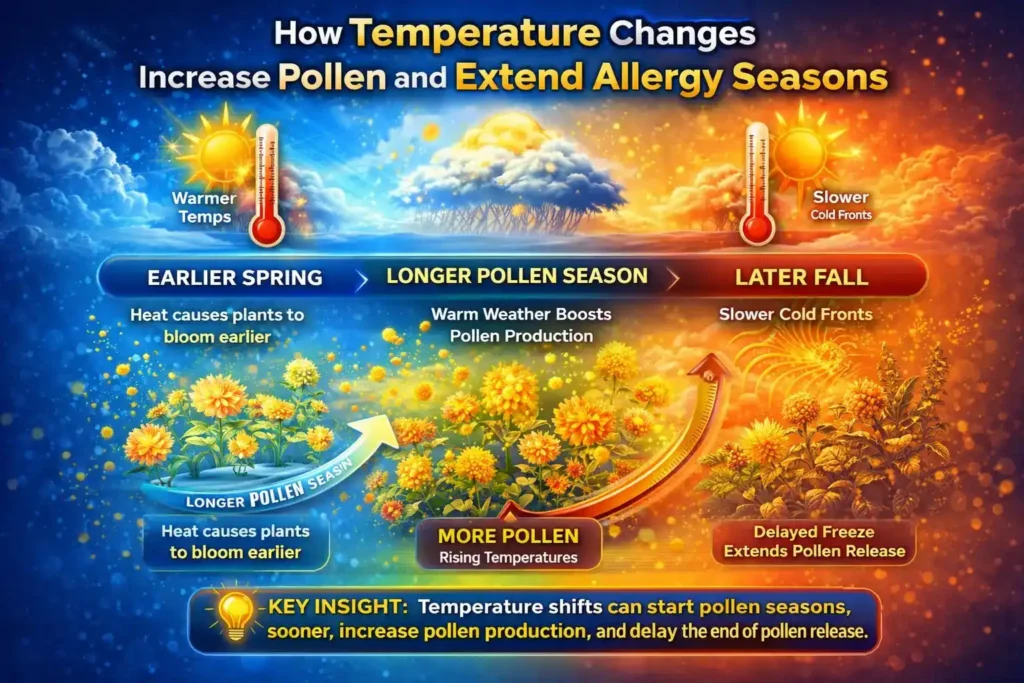
Temperature is one of the most important environmental factors affecting allergies.
🌡️ Rising Temperatures and Pollen
When temperatures increase:
- Plants bloom earlier
- Growing seasons extend
- Pollen production increases
Research demonstrates that warming temperatures are associated with longer pollen seasons and increased pollen concentrations (Anderegg, W. R. L., et al. 2021).
🔬 Clinical Impact
- Increased allergen exposure
- Higher risk of allergic rhinitis flare-ups
- More frequent asthma exacerbations
🌿 Real-World Patterns
- Mild winters → early tree pollen
- Hot summers → increased grass pollen
- Extended autumn → prolonged ragweed exposure
These patterns explain why many people report that temperature changes make allergies worse.
How Humidity Affects Allergies
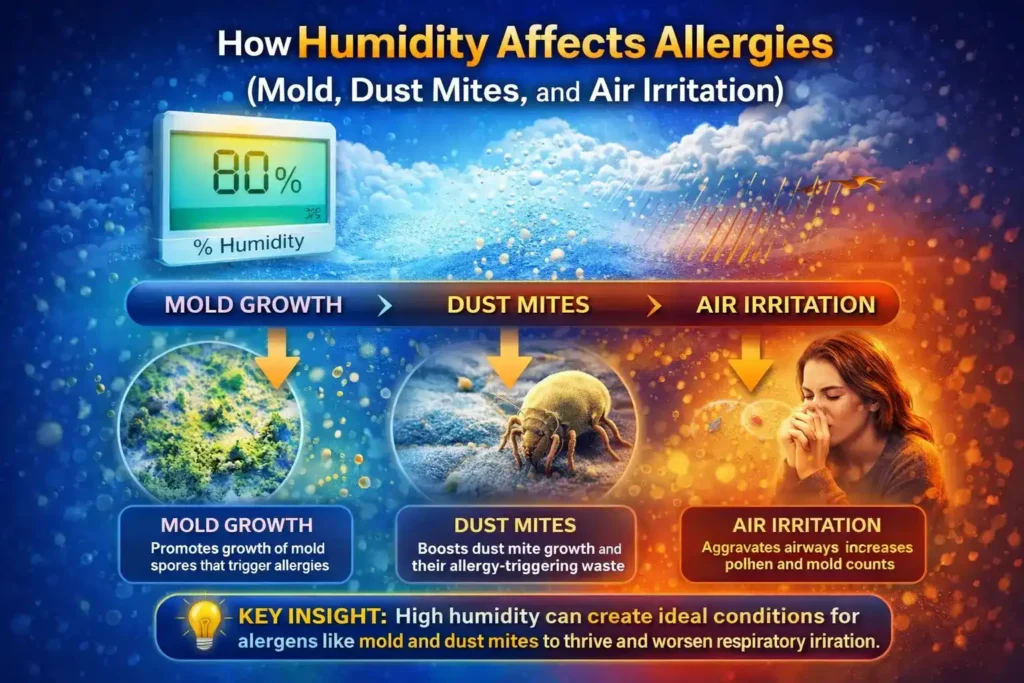
Humidity plays a crucial role in both indoor and outdoor allergen dynamics.
🌫️ High Humidity Effects
When humidity rises:
- Mold grows rapidly
- Dust mites multiply
- Air retains allergens longer
Studies show that high humidity significantly increases biological allergen load, particularly mold spores and dust mites (Tham, R., et al. 2020).
🧠 Physiological Effects
- Increased airway inflammation
- Mucus thickening
- Enhanced allergen penetration
❄️ Low Humidity Effects
Dry air can also worsen symptoms:
- Nasal dryness
- Increased irritation
- Greater sensitivity to allergens
👉 This is why both extremes of humidity can contribute to symptom worsening.
Why Pollen Levels Change with the Weather
Pollen is one of the most significant environmental allergens affected by weather.
🌾 Types of Pollen
- Tree pollen
- Grass pollen
- Ragweed pollen
🌬️ Wind and Airborne Spread
Wind plays a major role:
- Lifts pollen into the air
- Disperses it over long distances
👉 Warm, dry, windy conditions are associated with the highest pollen exposure.
🌧️ Rainfall and Pollen Behavior
Rain has a complex effect:
- Short-term → washes pollen out of the air
- After rainfall → plant growth increases → higher pollen levels
Research highlights this dual effect, showing that rainfall can temporarily reduce airborne pollen but contribute to future increases (Lake, I. R., et al. 2017).
🌡️ Temperature Interaction
- Warm days → increased pollen release
- Cool nights → pollen accumulation
These conditions create optimal environments for allergen exposure.
Rain, Wind, and Sudden Weather Changes: When Allergies Get Worse
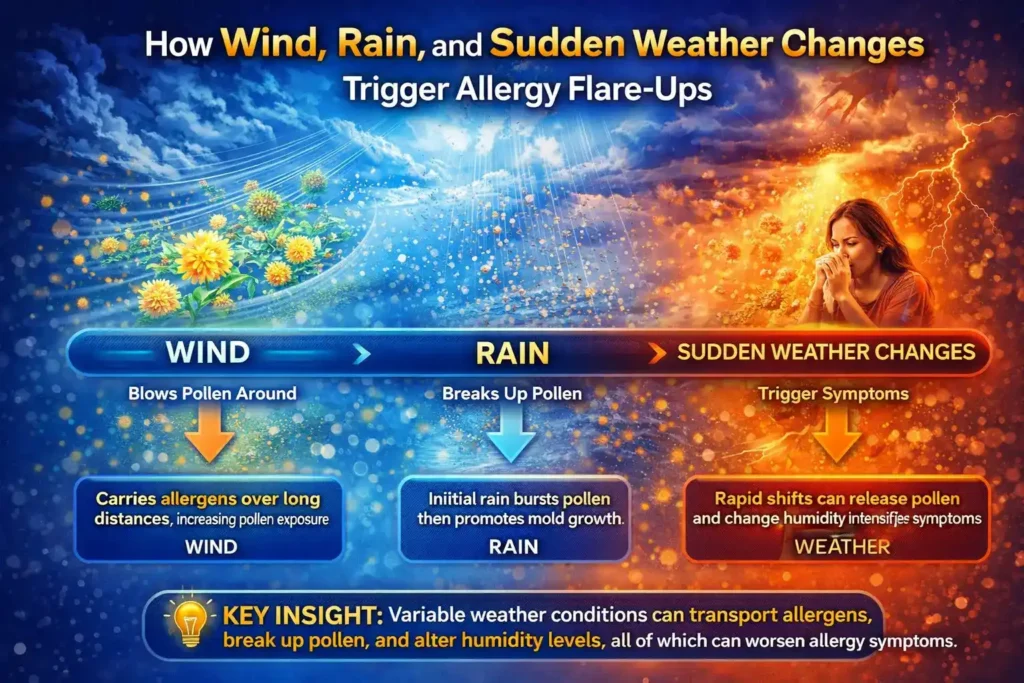
Sudden weather changes are often linked to symptom flare-ups.
⚡ Key Triggers
- Rapid temperature shifts
- Strong winds
- Rainstorms
- Seasonal transitions
These changes can:
- Increase airborne allergen concentration
- Irritate respiratory pathways
- Trigger inflammatory responses
🌪️ Thunderstorm Allergy Phenomenon
A critical but often overlooked factor:
- Storms break pollen into smaller particles
- These penetrate deeper into the lungs
- Can trigger severe asthma attacks
This phenomenon has been documented in environmental health research (D’Amato, G., et al. 2020).
Weather Changes and Nonallergic Rhinitis
Not all symptoms triggered by weather are allergic in nature.
❄️ Nonallergic Rhinitis
Weather changes can cause:
- Nasal congestion
- Runny nose
- Sneezing
Without an immune-mediated allergic response.
🌡️ Mechanism
- Temperature changes stimulate nasal nerves
- Barometric pressure shifts affect nasal blood flow
- Cold air triggers reflex nasal responses
👉 This explains why people experience symptoms even without confirmed allergies.
Which Weather Conditions Worsen Allergies the Most?
Certain environmental patterns are strongly associated with worsening symptoms:
🚨 High-Risk Conditions
- Warm, windy days
- Hot and humid environments
- Rain followed by vegetation growth
- Mild winters
- Sudden temperature fluctuations
📊 Why These Conditions Matter
They increase:
- Pollen concentration
- Mold growth
- Allergen dispersion
How Climate Change Is Making Allergies Worse
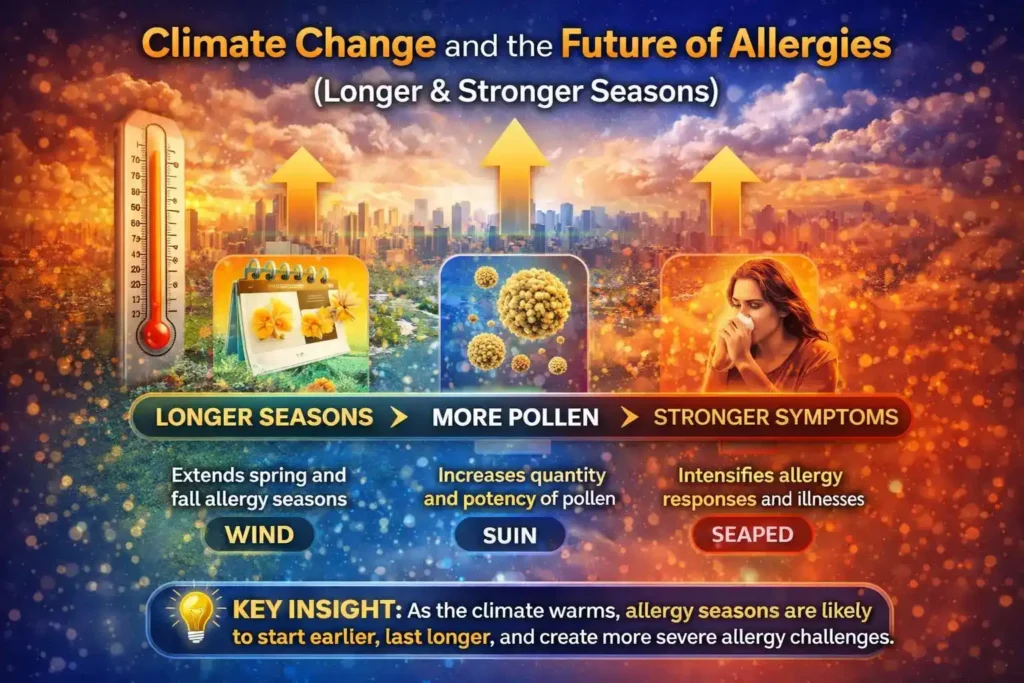
Climate change is significantly altering allergy patterns worldwide.
🌍 Scientific Evidence
- Rising temperatures → longer pollen seasons
- Increased CO₂ → enhanced pollen production
- Changing climate → new allergen exposure patterns
Research confirms that climate change is intensifying both the duration and severity of pollen seasons globally (Ziska, L. H., et al. 2019).
📈 Clinical Implications
- Increased allergy prevalence
- More severe symptoms
Extended exposure periods
The Key Mechanism: How Weather Influences Allergy Symptoms
The process can be simplified as:
🔬 Weather → Environment → Allergen → Immune Response
- Weather changes occur
- Environmental conditions shift
- Allergen levels increase
- Exposure rises
- Immune system reacts
📌 Key Insight
👉 Weather is not the cause — it is the environmental regulator of allergen exposure
Conclusion
Weather and human biology are closely connected.
When environmental conditions change, so does your exposure to allergens.
Understanding this relationship allows for better awareness, improved symptom prediction, and more effective management.
Medical Disclaimer
This content is for informational purposes only and does not replace professional medical advice, diagnosis, or treatment. Always consult a qualified healthcare provider for any medical concerns or conditions.
Frequently Asked Questions (FAQs)
1. Can weather changes trigger allergies?
Weather does not directly cause allergies, but it can increase exposure to triggers like pollen, mold, and other airborne allergens.
2. Does humidity make allergies worse?
Yes. High humidity can promote mold growth and dust mites, while very dry air can irritate the nose and make symptoms feel worse.
3. Can temperature changes make allergies worse?
Yes. Sudden temperature shifts can affect pollen release, extend allergy seasons, and sometimes trigger nonallergic rhinitis symptoms.
4. Why do allergies get worse on windy days?
Wind spreads pollen and other airborne allergens over longer distances, increasing the amount you breathe in.
5. Does rain help or worsen allergies?
Rain can temporarily wash pollen out of the air, but afterward it may encourage plant growth and raise future pollen levels.
References
- Ziska, L. H., Makra, L., Harry, S. K., Bruffaerts, N., Hendrickx, M., Coates, F., & Beggs, P. J. (2019). Temperature-related changes in airborne allergenic pollen abundance and seasonality. The Lancet Planetary Health, 3(3), e124–e131. https://doi.org/10.1016/S2542-5196(19)30015-3
- D’Amato, G., Vitale, C., De Martino, A., Viegi, G., Lanza, M., Molino, A., & Annesi-Maesano, I. (2020). Effects on asthma and respiratory allergy of climate change and air pollution. Multidisciplinary Respiratory Medicine, 15(1), 1–11. https://doi.org/10.4081/mrm.2020.704
- Anderegg, W. R. L., Abatzoglou, J. T., Anderegg, L. D. L., Bielory, L., Kinney, P. L., & Ziska, L. (2021). Anthropogenic climate change is worsening North American pollen seasons. Proceedings of the National Academy of Sciences, 118(7), e2013284118. https://doi.org/10.1073/pnas.2013284118
- Tham, R., Dharmage, S. C., Taylor, P. E., Katelaris, C. H., Vicendese, D., Abramson, M. J., & Erbas, B. (2020). Outdoor fungi and respiratory health: A systematic review. Allergy, 75(3), 593–610. https://doi.org/10.1111/all.14043
- Lake, I. R., Jones, N. R., Agnew, M., Goodess, C. M., Giorgi, F., Hamaoui-Laguel, L., & Epstein, M. M. (2017). Climate change and future pollen allergy in Europe. Environmental Health Perspectives, 125(3), 385–391. https://doi.org/10.1289/EHP173