

Can Allergies Cause Nausea or Stomach Problems?
Written by: Dr.Muhammad Ihsan Ullah, PhD
Medically reviewed by: Dr. Muhammad S. Anil, MD
Last updated on May 30,2026
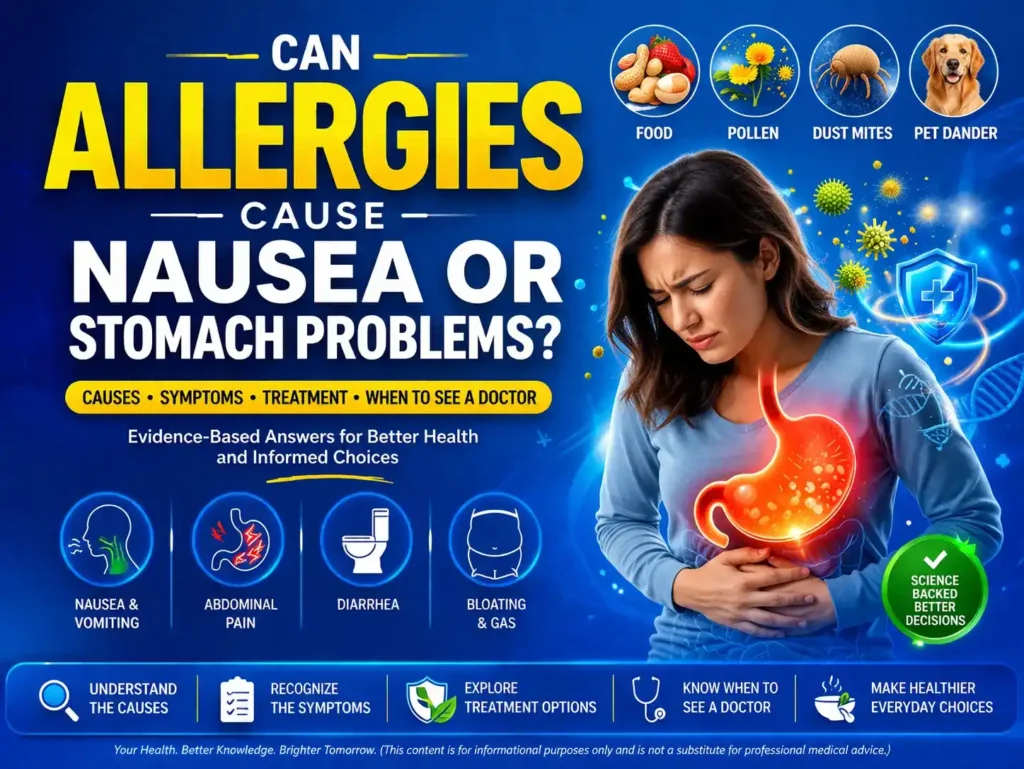
Can allergies cause nausea or stomach problems? Yes, allergies can cause a range of gastrointestinal symptoms, including nausea, abdominal pain, vomiting, and even bloating. While most people associate allergies with symptoms like sneezing or itchy eyes, food allergies and environmental allergies can also trigger stomach discomfort. The immune system’s response to allergens like pollen, pet dander, or certain foods releases histamine, which can affect the digestive system. This can lead to digestive issues such as nausea, cramps, and a loss of appetite. If you’ve experienced stomach problems alongside your allergy symptoms, there’s a good chance your immune system is reacting in ways that impact your gut health.
Can Allergies Really Cause Nausea or Digestive Issues?
Yes, allergies can cause nausea and digestive discomfort.
However, not all allergies behave the same way. The likelihood of stomach symptoms depends on the type of allergen and immune response involved.
When your body encounters an allergen, it activates the immune system and produces antibodies such as Immunoglobulin E (IgE). This leads to the release of histamine and other inflammatory mediators, which can affect both respiratory and digestive systems.
Histamine plays a significant role in gut function and can influence nausea, acid secretion, and intestinal motility (Smolinska, S., et al. 2022).
This is why many people experience symptoms like:
- Feeling sick during allergies
- Loss of appetite
- Upset stomach
Which Types of Allergies Cause Nausea and Stomach Problems?
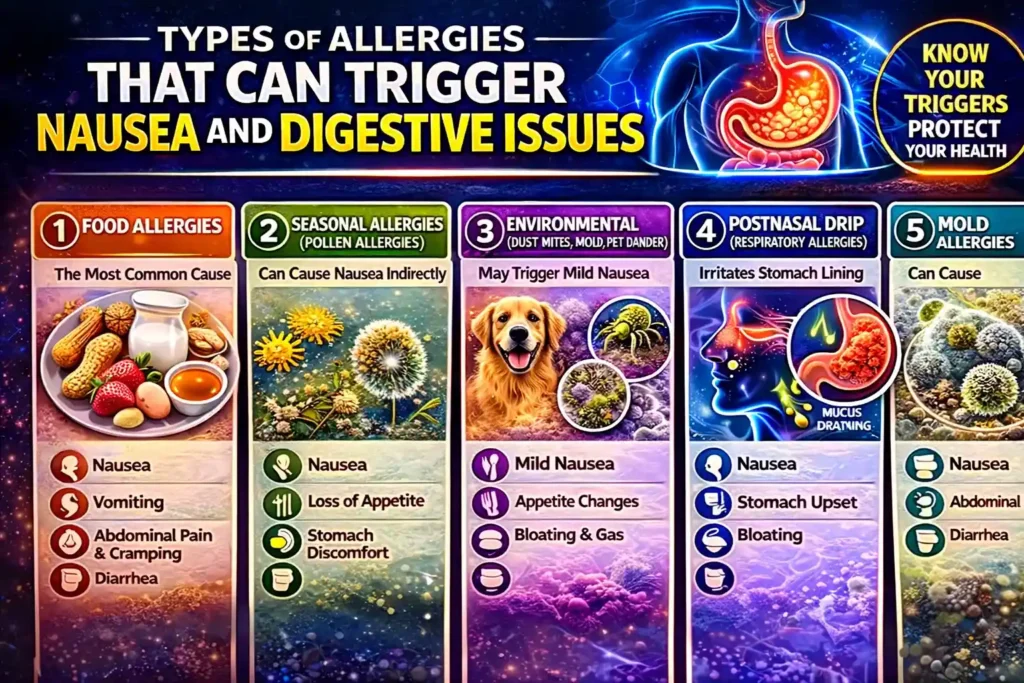
Food Allergies and Gastrointestinal Symptoms
Food allergies are the most common cause of nausea related to allergies.
When a person consumes a trigger food:
- The immune system identifies it as harmful
- IgE antibodies activate mast cells
- Histamine is released
This process leads to symptoms such as:
- Nausea
- Vomiting
- Abdominal pain
- Diarrhea
These reactions often occur within minutes to a few hours after eating (Anvari, S., et al. 2019).
In clinical terms, this is known as an IgE-mediated allergic reaction, which directly affects the gastrointestinal tract.
Can Seasonal Allergies Make You Nauseous?
Seasonal allergies, such as pollen allergies, do not usually affect the stomach directly.
However, they can indirectly cause nausea through mechanisms like:
- Postnasal drip: Mucus flows into the stomach, causing irritation
- Sinus drainage: Triggers nausea reflex
- Chronic inflammation: Alters body signaling
Some individuals report feeling nauseous during severe allergy episodes, especially when mucus accumulation is significant.
Environmental Allergies and Digestive Effects
Environmental allergens such as:
- Dust mites
- Mold
- Pet dander
…can trigger systemic immune responses.
Although less common, these reactions may influence:
- Appetite
- Gut sensitivity
- Mild nausea
This may be linked to inflammation affecting the gut-brain axis, which connects the digestive system and nervous system (Powell, N., et al. 2021).
Why Do Allergies Affect the Stomach? (Underlying Mechanisms)
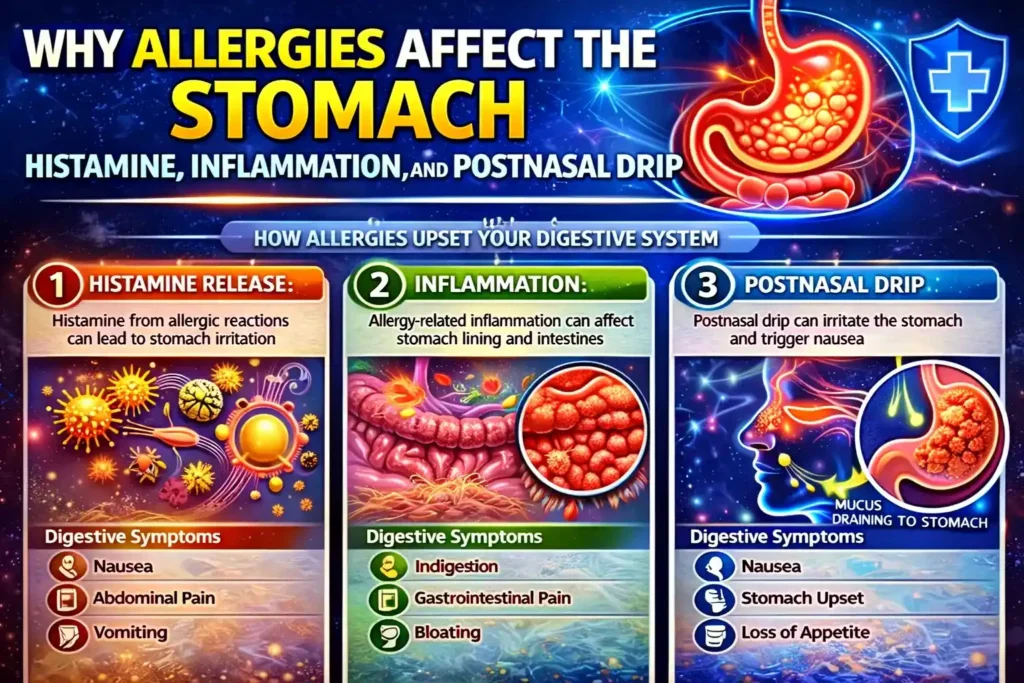
Histamine Release and Its Effect on the Gut
Histamine is a key chemical released during allergic reactions.
It interacts with receptors in the body:
- H1 receptors → allergic symptoms
- H2 receptors → stomach acid regulation
In the gut, histamine can:
- Increase gastric acid secretion
- Stimulate intestinal movement
- Trigger nausea
Studies show that histamine plays a central role in both allergic reactions and gastrointestinal disorders (Smolinska, S., et al. 2022).
Immune System Overreaction and Inflammation
Allergic reactions involve an exaggerated immune response.
This includes:
- Activation of IgE antibodies
- Mast cell degranulation
- Release of cytokines
These processes cause inflammation in the gut, leading to:
- Pain
- Cramping
- Digestive discomfort
This type of reaction is classified as a Type I hypersensitivity reaction (Anvari, S., et al. 2019).
Postnasal Drip Leading to Nausea
Postnasal drip is a common feature of respiratory allergies.
When mucus drains into the stomach:
- It irritates the stomach lining
- It stimulates nausea reflexes
This is one of the main reasons people feel sick during seasonal allergies.
Gut-Brain Axis and Allergy Response
The gut and brain communicate through a complex network known as the gut-brain axis.
Allergic inflammation can influence this system by:
- Altering neurotransmitters
- Activating immune pathways
- Sending signals that trigger nausea
Research highlights the role of immune-gut interactions in digestive symptoms associated with systemic inflammation (Powell, N., et al. 2021).
Common Digestive Symptoms Linked to Allergies
People with allergies may experience:
🤢 Nausea and Vomiting
Often associated with food allergies
🩺 Abdominal Pain and Cramping
Caused by inflammation and immune activation
💧 Diarrhea
Linked to gut irritation and immune response
🎈 Bloating and Gas
May overlap with intolerance or gut imbalance
Allergy vs Food Intolerance: Why It Matters
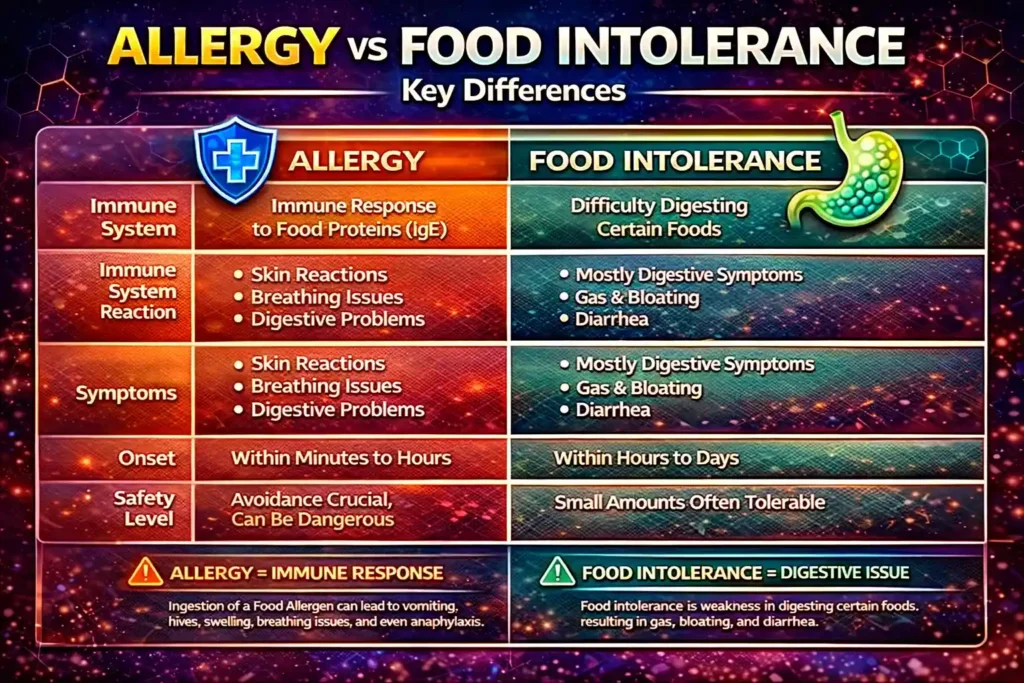
Feature | Food Allergy | Food Intolerance |
Immune system involvement | Yes | No |
IgE antibodies | Present | Absent |
Reaction speed | Rapid | Delayed |
Severity | Can be severe | Usually mild |
Food intolerance, such as lactose intolerance, does not involve the immune system and typically causes less severe symptoms (Nowak-Wegrzyn, A., et al. 2020).
When Are Stomach Problems a Sign of a Serious Allergy?
Seek immediate medical attention if symptoms include:
- Difficulty breathing
- Swelling of throat or tongue
- Severe vomiting
- Drop in blood pressure
These may indicate anaphylaxis, a life-threatening allergic reaction.a
How to Manage Nausea Caused by Allergies
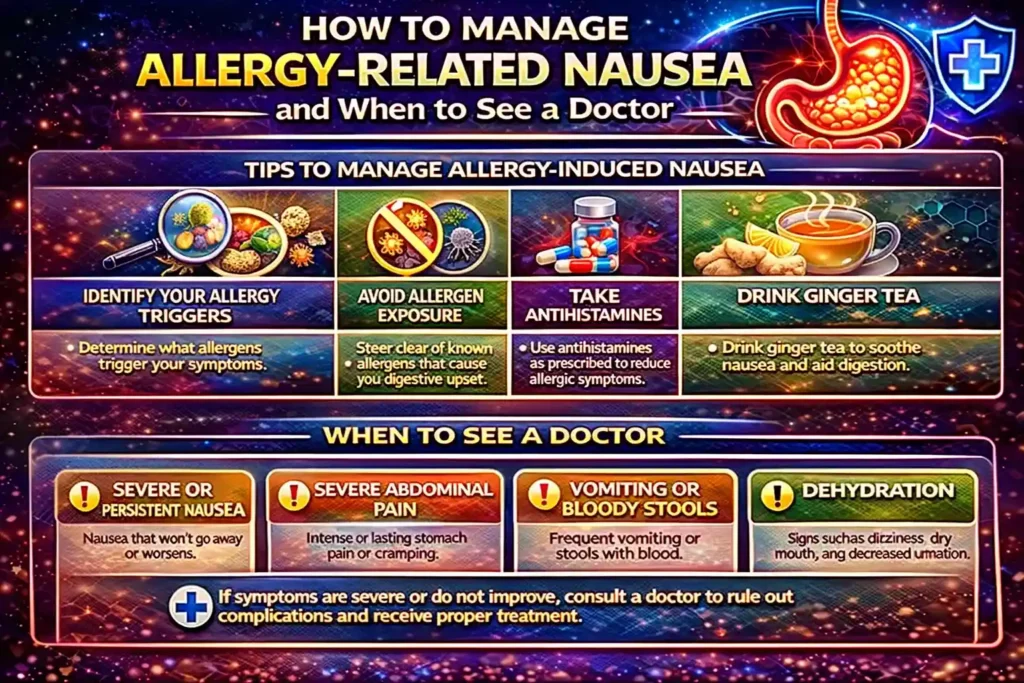
✔ Avoidance of Triggers
- Identify allergens
- Follow elimination diets
💊 Medications
- Antihistamines reduce histamine effects
- Other medications control inflammation
🥗 Dietary and Lifestyle Adjustments
- Maintain gut health
- Avoid known triggers
- Stay hydrated
When to See a Doctor
Consult a healthcare professional if:
- Symptoms are persistent
- Digestive issues worsen
- You suspect food allergies
Diagnosis may involve:
- IgE blood tests
- Skin prick testing
- Elimination diets
Medical Disclaimer:
This content is for informational and educational purposes only and is not intended as medical advice, diagnosis, or treatment. Always consult a qualified healthcare professional or your physician for any medical concerns, symptoms, or before making health-related decisions.
Frequently Asked Questions (FAQs)
1. Can allergies cause nausea?
Yes, allergies can cause nausea, especially food allergies, due to immune reactions and histamine release affecting the digestive system.
2. Can seasonal allergies make you feel sick or nauseous?
Seasonal allergies can indirectly cause nausea through postnasal drip and sinus drainage, which may irritate the stomach.
3. Do allergies cause stomach pain or digestive issues?
Yes, allergies can lead to stomach pain, bloating, diarrhea, and vomiting, particularly in food-related allergic reactions.
4. What is the difference between allergy and food intolerance?
A food allergy involves the immune system and can be serious, while food intolerance does not involve immunity and usually causes milder digestive symptoms.
5. When should I see a doctor for allergy-related stomach problems?
You should seek medical help if symptoms are severe, persistent, or include difficulty breathing, swelling, or repeated vomiting.
References
- Anvari, S., Miller, J., Yeh, C. Y., & Davis, C. M. (2019). IgE-mediated food allergy. Clinical Reviews in Allergy & Immunology. https://doi.org/10.1007/s12016-018-8710-3
- Smolinska, S., Jutel, M., Crameri, R., & O’Mahony, L. (2022). Histamine and gut mucosal immune regulation. Frontiers in Immunology. https://doi.org/10.3389/fimmu.2022.961063
- Powell, N., Walker, M. M., & Talley, N. J. (2021). The mucosal immune system: master regulator of bidirectional gut-brain communications. Nature Reviews Gastroenterology & Hepatology. https://doi.org/10.1038/s41575-020-00372-1
- Nowak-Wegrzyn, A., et al. (2020). Work Group report: Oral food challenge testing. The Journal of Allergy and Clinical Immunology. https://doi.org/10.1016/j.jaci.2020.01.047
- Norman, R. J., et al. (2023). Immune-mediated gastrointestinal responses in allergy-related disorders. Journal of Clinical Medicine. https://doi.org/10.3390/jcm12072645