

Allergy-Friendly Bedroom Setup: Complete Step-by-Step Guide
Written by: Dr.Muhammad Ihsan Ullah, PhD
Medically reviewed by: Dr.Hafiz Muhammad Kashif, MD
Last updated on January 31,2026
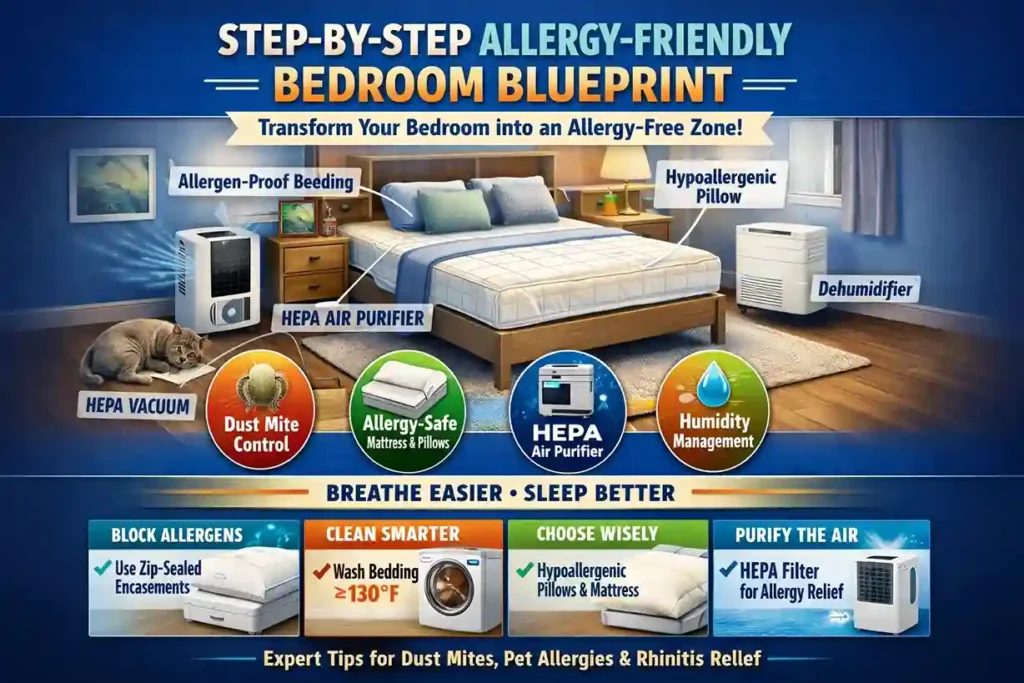
If you wake up with a blocked nose, sneezing, itchy eyes, headache, or dry mouth, the problem might not just be your allergy severity it’s often the environmental allergens in your bedroom.
People suffering from allergic rhinitis often spend 6–8 hours every night breathing in allergens released from bedding, mattresses, carpets, and indoor air. This makes the bedroom the single most important space for allergy control.
This comprehensive, evidence-based guide will show you:
- How to convert your bedroom into an allergy-friendly sanctuary
- What to remove, replace, or modify in your bedroom
- Which products genuinely reduce symptoms
- How to layer natural, lifestyle, and medical-safe strategies for effective relief
Why the Bedroom Matters Most for Allergies
During sleep, the body undergoes changes that make it more susceptible to allergens:
- Dust-mite allergens are released from bedding
- Nasal passages swell naturally at night
- Indoor allergens concentrate in closed rooms
- Mouth breathing increases allergen exposure
👉 Result: Night congestion + morning flare-ups
Clinical guidelines (ARIA, AAAAI) emphasize that bedroom allergen control is a core strategy for managing allergic rhinitis.
STEP-BY-STEP ALLERGY-FRIENDLY BEDROOM BLUEPRINT
STEP 1: Control Dust Mites
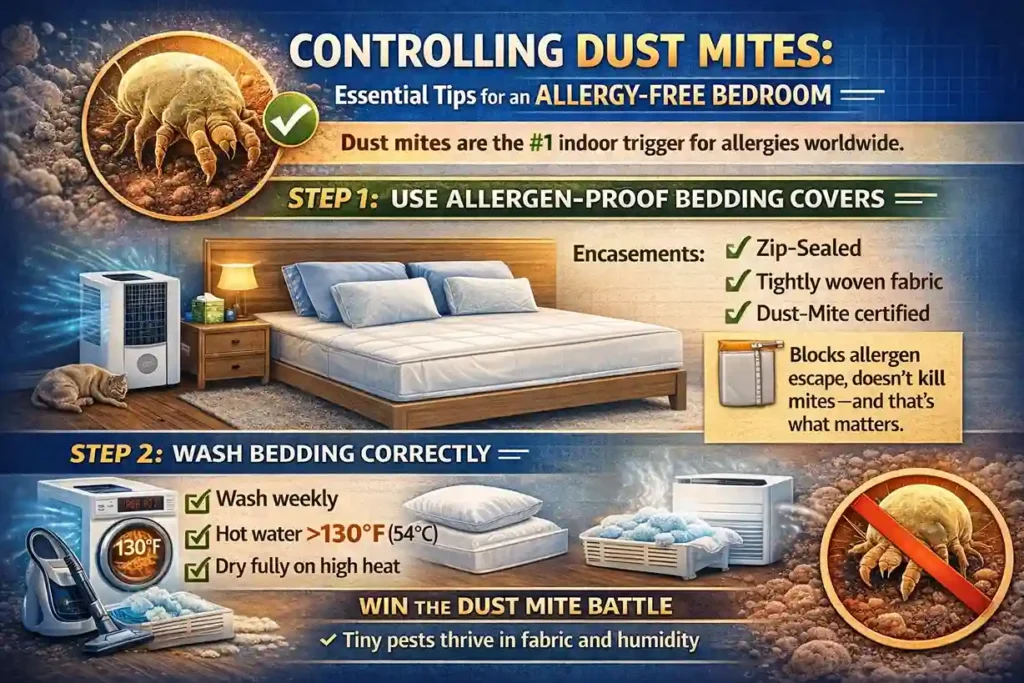
Dust mites are the major indoor triggers for allergic rhinitis worldwide.
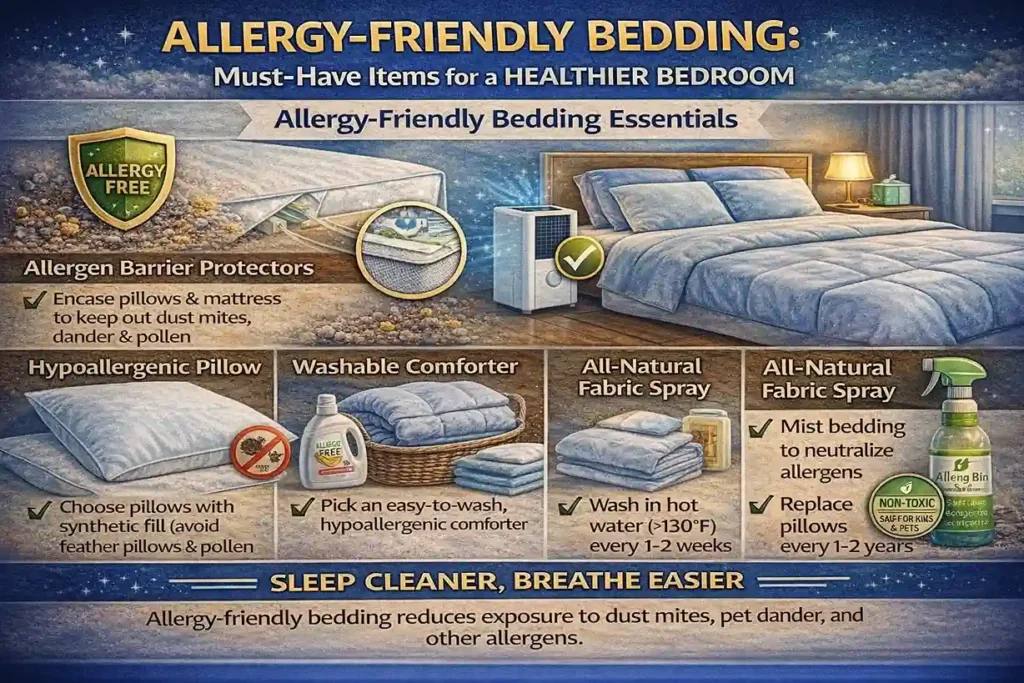
✔ Use Allergen-Proof Bedding Covers
Encase:
• Mattress
• Pillows
• Box spring
Look for:
✔ Zip-sealed
✔ Tightly woven fabric
✔ Dust-mite certified
📌 These covers block allergen escape, not kill mites—and that’s what matters.
✔ Wash Bedding Correctly
• Wash sheets & pillowcases weekly
• Use hot water ≥130°F (54°C)
• Dry fully on high heat
❌ Cold water washing is ineffective for dust-mite allergens.
STEP 2: Choose Allergy-Safe Pillows & Mattress
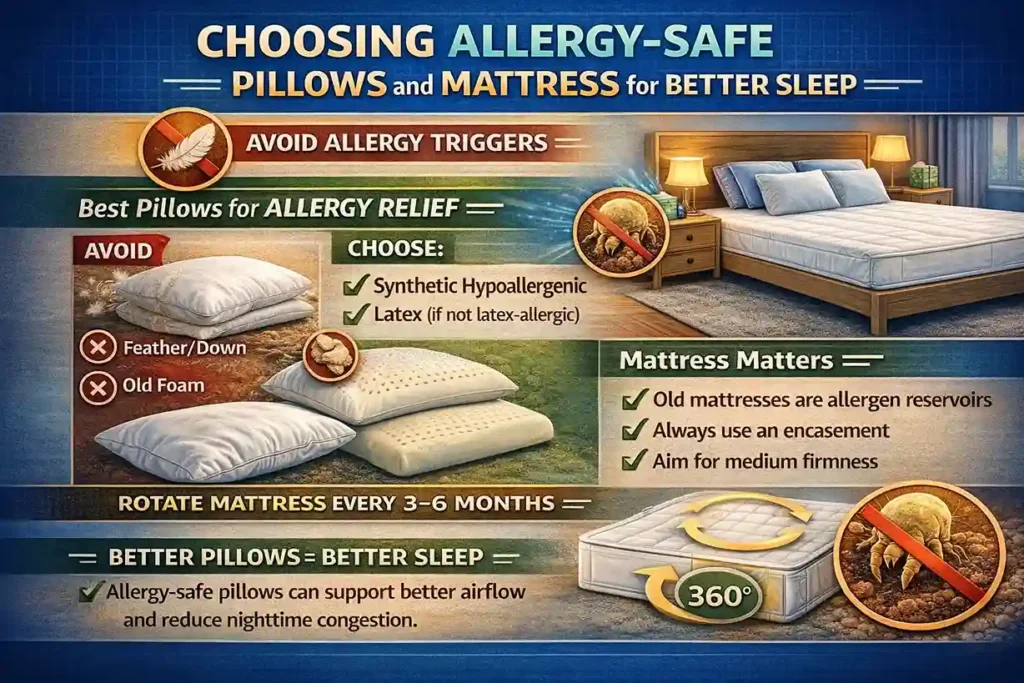
Best Pillows for Allergic Rhinitis
Avoid:
❌ Feather/down
❌ Old foam (crumbles allergens)
Choose:
✔ Synthetic hypoallergenic pillows
✔ Latex pillows (if not latex-allergic)
✔ Medium firmness (supports nasal airflow)
Mattress Matters
• Old mattresses = allergen reservoirs
• Use encasement even on new mattresses
• Rotate mattress every 3–6 months
STEP 3: Install a HEPA Air Purifier
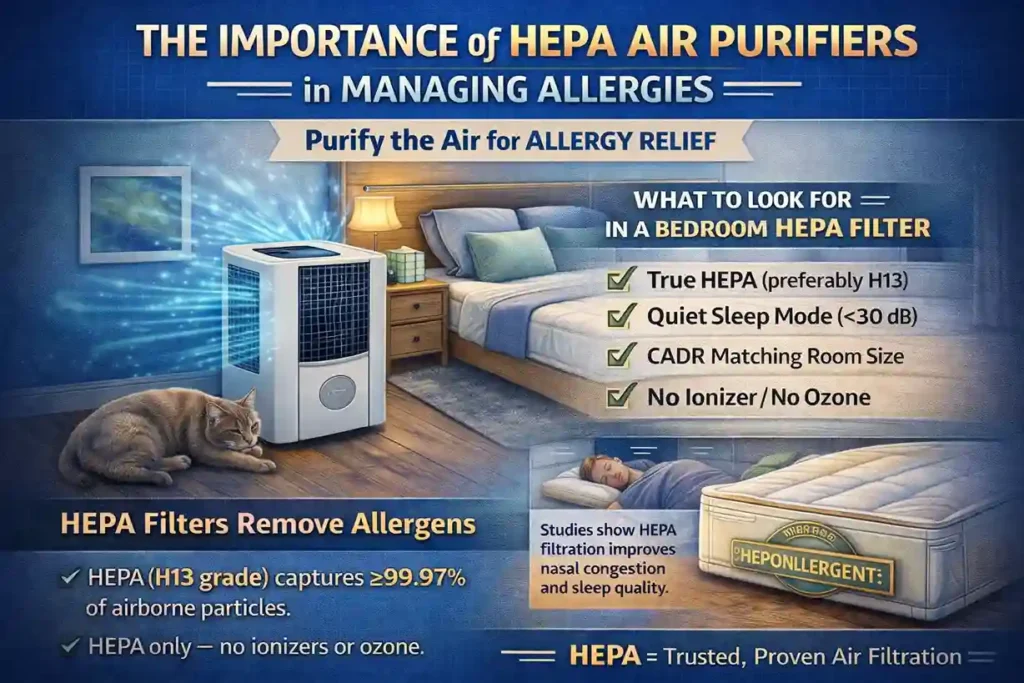
Why Bedroom HEPA Is Essential
HEPA air purifiers remove:
• Airborne dust-mite particles
• Pet dander
• Pollen fragments
• Mold spores
Studies show nighttime use of HEPA filters improves nasal congestion and sleep quality.
What to Look For
✔ True HEPA (H13 preferred)
✔ Quiet sleep mode (<30 dB)
✔ CADR matched to room size
✔ No ionizer / no ozone
STEP 4: Optimize Bedroom Flooring
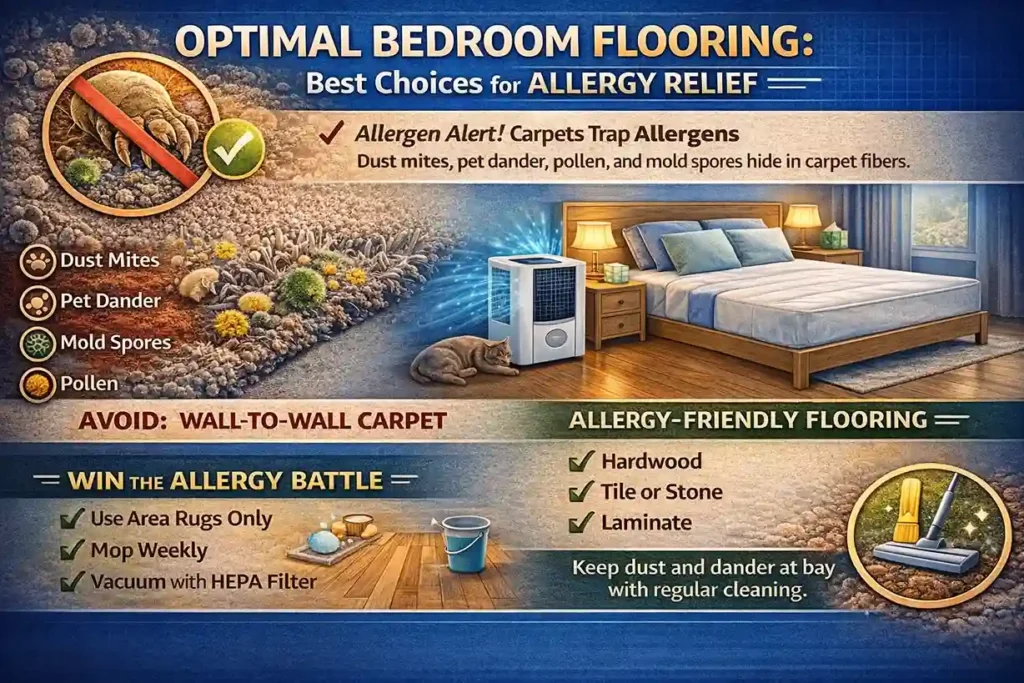
Best Flooring for Allergies
✔ Hardwood
✔ Vinyl
✔ Tile
If You Have Carpet (Reality Check)
• Vacuum 2× weekly with HEPA vacuum
• Steam clean periodically
• Keep carpet dry
❌ Avoid shag rugs & wall-to-wall carpeting if possible.
STEP 5: Control Humidity
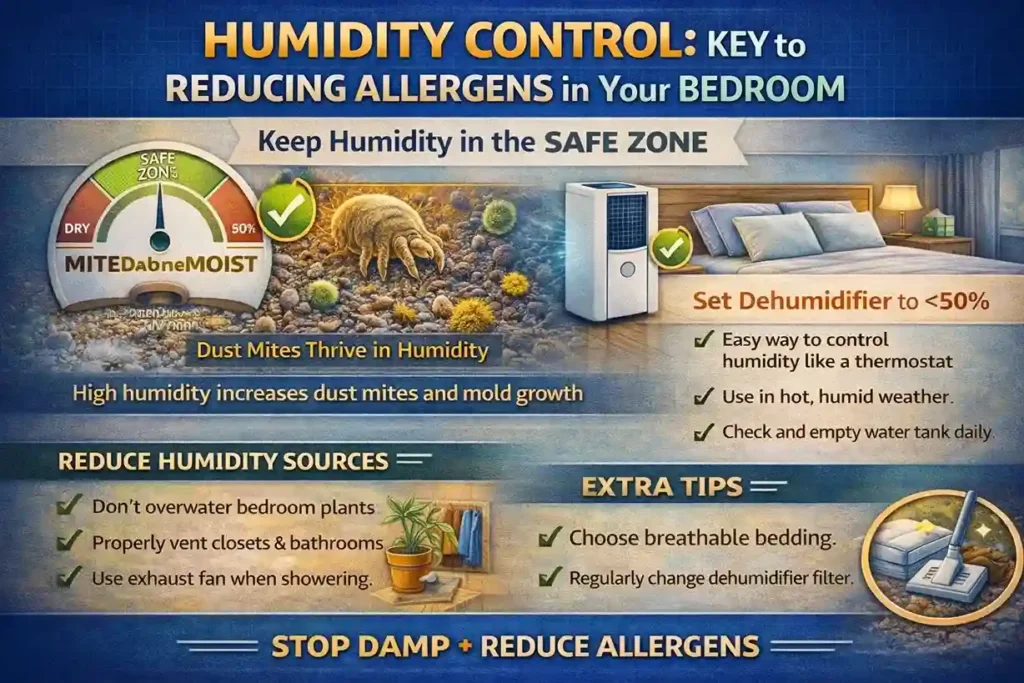
Ideal Bedroom Humidity: 35–50%
High humidity:
❌ Increases dust mites
❌ Encourages mold growth
Low humidity:
❌ Dries nasal passages
❌ Worsens congestion
Use:
✔ Dehumidifier (humid climates)
✔ Humidifier (dry winters)
STEP 6: Remove Hidden Allergen Traps
Remove or Reduce:
❌ Heavy curtains
❌ Fabric headboards
❌ Open bookshelves near bed
❌ Decorative cushions
❌ Stuffed toys (or wash weekly)
Replace with:
✔ Washable blinds
✔ Minimal décor
✔ Closed storage
📌 Less fabric = fewer allergens.
STEP 7: Pet-Proof the Bedroom
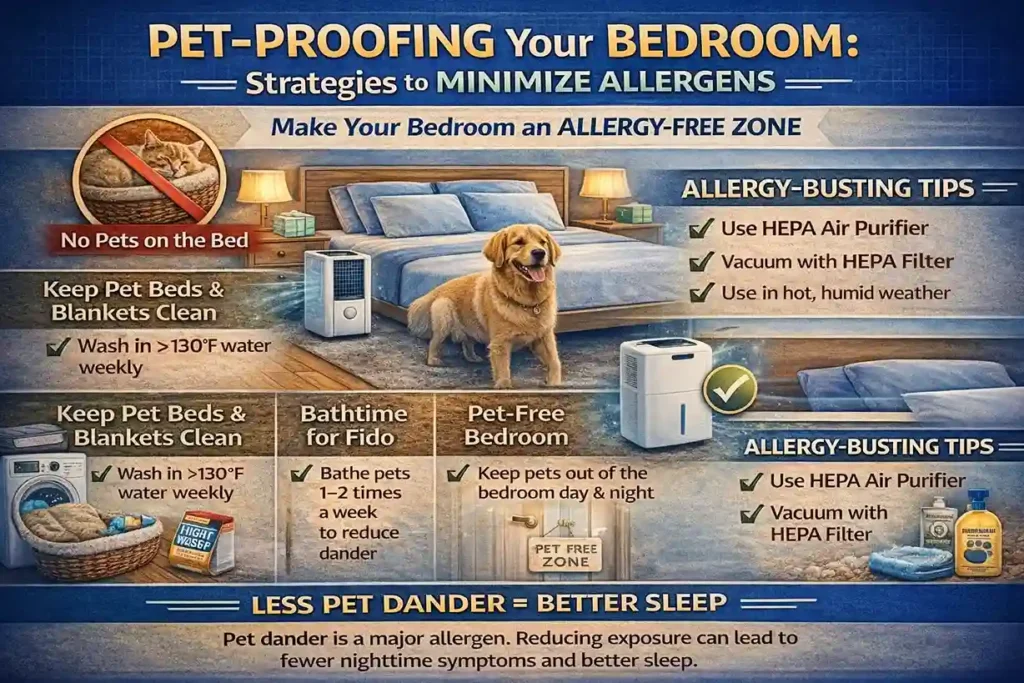
Even “hypoallergenic” pets release allergens.
Strict Rules:
❌ No pets on bed
❌ No pets in bedroom
Additional steps:
✔ HEPA vacuum weekly
✔ Wash pet bedding separately
✔ Use HEPA air purifier daily
STEP 8: Nighttime Nasal Support (Drug-Free)
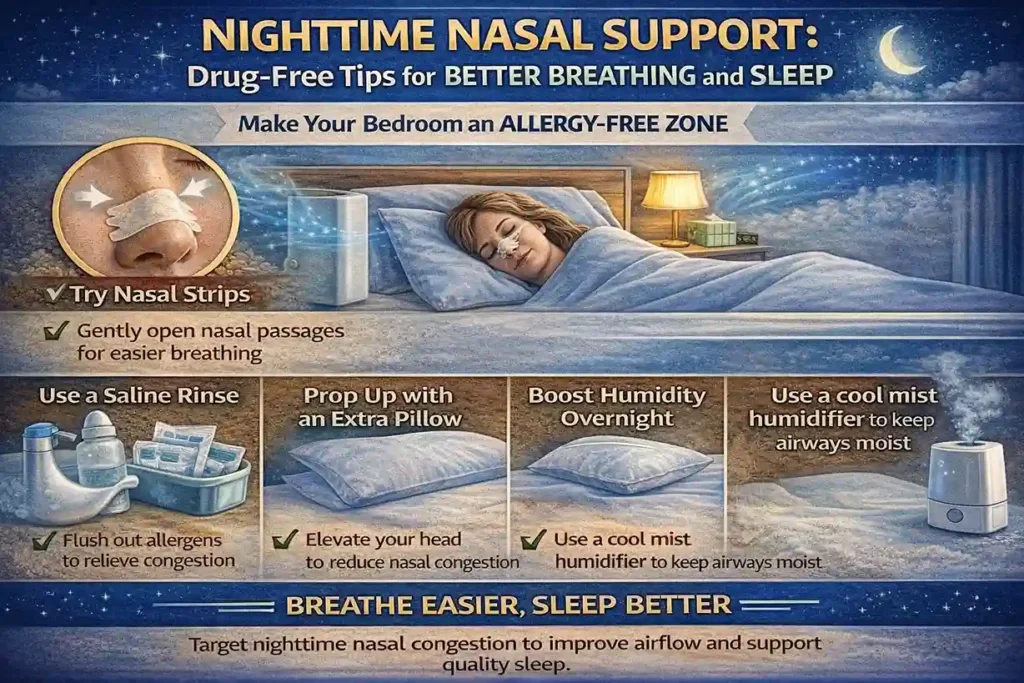
Before sleep:
✔ Saline nasal rinse
✔ Nasal strip or nasal dilator
✔ Shower if exposed to pollen
👉 This reduces mouth breathing & snoring.
STEP 9: Lighting, Fragrance & Chemicals
Avoid:
❌ Incense
❌ Scented candles
❌ Air fresheners
❌ Strong cleaning sprays
Use:
✔ Unscented cleaners
✔ Mild detergent
✔ Natural ventilation (low-pollen hours)
STEP 10: Allergy-Safe Bedtime Routine (Daily Habit Stack)
Simple nightly routine:
1️⃣ Shower & change clothes
2️⃣ Saline rinse
3️⃣ Turn on HEPA purifier
4️⃣ Apply nasal strip (if needed)
5️⃣ Sleep with head slightly elevated
Consistency = symptom reduction.
Common Bedroom Allergy Mistakes
❌ Opening windows at night
❌ Ignoring pillow encasements
❌ Using ionizers
❌ Washing bedding too infrequently
❌ Allowing pets on bed
Who Benefits Most From an Allergy-Friendly Bedroom?
✔ Allergic rhinitis patients
✔ Dust-mite allergy sufferers
✔ Pet allergy sufferers
✔ Children with night symptoms
✔ Asthma + rhinitis sufferers
✔ Morning congestion sufferers
Key Takeaways
• Bedroom allergen control is foundational
• Dust-mite covers + HEPA purifier = biggest impact
• Pets should stay out of bedroom
• Humidity control matters more than people think
• Small nightly habits create long-term relief
Medical Review Disclaimer
This article is for informational and educational purposes only and does not constitute medical advice. The content is written by a qualified healthcare professional and medically reviewed for accuracy. However, it should not be used as a substitute for professional medical diagnosis, treatment, or advice. Always consult a licensed healthcare provider regarding any medical condition or health concern.
Frequently Asked Questions (FAQs)
1. Can an allergy-friendly bedroom reduce medication use?
Yes. Many patients report fewer flare-ups and reduced reliance on rescue medications.
2. Is a HEPA purifier alone enough?
No. It must be combined with bedding encasements and regular cleaning.
3. How long before symptoms improve?
Some notice improvement within 1–2 weeks, others within 1 month of consistent setup.
4. Are plants good for bedroom air?
Soil can harbor mold; plants are not recommended for allergy-friendly bedrooms.
5. Should I sleep with windows open?
This increases pollen exposure, especially early morning.
References
- Bousquet, J., Klimek, L., Togias, A., Zuberbier, T., Agache, I., Ansotegui, I. J., … Wallace, D. V. (2020). Next-generation allergic rhinitis and its impact on asthma (ARIA). Journal of Allergy and Clinical Immunology, 145(3), 895–909.
- Custovic, A., et al. (1998). The effect of domestic cleaning on airborne allergen levels. Clinical & Experimental Allergy, 28(6), 670–675.
- Klimek, L., Bousquet, J., Pfaar, O., Bachert, C., Hellings, P. W., & Agache, I. (2024). Current management of allergic rhinitis. Journal of Allergy and Clinical Immunology: In Practice, 12(2), 215–229.