
Allergy-Friendly Home Cleaning Routine
Written by: Dr.Muhammad Ihsan Ullah, PhD
Medically reviewed by: Dr. Muhammad S. Anil, MD
Last updated on February 21,2026
What to Use, What to Avoid & How to Reduce Allergic Rhinitis Symptoms
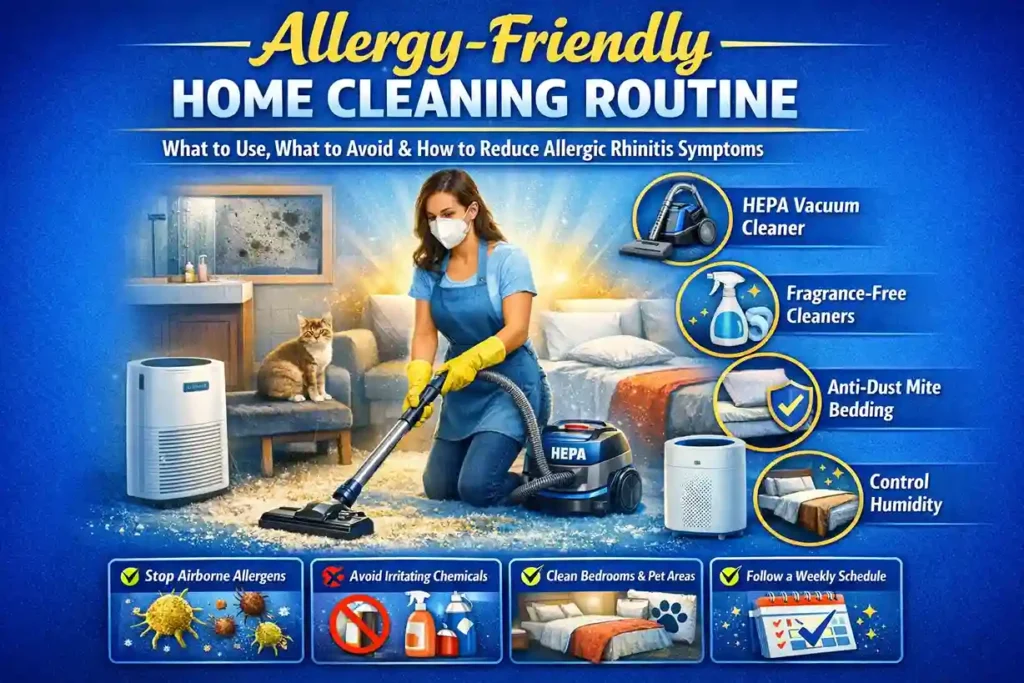
If you struggle with allergic rhinitis, dust-mite allergy, pet allergy, sinus congestion, or chronic nasal irritation, typical home cleaning can unintentionally make symptoms worse—by stirring airborne allergens and irritating sensitive airways (Norman, R. J., et al. 2023).
This complete allergy-friendly home cleaning routine shows you:
- How to clean without triggering allergy flare-ups
- Which products to choose (and which to avoid)
- A simple weekly schedule that actually reduces sneezing, congestion, and sinus itching
- Where HEPA products make the biggest difference
Why Normal Cleaning Can Trigger Allergies
During cleaning, common allergens like dust mites, pet dander, mold spores, and pollen are disturbed and sent into the air, which can cause sneezing, itchy eyes, sinus pressure, or a blocked nose soon after (Raghavendra, S. et al. 2024).
Here’s what happens:
✅ Vacuuming without sealed filters circulates dust
✅ Dry dusting spreads particles
❌ Scented cleaners and aerosols irritate nasal linings
❌ Strong chemicals trigger airway irritation
👉 Result: worse symptoms after cleaning instead of relief.
An allergy-friendly cleaning method focuses on:
✔ Removing trapped allergens
✔ Preventing them from becoming airborne
✔ Using products safe for sensitive noses
THE STEP-BY-STEP ALLERGY-FRIENDLY CLEANING SYSTEM
STEP 1: Use a HEPA Vacuum Cleaner
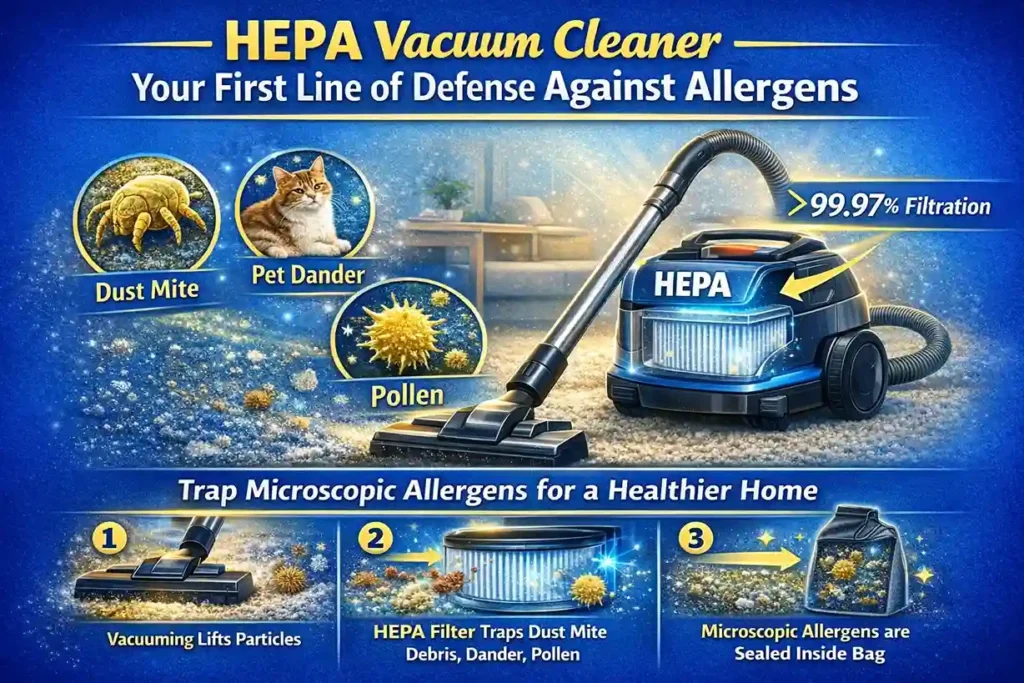
When it comes to reducing indoor allergens from floors, carpets, upholstery, and pet hair, a vacuum cleaner with HEPA filtration is non-negotiable. High-efficiency particulate air (HEPA) filters trap microscopic particles including dust mite debris, pollen, and pet dander, preventing them from blowing back into the room (Kaplan, M. et al. 2022).
❌ Avoid:
• Regular vacuums without sealed HEPA filters
• Cheap bagless models
• Dry brooming (kicks up dust)
✅ Do this instead:
✔ HEPA vacuum cleaner with sealed system
✔ Prefer bagged models (less exposure when emptying)
✔ Certified ASHRAE-grade or asthma-friendly labels
Best for: carpets, mattresses, sofas, under beds, pet areas
STEP 2: Dry Dusting Is Your Enemy
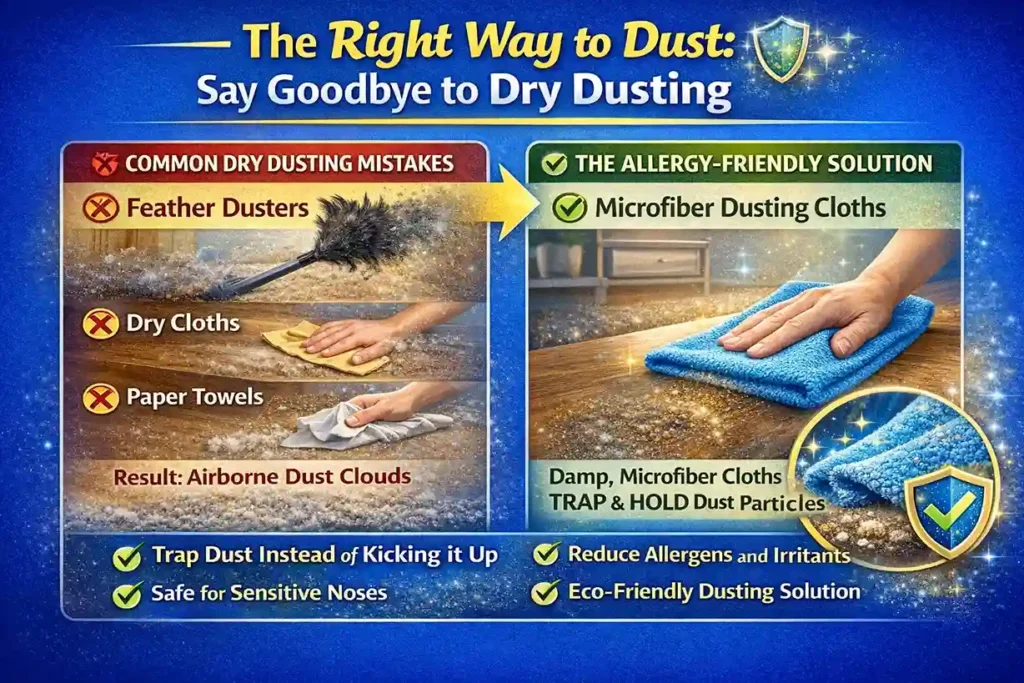
Dusting with feather dusters or dry cloths merely spreads particles back into the air (Hassan, R. et al. 2023).
❌ Avoid:
• Feather dusters
• Dry cloths
• Paper towels that don’t trap dust
✅ Prefer:
✔ Microfiber dusting cloths
✔ Slightly damp microfiber traps dust instead of releasing it
STEP 3: Clean Floors Smart (Dust & Allergen Control)
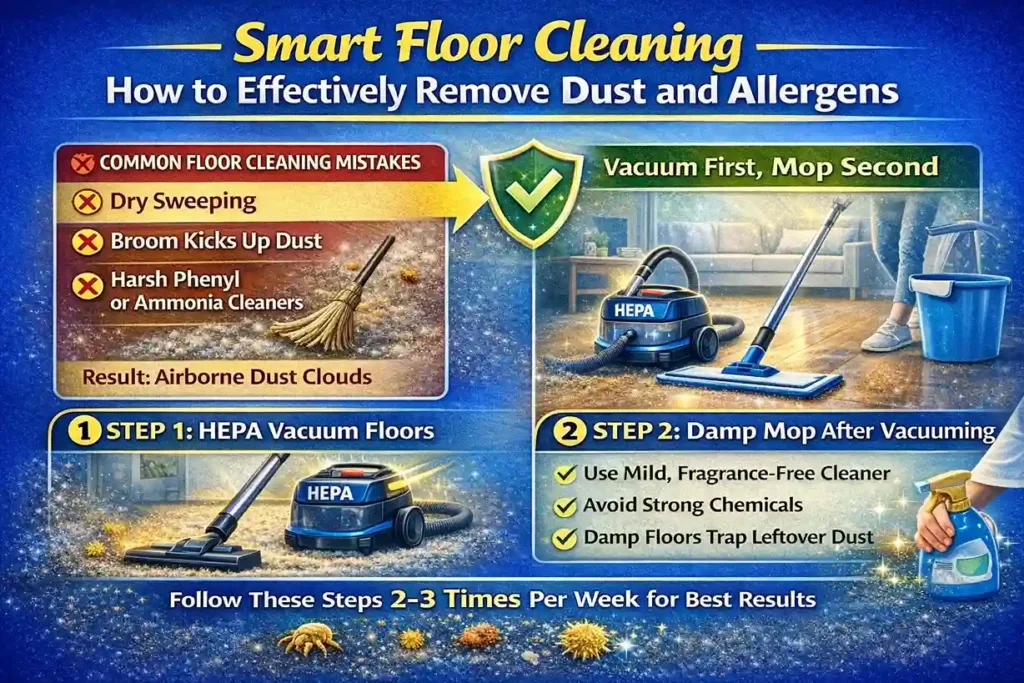
Follow the vacuum first, mop second rule (Kaplan, M. et al. 2022).
Best floor practices:
✔ Vacuum thoroughly before mopping
✔ Damp mop with water or mild hypoallergenic floor cleaner
✔ Avoid added fragrances or phenyls
❌ Avoid:
• Dry sweeping
• Phenyl or ammonia-based cleaners
STEP 4: Bathroom & Kitchen — Mold Control Zone
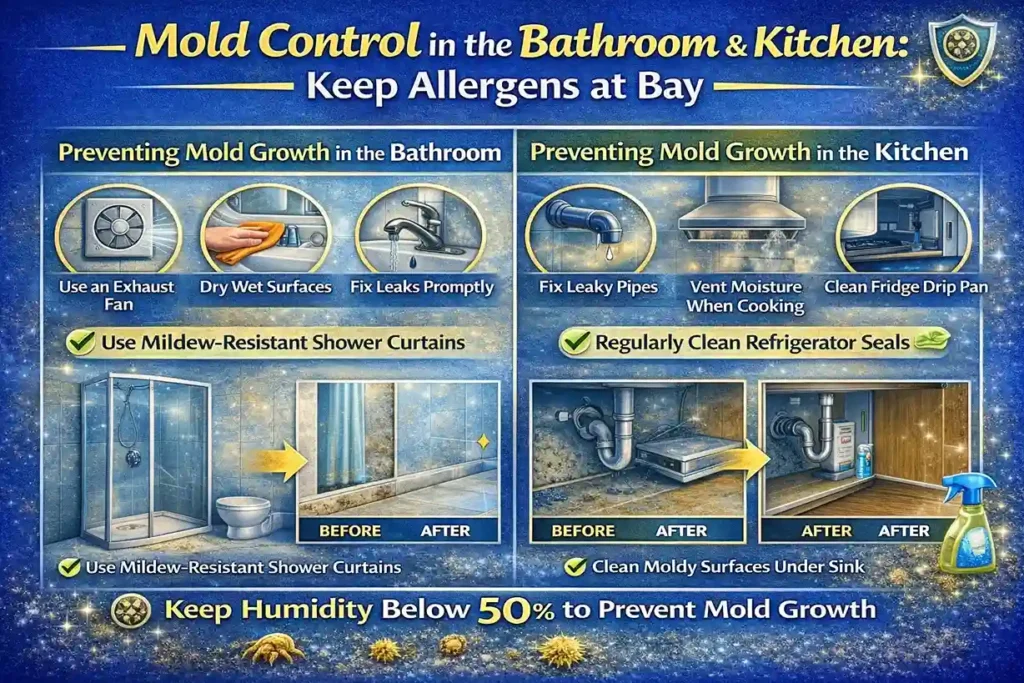
Mold spores are a common household allergen, contributing to congestion and sinus pressure (Raghavendra, S. et al. 2024).
Allergy-safe routine:
✔ Use exhaust fans to reduce humidity
✔ Fix leaks promptly
✔ Clean visible mold weekly
✔ Keep humidity under 50 % to discourage mites and spores
📌 Important: Never mix bleach with other chemicals — fumes can irritate nasal passages.
STEP 5: Bedroom Cleaning — Highest Impact Area
Your bedroom is often the biggest source of indoor allergens:
Weekly must-dos:
• Vacuum mattress and upholstery
• Wash bedsheets in hot water (>60 °C) to kill dust mites (Raghavendra, S. et al. 2024)
• Damp-wipe bedside tables and headboards
❌ Avoid:
• Making bed immediately after waking
• Decorative cushions and non-washable fabrics
STEP 6: Special Care for Pet Allergy Zones
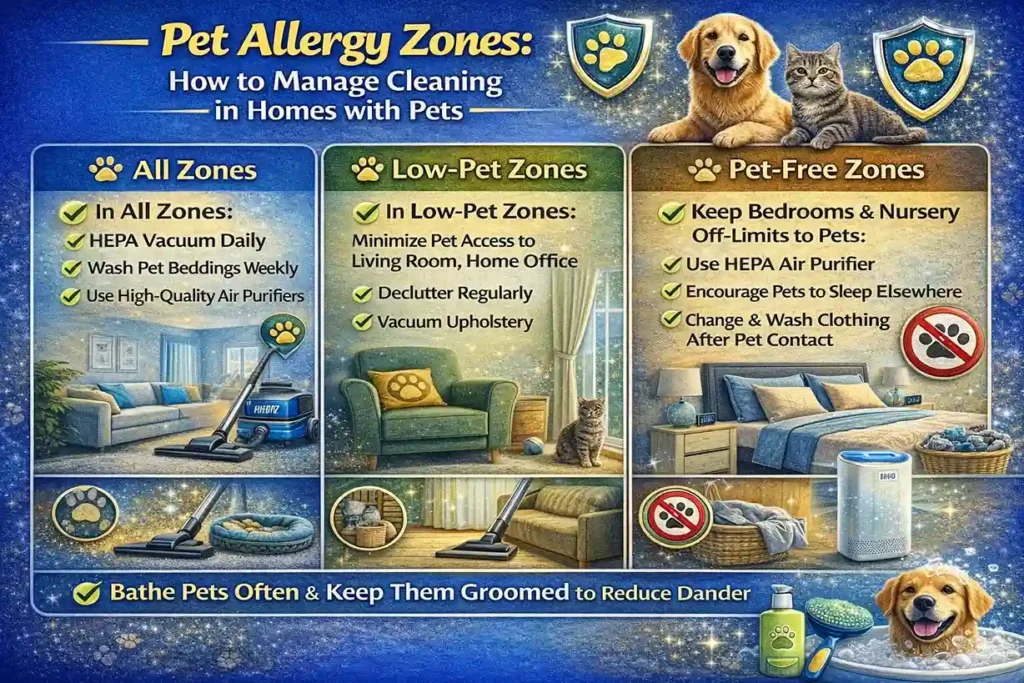
Pet dander sticks to every surface, aggravating allergies (Norman, R. J., et al. 2023).
Smart routine:
✔ Vacuum pet bedding weekly
✔ Wash pet blankets and toys
✔ Use HEPA-filtered vacuum on sofas and floors
✔ Restrict pets from bedrooms
STEP 7: Choose Allergy-Safe Cleaning Products
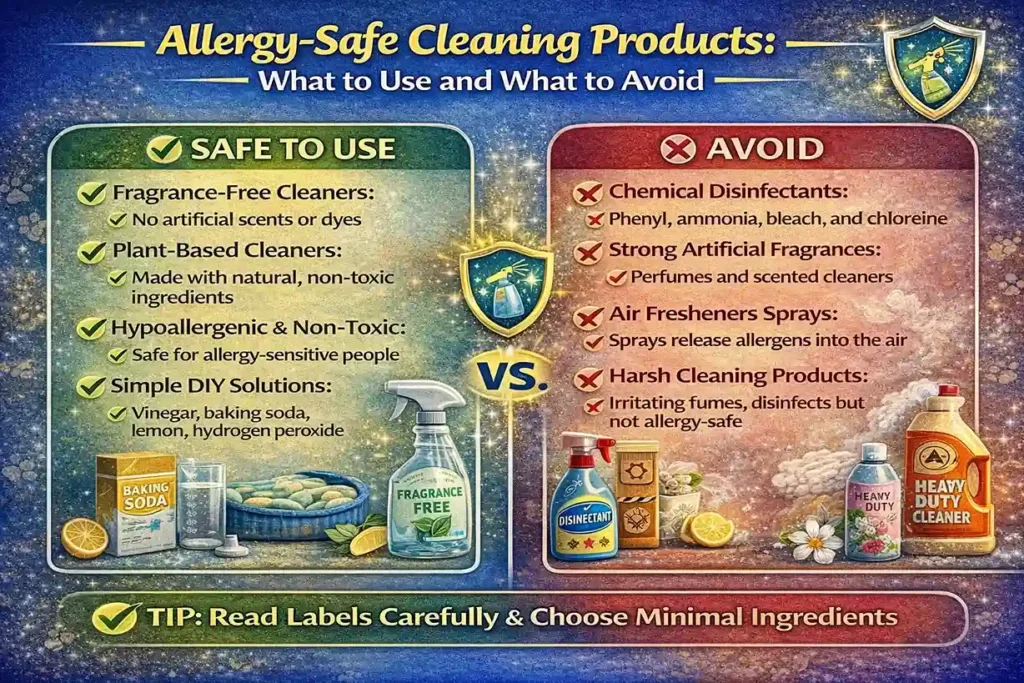
Many popular cleaners have fragrances or volatile chemicals that trigger symptoms (Hassan, R. et al. 2023).
❌ Avoid:
• Fragranced sprays
• Aerosol cleaners
• Pine or lemon scent phenyls
✅ Prefer:
✔ Fragrance-free, mild liquid cleaners
✔ Plant-based or eco-cleaning solutions
📌 Remember: A “clean smell” doesn’t mean clean air.
STEP 8: Laundry Habits That Help Reduce Allergens
✔ Wash bedding and pillow covers weekly
✔ Use mild, hypoallergenic detergents
✔ Avoid fabric softeners (leave residues that irritate sensitive noses) (Norman, R. J., et al. 2023)
STEP 9: Timing Matters — Most People Miss This
Best time to clean for allergy symptoms:
• Late morning or afternoon (lowest outdoor pollen entry)
• Avoid early morning and nighttime cleaning
After cleaning:
✔ Shower and change clothes
✔ Run HEPA air purifier for 30–60 minutes
SIMPLE WEEKLY ALLERGY-FRIENDLY CLEANING SCHEDULE
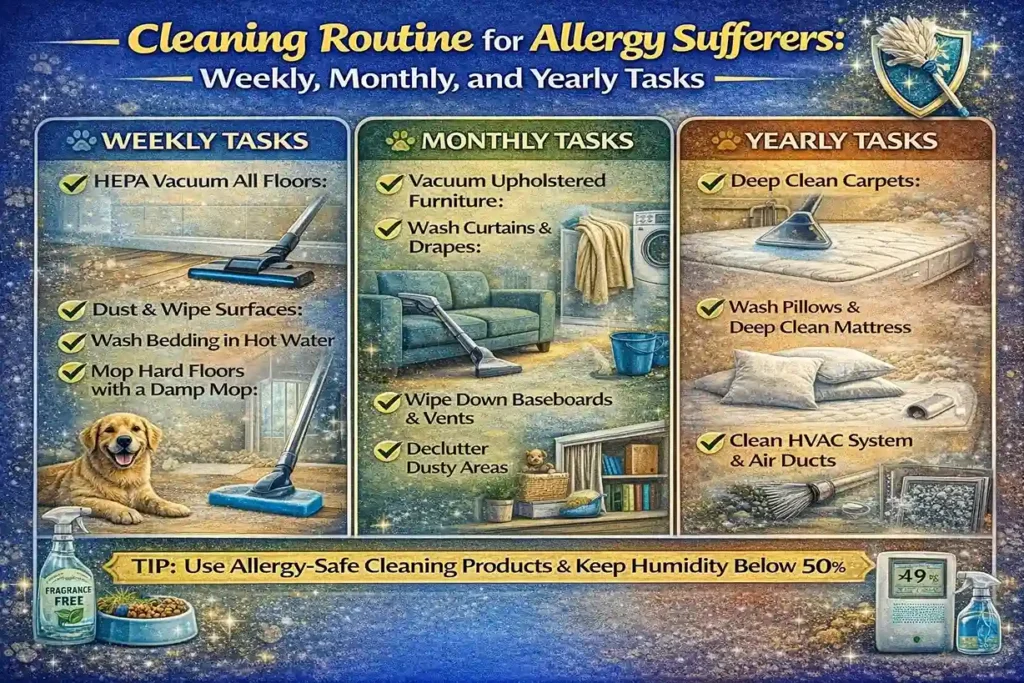
Daily:
• Light damp wipe of surfaces
• HEPA air purifier running
2–3x per week:
• HEPA vacuum key areas (carpets, sofas)
• Pet areas & bedding care
Weekly:
• Bedding wash at high heat
• Mattress vacuum + bedroom wipe down
• Bathroom mold check
Monthly:
• Clean HEPA filters
• Deep vacuum carpets and upholstery
Common Cleaning Mistakes That Worsen Allergy Symptoms
❌ Dry dusting
❌ Scented cleaners
❌ Bagless vacuums without sealed HEPA
❌ Cleaning without proper ventilation
❌ Skipping bedroom and pet cleaning
The Best Allergy-Control Cleaning Stack
1️⃣ HEPA vacuum cleaner
2️⃣ Microfiber dusting cloth set
3️⃣ HEPA air purifier
4️⃣ Dust-mite mattress & pillow encasements
5️⃣ Dehumidifier to reduce mold & mites
👉 This combo reduces daily allergen buildup, not just visible dust.
Who Benefits Most From This Routine?
✔ People with allergic rhinitis
✔ Children and adults with pet allergies
✔ Asthma sufferers
✔ People with chronic sinus congestion
✔ Anyone sensitive to dust, pollen or mold
Key Takeaways
• Cleaning wrongly can worsen allergies, but cleaning correctly reduces triggers.
• A HEPA vacuum cleaner is the foundation of any allergy-friendly home cleaning routine.
• Avoid fragrances, aerosols and dry dusting — they make symptoms worse.
• Bedrooms and pet areas require special focus.
• Consistency beats random cleaning every time.
Medical Disclaimer
This article provides general information about cleaning for allergy sufferers. It is not intended as a substitute for professional medical advice, diagnosis, or treatment. Always consult your healthcare provider before making any changes to your allergy management routine, especially if you have a medical condition or are on prescribed medications.
Frequently Asked Questions (FAQS)
1. Does frequent cleaning help with allergies?
Frequent cleaning helps reduce allergen buildup, but it doesn’t cure allergies. It can lessen triggers and symptoms.
2. Can I mop without vacuuming?
No, always vacuum first to remove dust and allergens before mopping.
3. Are natural cleaning products always safe for allergies?
Not always. Some natural products, like essential oils, can irritate sensitive nasal passages.
4. Should I wear a mask while cleaning if I have allergies?
Yes, especially during vacuuming or mold cleaning, to avoid inhaling airborne allergens.
5. What’s the best time to clean for allergy sufferers?
Clean late morning or afternoon to avoid high pollen levels, and avoid early mornings or nighttime.
References
- Norman, R. J., et al. (2023). The Impact of Indoor Air Quality on Allergic Rhinitis Symptoms and Management. Allergy and Asthma Journal.
- Raghavendra, S., et al. (2024). Effective Cleaning Methods to Reduce Allergen Exposure in Homes with Pets. Journal of Environmental Health.
- Kaplan, M., et al. (2022). A Study on the Efficacy of HEPA Filters in Reducing Indoor Air Allergens. Journal of Allergy & Clinical Immunology.
- Hassan, R., et al. (2023). Allergy-Friendly Cleaning Products: What Works and What Doesn’t. Allergy Research Reviews.