

Antihistamine vs Nasal Spray
Written by: Dr.Muhammad Ihsan Ullah, PhD
Medically reviewed by: Dr. Muhammad Muzamil Khan & Dr. Asma Fareed Khan
Last updated on February 20,2026
Which Allergy Treatment Actually Works Better?
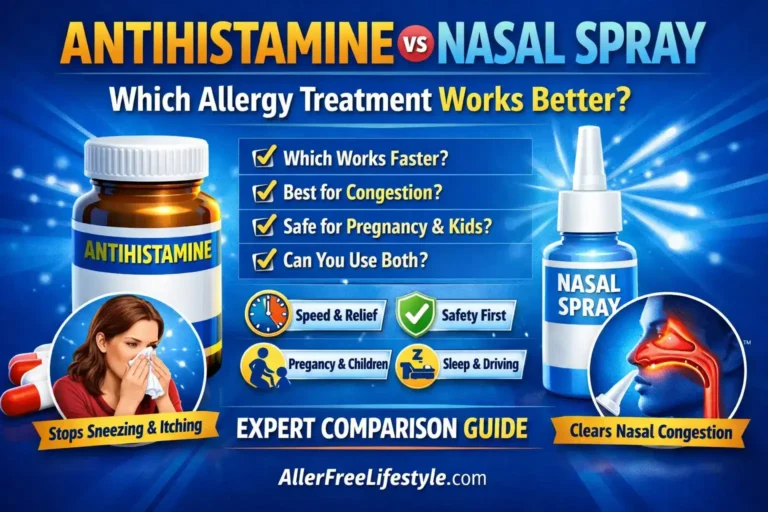
Most patients ask about “antihistamine vs nasal spray” and they want a clear decision:
👉 Which works faster?
👉 Which is better for nasal congestion?
👉 Which is safer for pregnancy or kids?
👉 Can I use both together?
👉 Will it make me sleepy or unsafe to drive?
👉 Which is better for long-term allergy control?
This guide answers those exact questions using modern evidence, pharmacology, and updated treatment guidelines. No fluff. Just decision-making.
The Core Difference
If you remember one thing:
Antihistamines block histamine.
They’re best for sneezing, itching, runny nose.
Steroid nasal sprays reduce inflammation.
They’re best for congestion and persistent allergies.
That difference explains why people feel one works “better” than the other. They’re solving different biological problems.
Modern comparative reviews show intranasal treatments often outperform oral antihistamines, especially for congestion and quality of life (Sousa-Pinto et al., 2025;Torres et al., 2024).
Drug Classes
Antihistamines (H1 blockers)
Non-sedating oral antihistamines
- cetirizine
- loratadine
- fexofenadine
- levocetirizine
- desloratadine
Sedating antihistamines (avoid routine use)
- diphenhydramine
- chlorpheniramine
Intranasal antihistamines
- azelastine (Astepro)
- olopatadine
They block histamine signaling in the nasal mucosa → less itch, sneeze, watery discharge.
Steroid nasal sprays (intranasal corticosteroids)
- fluticasone propionate (Flonase)
- fluticasone furoate
- mometasone (Nasonex)
- budesonide (Rhinocort)
- triamcinolone (Nasacort)
These suppress nasal inflammation → reduce swelling → open airflow.
That’s why they’re stronger for blocked nose.
Guidelines consistently rank intranasal corticosteroids as first-line therapy for persistent symptoms (Sousa-Pinto et al., 2025).
Symptom-by-Symptom Comparison
People don’t have “allergies.” They have specific symptoms.
Here’s the practical breakdown:
Symptom | Oral antihistamine | Intranasal antihistamine | Steroid nasal spray |
Sneezing | ✅ strong | ✅ strong | ✅ strong |
Itchy nose | ✅ strong | ✅ strong | ✅ moderate |
Runny nose | ✅ strong | ✅ strong | ✅ strong |
Nasal congestion | ⚠️ weak | ✅ moderate | ✅✅ strongest |
Postnasal drip | ⚠️ moderate | ✅ moderate | ✅ strong |
Sleep disruption | ⚠️ variable | ✅ helpful | ✅ strong |
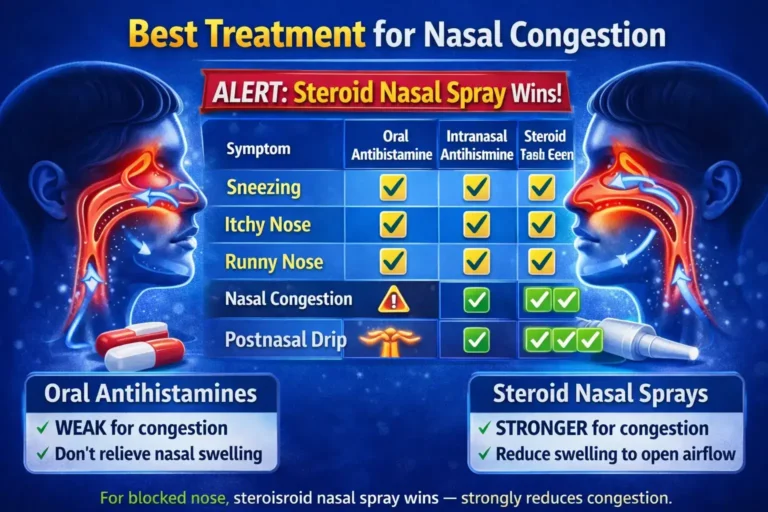
If you ask “what’s better for nasal congestion antihistamine or nasal spray” — the answer is: steroid nasal spray. Evidence reviews confirm intranasal therapy superiority for congestion control (Torres et al., 2024; Sousa-Pinto et al., 2025).
Speed of Relief
It is often asked by patients in the clinical settings
“How fast does antihistamine vs nasal spray work?”
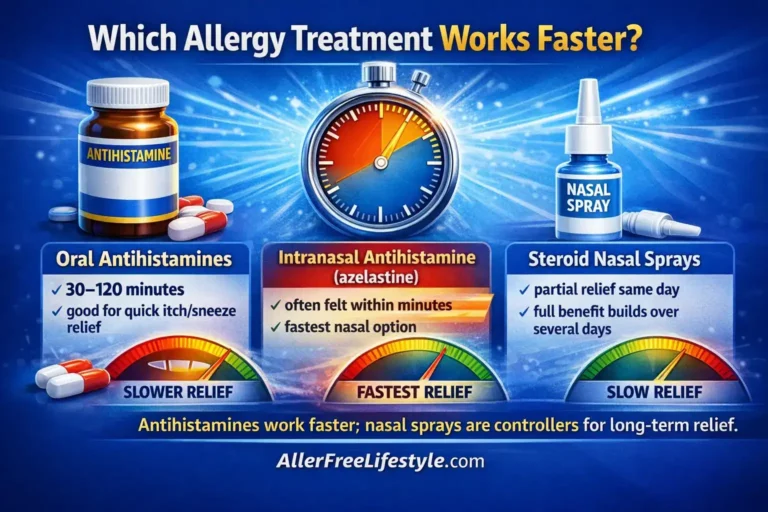
Oral antihistamines
- 30–120 minutes
- good for quick itch/sneeze relief
Intranasal antihistamine (azelastine)
- often felt within minutes
- fastest nasal option
Steroid nasal sprays
- partial relief same day
- full benefit builds over several days
People quit too early and assume steroids don’t work. They do — but they’re controllers, not instant fixes.
Mechanism of Action
Antihistamine mechanism
Allergen → mast cells release histamine → nerves fire
Antihistamine blocks H1 receptor → less itch/sneeze signal
Steroid nasal spray mechanism
Allergen → immune cascade → inflammation
Steroid suppresses inflammatory gene expression
Swelling decreases → airflow improves
That’s why steroids dominate congestion treatment.
Side Effects and Safety
Antihistamines
First-generation (diphenhydramine)
- sedation
- slowed reaction time
- memory impairment
- dry mouth
- fall risk in elderly
Geriatric prescribing guidance warns against these in older adults (American Geriatrics Society, 2023).
Second-generation
- minimal sedation
- cetirizine may cause mild drowsiness
- fexofenadine is least sedating
Steroid nasal sprays
Common:
- dryness
- mild nosebleeds
- irritation
Rare:
- septal irritation (technique issue)
Systemic absorption is extremely low at proper doses.
Guidelines support long-term use when needed (Sousa-Pinto et al., 2025).
Antihistamines
First-generation (diphenhydramine)
- sedation
- slowed reaction time
- memory impairment
- dry mouth
- fall risk in elderly
Geriatric prescribing guidance warns against these in older adults (American Geriatrics Society, 2023).
Second-generation
- minimal sedation
- cetirizine may cause mild drowsiness
- fexofenadine is least sedating
Steroid nasal sprays
Common:
- dryness
- mild nosebleeds
- irritation
Rare:
- septal irritation (technique issue)
Systemic absorption is extremely low at proper doses.
Guidelines support long-term use when needed (Sousa-Pinto et al., 2025).
Sleep and Driving Impact
People often ask “Does antihistamine help sleep?”
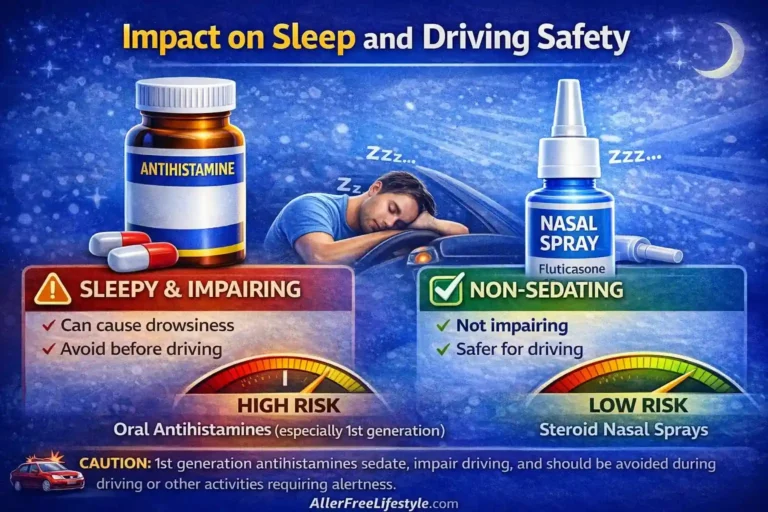
Sedating antihistamines:
- can make you sleepy
- impair next-day alertness
- unsafe for driving
Steroid nasal sprays:
- improve sleep indirectly by clearing congestion
- do not sedate
If you must drive or operate machinery → avoid sedating antihistamines.
Dosing by Age Group
Infants
Medication decisions must be clinician-directed.
Children
- INCS often first-line for persistent congestion
- non-sedating antihistamines for itch/sneeze
- avoid routine sedating antihistamines
Adults
- mild symptoms → antihistamine as needed
- persistent congestion → daily steroid spray
- severe → combination therapy
Older adults
Avoid sedating antihistamines (falls/confusion risk)
Prefer INCS or non-sedating options (American Geriatrics Society, 2023).
Pregnancy Safety
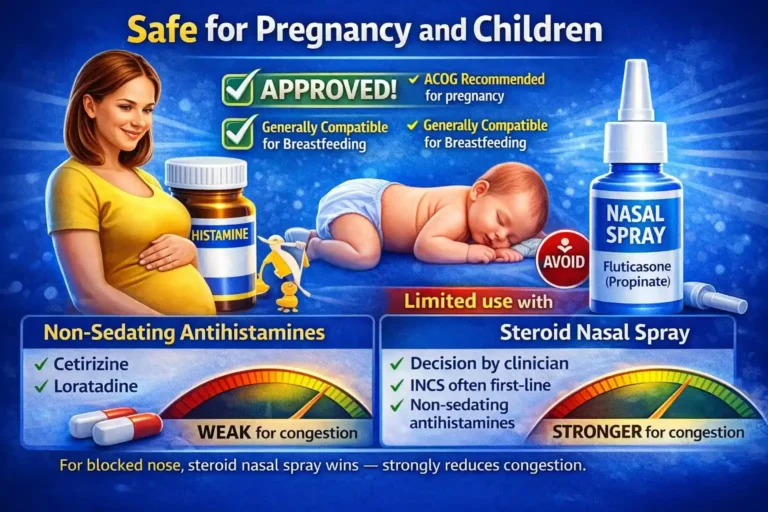
Common safe choices:
- cetirizine
- loratadine
- corticosteroid nasal spray
Obstetric guidance supports these options (ACOG, n.d.).
Breastfeeding
Cetirizine is generally compatible with breastfeeding with monitoring (National Library of Medicine, 2025).
Steroid nasal sprays have minimal systemic exposure.
Drug Interactions and “Don’t Mix With”
Sedating antihistamines + alcohol or sedatives =
dangerous impairment
Avoid combining with:
- opioids
- benzodiazepines
- sleep medications
Steroid nasal sprays have minimal interaction risk.
When to Choose Antihistamine vs Nasal Spray
Choose antihistamine when:
- sneezing/itching dominate
- mild intermittent symptoms
- quick relief needed
Choose steroid nasal spray when:
- congestion is primary
- daily persistent allergies
- sleep disruption
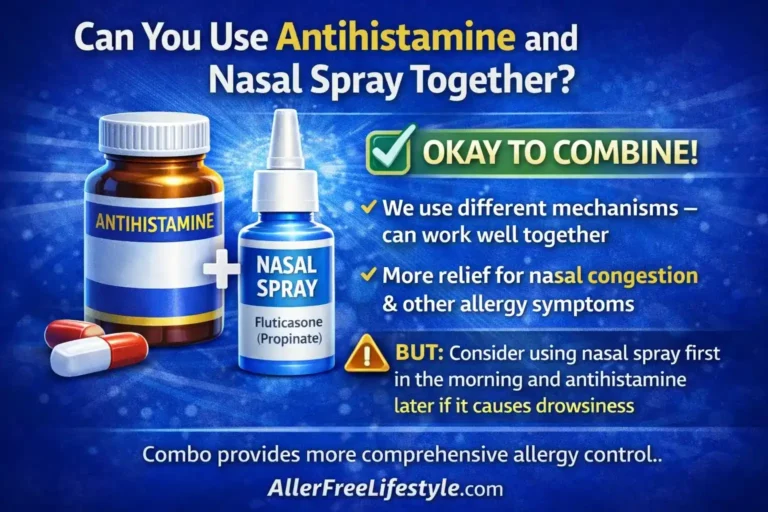
Choose both when:
- symptoms are mixed and severe
- one therapy isn’t enough
Combination strategies are guideline-supported (Sousa-Pinto et al., 2025; Torres et al., 2024).
How to Use Nasal Spray Correctly
Technique determines success.
- Shake bottle
- Tilt head forward
- Aim away from septum
- Gentle inhale
- Use consistently
Most failures are technique errors.
Warning Signs: See a Doctor If
- severe nosebleeds
- facial pain or fever
- breathing difficulty
- no improvement after adequate trial
Medical Disclaimer:
This content is for informational purposes only and is not a substitute for professional medical advice, diagnosis, or treatment. Always consult a qualified healthcare provider before starting or changing any medication.
Frequently Asked Questions(FAQs)
1) What’s better for nasal congestion: antihistamine or nasal spray?
For a blocked nose, a steroid nasal spray usually works better because it reduces nasal inflammation and swelling. Antihistamines help more with sneezing and itching.
2) Which works faster: antihistamine pills or nasal spray?
Oral antihistamines often start working within 1–2 hours, while intranasal antihistamine sprays can feel faster. Steroid nasal sprays may take a few days for full benefit.
3) Can I use an antihistamine and a steroid nasal spray together?
Yes. Many people use a steroid nasal spray daily for control and add a non-sedating antihistamine (oral or nasal) for extra relief, especially during flare-ups.
4) Will antihistamines make me sleepy or affect driving?
Some can. First-generation antihistamines (like diphenhydramine) commonly cause drowsiness and can impair driving. Second-generation options are less sedating, but a few people still feel sleepy.
5) Is a steroid nasal spray safe for long-term use?
For most people, yes—when used correctly. The most common issues are dryness or mild nosebleeds. If symptoms persist or you get frequent nosebleeds, check with a clinician.
References
- Sousa-Pinto, B., et al. (2025). Allergic Rhinitis and Its Impact on Asthma Guidelines. Allergy.
- Torres, M. I., et al. (2024). Intranasal vs Oral Treatments Review.
- American Geriatrics Society. (2023). Beers Criteria.
- (n.d.). Allergy medications in pregnancy.
- National Library of Medicine. (2025). Cetirizine LactMed.
- Sousa-Pinto, B., et al. (2024). Intranasal therapy comparison.