

Best HEPA Vacuum Cleaners for Dust-Mite & Pet Allergy
Written by: Dr.Muhammad Ihsan Ullah, PhD
Medically reviewed by: Dr.Hafiz Muhammad Kashif, MD
Last Updated on February 21,2026
If you suffer from allergic rhinitis, pet allergy, dust-mite allergy, or asthma, regular cleaning alone is often not enough. Many traditional vacuum cleaners can actually worsen allergy symptoms by releasing microscopic allergens back into the air.
This is where HEPA vacuum cleaners become essential.
This buyer-focused guide explains:
- Why HEPA vacuums matter for allergy control
- Which features actually make a vacuum allergy-safe
- Best HEPA vacuums for dust mites and pet dander
- How to choose the right vacuum for your home and symptoms
Why Regular Vacuum Cleaners Can Worsen Allergies
Dust-mite allergens, pet dander, pollen fragments, and mold spores are microscopic and easily become airborne.
Allergen | Approximate Size |
Dust-mite allergens | ~10–40 µm |
Pet dander | ~2–10 µm |
Pollen fragments | <5 µm |
Most standard vacuum cleaners:
- ❌ Leak allergens through exhaust air
- ❌ Resuspend dust into the breathing zone
- ❌ Lack sealed filtration systems
👉 Result: Increased sneezing, nasal congestion, and itchy eyes after cleaning in sensitive individuals.
What Is a HEPA Vacuum Cleaner?
A True HEPA filter captures ≥99.97% of particles ≥0.3 microns.
This means it can effectively trap:
- Dust-mite waste particles
- Pet dander allergens
- Pollen fragments
- Mold spores
📌 Important:
A HEPA filter alone is not enough. A sealed filtration system is required so that all exhaust air passes through the HEPA filter.
Do HEPA Vacuums Help Allergic Rhinitis?
Yes — strongly supported by clinical evidence.
Studies show that HEPA vacuuming:
- Reduces airborne allergen levels
- Improves nasal congestion and sneezing
- Reduces asthma and allergy flare-ups
- Works best when combined with dust-mite bedding control
(Custovic et al., 1998)
ARIA and AAAAI guidelines recognize HEPA vacuum cleaners as an effective tool for indoor allergen reduction when used correctly (Bousquet et al., 2020; Klimek et al., 2024).
A Clinically Common Scenario
Many patients with allergic rhinitis notice that symptoms worsen after cleaning, particularly in carpeted bedrooms or living rooms.
For example, an adult with dust-mite and pet allergy may experience increased sneezing and nasal congestion shortly after vacuuming with a standard vacuum. After switching to a sealed, bagged HEPA vacuum, post-cleaning symptoms often become less frequent and less intense.
📌 Clinical takeaway:
This reflects reduced allergen re-aerosolization rather than elimination of the allergy itself.
HEPA Vacuum vs HEPA Air Purifier
Feature | HEPA Vacuum | HEPA Air Purifier |
Removes settled allergens | ✅ Yes | ❌ No |
Cleans carpets & sofas | ✅ Yes | ❌ No |
Dust-mite allergen control | ✅ Yes | ❌ No |
Pet hair removal | ✅ Yes | ❌ No |
Suitable for night use | ❌ | ✅ |
👉 Best strategy:
Both are complementary, but HEPA vacuums are essential for carpets, mattresses, and upholstery.
Buyer Checklist: What Makes a Vacuum Allergy-Safe?
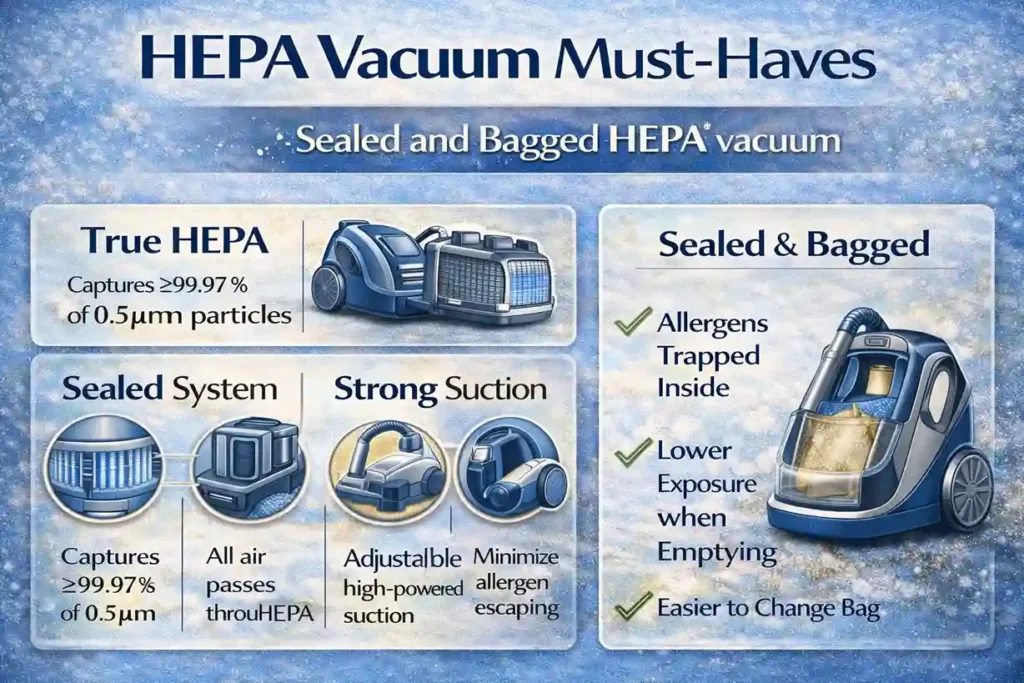
1.True HEPA Filter (Non-Negotiable)
Look for:
- “True HEPA” (not HEPA-like)
- HEPA H13 preferred
- Medical or allergy certifications
Avoid:
- HEPA-style filters
- Washable foam filters only
2.Fully Sealed Filtration System
Critical for allergies.
✔ Sealed body
✔ No air leaks
✔ All exhaust air passes through HEPA
Without sealing → HEPA becomes ineffective.
3.Strong Suction for Dust-Mite Removal
Dust mites reside deep inside:
- Carpets
- Mattresses
- Upholstered furniture
Look for:
- Motorized brush roll
- Adjustable suction
- Carpet-specific cleaning modes
4.Pet Hair & Dander Handling
For homes with pets:
- Anti-tangle brush rolls
- High airflow
- Dander-grade HEPA filtration
5.Bagged vs Bagless
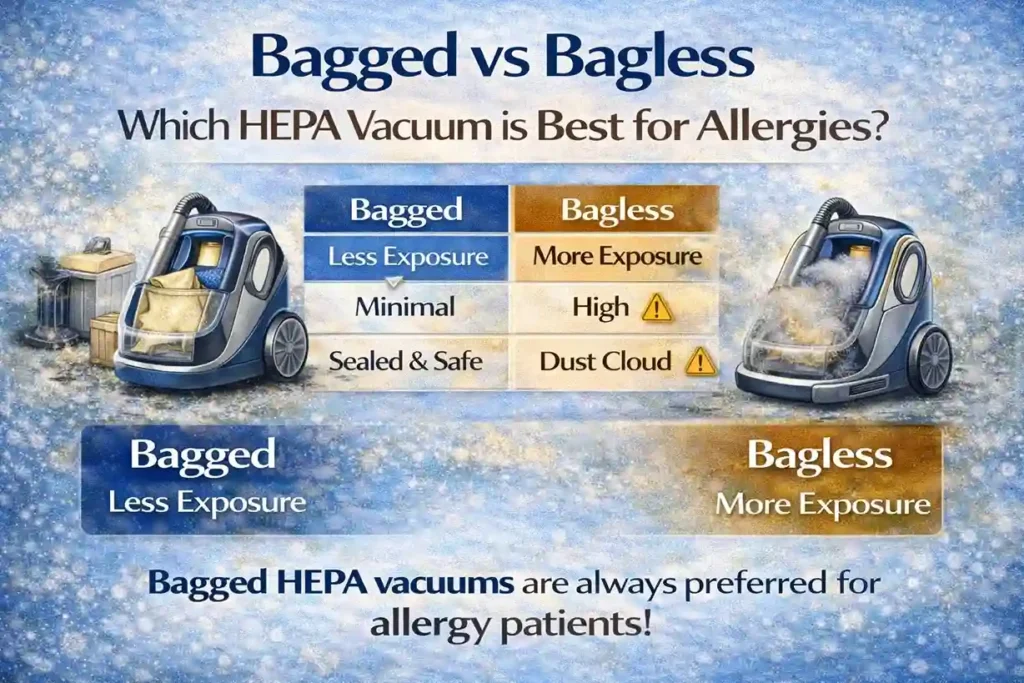
Bagged HEPA vacuums are strongly preferred for allergies.
Feature | Bagged | Bagless |
Allergen exposure | Minimal | High |
Emptying safety | Sealed | Dust cloud |
Recommended for rhinitis | ✅ Yes | ❌ Avoid |
📌 If allergic → always choose bagged.
Best HEPA Vacuum Cleaners by Use Case
✅ Best HEPA Vacuum for Dust-Mite Allergy (Overall)
Best for: Allergic rhinitis, carpets, bedrooms
- True HEPA filtration
- Fully sealed system
- Strong carpet agitation
- Quiet operation
✅ Best HEPA Vacuum for Pet Allergy
Best for: Cats, dogs, heavy shedding
- Excellent pet hair pickup
- Strong suction
- HEPA-sealed exhaust
Especially useful for sofas, rugs, and pet beds.
✅ Best HEPA Vacuum for Mattresses & Upholstery
Best for:
- Dust-mite control
- Bed and sofa cleaning
Look for:
- Motorized upholstery tools
- Gentle but deep suction
✅ Best Lightweight HEPA Vacuum (Apartments & Seniors)
- Easy maneuverability
- Low noise
- Fully sealed HEPA
Ideal for frequent allergy maintenance.
✅ Best Budget HEPA Vacuum (Safe Choice)
- Certified HEPA filtration
- Bagged system
- Reliable suction
⚠ Avoid very cheap, uncertified “HEPA-style” models.
How Often Should Allergy Patients Vacuum?
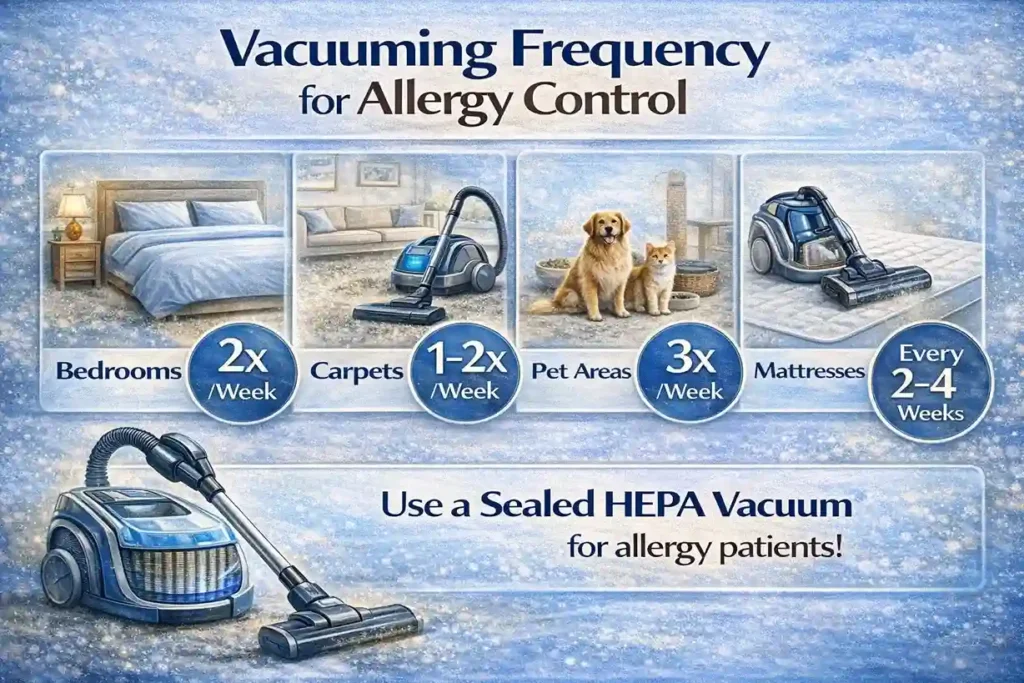
Area | Frequency |
Bedrooms | 2× per week |
Living rooms | 1–2× per week |
Pet areas | 3× per week |
Mattress surface | Every 2–4 weeks |
📌 Use slow, overlapping strokes for maximum effectiveness.
Correct Vacuuming Technique
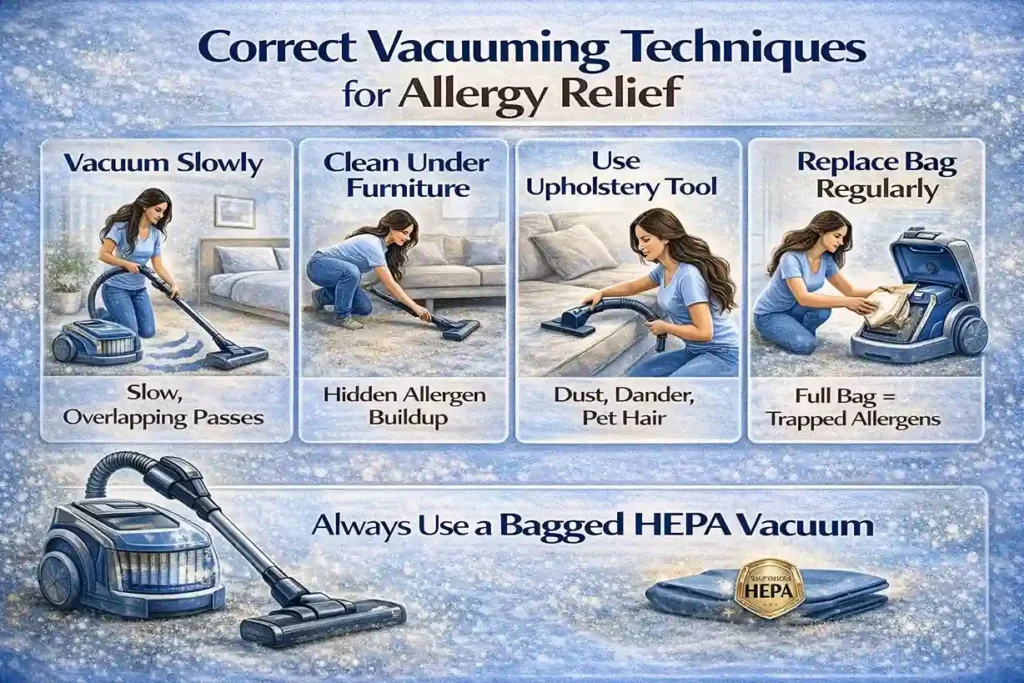
- Vacuum slowly
- Use straight + cross directions
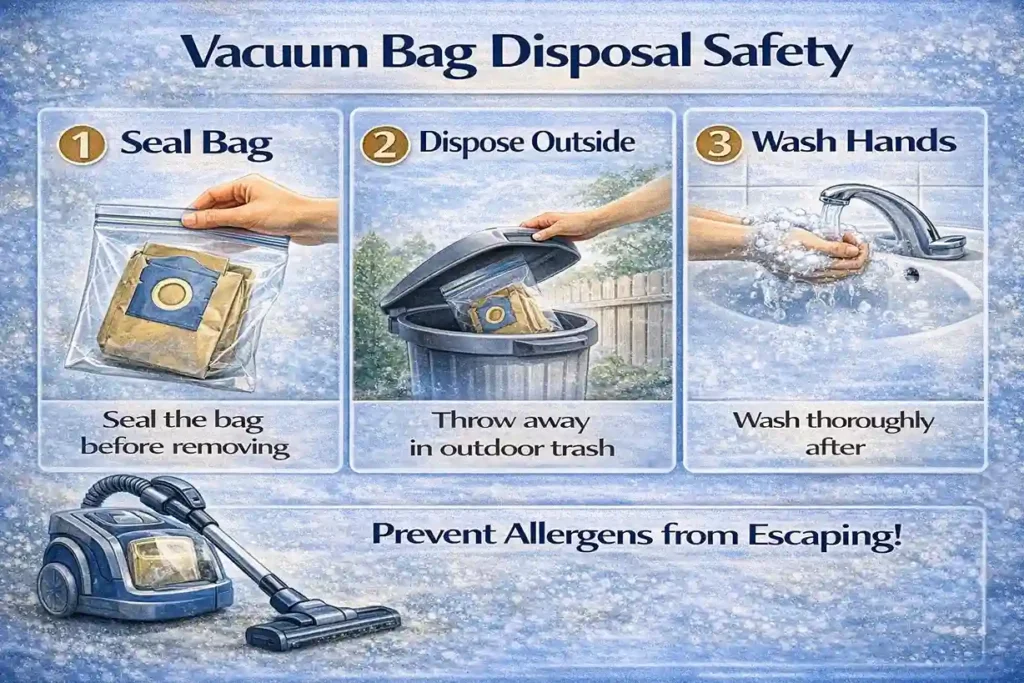
- Empty bags outdoors
- Wear a mask if highly allergic
- Vacuum before running air purifiers
HEPA Vacuum + Bedding Covers = Maximum Relief
Best allergy control stack:
1️⃣ Dust-mite mattress & pillow encasements
2️⃣ HEPA vacuum cleaner
3️⃣ Weekly hot-water bedding washing
4️⃣ HEPA air purifier (bedroom)
👉 This combination reduces night-time and morning symptoms most effectively.
Common Myths
❌ “Bagless vacuums are more powerful”
❌ “HEPA filter alone is enough”
❌ “Vacuuming once a week is enough”
❌ “Pet hair is the only problem”
Reality: Microscopic allergens—not visible hair—cause symptoms.
Who Should Buy a HEPA Vacuum Immediately?
- Allergic rhinitis patients
- Pet allergy sufferers
- Asthma with allergies
- Children with nasal allergies
- Carpeted homes
- Humid environments
Key Takeaways
- HEPA vacuums are essential for allergy-safe cleaning
- Bagged + sealed systems work best
- Regular vacuums may worsen allergy symptoms
- Carpets and mattresses need focused cleaning
- Proper HEPA vacuuming can reduce reliance on medications over time
Medical Review Disclaimer
This article is for informational and educational purposes only and does not constitute medical advice. The content is written by a qualified healthcare professional and medically reviewed for accuracy. However, it should not be used as a substitute for professional medical diagnosis, treatment, or advice. Always consult a licensed healthcare provider regarding any medical condition or health concern.
Frequently Asked Questions (FAQs)
1. Is a HEPA vacuum worth it for allergies?
Yes. It significantly reduces allergen exposure.
2. Can HEPA vacuums remove dust mites?
They remove dust-mite allergens, which is what matters clinically.
3. Bagged or bagless — which is better?
Bagged is strongly recommended for allergic rhinitis.
4. How long do HEPA filters last?
Usually 6–12 months, depending on use.
5. Do robot vacuums help allergies?
Only models with sealed HEPA filtration provide benefit.
References
Bousquet, J., Klimek, L., Togias, A., Zuberbier, T., Agache, I., Ansotegui, I. J., … Wallace, D. V. (2020). Next-generation allergic rhinitis and its impact on asthma (ARIA). Journal of Allergy and Clinical Immunology, 145(3), 895–909.
Custovic, A., et al. (1998). The effect of domestic cleaning on airborne allergen levels. Clinical & Experimental Allergy, 28(6), 670–675.
Klimek, L., Bousquet, J., Pfaar, O., Bachert, C., Hellings, P. W., & Agache, I. (2024). Current management of allergic rhinitis. Journal of Allergy and Clinical Immunology: In Practice, 12(2), 215–229.