

Best Nasal Strips & Nasal Dilators for Nighttime Congestion
Written by: Dr.Muhammad Ihsan Ullah, PhD
Medically reviewed by: Dr Ali Raza Dogar ,MBBS,ENT
Last updated on January 26,2026

Waking up with a blocked nose, mouth breathing, dry throat, or poor sleep is extremely common in people with allergic rhinitis, dust-mite allergy, pet allergy, or chronic nighttime nasal congestion.
For many people, medications alone are not always enough — especially at night.
Nasal strips and nasal dilators are simple, drug-free mechanical airflow devices designed to physically open the nasal passages and improve breathing during sleep by supporting the nasal valve area, the narrowest part of the nasal airway (Mayo Clinic, 2023).
This in-depth buyer’s guide will help you:
- Understand how nasal strips and nasal dilators work
- Choose the best option for allergic rhinitis and nighttime congestion
- Identify devices for mouth breathing, snoring, and nasal valve collapse
- Avoid gimmicks that don’t improve airflow
- Buy the right product based on nose anatomy, sleep position, and symptom severity
Why Nighttime Nasal Congestion Is Worse
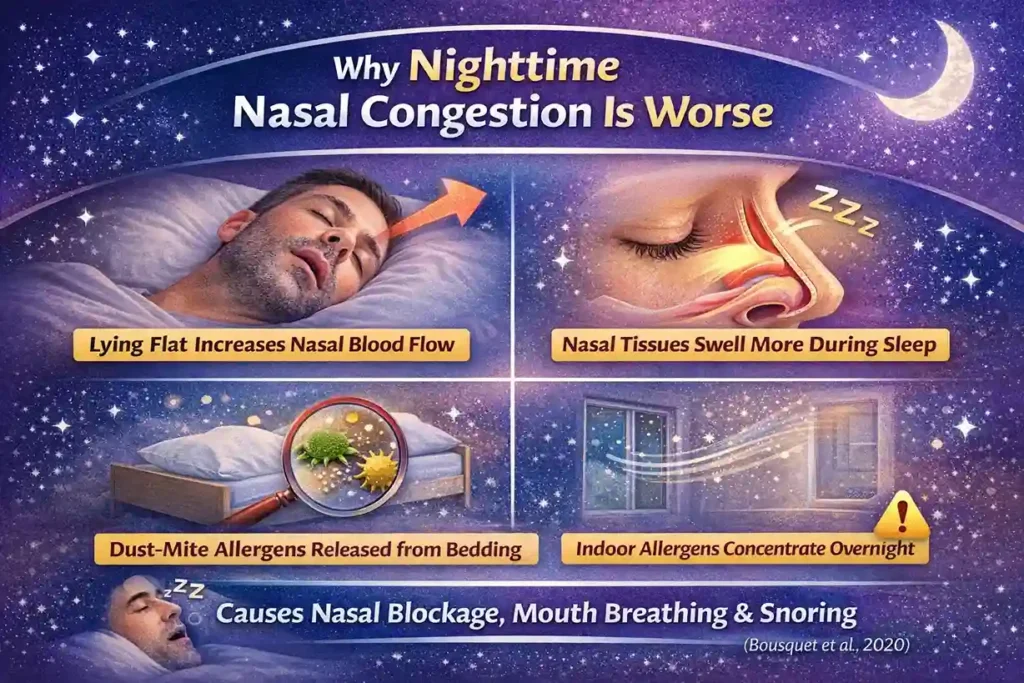
Nighttime nasal symptoms often worsen due to several physiological and environmental factors:
- Lying flat increases nasal blood flow and tissue swelling
- Nasal mucosa naturally becomes more congested during sleep
- Dust-mite allergens are released from bedding with movement
- Indoor allergens concentrate overnight in closed bedrooms
These factors combine to increase nasal obstruction, leading to mouth breathing during sleep, snoring, frequent awakenings, and poor sleep quality (Bousquet et al., 2020).
What Are Nasal Strips?
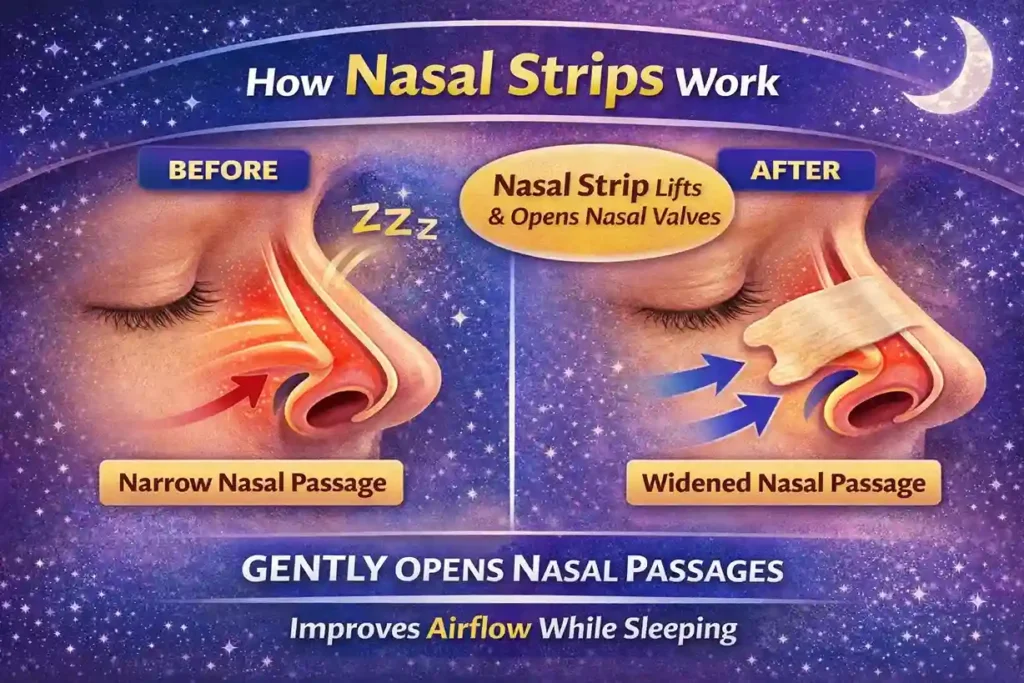
Nasal strips are external adhesive nasal dilators placed across the bridge of the nose.
They work by gently pulling the nasal valves outward, reducing resistance at the external nasal valve, which improves airflow through the nostrils during inhalation (Mayo Clinic, 2023).
Key Features of Nasal Strips
- Drug-free and non-medicated
- Immediate mechanical airflow improvement
- Disposable and hygienic
- Safe for nightly use
- Easy for beginners
Best for:
Mild to moderate nighttime congestion, allergy-related nasal blockage, first-time users, and people sensitive to internal devices.
What Are Nasal Dilators?
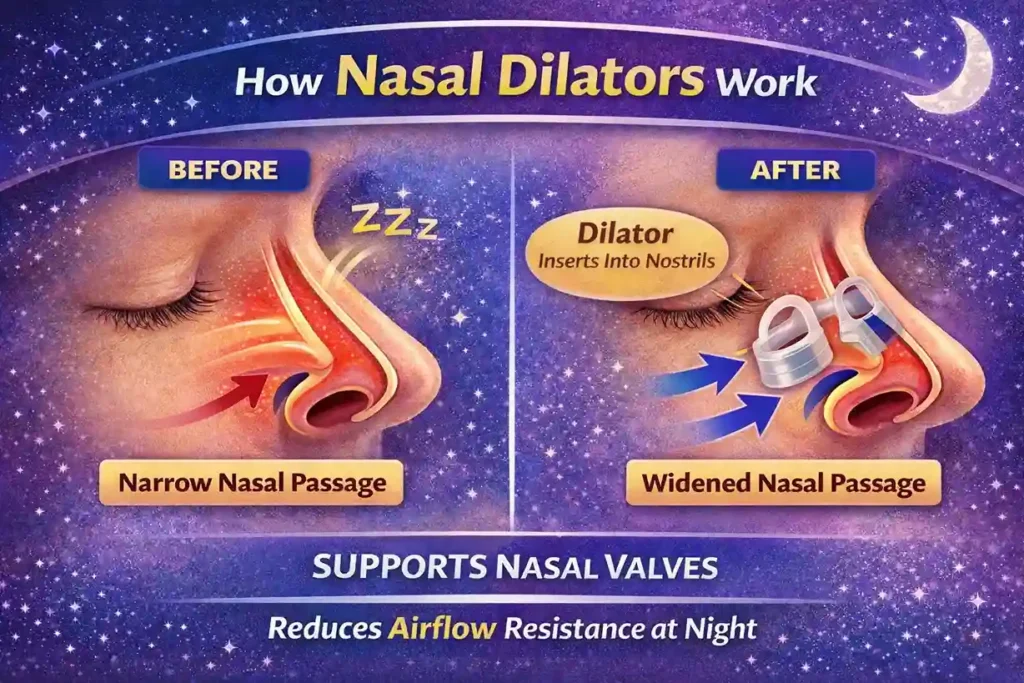
Nasal dilators are airflow devices placed inside the nostrils (internal nasal dilators) or clipped externally to support the nasal valves.
They physically prevent nasal valve collapse, a common cause of nighttime congestion, especially in people with narrow nasal passages or structural airway narrowing (Klimek et al., 2024).
Key Features of Nasal Dilators
- Reusable and long-lasting
- Stronger airflow support than nasal strips
- Effective for chronic nasal obstruction
- Often preferred when strips fail
Best for:
Severe congestion, narrow nostrils, nasal valve collapse, persistent mouth breathing, and snoring related to nasal obstruction.
Do Nasal Strips & Dilators Help Allergic Rhinitis?
Yes — particularly for nighttime nasal congestion caused by allergic rhinitis.
Clinical and guideline-based evidence indicates that nasal strips and nasal dilators can:
- Improve nasal airflow during sleep
- Reduce mouth breathing and dry mouth
- Support better sleep quality
- Reduce snoring caused by nasal blockage
However, these devices do not treat allergic inflammation. They provide mechanical airflow support, which is especially helpful when nasal swelling worsens at night (Mayo Clinic; Klimek et al., 2024).
Best Results Occur When Combined With:
- Prescribed daytime nasal sprays (if recommended)
- Bedroom HEPA air purification
- Dust-mite–proof mattress and pillow covers
(ARIA Guidelines)
Nasal Strips vs Nasal Dilators (Quick Comparison)
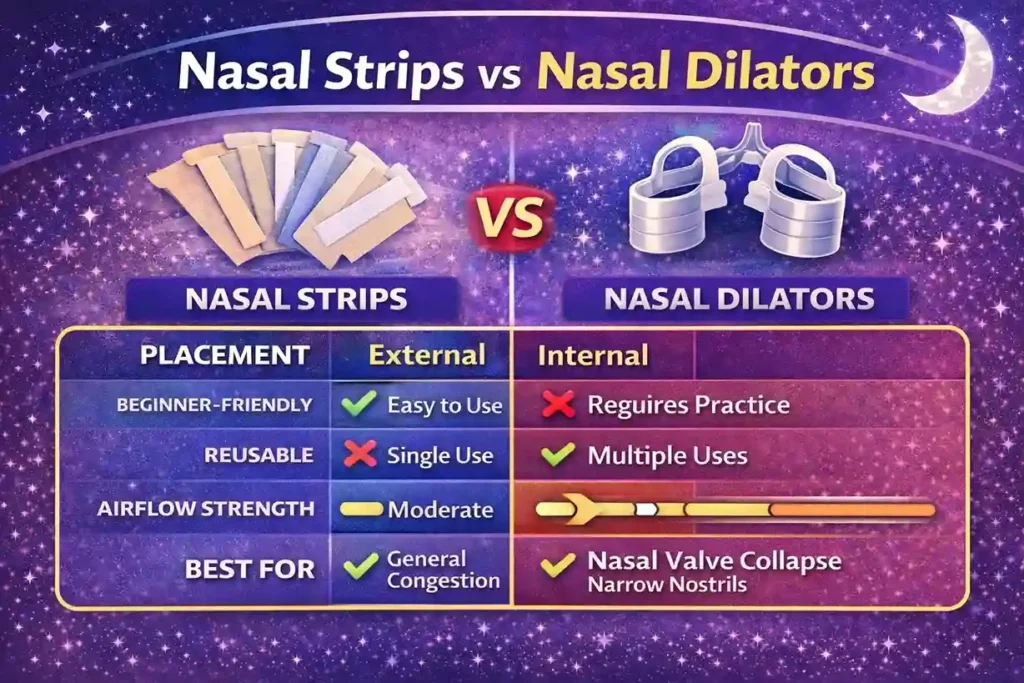
Feature | Nasal Strips | Nasal Dilators |
External | ✅ | ❌ |
Internal | ❌ | ✅ |
Ease of Use | Very easy | Moderate |
Reusable | ❌ | ✅ |
Airflow Strength | Moderate | Strong |
Beginner-Friendly | ✅ | ❌ |
Nasal Valve Collapse | ❌ | ✅ |
Narrow Nostrils | ❌ | ✅ |
How to Use Nasal Strips Correctly (Most People Do It Wrong)
- Wash and dry the nose (oil reduces adhesion)
- Place the strip just above the nostril flare
- Press firmly for 30 seconds
- Apply before sleep, not during the night
Incorrect placement significantly reduces effectiveness (Mayo Clinic, 2023).
How to Use Nasal Dilators Safely
- Choose the correct size
- Insert gently without force
- Clean daily with mild soap
- Stop use if irritation or bleeding occurs
(Klimek et al., 2024)
Who Benefits Most From Nasal Strips & Dilators?
- People with allergic rhinitis
- Dust-mite allergy sufferers
- Nighttime nasal congestion
- Mouth breathers
- Snorers with nasal obstruction
- Those seeking drug-free solutions
What Nasal Strips & Dilators CANNOT Do
- Do not cure allergies
- Do not replace nasal steroid sprays
- Do not treat sinus infections
- Do not work for severe nasal polyps
They are support tools, not disease treatments (Klimek et al., 2024).
Best Combination for Nighttime Relief
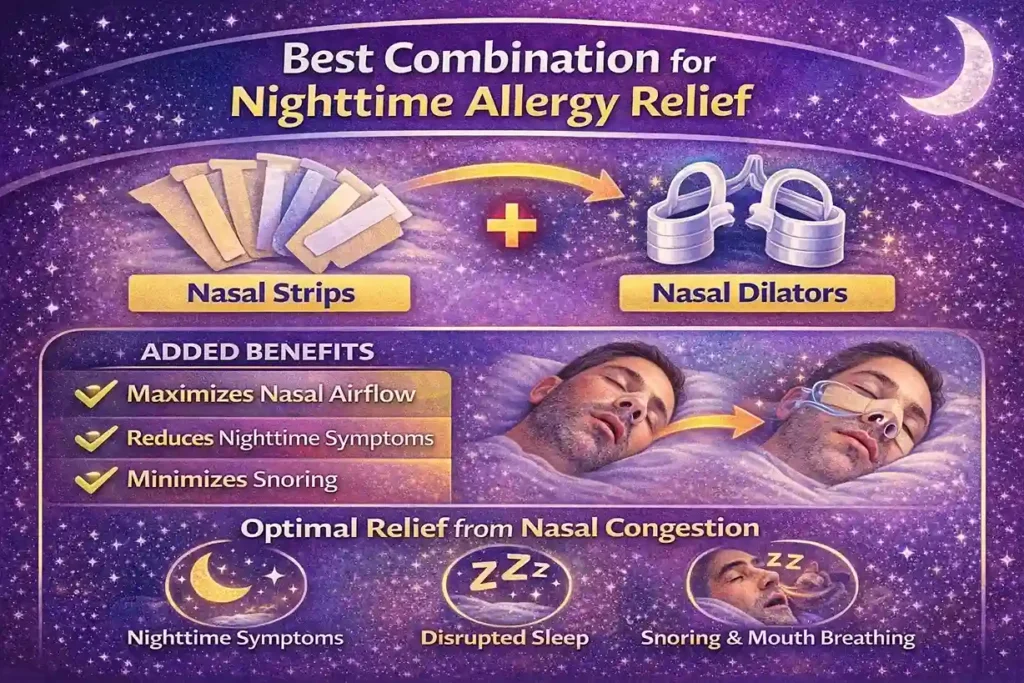
Most people experience the best relief when combining:
- Bedroom HEPA air purifier
- Dust-mite mattress and pillow covers
- Nasal strip or nasal dilator
- Saline rinse before bed
This layered approach aligns with ARIA-based allergy management.
Key Takeaways
- Nasal strips and dilators improve airflow immediately
- Most effective for nighttime congestion
- Drug-free and affordable
- Dilators provide stronger support than strips
- Best results come from combining airflow support with allergen control
Medical Disclaimer
This content is for informational purposes only and does not replace professional medical advice. Consult a qualified healthcare professional for persistent or severe nasal symptoms.
Frequently Asked Questions (FAQs)
1. Do nasal strips help allergic rhinitis?
Yes. They improve airflow but do not treat inflammation.
2. Are nasal dilators safe for nightly use?
Yes, when properly sized, used correctly, and cleaned regularly.
3. Which works better: nasal strips or dilators?
Dilators provide stronger airflow support; strips are easier to use.
4. Can children use nasal strips?
Yes. Child-specific sizes should be used, and manufacturer guidance or pediatric advice should be followed.
5. Can nasal strips or dilators be used with nasal sprays?
Yes. Apply the spray first, then use the strip or dilator.
References
Mayo Clinic. (2023). Nasal strips and nasal dilators: How they work.
Bousquet, J., Klimek, L., Togias, A., Zuberbier, T., Agache, I., Ansotegui, I. J., … Wallace, D. V. (2020).
Next-generation allergic rhinitis and its impact on asthma (ARIA). Journal of Allergy and Clinical Immunology, 145(3), 895–909.
Klimek, L., Bousquet, J., Pfaar, O., Bachert, C., Hellings, P. W., & Agache, I. (2024).
Management of nasal obstruction in allergic rhinitis. Journal of Allergy and Clinical Immunology: In Practice, 12(2), 215–229