

Can Allergies Cause Fever?
Written by: Dr.Muhammad Ihsan Ullah, PhD
Medically reviewed by: Dr. Muhammad Mudassar Hassan,MD
Last updated on February 22,2026
Symptoms, Causes, and When to Worry
If you’ve ever experienced sneezing, nasal congestion, itchy eyes, fatigue, and a rising body temperature at the same time, you may have wondered:
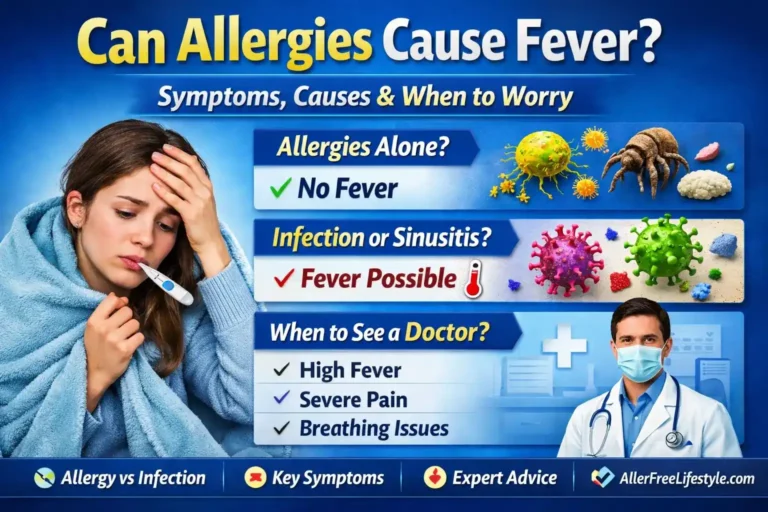
Can allergies cause fever?
This is one of the most common health questions searched online, especially during seasonal allergy periods. Many people confuse allergy symptoms with infections because both conditions involve immune system activation and inflammation affecting the respiratory tract.
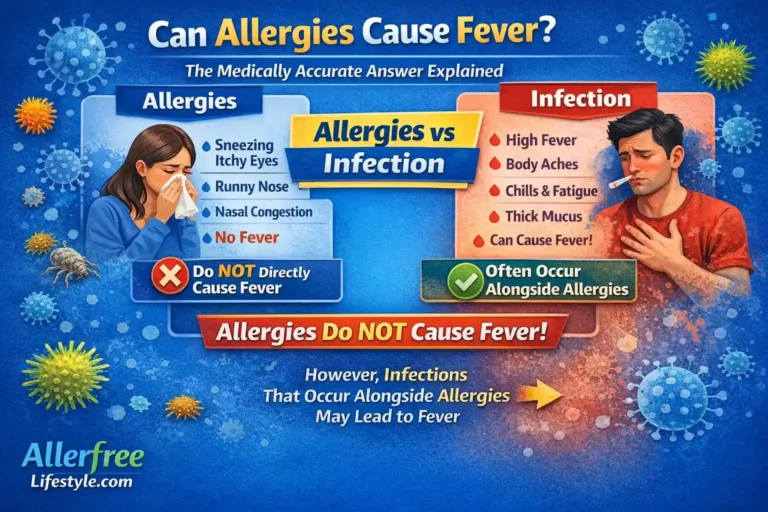
The medically accurate answer is:
Allergies themselves do not directly cause fever.
However, infections that occur alongside allergies may lead to fever.
Understanding this distinction is important because fever may indicate a condition that requires medical evaluation rather than simple allergy treatment.
This comprehensive evidence-based guide explains:
- Whether allergies can cause fever
- Why allergies may make you feel feverish
- When fever occurs with allergy symptoms
- How to distinguish allergies from infections
- When to seek medical care
Do Allergies Cause Fever?
No — allergic reactions typically do not cause fever.
- Fever occurs when the body releases inflammatory chemicals called pyrogens, which signal the hypothalamus in the brain to increase body temperature in response to infections such as viruses or bacteria. Allergies, in contrast, involve immune responses to harmless substances like pollen, dust mites, or pet dander rather than pathogens.
- Allergic rhinitis is an IgE-mediated hypersensitivity reactioninvolving mast cell activation and histamine release, which causes symptoms like sneezing, congestion, and itching but does not usually activate the pyrogen pathways responsible for fever (Wise et al., 2023).
Clinical guidelines consistently emphasize that when fever is present with allergy-like symptoms, another illness is usually responsible — most commonly viral infections or sinusitis.
This is also why the term “hay fever” is misleading. Despite the name, allergic rhinitis does not produce true fever.
Why Allergies Can Make You Feel Feverish
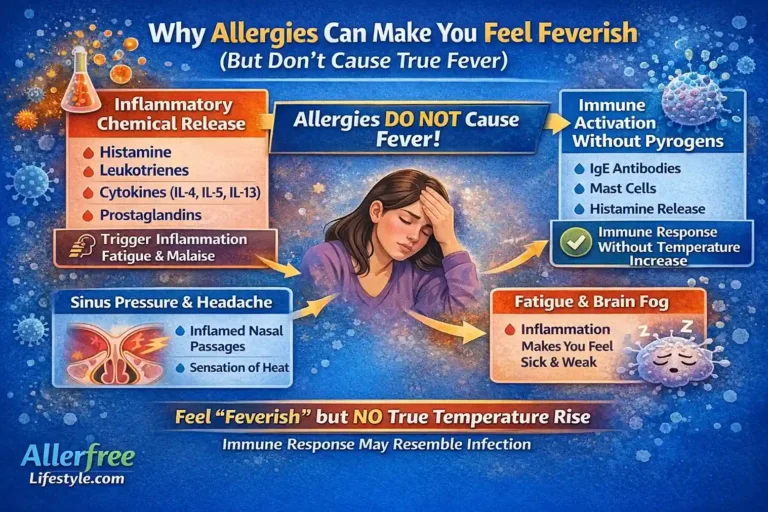
Many individuals report feeling hot, tired, or sick during allergy flare-ups, leading to confusion between allergies and infection.
Several physiological mechanisms explain this sensation.
1. Inflammatory Mediator Release
Allergic reactions trigger release of:
- Histamine
- Leukotrienes
- Cytokines (IL-4, IL-5, IL-13)
- Prostaglandins
- Eosinophilic inflammatory mediators
These chemicals produce inflammation and systemic symptoms such as fatigue and malaise, which can mimic infection without actually raising body temperature (Ghosh et al., 2025).
2. Sinus Pressure and Headache
Inflamed nasal passages and sinus cavities can cause:
- Facial pressure
- Headache
- Fatigue
- Cognitive fog
These symptoms often create the perception of fever even when body temperature is normal.
3. Immune System Activation Without Pyrogen Response
Allergy immune pathways differ fundamentally from infection pathways.
Infections activate:
- Interleukin-1 (IL-1)
- Tumor necrosis factor (TNF)
- Interleukin-6 (IL-6)
These cytokines induce fever by acting on the hypothalamus.
Allergies activate:
- IgE antibodies
- Mast cells
- Histamine pathways
- Type-2 helper T-cell immune responses
These pathways cause inflammation but not fever (De Carli et al., 2023).
4. Fatigue and Brain Fog
Cytokine signaling during allergic inflammation can produce:
- Fatigue
- Reduced concentration
- Brain fog
- Weakness
These systemic symptoms may resemble illness.
When Fever Can Occur With Allergies
Although allergies do not directly cause fever, fever may occur in certain situations.
Secondary Sinus Infection (Sinusitis)
Blocked sinuses caused by allergic inflammation can create an environment for bacterial growth.
Acute sinusitis may cause:
- Fever
- Facial pain
- Thick nasal discharge
- Headache
Sinus infection is one of the most common reasons fever appears alongside allergy symptoms.
Viral Infection Occurring With Allergies
People may experience:
- Seasonal allergies
- Viral cold
- Influenza
- COVID-19
Simultaneously.
In these cases, infection — not allergies — causes fever.
Complications of Chronic Allergies
Persistent inflammation may increase risk of:
- Ear infections
- Respiratory infections
- Sinus infections
These complications can produce fever.
Allergy Symptoms vs Fever Symptoms: Key Differences
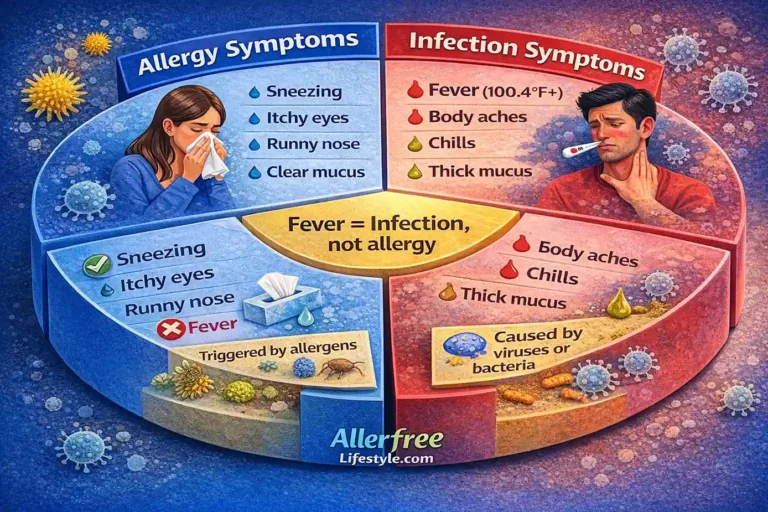
Understanding symptom patterns helps determine whether allergies or infection is responsible.
Typical Allergy Symptoms
- Sneezing
- Runny nose
- Nasal congestion
- Itchy eyes
- Clear mucus
- Post-nasal drip
- Symptoms triggered by allergens
These features are classic for allergic rhinitis (Akhouri et al., 2023).
Symptoms Suggesting Infection
- Fever above 100.4°F (38°C)
- Chills
- Body aches
- Severe fatigue
- Thick yellow or green mucus
- Persistent cough
- Sore throat
Fever strongly suggests infection rather than allergies.
Allergies vs Cold vs Flu vs COVID
Symptom | Allergies | Cold | Flu | COVID |
Sneezing | Common | Sometimes | Rare | Sometimes |
Itchy eyes | Very common | Rare | Rare | Rare |
Fever | No | Mild possible | Common | Common |
Body aches | Rare | Mild | Severe | Common |
Duration | Weeks | 7–10 days | 5–14 days | Variable |
Trigger | Allergens | Virus | Influenza virus | SARS-CoV-2 |
Can Seasonal Allergies Cause Low-Grade Fever?
A frequent question is:
“Can seasonal allergies cause a low-grade fever?”
True fever caused solely by allergies is unlikely.
If temperature rises slightly, possible explanations include:
- Early infection
- Sinus inflammation
- Dehydration
- Environmental heat exposure
- Measurement variation
Children with allergy symptoms and fever almost always have an accompanying infection rather than allergy alone.
Children and Fever With Allergies
Parents often worry when children with allergies develop fever.
Important points:
- Allergies alone rarely cause fever in children
- Fever usually indicates viral illness
- Medical evaluation may be necessary
Allergic rhinitis is a non-infectious inflammatory condition with symptoms such as sneezing, nasal congestion, and itching, but not fever (Cheng et al., 2024).
The Science: Why Allergies Don’t Trigger Fever
Understanding the immunology clarifies the difference.
Infection-Related Fever Mechanism
Pathogens stimulate immune cells to release cytokines that act as pyrogens, increasing body temperature to fight infection.
Allergy Immune Pathway
Allergic reactions involve:
- IgE antibodies
- Mast cell degranulation
- Histamine release
- Eosinophilic inflammation
These mechanisms cause symptoms but typically do not activate fever pathways.
Can Severe Allergic Reactions Cause Fever?
Even severe allergic reactions such as:
- Allergic rhinitis
- Food allergies
- Skin allergies
Do not typically cause fever.
However, fever should always prompt evaluation for infection or complications.
When to See a Doctor
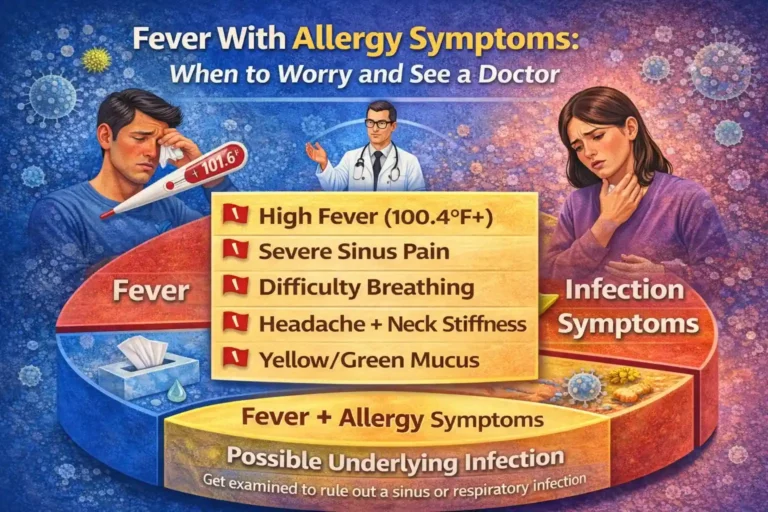
Seek medical care if you experience:
- Fever above 101°F (38.3°C)
- Fever lasting more than 3 days
- Severe headache
- Breathing difficulty
- Chest pain
- Confusion
- Persistent vomiting
- Severe sinus pain
These symptoms may indicate infection or another serious condition.
Treatment if You Have Allergies and Fever
Treatment depends on the underlying cause.
Allergy Management
- Antihistamines
- Intranasal corticosteroids
- Saline irrigation
- Allergen avoidance
- Immunotherapy
Infection Treatment
- Rest and hydration
- Acetaminophen or ibuprofen
- Antiviral or antibiotic therapy when indicated
Medical Disclaimer:
The information provided on this website is for educational and informational purposes only and is not intended as medical advice, diagnosis, or treatment. Always seek the advice of a qualified healthcare professional with any questions regarding a medical condition. Never disregard professional medical advice or delay seeking care because of something you have read on this site.
Frequently Asked Questions(FAQs)
1. Can allergies cause fever and chills?
No. Fever and chills usually indicate infection rather than allergies.
2. Can pollen allergies cause fever?
Pollen triggers allergic symptoms but does not directly cause fever.
3. Why do I feel sick during allergies?
Inflammation and immune activation may create flu-like symptoms without fever.
4. Can allergies cause body aches?
Mild discomfort may occur, but significant aches usually indicate infection.
References
- Wise, S. K., et al. (2023). International consensus statement on allergy and rhinology: Allergic rhinitis. International Forum of Allergy & Rhinology. https://doi.org/10.1002/alr.23090
- De Carli, M., et al. (2023). Mechanism and clinical evidence of immunotherapy in allergic rhinitis. Frontiers in Allergy. https://doi.org/10.3389/falgy.2023.1217388
- Ghosh, S., et al. (2025). Mechanism of histamine-mediated allergic reactions. Biomedical & Pharmacology Journal. https://doi.org/10.13005/bpj/XXXX
- Akhouri, S., et al. (2023). Allergic rhinitis. StatPearls Publishing. https://doi.org/10.5252/statpearls.nbK538186
- Cheng, M., et al. (2024). New progress in pediatric allergic rhinitis. Frontiers in Immunology. https://doi.org/10.3389/fimmu.2024.1452410