

Signs and Symptoms of Allergic Rhinitis (Hay Fever): How to Recognize It
Written by: Dr.Muhammad Ihsan Ullah, PhD
Medically reviewed by: Dr. Jamal ud Din Khan, FCPS
Last updated on February 07,2026
Allergic rhinitis, commonly known as hay fever, causes a range of nasal, eye, and general symptoms that occur when the immune system overreacts to inhaled allergens such as pollen, dust mites, pet dander, or mold spores.
Symptoms may appear suddenly after exposure or persist for long periods, depending on whether the triggers are seasonal or present year-round. Recognizing the characteristic signs and symptoms of allergic rhinitis is essential for early diagnosis and proper management.

What Allergic Rhinitis Looks Like: Key Signs and Symptoms
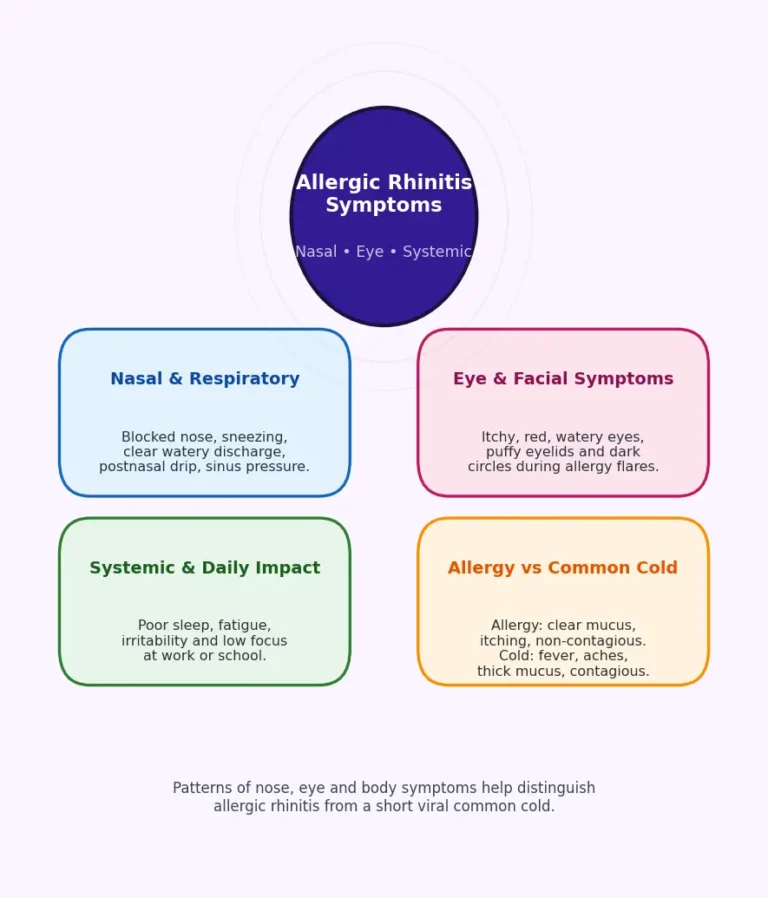
Allergic rhinitis typically presents with a recognizable pattern of nasal, eye, and general symptoms that appear shortly after allergen exposure.People often notice sudden bouts of sneezing, an itchy or runny nose, blocked nasal passages, and watery or irritated eyes. In many cases, these symptoms are persistent enough to disturb sleep, concentration, and daily activities, especially during high-pollen seasons or in poorly ventilated indoor environments. Understanding these key signs and symptoms helps distinguish allergic rhinitis from a common cold and guides timely medical assessment and treatment.
Nasal and Respiratory Symptoms of Allergic Rhinitis
Nasal symptoms are the most prominent and defining features of allergic rhinitis.
The most distinguishing sign is nasal congestion, characterized by a sense of obstruction or stuffiness caused by irritated nasal tissues. Many individuals experience frequent sneezing, runny noses, and postnasal drip, which can irritate the throat and cause persistent coughing.
Inflammation in the sinus cavities may result in sinus pressure, and headaches. Some individuals experience wheezing, chest tightness, or shortness of breath, particularly when asthma is combined with allergic rhinitis. Hay fever symptoms in adults often persist longer and may worsen with repeated allergen exposure.
Eye Symptoms and Facial Changes in Allergic Rhinitis
Itchy, watery eyes known as allergic conjunctivitis usually go along with nasal symptoms. Swelling of the eyelids, cheeks, or bridge of the nose is possible, and prolonged inflammation may cause dark circles under the eyes. Sensitivity to light and forehead ache has also been observed in some individuals.
Systemic and Secondary Effects
Along with nasal symptoms, allergic rhinitis may cause fatigue, irritability, and disturbances in sleep patterns because of overnight congestion. Some individuals even report headaches, facial pain, or pressure in the nasal area.
Persistent inflammation in both ears might result in ear congestion or temporary hearing loss. When left untreated, these symptoms might interfere with school, work, and other everyday activities, leading to decreased productivity and cognitive focus. Ongoing symptoms can significantly impair attention, memory, and overall daily functioning.
Triggers That Intensify Symptoms
Sneezing and congestion can be worsened by exposure to airborne irritants that include chemicals, flour dust, products for cleaning, perfumes, and cigarette smoke. Indoor humidity, cold air, weather changes, and high pollen concentrations can affect the frequency and severity of symptoms.
When to Seek Medical Attention
An allergist or physician should be consulted if symptoms persist despite using over-the-counter antihistamines, if sinus infections occur frequently, or if the symptoms overlap with asthma attacks. Early medical examination prevents complications like chronic sinusitis or difficulty in sleeping patterns and provides customized management through allergy avoidance
Allergic Rhinitis vs Common Cold: Key Differences in Symptoms
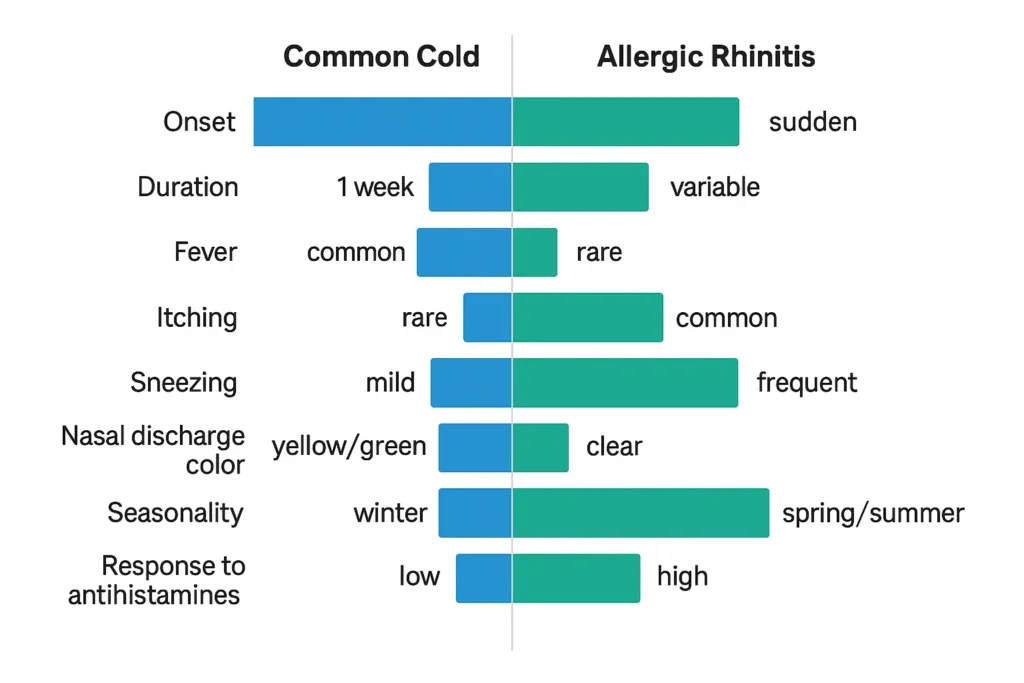
Allergic rhinitis and a common cold can both cause sneezing and congestion, but they have quite different underlying factors. Allergic rhinitis is caused by an overreaction of the immune system to harmless particles such as dust mites, pollen, or pet dander, whereas the cold is caused by a viral infection. Understanding allergic rhinitis vs common cold symptoms helps prevent misdiagnosis and unnecessary treatments.
Appropriate medical care and long-term relief rely on proper management and understanding what differentiates both conditions.
In clinical terms, the common cold typically results from infection by rhinoviruses or other respiratory viruses that penetrate the nasal and throat mucosa. On the other hand, allergic rhinitis develops when the body’s immune system perceives airborne allergens as a threat and releases histamine and inflammatory mediators that lead to itching, sneezing, and congestion.
Though both conditions have overlapping symptoms such as nasal congestion, sore throat, and exhaustion, understanding the mechanism behind them can help you choose whether you need to rest and hydrate or use antihistamines and anti-allergy medications. Many people wonder how long allergic rhinitis symptoms last, and symptoms may continue for weeks or months as long as allergen exposure persists.
Pathophysiology in the Common Cold
In the common cold, when a virus enters the upper respiratory system, it damages the epithelial lining of the nose and throat. The immune system of the body responds with inflammation, releasing mucous, fever, and body pains as a form of its protection mechanism. The level of histamine can also increase locally, but this is a secondary response to infection instead of an allergic reaction.
Pathophysiology in Allergic Rhinitis
Allergic rhinitis does not involve infection. Instead, the immune system misinterprets harmless airborne particles like pollen, mold spores, pet dander, and dust mites as harmful. This stimulates IgE antibodies, resulting in a histamine surge and inflammatory chain reaction, which causes itchy eyes, sneezing, nasal congestion, and post-nasal drip.
Environmental variables like air pollution, fragrances, and smoke also have the tendency to irritate sensitive nasal passages.
Clinical Presentation: Key Signs and Symptoms
Symptom / Feature | Allergic Rhinitis | Common Cold |
Cause | Immune response to allergens (like pollen, dust, pet dander, mold) | Viral infection (mostly rhinoviruses) |
Onset | Sudden, right after coming into contact with allergens | Gradual (takes about 2–3 days after infection) |
Duration | Can last weeks to months, often recurring seasonally or years round | Typically lasts 7–10 days |
Fever | Rare | Common, usually mild to moderate |
Nasal discharge | Clear, watery discharge | Thick, yellow or green mucus |
Sneezing | Frequent and intense | Moderate |
Itching (eyes, nose, throat) | Common | Uncommon |
Cough | Frequent with throat irritation | May occur |
Fatigue / Tiredness | May occur due to ongoing inflammation or lack of sleep | Occur during infection |
Eye involvement | Common (watery, itchy eyes) | Rare |
Sinus pressure / headache | Common during high allergen exposure | Common |
Contagious | No | Yes |
Complications and Overlaps Between Allergic Rhinitis and Common Cold
Chronic allergic rhinitis can lead to:
- Sinus infections (sinusitis)
- Ear effusion or obstruction
- Exacerbations of asthma
- Disturbed sleep and tiredness
Medical Review Disclaimer
This article is for informational and educational purposes only and does not constitute medical advice. The content is written by a qualified healthcare professional and medically reviewed for accuracy. However, it should not be used as a substitute for professional medical diagnosis, treatment, or advice. Always consult a licensed healthcare provider regarding any medical condition or health concern.
Frequently Asked Questions (FAQs)
1. What are the most common symptoms of allergic rhinitis?
Sneezing, nasal congestion, runny or itchy nose, postnasal drip, and itchy or watery eyes are the most common symptoms.
2. Can allergic rhinitis cause eye symptoms?
Yes. It often causes red, itchy, or watery eyes, known as allergic conjunctivitis.
3. Does allergic rhinitis make you feel tired?
Yes. Poor sleep from nasal blockage and ongoing inflammation can lead to fatigue and daytime sleepiness.
4. How can I tell if it’s a cold or allergic rhinitis?
Colds are caused by viruses and may cause fever or body aches, while allergic rhinitis usually causes itching and clear nasal discharge without infection.
5. When should I see a doctor for allergy symptoms?
You should see a doctor if symptoms last for weeks, affect sleep or daily life, or are linked with asthma or frequent sinus infections