

What Is Allergic Rhinitis (Hay Fever)? Causes, Symptoms, and Daily Impact
Written by: Dr.Muhammad Ihsan Ullah, PhD
Medically reviewed by: Dr.Hafiz Muhammad Kashif, MD
Last updated on February 07,2026
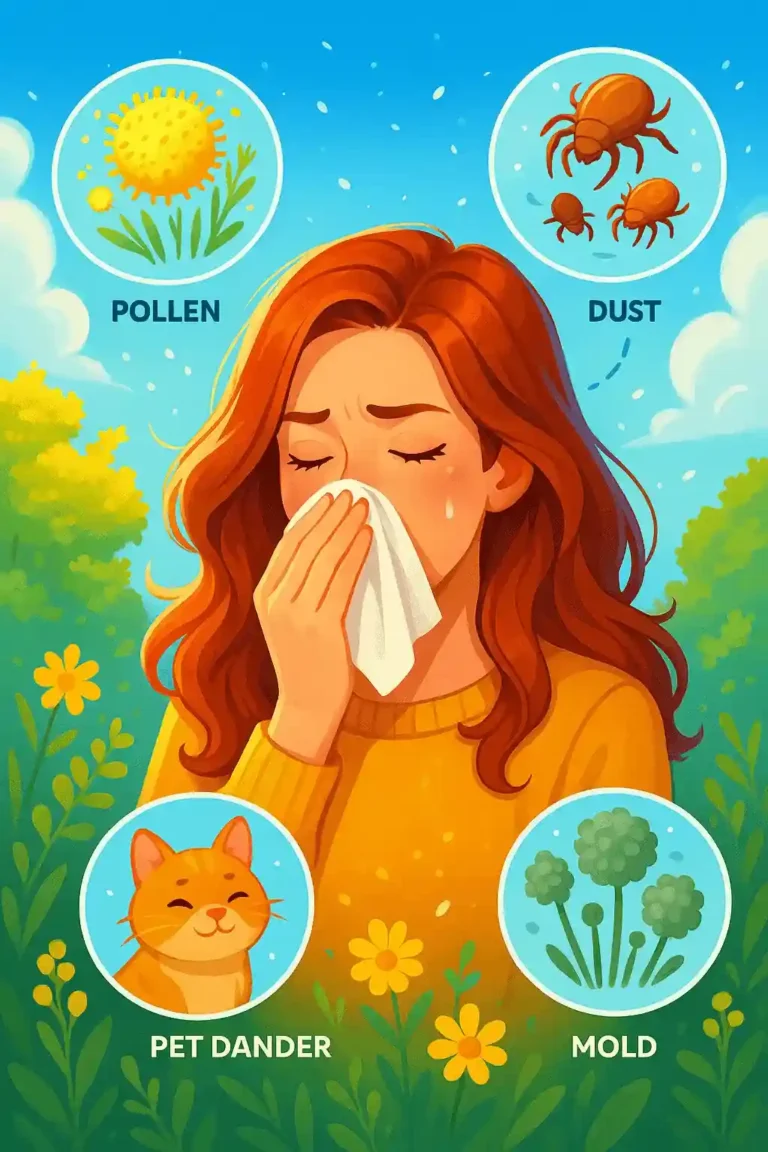
Allergic rhinitis, commonly known as hay fever, is a long-term allergic condition that affects the nose and surrounding nasal passages. It occurs when the immune system overreacts to harmless substances in the air, such as pollen, dust mites, mold spores, or pet dander.
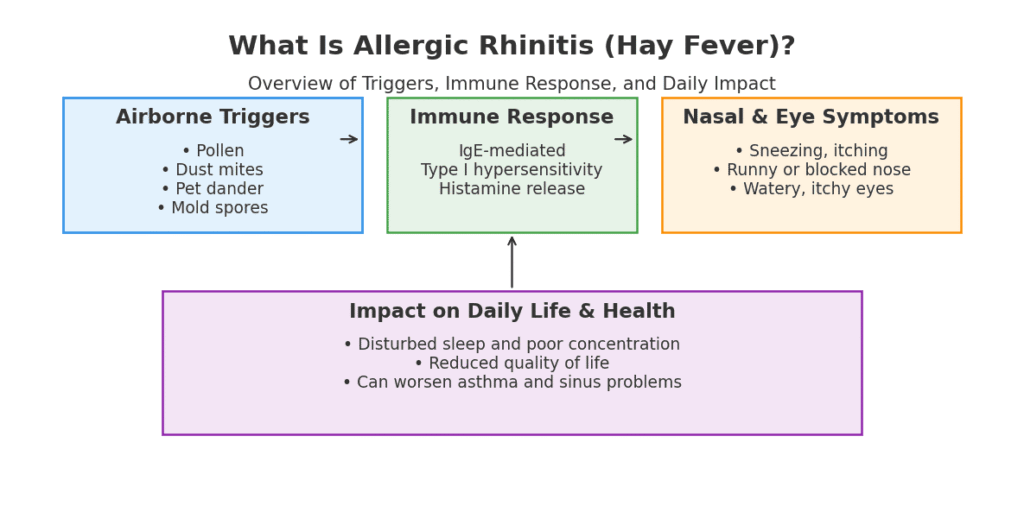
When these allergens enter the nose, the body releases histamine and other inflammatory substances, leading to symptoms such as sneezing, nasal congestion, a runny or itchy nose, and general discomfort. Although allergic rhinitis is often mistaken for a common cold, it is not an infection but an immune-mediated allergic response.
At a biological level, allergic rhinitis is linked to an IgE-mediated immune reaction, where the body incorrectly identifies harmless environmental particles as threats and triggers inflammation in the nasal lining (Ellis & Linton, 2025).
How Allergic Rhinitis Affects Daily Life
Allergic rhinitis can significantly affect daily life by disrupting sleep, reducing concentration, and lowering overall well-being. Some people experience symptoms only during certain seasons due to pollen exposure, while others suffer year-round because of indoor allergens such as dust mites or pet dander.
Although allergic rhinitis cannot always be permanently cured, its symptoms can usually be managed effectively. Common approaches include reducing exposure to allergens, following appropriate lifestyle measures, and using medical treatments as advised by healthcare professionals.
Clinical and Public Health Impact
From a clinical perspective, long-standing allergic rhinitis may reduce the sense of smell, a condition known as hyposmia, and may worsen related conditions such as asthma in susceptible individuals.
On a broader public health level, allergic rhinitis is no longer viewed as a minor inconvenience. Environmental changes, increased indoor allergen exposure, and rising pollen levels have contributed to a growing disease burden worldwide. As a result, allergic rhinitis is increasingly recognized as a condition that significantly affects quality of life (Clari et al., 2023).
“Learn more about prevention strategies“
Medical Review Disclaimer
This article is for informational and educational purposes only and does not constitute medical advice. The content is written by a qualified healthcare professional and medically reviewed for accuracy. However, it should not be used as a substitute for professional medical diagnosis, treatment, or advice. Always consult a licensed healthcare provider regarding any medical condition or health concern.
Frequently Asked Questions (FAQs)
1. What is allergic rhinitis?
Allergic rhinitis is an allergy-related inflammation of the nose triggered by airborne allergens like pollen, dust, pet dander, or mold.
2. Is allergic rhinitis the same as hay fever?
Yes, hay fever is the common name for allergic rhinitis caused by environmental allergens.
3. What are the main symptoms of allergic rhinitis?
Typical symptoms include sneezing, an itchy or runny nose, nasal congestion, and sometimes itchy or watery eyes.
4.Is allergic rhinitis contagious?
No, allergic rhinitis is not an infection and cannot spread from person to person.
5. Can allergic rhinitis affect daily life?
Yes, it can disturb sleep, concentration, mood, and overall quality of life if not well controlled.
References
1.Ellis, A. K., & Linton, S. (2025). Diagnosing allergic rhinitis and local allergic rhinitis. Journal of Allergy and Clinical Immunology: In Practice, 13(12), 3456-3468. https://doi.org/10.1016/j.jaip.2025.03.003
2. Clari, S., et al. (2023). Symptom control and health-related quality of life in allergic rhinitis with and without comorbid asthma: A multicentre European study. Clinical and Translational Allergy, 13(2), e12209. https://doi.org/10.1186/s13601-023-00442-w