

Morning vs Evening Allergy Symptoms
Written by: Dr.Muhammad Ihsan Ullah, PhD
Medically reviewed by: Dr. Jamal ud Din Khan, FCPS
Why Allergic Rhinitis Feels Worse at Certain Times of the Day
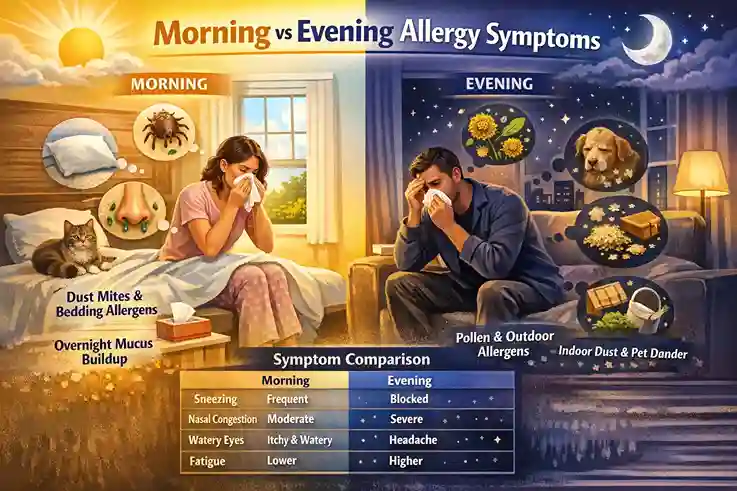
Many people with allergic rhinitis (hay fever) notice a clear pattern in their symptoms. For some, sneezing, nasal congestion, and watery eyes are worst immediately after waking up. Others feel relatively fine in the morning but struggle with severe congestion, sinus pressure, or itching in the evening.
This timing difference is not random. Allergic rhinitis symptoms fluctuate throughout the day due to allergen exposure, immune system rhythms, hormones, and daily habits. Understanding morning vs evening allergy symptoms helps you predict flare-ups and manage them more effectively.
Why Allergy Symptoms Change During the Day
Allergic rhinitis severity varies because of three main factors:
- Circadian rhythm (your internal biological clock)
- Timing of allergen exposure
- Environmental and lifestyle habits
These factors interact differently in the morning and evening.
Morning Allergy Symptoms: Why Are They So Common?
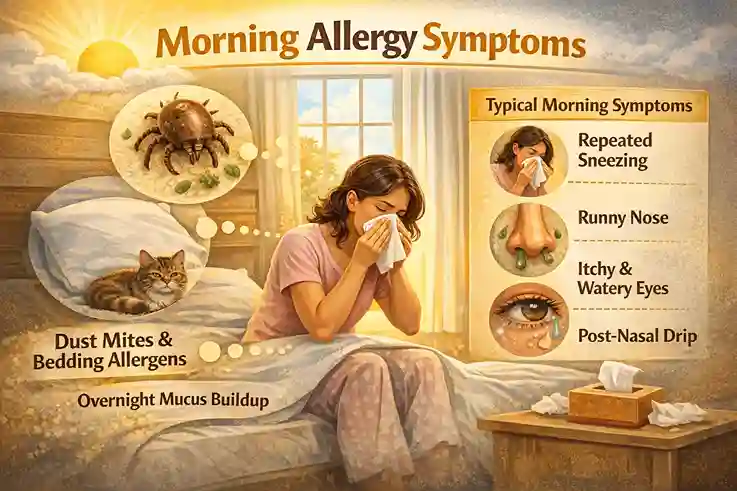
Morning allergy symptoms are extremely common in allergic rhinitis.
Typical Morning Symptoms
- Repeated sneezing after waking up
- Runny or blocked nose
- Itchy nose and eyes
- Post-nasal drip
- Head pressure or heaviness
Causes of Morning Allergy Symptoms
1. Overnight Allergen Exposure
During sleep, you spend many continuous hours in close contact with:
- Dust mites in bedding
- Pillow and mattress allergens
- Pet dander on sheets or blankets
This prolonged exposure triggers inflammation that becomes noticeable upon waking.
2. Mucus Accumulation During Sleep
When lying down, mucus drainage slows. Overnight mucus buildup leads to:
- Morning nasal congestion
- Throat irritation
- Post-nasal drip
Once you wake up and sit upright, symptoms may temporarily worsen before improving.
3. Morning Immune Response
Cortisol, a natural anti-inflammatory hormone, is lowest during the night and rises in the early morning. This shift can briefly unmask inflammation, making symptoms more noticeable upon waking.
Evening Allergy Symptoms: Why Do Symptoms Flare Later in the Day?
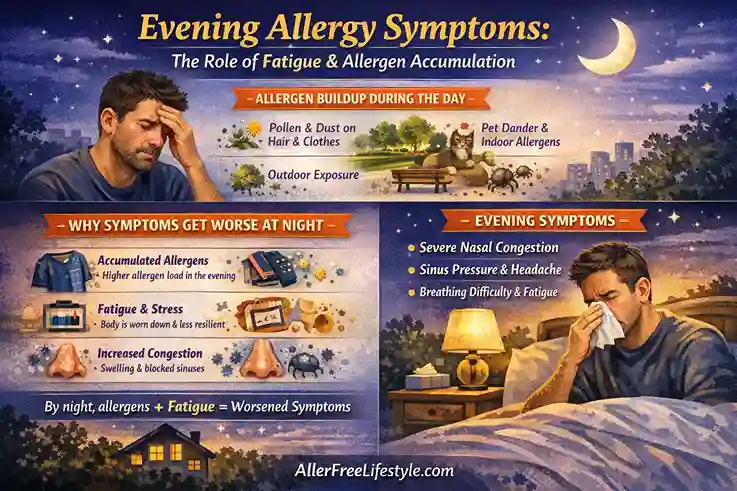
Some people experience worse allergic rhinitis symptoms in the evening rather than the morning.
Typical Evening Symptoms
- Increasing nasal blockage
- Sinus pressure
- Headache
- Fatigue-related symptom worsening
- Difficulty breathing through the nose
Causes of Evening Allergy Symptoms
1. Daytime Allergen Accumulation
Throughout the day, allergens build up on:
- Hair
- Skin
- Clothes
- Shoes
By evening, exposure load is higher, especially if you spent time outdoors or in dusty environments.
2. Indoor Allergen Exposure
Evenings are often spent indoors, increasing exposure to:
- Dust mites
- Mold spores
- Pet allergens
- Poor indoor air circulation
This indoor exposure contributes significantly to evening congestion.
3. Fatigue and Reduced Immune Regulation
As the day progresses:
- The body becomes more fatigued
- Inflammatory responses become more noticeable
- Nasal tissues feel more swollen
Fatigue does not cause allergies, but it amplifies symptom perception.
Morning vs Evening Allergy Symptoms: Comparison Table
Feature | Morning Symptoms | Evening Symptoms |
Main trigger | Bedding allergens | Accumulated daily exposure |
Sneezing | Very common | Less frequent |
Nasal congestion | Moderate to severe | Often severe |
Post-nasal drip | Common | Common |
Eye symptoms | Common | Mild to moderate |
Fatigue impact | Lower | Higher |
Sleep disturbance | Less | More |
Is Morning or Evening Worse for Allergic Rhinitis?
There is no single worst time for everyone. Patterns vary depending on:
- Primary allergens (dust mites vs pollen)
- Home environment
- Outdoor exposure
- Sleep habits
Some people experience a bimodal pattern—symptoms in both the morning and evening.
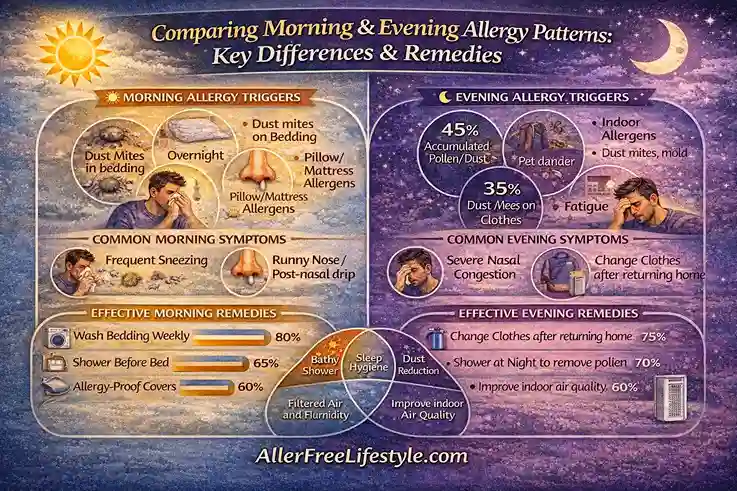
How to Reduce Morning Allergy Symptoms
Helpful strategies include:
- Washing bedding weekly in hot water
- Using allergen-proof mattress and pillow covers
- Showering before bed to remove allergens
- Improving bedroom air quality
- Performing gentle nasal care in the morning
Reducing overnight exposure often leads to calmer mornings.
How to Reduce Evening Allergy Symptoms
Effective steps include:
- Changing clothes after coming home
- Showering in the evening to remove pollen
- Keeping windows closed during high-pollen seasons
- Improving indoor ventilation
- Managing indoor humidity
Evening routines play a major role in symptom control.
When to Seek Medical Advice
Consult a healthcare professional if:
- Symptoms are severe at all times of day
- Sleep is consistently disrupted
- You experience asthma symptoms
- Nasal congestion persists despite lifestyle changes
Key Takeaways
- Allergic rhinitis symptoms vary between morning and evening due to immune rhythms and allergen exposure
- Morning symptoms are often linked to bedding and overnight mucus buildup
- Evening symptoms are commonly caused by accumulated allergens and fatigue
- Identifying your personal pattern helps optimize prevention strategies
- Lifestyle adjustments can significantly reduce time-specific flare-ups
Medical Review Disclaimer
This article is for informational and educational purposes only and does not constitute medical advice. The content is written by a qualified healthcare professional and medically reviewed for accuracy. However, it should not be used as a substitute for professional medical diagnosis, treatment, or advice. Always consult a licensed healthcare provider regarding any medical condition or health concern.
Frequently Asked Questions (FAQs)
1. Why do I sneeze a lot in the morning?
Overnight exposure to dust mites and mucus accumulation triggers morning sneezing.
2. Why does my nose block more in the evening?
Daily allergen buildup and indoor exposure commonly worsen evening congestion.
3. Is it normal to have symptoms both morning and evening?
Yes. Many people experience flare-ups at both times due to different triggers.
4. Do allergy medications work better at certain times?
Timing can matter. Some treatments are more effective when taken consistently rather than based only on symptoms.
5. Can lifestyle changes reduce time-specific allergy symptoms?
Yes. Adjusting sleep hygiene, indoor environment, and daily routines can significantly improve symptom timing.