

Nose & Sinus Care Routine for Allergic Rhinitis and Chronic Sinus Congestion
Written by: Dr.Muhammad Ihsan Ullah, PhD
Medically reviewed by: Dr Ali Raza Dogar ,MBBS,ENT
Last updated on January 02,2026

Allergic rhinitis does not only cause sneezing and a runny nose—it frequently leads to chronic nasal congestion, sinus pressure, postnasal drip, facial heaviness, and impaired breathing. Over time, untreated nasal inflammation can disturb sinus drainage and increase the risk of recurrent sinus congestion or sinusitis.
A structured nose and sinus care routine helps reduce allergen load, calm mucosal inflammation, improve sinus ventilation, and support long-term symptom control especially when combined with medical therapy when needed.
This guide explains daily nasal and sinus care practices, why they work, and how to perform them safely at home.
Why Nose & Sinus Care Is Critical in Allergic Rhinitis
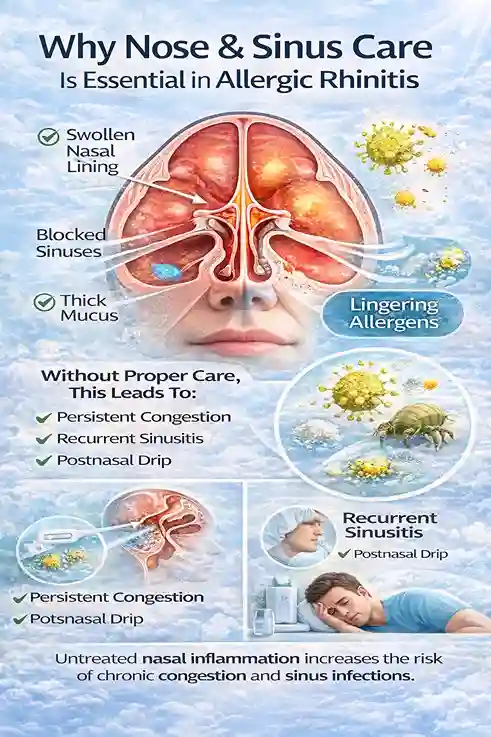
In allergic rhinitis:
- Nasal mucosa becomes swollen and inflamed
- Sinus openings narrow
- Mucus thickens and drains poorly
- Allergens remain trapped longer
This leads to:
- Persistent nasal blockage
- Facial pressure
- Headaches
- Reduced smell
- Postnasal drip
- Sleep disturbance
Regular nasal care helps restore normal nasal physiology, which is strongly supported by allergy and ENT guidelines (Dykewicz et al., 2020; Bousquet et al., 2020).
Foundational Principle: Clean, Moist, and Open Nasal Passages
Healthy nasal and sinus function depends on:
- Adequate moisture
- Effective mucus clearance
- Open sinus drainage pathways
- Reduced allergen contact time
Every step in this routine supports one or more of these mechanisms.
Daily Nose & Sinus Care Routine
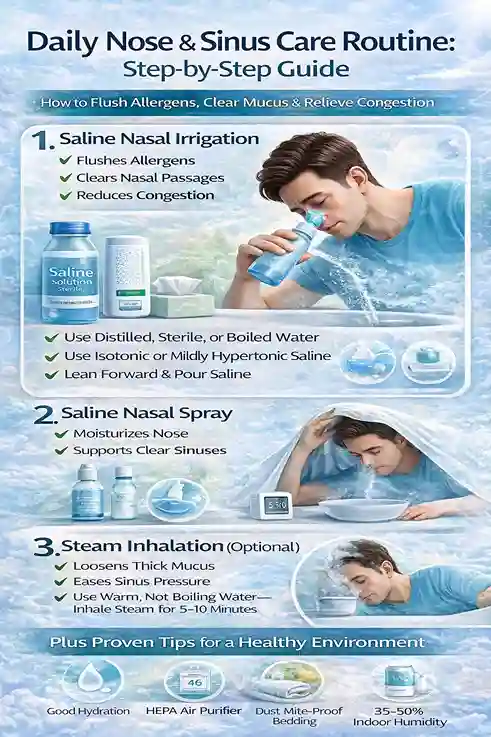
1. Saline Nasal Irrigation (Cornerstone of Sinus Care)
Best for: Nasal congestion, sinus pressure, postnasal drip, pollen exposure
How It Works
Saline irrigation:
- Flushes out allergens (pollen, dust, dander)
- Removes thick mucus
- Reduces inflammatory mediators
- Improves sinus drainage
How to Do It Safely
- Use distilled, sterile, or boiled & cooled water
- Use isotonic or mildly hypertonic saline
- Lean forward over sink
- Gently pour saline into one nostril
- Allow it to drain from the other nostril
- Repeat on both sides
- Clean device after use
Frequency
- Once daily (routine care)
- Twice daily during high allergy seasons or congestion
📌 Clinical evidence: Saline irrigation improves nasal symptoms and quality of life in allergic rhinitis (Dykewicz et al., 2020).
2. Saline Nasal Spray (Maintenance Care)
Best for: Dryness, mild congestion, indoor allergen exposure
Saline sprays:
- Keep nasal lining moist
- Reduce crusting
- Support ciliary function
- Can be used multiple times daily
Useful for workplaces, travel, and dry environments.
3. Steam Inhalation (Supportive Step)
Best for: Sinus pressure, facial heaviness, thick mucus
How to Do It Safely
- Use warm (not boiling) steam
- Inhale gently for 5–10 minutes
- Avoid burns
- Not recommended for young children
Steam helps loosen secretions but does not replace saline irrigation.
4. Sinus Drainage Head Positions
Best for: Sinus fullness, facial pressure
Simple Positions
- Side-lying with head slightly elevated
- Forward lean breathing after saline rinse
- Gentle neck movements (no force)
These positions assist gravity-assisted sinus drainage.
5. Daily Nasal Hygiene Habits
Best for: Preventing symptom recurrence
✔ Blow nose gently
✔ Avoid frequent nose rubbing
✔ Keep fingernails clean
✔ Avoid nasal trauma
✔ Avoid dry, dusty air
Aggressive nose blowing increases inflammation.
Morning Nose & Sinus Routine (5–10 Minutes)
- Saline nasal spray or rinse
- Gentle nasal breathing
- Chest expansion breathing
- Avoid outdoor pollen exposure early morning
This prepares the nose for daily allergen contact.
Evening Nose & Sinus Routine (10 Minutes)
- Shower and wash hair (remove pollen)
- Saline irrigation
- Optional steam inhalation
- Gentle breathing before bed
Evening care reduces night-time congestion and sleep disruption.
Environmental Support for Sinus Health
Nasal care works best when paired with environmental control:
- HEPA air purifier in bedroom
- Indoor humidity ~35–50%
- Dust-mite-proof bedding
- Regular cleaning
- No smoking or strong fragrances
These reduce continuous nasal irritation.
Allergic Rhinitis vs Sinusitis: Important Distinction
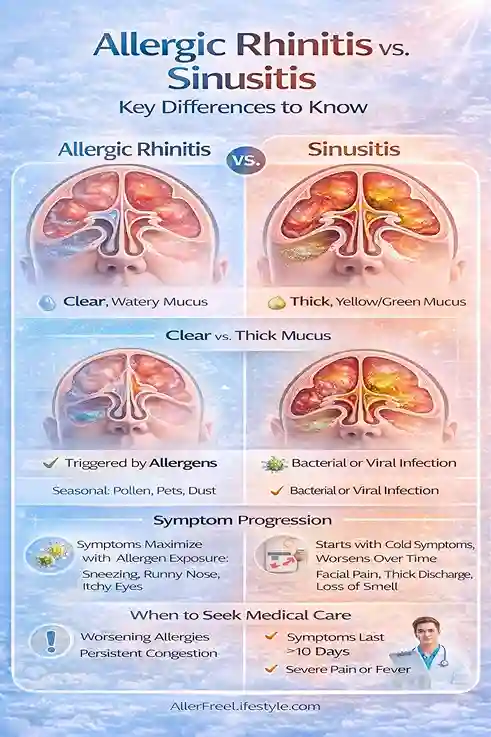
Allergic rhinitis:
- Clear mucus
- Itching, sneezing
- Seasonal or perennial
- Responds to antihistamines and steroids
Sinusitis (infection):
- Thick yellow/green mucus
- Facial pain
- Fever
- Symptoms worsen over time
Persistent sinus pain or fever requires medical evaluation.
When Nose & Sinus Care Is Not Enough
Seek medical care if:
- Symptoms last >10–14 days
- Severe facial pain develops
- Fever occurs
- Smell loss persists
- Recurrent sinus infections occur
Medical imaging or ENT evaluation may be needed.
What Nose & Sinus Care Can and Cannot Do
✔ Can:
- Reduce congestion
- Improve sinus drainage
- Lower symptom severity
- Improve sleep and breathing comfort
❌ Cannot:
- Cure allergic rhinitis
- Replace prescribed medications
- Treat bacterial sinus infections alone
Medical Review Disclaimer
This article is for informational and educational purposes only and does not constitute medical advice. The content is written by a qualified healthcare professional and medically reviewed for accuracy. However, it should not be used as a substitute for professional medical diagnosis, treatment, or advice. Always consult a licensed healthcare provider regarding any medical condition or health concern.
Frequently Asked Questions (FAQs)
1. Is saline nasal irrigation safe for long-term use?
Yes, when performed correctly with clean water
2. Can daily nasal rinsing reduce allergy symptoms?
Yes. It significantly reduces allergen exposure and congestion.
3. Is steam inhalation necessary?
No. It is optional and supportive, not essential.
4. Can children use saline nasal sprays?
Yes. Age-appropriate sprays are safe.
References
Bousquet, J., Klimek, L., Togias, A., Zuberbier, T., Agache, I., Ansotegui, I. J., … Wallace, D. V. (2020). Next-generation allergic rhinitis and its impact on asthma (ARIA). Journal of Allergy and Clinical Immunology, 145(3), 895–909. https://doi.org/10.1016/j.jaci.2019.12.898
Dykewicz, M. S., Wallace, D. V., Baroody, F., Bernstein, J., Craig, T., Finegold, I., … Portnoy, J. (2020). Rhinitis 2020: A practice parameter update. Journal of Allergy and Clinical Immunology, 146(4), 721–767.
Harvey, R., & Hannan, S. A. (2009). Nasal saline irrigations for the symptoms of chronic rhinosinusitis. Cochrane Database of Systematic Reviews, (3), CD006394. https://doi.org/10.1002/14651858.CD006394.pub2