

Prevalence of Allergic Rhinitis
Written by: Dr.Muhammad Ihsan Ullah, PhD
Medically reviewed by: Dr.Hafiz Muhammad Kashif, MD
Last updated on February 07,2026
Global Prevalence of Allergic Rhinitis
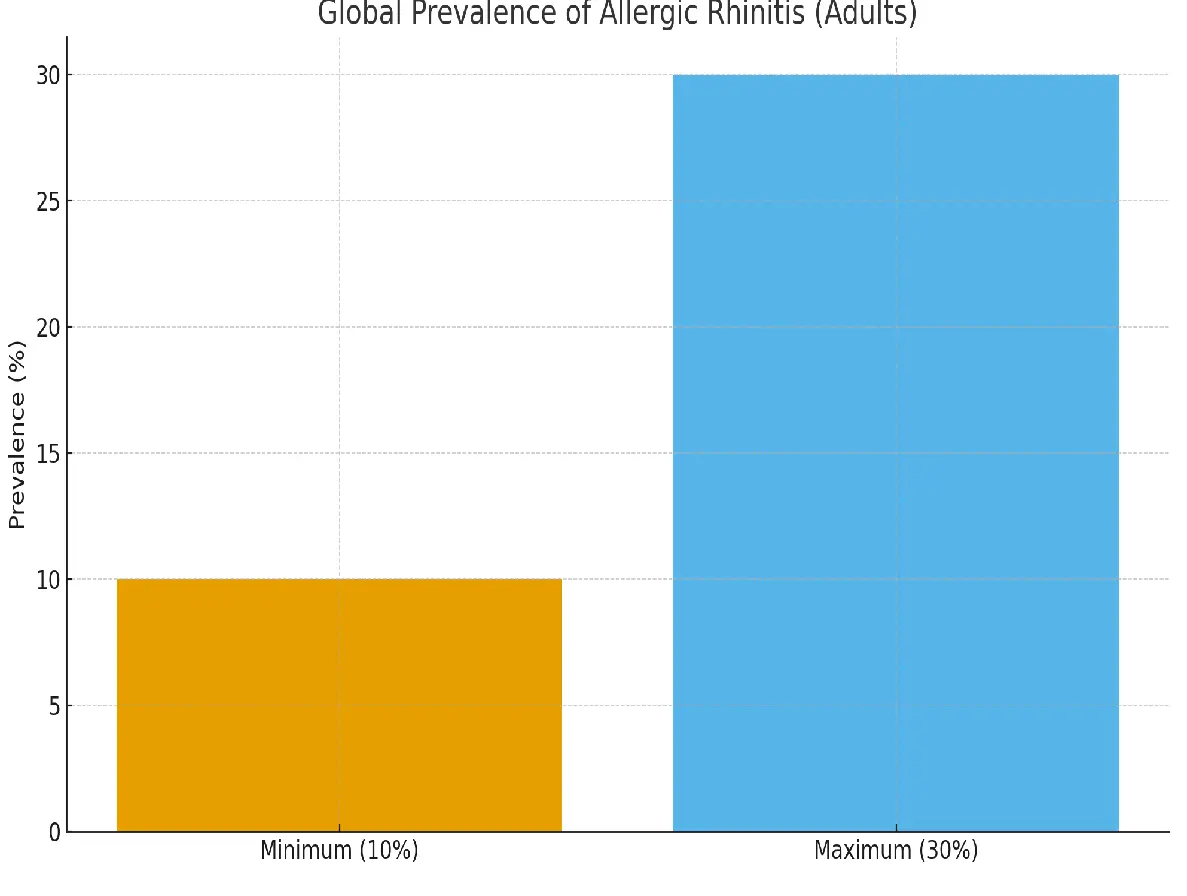
Allergic rhinitis is one of the most common chronic allergic conditions worldwide. Epidemiological studies estimate that it affects approximately 10–30% of adults globally, with prevalence continuing to rise across many regions.
While allergic rhinitis was once considered more common in high-income countries, recent data show a growing burden in developing and rapidly urbanizing nations as well. Large population-based studies from countries such as China indicate a substantial increase in allergic rhinitis over recent decades, reflecting changes in environment, lifestyle, and allergen exposure (Zhang et al., 2023).
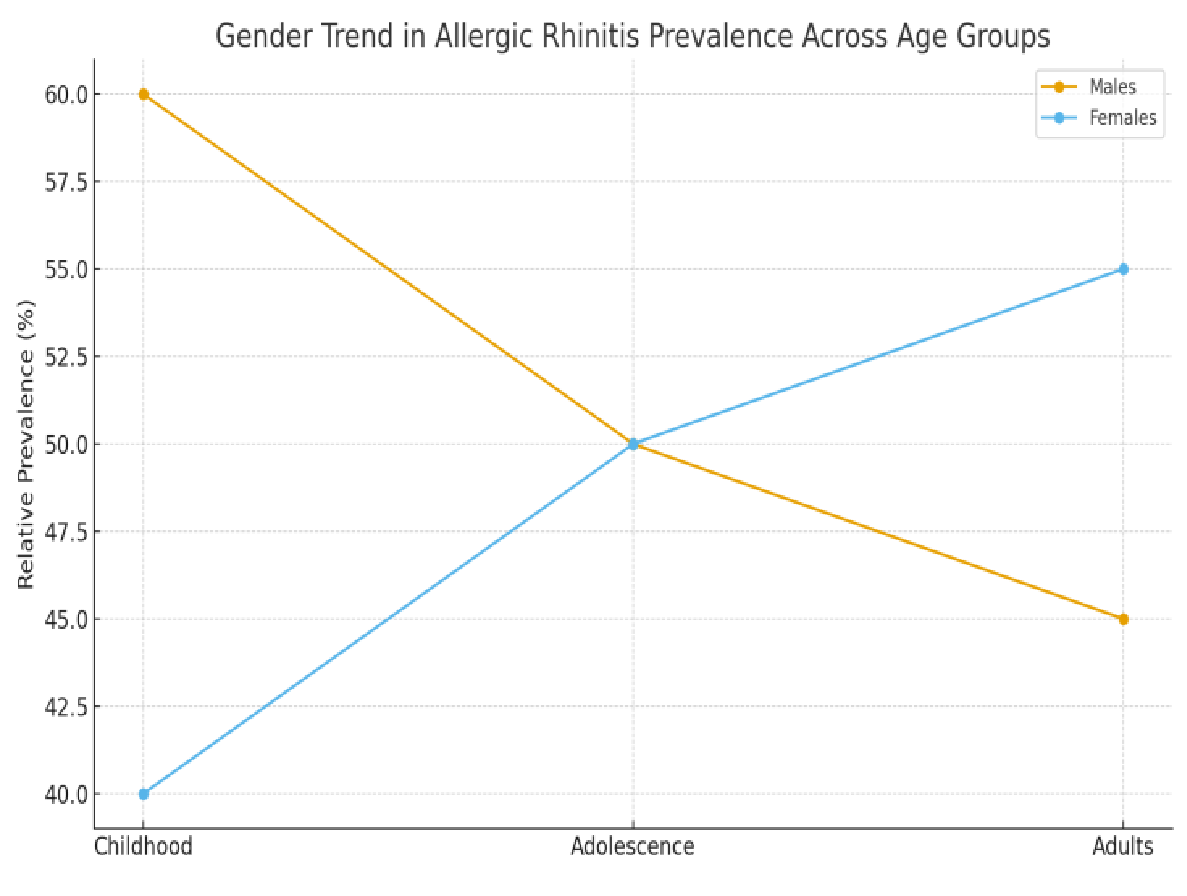
Research also suggests that prevalence patterns vary by sex and age. In adulthood, allergic rhinitis tends to be equally common or slightly more prevalent in females, while remission rates appear higher among males (Vasileiadou et al., 2023).
Prevalence in United States
In the United States, allergic rhinitis represents a major public health concern. It is estimated to affect up to 60 million individuals, making it one of the most common allergic disorders nationwide.
Among affected individuals, approximately three-quarters experience moderate to severe symptoms, and many report a noticeable impact on daily activities, work performance, and quality of life (Peifer et al., 2025).
Prevalence in Children
In children, allergic rhinitis often remains underdiagnosed, particularly in early stages, as symptoms may be mistaken for recurrent colds or mild nasal irritation. As a result, many children do not receive timely evaluation or treatment.
Although allergic rhinitis is not associated with mortality, it can significantly affect a child’s quality of life, interfering with sleep, school performance, and overall physical and emotional development.
Data from the International Study of Asthma and Allergies in Childhood (ISAAC) indicate that rhino-conjunctivitis symptoms are reported in 4.2–12.7% of children aged 6–7 years and up to 45% of adolescents aged 13–14 years worldwide. Prevalence varies across regions, with some countries reporting even higher rates (Imoto et al., 2024).
Prevalence by Gender
Epidemiological studies show a clear age-dependent gender pattern in allergic rhinitis prevalence. During childhood, the condition is more common in males, with boys demonstrating higher rates of sensitization and symptoms.
Around adolescence, prevalence becomes more balanced between sexes. In adulthood, many population-based studies report similar rates or a slight predominance among females, influenced partly by healthcare-seeking behavior and diagnostic awareness (Bousquet et al., 2020).
Prevalence by Season (USA + Worldwide)
The prevalence and severity of allergic rhinitis symptoms vary considerably by season and geographic region.Allergic rhinitis is quite widespread worldwide, affects approximately 10-30% of adults population, with global assessments indicating a median adult prevalence of roughly 18%. Seasonal allergic rhinitis normally surges in the spring in response to tree pollens, then rises again in early summer with grass pollens, and finally spikes in late summer to fall due to weed and ragweed pollen. Although outdoor pollen counts are often lower throughout the winter, many people continue to experience symptoms from indoor allergens such as dust mites and molds.
Globally, temperate regions have similar spring-summer-fall peaks, although Mediterranean climates may have earlier and longer pollen seasons. Tropical and humid climates often have a less distinct seasonal pattern, with many patients suffering from symptoms throughout the entire year due to persistent indoor allergens. According to research, climate change is lengthening pollen seasons and increasing pollen intensity, contributing to increased global prevalence and prolonged symptomatic periods (Savouré et al., 2022).
Prevalence by type (Seasonal vs Perennial Rhinitis)
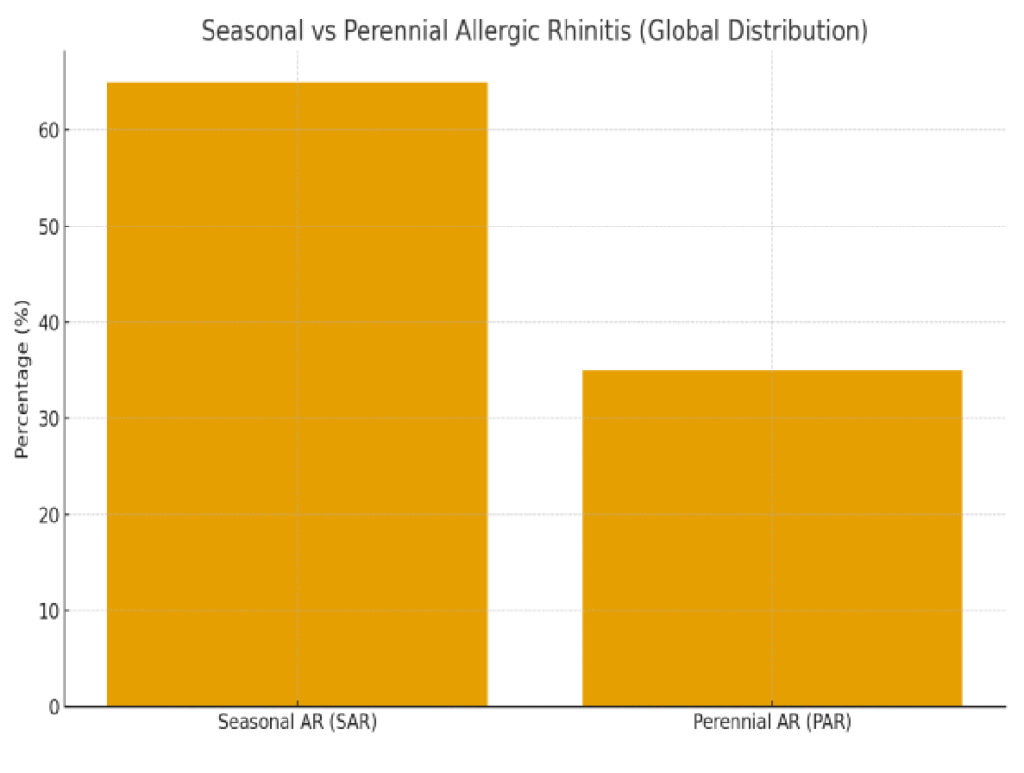
Allergic rhinitis is frequently classified into two types: Seasonal Allergic Rhinitis (SAR) and Perennial Allergic Rhinitis (PAR), with each having its own global prevalence pattern. Seasonal allergic rhinitis, which is frequently associated with outdoor pollens such as trees, grasses, and weeds, affects a large proportion of the world’s population. Large epidemiological studies suggest that SAR accounts for 60-70% of all allergic rhinitis cases, making it the most prevalent clinical presentation in areas with defined pollen seasons. Its prevalence is maximum in the spring, summer, and early fall, depending on local pollen calendars.
In contrast, perennial allergic rhinitis, which is predominantly caused by indoor allergens such as dust mites, pet dander, cockroaches, and indoor molds, accounts for 20-40% of allergic rhinitis cases, with symptoms occurring throughout the whole year. The condition is more common in humid and tropical climates, where dust-mite contact is persistent throughout the year, and in urbanized areas, where indoor allergen exposure is higher.
SAR predominates in high-income temperate regions such as the United States and parts of Europe due to clearly defined pollen seasons. However, a significant percentage of patients have mixed patterns, with persistent symptoms worsening at pollen peaks. Globally, prevalence varies by region: SAR is more widespread in temperate regions, but PAR is more common in tropical, subtropical, and heavily populated cities. Climate change, increasing humidity, and changing indoor living patterns are also thought to contribute to the increasing prevalence of both SAR and PAR, with longer pollen seasons and higher allergen exposure worsening the overall disease burden.
Many individuals experience mixed patterns, with perennial symptoms that worsen during peak pollen seasons, further blurring the distinction between seasonal and perennial allergic rhinitis (Bousquet et al., 2020).
Trends and Future Projections
Over the past few decades, allergic rhinitis has become increasingly common, reflecting broader environmental and lifestyle changes worldwide.Allergic rhinitis is increasing in frequency worldwide, driven by environmental, climatic, and lifestyle changes that affect both allergen exposure and individual sensitivity. Epidemiological data demonstrate a persistent growing trend over the previous three decades, with global prevalence rising in both adults and children. Urbanization, reduced early-life microbial exposure, increased pollution levels, and a shift toward indoor lifestyles have all contributed to increasing sensitivity rates. At the same time, pollen monitoring data indicates that pollen seasons are starting earlier, lasting longer, and creating higher allergen concentrations than in previous decades. These changes have resulted in more severe and persistent seasonal symptoms, generating a rising overlap between seasonal and perennial allergic rhinitis in many regions.
In the future, researchers predict that allergic rhinitis will become more common worldwide. Rising temperatures and higher CO₂ levels are expected to stimulate plant growth and pollen production, enhancing seasonal peaks and expanding the geographic range of allergenic species like ragweed. Temperate countries may have longer pollen seasons, whereas tropical and humid climates are predicted to have consistently high levels of perennial triggers such as dust mites and molds. By the mid-century, researchers expect that millions more people may suffer from allergy sensitization as a result of environmental changes alone. These changes underline the importance of enhanced surveillance systems, early detection and prevention efforts, and public health programs that anticipate changing allergy patterns. Understanding future forecasts will be critical for doctors, governments, and patients as the worldwide burden of allergic rhinitis increases (Ziska et al., 2019).
Medical Review Disclaimer
This article is for informational and educational purposes only and does not constitute medical advice. The content is written by a qualified healthcare professional and medically reviewed for accuracy. However, it should not be used as a substitute for professional medical diagnosis, treatment, or advice. Always consult a licensed healthcare provider regarding any medical condition or health concern.
Frequently Asked Questions (FAQs)
1. How common is allergic rhinitis worldwide?
It affects approximately 10–30% of adults, with rates increasing in many countries
2. How many people have allergic rhinitis in the United States?
Studies report that up to 60 million people in the US are affected.
3. Is allergic rhinitis becoming more common?
Yes. Data over recent decades show a steady rise in prevalence in both adults and children.
4. Is allergic rhinitis more common in males or females?
It is more common in boys during childhood, then becomes similar or slightly higher in females in adulthood.
5. Does allergic rhinitis vary by season?
Yes. Symptoms usually peak in spring, summer, and fall due to different pollens, while indoor allergens drive year-round symptoms.
References
- Zhang, X., Zhang, M., Sui, H., Li, C., Huang, Z., Liu, B., Song, X., Liao, S., Yu, M., Luan, T., Zuberbier, T., Wang, L., Zhao, Z., & Wu, J. (2023). Prevalence and risk factors of allergic rhinitis among Chinese adults: A nationwide representative cross-sectional study. World Allergy Organization Journal, 16(3), 100744
https://doi.org/10.1016/j.waojou.2023.100744 - Vasileiadou, S., Goksör, E., Wennergren, G., Rönmark, E., & Hedman, L. (2023). Allergic rhinitis: Incidence and remission from childhood to young adulthood—A prospective study. The study was published in the journal Pediatric Allergy and Immunology, volume 34, issue 7, on page e70078.
https://doi.org/10.1111/pai.70078 - Peifer, S. J., Helmen, Z. M., Duffield, S., Shields, C., Mehra, S., Lerner, D. K., & Gadkaree, S. K. (2025). The study focuses on the underrepresented populations and the barriers to healthcare access associated with allergic rhinitis. The Laryngoscope, 135(9), 3071-3081.
https://doi.org/10.1002/lary.32077 - Imoto, Y., Sakashita, M., Tokunaga, T., Kanno, M., Saito, K., Shimizu, A., Maegawa, A., & Fujieda, S. (2024). Recent prevalence of allergic rhinitis caused by house dust mites among the pediatric population in Fukui, Japan. World Allergy Organization Journal, 17(7), Article 100932.
https://doi.org/10.1016/j.waojou.2024.100932 - Bousquet, J., Schünemann, H. J., Togias, A., Zuberbier, T., Rush, N., Bachert, C., … & Haahtela, T. (2020). Allergic rhinitis. Nature Reviews Disease Primers, 6, 62. https://doi.org/10.1038/s41572-020-00227-0
- Savouré, M., Bousquet, J., Jaakkola, J. J. K., Jaakkola, M. S., Jacquemin, B., & Nadif, R. (2022). Worldwide prevalence of rhinitis in adults: A review of definitions and temporal evolution. Clinical and Translational Allergy, 12(3), e12130. https://doi.org/10.1002/clt2.12130
- Ziska, L. H., Makra, L., Harry, S. K., Bruffaerts, N., Hendrickx, M., Coates, F., & Knowlton, K. (2019). Temperature-related changes in airborne allergenic pollen abundance and seasonality across the northern hemisphere. Science Advances, 5(7), eaav7610. https://doi.org/10.1126/sciadv.aav7610