

The Complete Allergy-Free Lifestyle Blueprint
Written by: Dr.Muhammad Ihsan Ullah, PhD
Medically reviewed by: Dr. Jamal ud Din Khan, FCPS
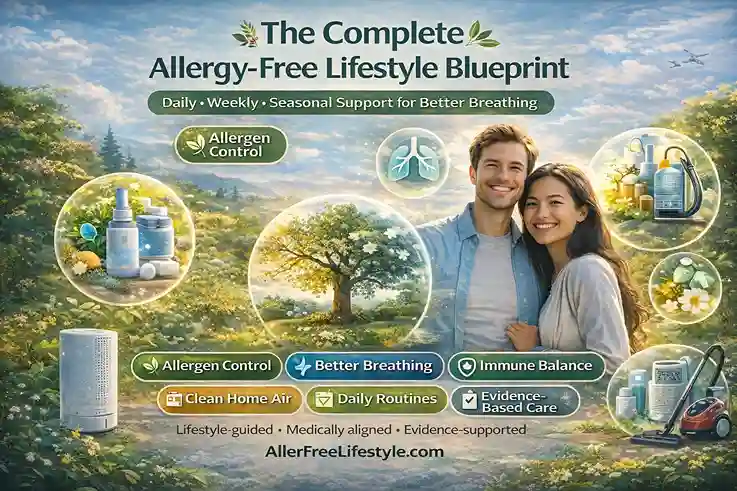
Allergic rhinitis (hay fever) is not just a “nose problem.” It is a lifestyle-sensitive inflammatory condition influenced by air quality, home environment, immunity, breathing habits, nutrition, sleep, and stress.
While medications control symptoms, long-term relief comes from reducing daily allergen burden and strengthening the body’s natural defenses. This is the core philosophy behind AllerFreeLifestyle.
This complete blueprint brings together everything that actually works—medical guidance, lifestyle optimization, natural strategies, breathing exercises, immunity support, and environmental control—into one simple, actionable system.
🔑 Core Brand Philosophy (Internal Positioning)
AllerFreeLifestyle helps people reduce allergy burden through lifestyle optimization, environmental control, breathing techniques, nutrition, and evidence-supported natural interventions—alongside medical care when needed.
🧠 How Allergic Rhinitis Fits Into the “Whole-Body” Picture
Allergic rhinitis involves:
- IgE-mediated immune overreaction
- Chronic nasal inflammation
- Nervous system hypersensitivity
- Frequent coexistence with asthma, sinusitis, fatigue, and poor sleep
That is why single-pill solutions fail long-term.
This blueprint addresses:
- Triggers (environment)
- Response (immune system)
- Airflow (nose & lungs)
- Recovery (sleep & routines)
🕒 DAILY ALLERGY-FREE ROUTINE
🌅 Morning Routine (Protect Before Exposure)
✔ Saline nasal rinse (flush overnight allergens)
✔ Breathing exercise (5–10 minutes nasal breathing)
✔ Use nasal spray (if prescribed)
✔ Check pollen count (plan exposure)
✔ Keep windows closed during peak pollen hours
📌 Why it works: Morning inflammation primes the nose. Early control prevents flare escalation.
🌞 Daytime Habits (Reduce Allergen Load)
✔ Wear sunglasses outdoors
✔ Avoid touching nose & eyes
✔ Stay hydrated (thins mucus)
✔ Use mask during high-pollen or dusty tasks
✔ Avoid smoke, perfumes, harsh sprays
📌 Lifestyle beats medication when exposure is controlled.
🌆 Evening Routine (Reset the System)
✔ Shower after outdoor exposure
✔ Change clothes immediately
✔ Light saline rinse if congested
✔ Turn on HEPA air purifier
✔ Gentle breathing or chest expansion exercises
🌙 Night Routine (Healing Phase)
✔ Clean, dust-free bedroom
✔ Dust-mite-proof bedding
✔ Bedroom humidity 35–50%
✔ Pets kept out of bed
✔ Sleep on slightly elevated pillow
Good sleep = better immune regulation.
WEEKLY ALLERGY MAINTENANCE CHECKLIST
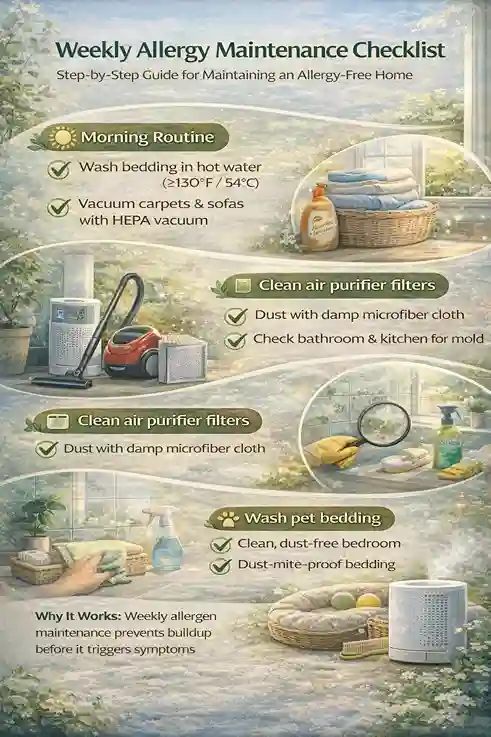
✔ Wash bedding in hot water (≥130°F / 54°C)
✔ Vacuum carpets & sofas with HEPA vacuum
✔ Clean air purifier filters
✔ Dust with damp microfiber cloth
✔ Check bathroom & kitchen for mold
✔ Wash pet bedding
🌦️ SEASONAL ALLERGY STRATEGY
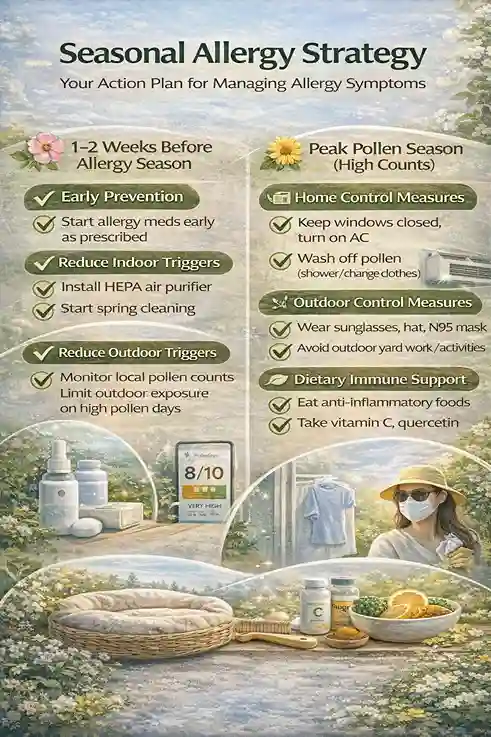
🌸 Spring (Tree Pollen)
- Start nasal steroids 1–2 weeks before
- Keep windows closed
- Shower daily after outdoors
🌾 Summer (Grass Pollen)
- Avoid lawns & parks early morning
- Use masks during outdoor work
- Increase air purifier usage
🍂 Fall (Ragweed)
- Strict clothing hygiene
- Avoid outdoor drying of clothes
- Continue daily nasal care
❄️ Winter (Indoor Allergens)
- Focus on dust mites & mold
- Control humidity
- Increase ventilation without cold air exposure
🏠 HOME ENVIRONMENT BLUEPRINT
Bedroom (MOST IMPORTANT)
- HEPA air purifier
- Allergen-proof mattress & pillows
- No carpets
- No pets
Living Areas
- Minimal clutter
- Washable rugs
- Fragrance-free cleaning
Kitchen & Bathroom
- Moisture control
- Exhaust fans
- Mold prevention
📌 Environmental control reduces medication need (Bousquet et al., 2020).
🫁 BREATHING & AIRWAY OPTIMIZATION
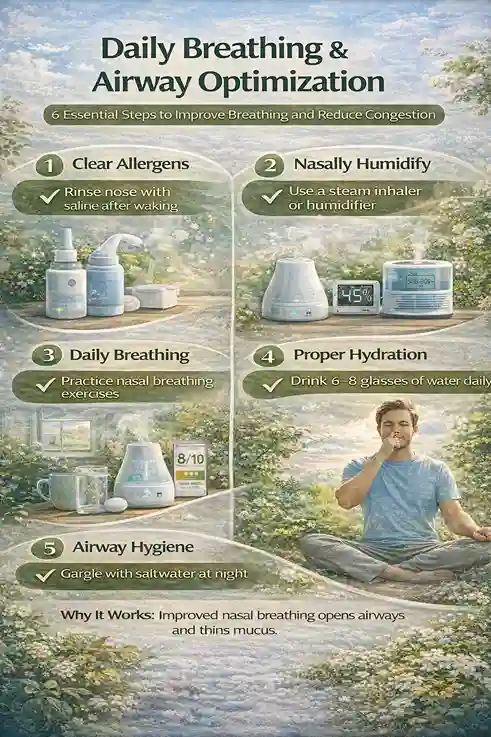
Daily breathing practices:
- Nasal breathing (mouth breathing worsens allergies)
- Diaphragmatic breathing
- Chest expansion exercises
- Buteyko-style slow breathing (optional)
Benefits:
✔ Improves airflow
✔ Reduces nasal nerve sensitivity
✔ Supports asthma control
🛡️ IMMUNITY-SUPPORTIVE LIFESTYLE
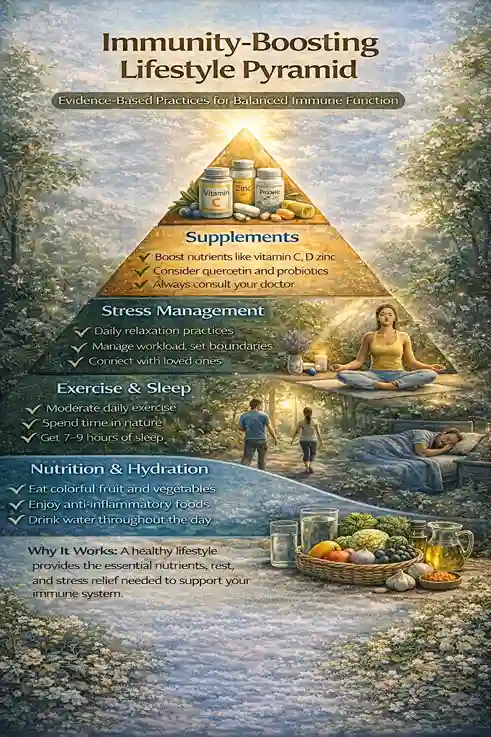
Evidence-Supported Support
- Adequate sleep
- Regular moderate exercise
- Balanced nutrition
- Stress reduction
- Vitamin D (if deficient)
- Omega-3 fatty acids
⚠️ No supplement replaces allergen avoidance.
🌿 NATURAL & NON-DRUG SUPPORT (SAFE ZONE)
✔ Saline irrigation (strongest evidence)
✔ HEPA air filtration
✔ Humidity control
✔ Nasal hygiene
✔ Lifestyle discipline
Herbal supplements (butterbur, quercetin) → limited benefit only.
💊 MEDICATIONS: WHERE THEY FIT (REALISTIC VIEW)
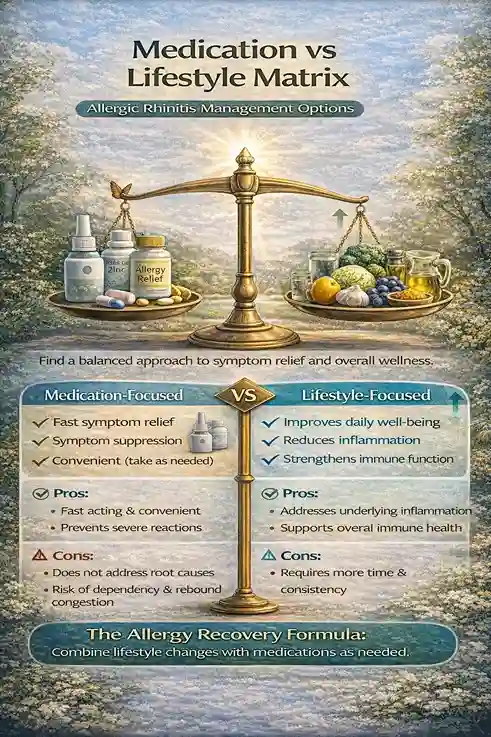
✔ Antihistamines → itching/sneezing
✔ Nasal steroids → congestion (gold standard)
✔ Combination sprays → moderate–severe cases
✔ Immunotherapy → long-term disease modification
Lifestyle + medicine = best outcome.
🧩 WHEN TO ESCALATE CARE
See an allergist/ENT if:
- Symptoms last >4 weeks
- Asthma symptoms appear
- Recurrent sinus infections
- Repeated steroid use needed
- Considering immunotherapy
Medical Review Disclaimer
This article is for informational and educational purposes only and does not constitute medical advice. The content is written by a qualified healthcare professional and medically reviewed for accuracy. However, it should not be used as a substitute for professional medical diagnosis, treatment, or advice. Always consult a licensed healthcare provider regarding any medical condition or health concern.
References
Bousquet, J., Klimek, L., Togias, A., Zuberbier, T., Agache, I., Ansotegui, I. J., … Wallace, D. V. (2020). ARIA guidelines. Journal of Allergy and Clinical Immunology, 145(3), 895–909.
Dykewicz, M. S., et al. (2020). Rhinitis 2020 update. Journal of Allergy and Clinical Immunology, 146(4), 721–767.
Reisman, R. E., et al. (1990). HEPA filters in allergic rhinitis. JACI, 85(6), 1050–1057.