

Allergic Rhinitis vs Adenoids in Children: How to Tell If Your Child Has Adenoids or Allergies
Written by: Dr.Muhammad Ihsan Ullah, PhD
Medically reviewed by: Dr. Muhammad Sohail,FCPS & Dr Ali Raza Dogar ,ENT
Last updated on August 07, 2026
How to Tell the Difference & When to Worry
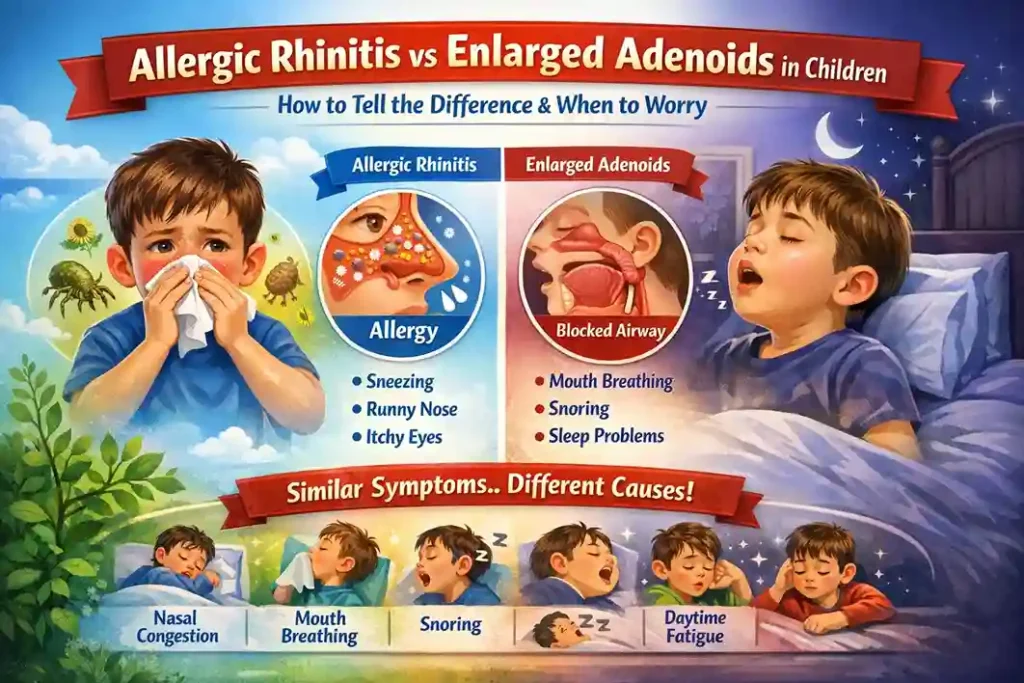
Many parents feel confused when their child has persistent nasal blockage, mouth breathing, or snoring, and they start searching for allergic rhinitis vs adenoids in children or how to tell if a child has adenoids or allergies. These two conditions can look very similar, often causing concerns like child mouth breathing and snoring related to allergies or adenoids. Understanding the key differences in adenoids vs allergies symptoms is essential, because the treatment approach for each condition is completely different and early recognition can help prevent long-term complications.
This guide explains the clear differences, overlap, and how doctors decide what your child really has.
What Is Allergic Rhinitis in Children?
Allergic rhinitis (hay fever) is an immune-mediated condition where a child’s body overreacts to harmless airborne allergens such as:
- Dust mites
- Pollen
- Pet dander
- Mold spores
This immune response releases histamine, leading to nasal inflammation, congestion, and itching (Bousquet et al., 2024).
Key features:
- Chronic or seasonal
- Improves with allergy treatment
- Often associated with itching and sneezing
Allergic rhinitis is one of the most common chronic pediatric conditions worldwide (Seidman et al., 2023).
What Are Adenoids and Adenoid Hypertrophy?
Adenoids are lymphoid tissue located behind the nose, above the throat.
They are part of the immune system and are normally larger in young children.
Adenoid hypertrophy means:
- Adenoids become abnormally enlarged
- They block airflow through the nose
- Common between ages 3–8 years
Enlarged adenoids are not an allergy, but chronic inflammation or infections can cause them to remain enlarged (AAO-HNS, 2023).
Why Parents Confuse Allergic Rhinitis and Adenoids
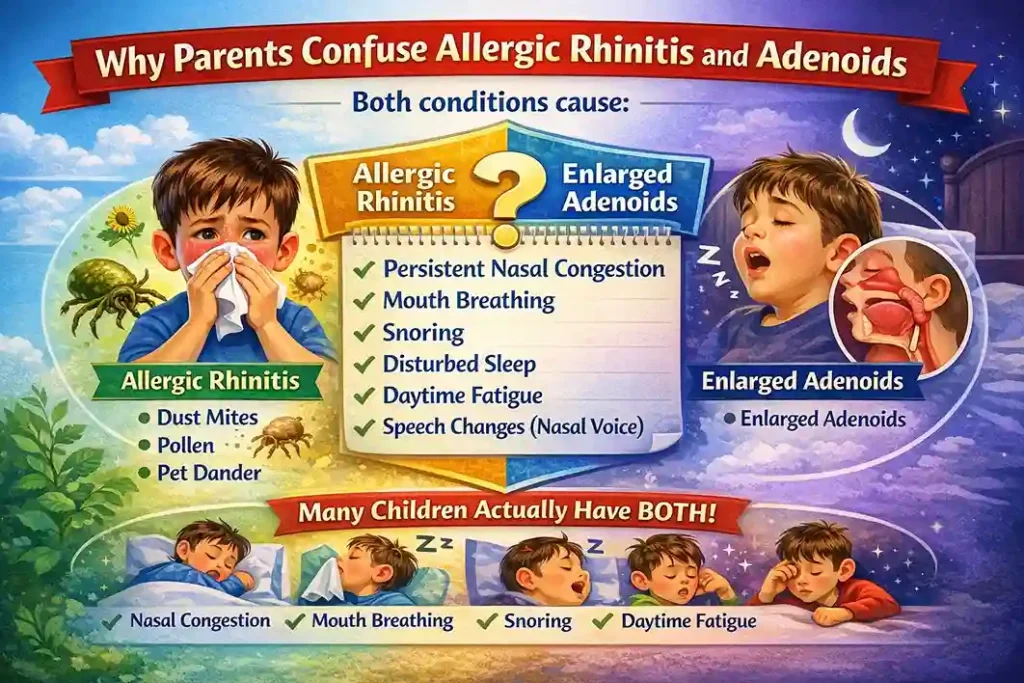
Because both conditions cause:
✔ Persistent nasal congestion
✔ Mouth breathing
✔ Snoring
✔ Disturbed sleep
✔ Daytime fatigue
✔ Speech changes (nasal voice)
Many children actually have BOTH conditions at the same time, which further complicates diagnosis (Krouse et al., 2024).
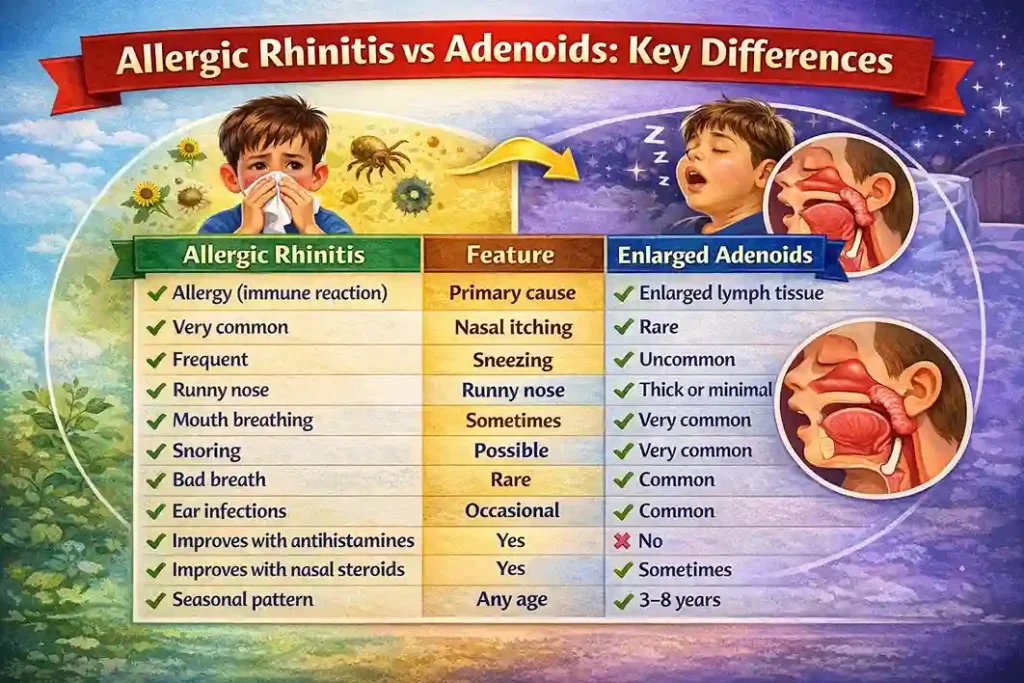
Allergic Rhinitis vs Adenoids: Key Differences
Signs More Suggestive of Allergic Rhinitis
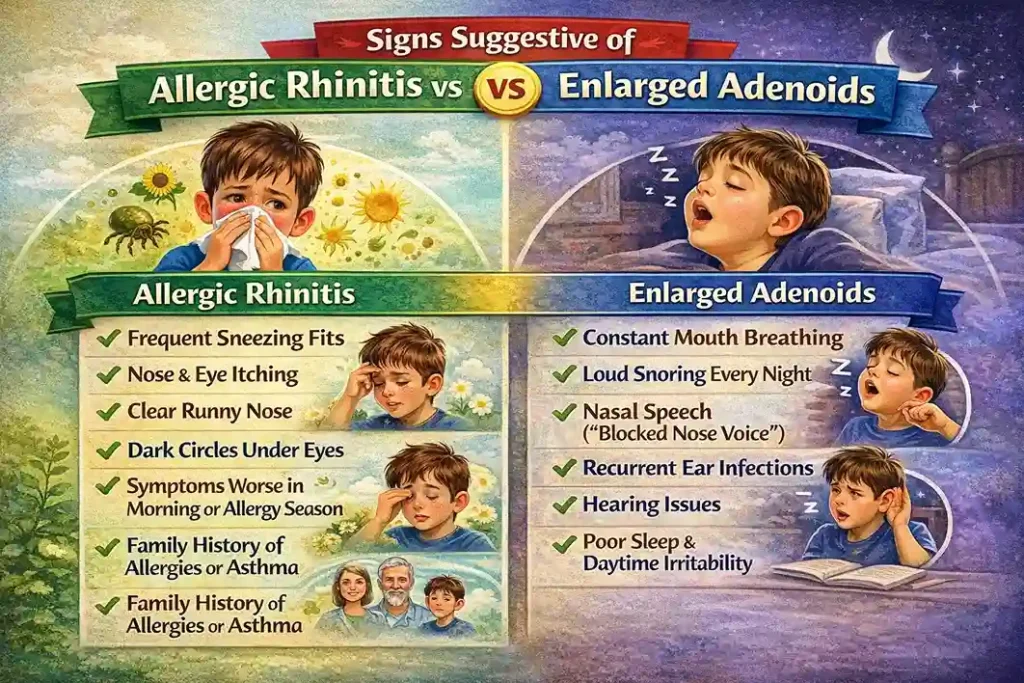
Your child is more likely to have allergic rhinitis if you notice:
✔ Frequent sneezing fits
✔ Nose and eye itching
✔ Clear runny nose
✔ Dark circles under eyes (allergic shiners)
✔ Symptoms worse in morning or allergy season
✔ Family history of allergies or asthma
Itching and sneezing are key distinguishing features favoring allergy (ARIA Guidelines, 2024).
Signs More Suggestive of Enlarged Adenoids
Adenoids are more likely if your child has:
✔ Constant mouth breathing
✔ Loud snoring every night
✔ Nasal speech (“blocked nose voice”)
✔ Recurrent ear infections
✔ Hearing issues
✔ Poor sleep with daytime irritability
✔ No itching or sneezing
Chronic nasal obstruction with sleep-disordered breathing strongly suggests adenoid hypertrophy (AAO-HNS, 2023)
Can Allergic Rhinitis Cause Enlarged Adenoids?
👉 YES — very commonly
Chronic nasal allergy can:
- Keep adenoids inflamed
- Prevent them from shrinking naturally
- Worsen nasal blockage over time
Treating allergic rhinitis early may reduce adenoid size and lower the need for surgery (Krouse et al., 2024).
How Doctors Diagnose the Difference
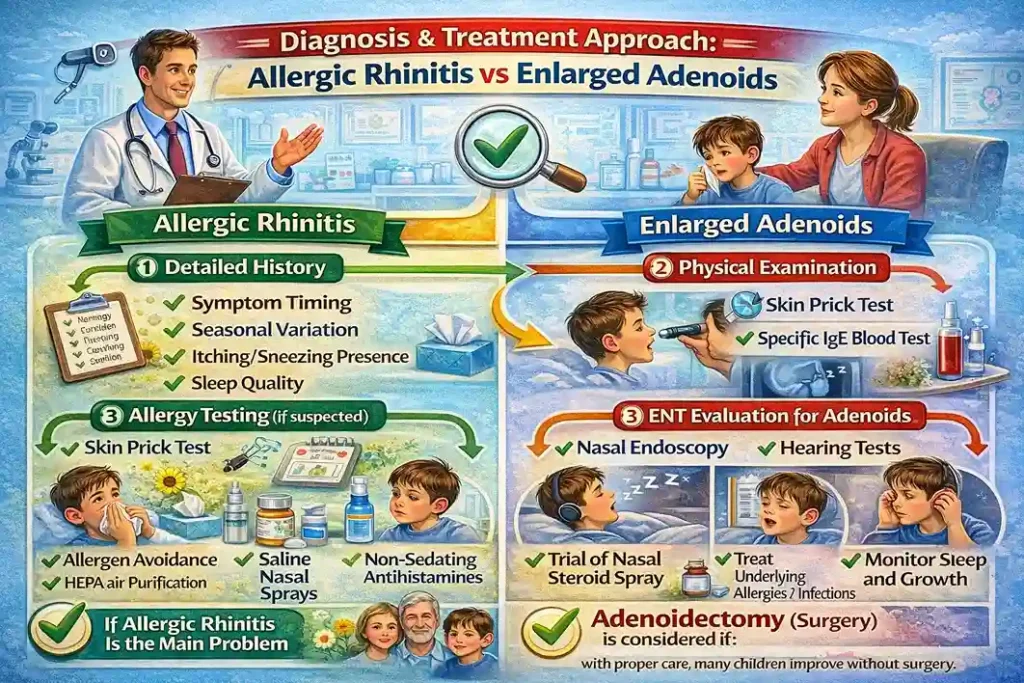
1️⃣ Detailed History
- Symptom timing
- Seasonal variation
- Itching/sneezing presence
- Sleep quality
2️⃣ Physical Examination
- Nasal lining (pale & swollen in allergy)
- Mouth breathing signs
- Tonsil size
3️⃣ Allergy Testing (if suspected)
- Skin prick test
- Specific IgE blood test
4️⃣ ENT Evaluation for Adenoids
- Nasal endoscopy (small camera)
- Lateral neck X-ray (in some cases)
- Hearing tests if ear infections are frequent
Nasal endoscopy is the gold standard for assessing adenoid size (AAO-HNS, 2023).
Treatment Approach: Allergic Rhinitis vs Adenoids
If Allergic Rhinitis Is the Main Problem
✔ Allergen avoidance
✔ Saline nasal sprays
✔ Non-sedating antihistamines
✔ Intranasal corticosteroid sprays
✔ HEPA air purification
✔ Immunotherapy (selected cases)
Many children improve without surgery (ARIA Guidelines, 2024)
If Enlarged Adenoids Are the Main Problem
✔ Trial of nasal steroid spray
✔ Treat underlying allergies or infections
✔ Monitor sleep and growth
Adenoidectomy (Surgery) is considered if:
- Severe nasal obstruction
- Sleep apnea
- Recurrent ear infections
- Poor response to medical therapy
Surgery is reserved for clearly indicated cases (AAO-HNS
What If a Child Has BOTH?
This is very common.
Best approach:
1️⃣ Treat allergic rhinitis first
2️⃣ Reduce inflammation
3️⃣ Reassess adenoid size later
Many children avoid surgery once allergies are controlled (Krouse et al., 2024).
Can Adenoids Shrink Naturally?
Yes.
- Adenoids usually shrink after age 8–10
- Controlling allergies speeds this process
- Not every child needs surgery
When Parents Should Seek Medical Help
Consult a pediatrician or ENT if:
- Snoring is loud and nightly
- Child stops breathing during sleep
- Poor growth or learning issues appear
- Recurrent ear infections occur
- Symptoms persist despite allergy treatment
Key Takeaways for Parents
✔ Allergic rhinitis and adenoids often overlap
✔ Itching and sneezing suggest allergy
✔ Constant mouth breathing suggests adenoids
✔ Treat allergies first whenever possible
✔ Many children avoid surgery with proper care
Medical Review Disclaimer
This article is for informational and educational purposes only and does not constitute medical advice. The content is written by a qualified healthcare professional and medically reviewed for accuracy. However, it should not be used as a substitute for professional medical diagnosis, treatment, or advice. Always consult a licensed healthcare provider regarding any medical condition or health concern.
Frequently Asked Questions(FAQs)
1. How do I know if my child has allergies or adenoids?
Itching and sneezing suggest allergies, while constant mouth breathing and loud snoring suggest adenoids.
2. Can allergic rhinitis cause enlarged adenoids?
Yes. Ongoing nasal allergies can keep adenoids swollen over time.
3. Does every child with adenoids need surgery?
No. Many improve with medical treatment and allergy control.
4. Can a child have both conditions?
Yes. Allergic rhinitis and enlarged adenoids often occur together.
5. At what age do adenoids shrink naturally?
Usually after 8–10 years of age.
6. When should parents worry?
If snoring is loud, sleep is disturbed, or symptoms persist despite treatment.
References
- American Academy of Otolaryngology–Head and Neck Surgery. (2023). Clinical practice guideline: Tonsillectomy and adenoidectomy in children.
https://www.entnet.org
2. Bousquet, J., et al. (2024). ARIA 2024 guidelines for allergic rhinitis management. Journal of Allergy and Clinical Immunology, 153(2), 452–470.
https://doi.org/10.1016/j.jaci.2023.10.012
3. Krouse, J. H., et al. (2024). Overlap of allergic rhinitis and adenoid hypertrophy in pediatric patients. International Journal of Pediatric Otorhinolaryngology, 176, 111675.
https://doi.org/10.1016/j.ijporl.2024.111675
4. Seidman, M. D., et al. (2023). Clinical practice guideline: Allergic rhinitis. Otolaryngology–Head and Neck Surgery, 168(1), S1–S55.
https://doi.org/10.1177/01945998221141809
5. Skoner, D. P. (2023). Allergic rhinitis: Pathophysiology and diagnosis in children. Pediatrics, 152(4), e20230678.
https://doi.org/10.1542/peds.2023-0678