

How to Treat Allergic Rhinitis at Home: Best Home Remedies
Written by: Dr.Muhammad Ihsan Ullah, PhD
Medically reviewed by: Dr. Jamal ud Din Khan, FCPS
Wondering how to treat allergic rhinitis at home? The best home remedies include saline nasal rinses, HEPA air purification, dust-mite control, humidity management, pollen avoidance, lifestyle changes, and allergy-friendly foods. These steps may not cure allergic rhinitis permanently, but they can reduce sneezing, runny nose, nasal congestion, post-nasal drip, and morning allergy symptoms when used consistently.
For fast home relief, start with saline nasal irrigation, keep bedroom air clean, control humidity, wash bedding weekly, and reduce pollen exposure after outdoor activity.
Quick Answer: How to Treat Allergic Rhinitis at Home
User problem | Best home remedy |
Sneezing and runny nose | Saline rinse, pollen control, shower after outdoor exposure |
Nasal congestion | Saline irrigation, humidity control, HEPA air purifier |
Morning allergies | Wash bedding, dust-mite covers, bedroom HEPA filter |
Pet allergy symptoms | Keep pets out of bedroom, HEPA vacuum, air purifier |
Dust mite allergy | Mattress cover, pillow cover, hot-wash bedding |
Mold-triggered rhinitis | Fix leaks, reduce humidity, ventilate bathrooms |
Food-related support | Fruits, vegetables, anti-inflammatory foods |
Symptoms not improving | See a doctor for nasal spray, antihistamine, or allergy testing |
Fast Relief for Allergic Rhinitis at Home
For fast relief from allergic rhinitis at home, focus on reducing allergen contact and clearing the nose first. The quickest non-drug steps are saline nasal rinse, avoiding the trigger, washing the face, changing clothes after outdoor exposure, and keeping bedroom air clean.
A simple fast-relief plan:
- Move away from the trigger, such as pollen, dust, smoke, pets, mold, or strong fragrance.
- Rinse your nose with saline spray or saline irrigation.
- Wash your face and eyelids if your eyes are itchy or watery.
- Drink water or warm fluids if mucus feels thick.
- Keep windows closed during high-pollen periods.
- Run a HEPA air purifier in the bedroom or main living area.
- Shower and change clothes after outdoor exposure.
Home remedies can reduce sneezing, runny nose, congestion, and post-nasal drip, but they do not work like instant rescue medicine. If symptoms are severe, persistent, or linked with wheezing, chest tightness, shortness of breath, facial pain, fever, or thick mucus, medical advice is needed.
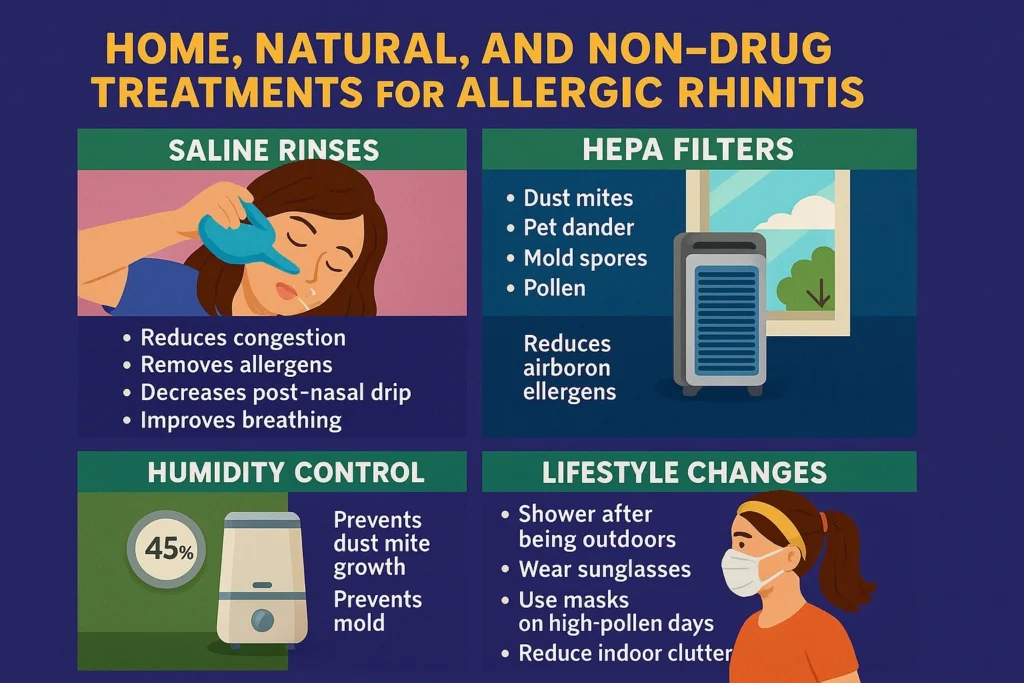
Best Home Remedies to Treat Allergic Rhinitis at Home
The best home remedies for allergic rhinitis are saline nasal irrigation, HEPA air filtration, allergen-proof bedding, humidity control, pollen avoidance, pet dander control, mold prevention, and supportive foods. These home treatments work best when used together as a daily routine.
Natural ways to treat hay fever at home
Saline nasal irrigation (neti pot or spray)
HEPA air purifiers and clean indoor air
Humidity control (35–50%)
Allergen-proof bedding
Regular cleaning to reduce dust and mold
Limiting pet exposure
Lifestyle habits to reduce pollen contact
Why Natural and Non-Drug Treatments Work
Allergic rhinitis occurs when allergens enter the nose and trigger inflammation. Natural treatments work by:
- Reducing allergen exposure
- Improving nasal hygiene
- Supporting airway function
- Improving indoor air quality
- Enhancing overall breathing comfort
These strategies are strongly recommended in ARIA and AAAAI guidelines (Bousquet et al., 2020).These measures are commonly referred to as natural treatment options for allergic rhinitis in clinical guidelines.
Do home remedies help allergic rhinitis?
Yes, home remedies can help reduce allergic rhinitis symptoms by lowering allergen exposure and improving nasal hygiene. While they do not cure allergies, consistent use of measures like saline rinses, clean air, and humidity control can significantly improve symptom control.
Allergic Rhinitis Self-Care: What Actually Helps
Allergic rhinitis self-care works best when it becomes a daily routine, not a one-time remedy. The goal is to reduce the number of allergens reaching your nose, calm nasal irritation, and prevent symptoms before they become severe.
The most useful self-care habits include:
- saline nasal rinse or saline spray
- washing bedding weekly
- using dust-mite-proof pillow and mattress covers
- keeping pets out of the bedroom
- reducing carpets, curtains, and fabric clutter
- keeping windows closed during pollen season
- showering after outdoor exposure
- using a true HEPA air purifier
- controlling indoor humidity
- avoiding smoke, incense, perfume, and harsh cleaning sprays
Self-care is especially helpful for mild to moderate symptoms. If allergic rhinitis affects sleep, school, work, breathing, or daily life, home care should be combined with a proper treatment plan from a clinician.
What is the most effective natural remedy for hay fever?
Saline nasal irrigation is considered the most effective natural remedy for hay fever because it directly removes allergens, mucus, and inflammatory particles from the nose. Regular use improves breathing, reduces congestion, and enhances the effect of other treatments.
Saline Irrigation & Neti Pot: The Most Effective Natural Remedy
Saline nasal irrigation is one of the fastest home remedies for allergic rhinitis because it physically removes pollen, dust, mucus, and irritants from the nose. It is especially helpful for congestion, post-nasal drip, and morning stuffiness.
Saline nasal irrigation for allergic rhinitis helps remove allergens, mucus, and inflammatory mediators from the nasal cavity. Patients often ask how to use neti pot for allergic rhinitis. Studies have reported that saline irrigation is one of the most effective natural treatments for allergic rhinitis. It washes out pollen, dust mites, pet dander, mold, mucus, and inflammatory mediators from the nasal cavity (Klimek et al., 2024).
✔Effects of Saline Nasal Irrigation
- Reduces congestion
- Removes allergens
- Decreases post-nasal drip
- Improves breathing
- Enhances the effect of nasal sprays
✔ Forms of Nasal Irrigation
- Neti pot
- Squeeze bottle
- Pressurized nasal rinse
- Saline mist (milder option)
✔ Step-by-Step Safe Use
(ARIA-recommended)
- Always use distilled, boiled, or sterile water (Dykewicz et al., 2020).
- Mix saline powder OR use premixed packets.
- Tilt your head and pour into one nostril, letting it flow out the other.
- Repeat on both sides.
- Clean your device thoroughly after each use.
Daily Nose Care Routine for Allergic Rhinitis
A daily nose care routine can help reduce congestion, post-nasal drip, sneezing, and morning allergy symptoms. This routine is useful during pollen season, dust mite exposure, pet allergy flare-ups, or chronic allergic rhinitis.
Morning routine:
- Sit upright after waking.
- Drink water to loosen mucus.
- Use saline spray or saline rinse if the nose feels blocked.
- Wash your face and eyelids if you have itching or watery eyes.
- Avoid opening bedroom windows during high-pollen periods.
Evening routine:
- Change clothes after outdoor exposure.
- Shower before bed if pollen exposure is likely.
- Keep pets away from pillows and bedding.
- Run a HEPA air purifier in the bedroom.
- Keep bedding clean and dry.
- Use allergy medicines or nasal sprays only as directed.
If you use a nasal spray prescribed by a clinician, saline rinse is often used before the medicine so the nose is clearer. Do not overuse medicated decongestant sprays because they can worsen congestion if used for too long.
HEPA Air Purifier for Allergic Rhinitis at Home
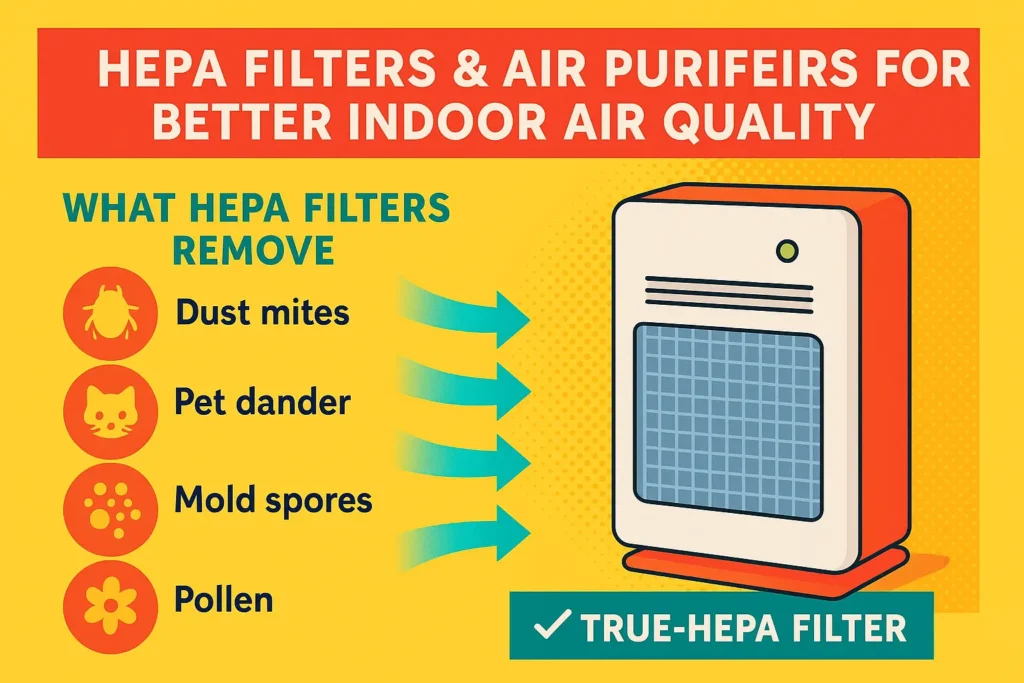
A true HEPA air purifier is most useful in the bedroom because dust mites, pollen, mold spores, and pet dander often collect where you sleep. Run it daily, keep doors/windows closed during high pollen days, and choose a purifier matched to room size.
HEPA purifiers show clinically proven benefits for allergic rhinitis and asthma by reducing airborne allergens (Reisman et al., 1990).
✔ What HEPA Filters Remove
- Dust mites
- Pet dander
- Mold spores
- Pollen
- Smoke particles
✔ Placement Matters
- Put one in the bedroom (most important).
- Add another in the living room for added benefit.
✔ Choose a HEPA Filter With:
- High CADR rating
- True-HEPA (not HEPA-like)
- Low noise for nighttime use
Bedroom Home Treatment for Morning Allergic Rhinitis
If allergic rhinitis is worse in the morning, the bedroom is usually the first place to fix. Dust mites, bedding allergens, pet dander, indoor pollen, and dry air can build up overnight and trigger sneezing, blocked nose, and post-nasal drip after waking.
5-minute morning allergy routine
- Sit upright and drink water.
- Use saline spray or saline rinse.
- Wash your face or shower if pollen exposure is likely.
- Keep windows closed during pollen season.
- Run a HEPA air purifier in the bedroom.
- Change pillowcases frequently.
- Wash bedding weekly.
Humidity Control for Allergic Rhinitis Home Treatment
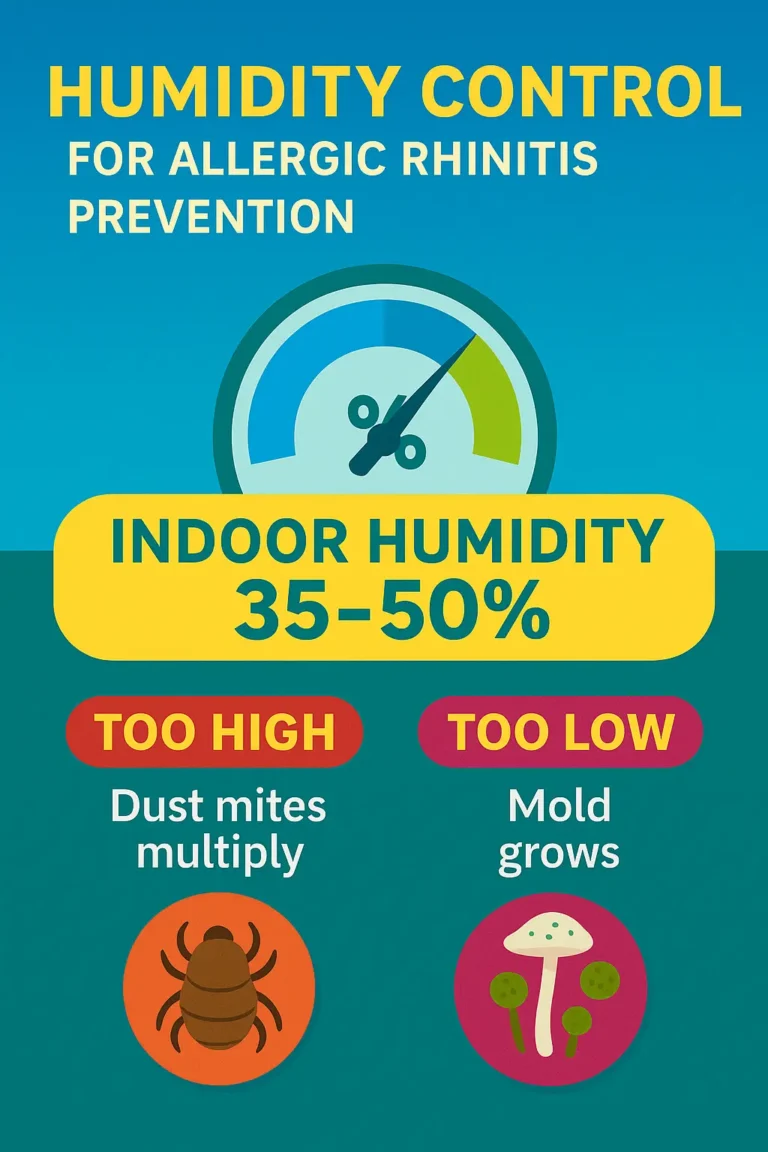
Keep indoor humidity around 35–50%. High humidity can increase dust mites and mold, while very dry air can irritate the nose, throat, and sinuses. Use a hygrometer to check humidity instead of guessing (Klimek et al., 2024).
✔ If humidity is too high:
- Dust mites multiply
- Mold grows
Sinus congestion
✔ If humidity is too low:
- Nose becomes dry
- Irritation worsens
- Nosebleeds may
Proper humidity control for allergic rhinitis helps prevent dust mite growth and mold formation.
Humidifier or Dehumidifier for Allergic Rhinitis?
A humidifier or dehumidifier can help allergic rhinitis only when used for the right problem. The best indoor humidity range is usually moderate, not too dry and not too damp.
A humidifier may help if:
- indoor air is very dry
- the nose feels dry, crusty, or irritated
- heating or air conditioning dries the room
- you wake with throat dryness or nasal irritation
A dehumidifier may help if:
- the room feels damp or musty
- mold is present
- dust mite allergy is worse indoors
- humidity is high
- condensation appears on windows or walls
Do not use a humidifier blindly. Too much humidity can increase dust mites and mold, which may worsen allergic rhinitis. Use a hygrometer to check the room instead of guessing.
Allergen-Proof Bedding for Dust Mite Allergy
Dust mites are the single biggest indoor trigger of perennial allergic rhinitis (Klimek et al., 2024).For dust mite allergic rhinitis, bedding changes can make a big difference. Use dust-mite-proof pillow and mattress covers, wash sheets weekly, reduce heavy blankets, and avoid sleeping with stuffed toys or pets.
✔ Recommended Steps
- Use allergen-proof covers on mattress, pillows, box springs.
- Wash bedding weekly in hot water ≥130°F (54°C).
- Replace heavy carpets with washable rugs.
- Limit stuffed toys or wash them regularly.
Pet Allergy Management in a Natural Way
Pets shed dander (skin protein) that triggers allergic rhinitis.
✔ Natural Strategies
- Keep pets out of the bedroom
- Use HEPA vacuum cleaners
- Wash pets weekly if medically safe
- Use pet allergen-reducing shampoos
Mold Prevention and Removal
Mold spores worsen congestion, sinus pressure, and asthma.
✔ Natural Mold-Control Steps
- Use ventilation in kitchens and bathrooms
- Fix leaks quickly
- Use dehumidifiers
Clean surfaces using anti-mold cleaners
Improving Indoor Air Quality Without Medication
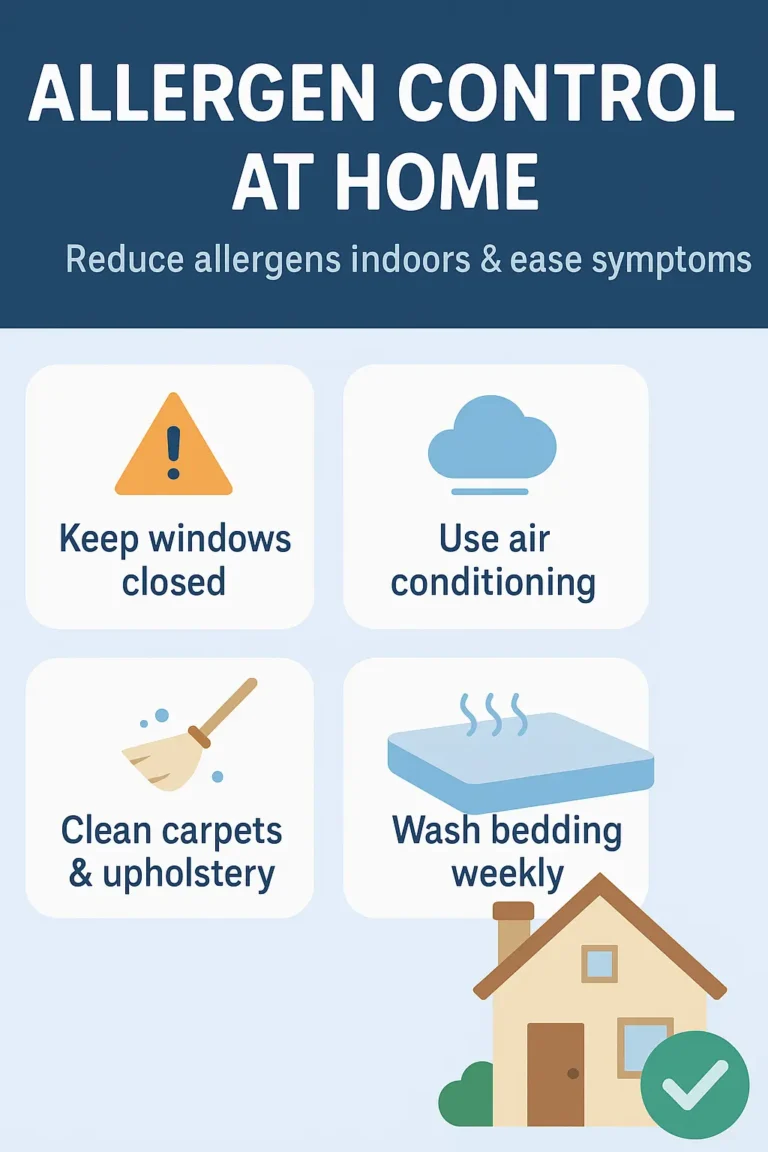
Indoor air quality affects nasal health more than most people realize.
✔ Best Evidence-Based Non-Drug Air Quality Steps
- Use HEPA vacuum cleaners
- Dust using microfiber cloths (captures allergens)
- Avoid incense, strong cleaning chemicals, and aerosols
- Keep windows closed during allergy season
- Maintain good ventilation
These measures represent core non-drug treatment options for allergic rhinitis.
How can I get natural relief from allergies quickly?
Quick natural relief from allergies can be achieved by rinsing the nose with saline, staying indoors during high pollen levels, using an air purifier, and avoiding known triggers. These steps help reduce immediate allergen exposure and ease symptoms faster.
Lifestyle Changes to Manage Allergic Rhinitis Naturally
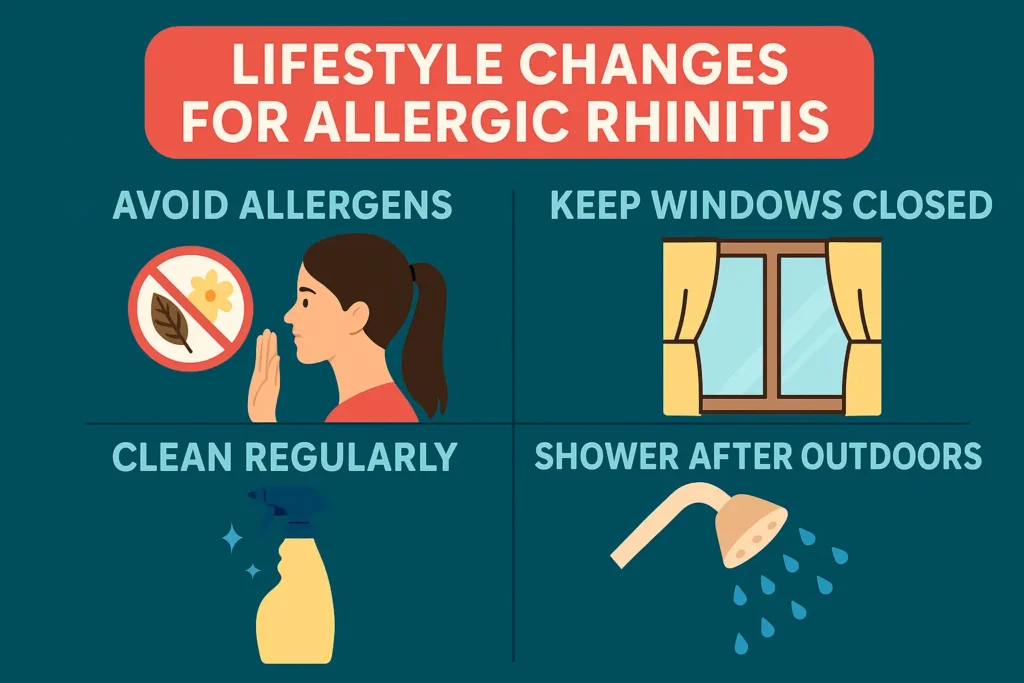
Lifestyle changes can reduce allergic rhinitis flares by lowering daily allergen exposure. These changes are simple, but they work best when repeated every day during allergy season.
Best lifestyle changes
- Shower after outdoor exposure.
- Change clothes before sitting on bed.
- Keep windows closed on high-pollen days.
- Wear sunglasses outdoors.
- Use a mask when cleaning dusty areas.
- Avoid smoke, incense, and strong fragrance.
- Exercise indoors when pollen is high.
Best Foods for Allergic Rhinitis
Foods do not cure allergic rhinitis, but an anti-inflammatory diet may support nasal and immune health. The best foods for allergic rhinitis are fruits, vegetables, omega-3-rich foods, and antioxidant-rich meals.
Best foods and fruits for allergic rhinitis
Food group | Examples | Why it may help |
Vitamin C fruits | Oranges, kiwi, strawberries, guava | Supports antioxidant defense |
Quercetin foods | Apples, onions, berries | May support anti-inflammatory pathways |
Omega-3 foods | Fish, chia seeds, flaxseed | Supports inflammation balance |
Vegetables | Spinach, broccoli, carrots | Provide antioxidants and micronutrients |
Warm fluids | Soup, warm water, herbal tea | May soothe throat and mucus irritation |
Food is supportive, not a replacement for allergen control, saline rinses, or medical treatment when symptoms are moderate or severe.
Steam Inhalation for Allergic Rhinitis: Is It Safe?
Steam inhalation may temporarily loosen mucus, but it does not treat the allergic inflammation behind allergic rhinitis. Hot-water steam can also cause burns, especially in children. Safer options include warm showers, saline spray, saline rinses, and proper humidity control.
Home Remedies That Can Make Allergic Rhinitis Worse
Not every “natural remedy” is safe or useful for allergic rhinitis. Some home remedies may irritate the nose, worsen inflammation, or delay proper treatment.
Be careful with:
- hot steam bowls, because they can cause burns
- essential oils, because strong scents may irritate the nose
- smoke, incense, or scented candles
- herbal sprays without safety guidance
- frequent dry dusting, which spreads allergens into the air
- sleeping with pets if pet dander triggers symptoms
- using tap water for nasal rinses
- overusing nasal decongestant sprays
- relying only on food or supplements for moderate to severe symptoms
The safest home remedies are usually simple: saline rinses, allergen control, clean air, bedding hygiene, humidity control, and avoiding known triggers.
Can Allergic Rhinitis Be Cured Permanently at Home?
Allergic rhinitis usually cannot be cured permanently with home remedies alone. Home treatment can reduce symptoms and prevent flare-ups, but long-term control may require trigger avoidance, medicines, allergy testing, or immunotherapy. Be careful with any remedy that promises a permanent cure.
When Home Remedies Are Not Enough
Home remedies may not be enough if symptoms last more than 4 weeks, disturb sleep, cause severe congestion, trigger asthma, or keep returning despite allergen control. In these cases, a doctor may recommend nasal corticosteroids, antihistamines, allergy testing, or immunotherapy.
Non-Allergic Rhinitis Home Remedies: What Changes?
Non-allergic rhinitis can look like allergic rhinitis, but the triggers are different. Instead of pollen, dust mites, or pet dander, symptoms may be triggered by cold air, smoke, perfume, weather changes, spicy foods, air pollution, or strong cleaning products.
Home care for non-allergic rhinitis focuses more on avoiding irritants than avoiding allergens.
Helpful steps include:
- avoiding smoke, perfume, incense, and strong odors
- using saline spray for dryness or irritation
- keeping indoor air clean
- avoiding sudden cold-air exposure when possible
- using a mask when cleaning or around strong irritants
- improving ventilation during cooking or cleaning
- avoiding overuse of decongestant nasal sprays
If symptoms are mostly congestion, runny nose, or post-nasal drip without itching or sneezing, non-allergic rhinitis may be possible. A clinician can help confirm the cause and suggest the right treatment.
Key Takeaways
- Natural treatments are powerful and evidence-supported.
- Saline irrigation is the most effective non-drug therapy.
- HEPA filters significantly reduce airborne allergens.
- Humidity control prevents mold and dust mite growth.
- Allergen-proof bedding is essential for dust-mite allergies.
- Lifestyle changes help reduce daily triggers.
- Natural methods work best when combined with proper medical treatment.
Medical Review Disclaimer
This article is for informational and educational purposes only and does not constitute medical advice. The content is written by a qualified healthcare professional and medically reviewed for accuracy. However, it should not be used as a substitute for professional medical diagnosis, treatment, or advice. Always consult a licensed healthcare provider regarding any medical condition or health concern.
Frequently Asked Questions (FAQs)
How can I treat allergic rhinitis at home?
You can treat allergic rhinitis at home with saline nasal rinses, dust mite control, HEPA air purification, clean bedding, humidity control, pollen avoidance, pet dander control, mold prevention, and avoiding smoke or strong fragrances.
What gives fast relief from allergic rhinitis at home?
Fast home relief may come from saline nasal rinse, washing the face, avoiding the trigger, showering after pollen exposure, changing clothes, closing windows, and using a HEPA air purifier. Severe or persistent symptoms may still need medical treatment.
What is the best home remedy for allergic rhinitis?
Saline nasal irrigation is one of the best home remedies because it removes pollen, dust, mucus, and irritants from the nose. It may help congestion, post-nasal drip, sneezing, and morning nasal blockage.
What is the best daily nose care routine for allergic rhinitis?
A good routine includes saline spray or rinse, clean bedding, closed windows during pollen season, showering after outdoor exposure, avoiding bedroom allergens, and using prescribed allergy medicine or nasal spray correctly when needed.
Can allergic rhinitis be cured permanently at home?
No, allergic rhinitis usually cannot be cured permanently at home. Home remedies can reduce symptoms and flare-ups, but persistent allergic rhinitis may require allergy testing, nasal sprays, antihistamines, or immunotherapy.
Is steam inhalation good for allergic rhinitis?
Steam may temporarily loosen mucus, but it does not treat allergic inflammation. Hot steam can also cause burns. Safer options include saline spray, saline rinse, warm showers, and proper humidity control.
Is a humidifier good for allergic rhinitis?
A humidifier may help if indoor air is very dry, but too much humidity can increase dust mites and mold. Use a hygrometer and keep humidity balanced instead of making the room overly damp.
Is a dehumidifier good for allergic rhinitis?
A dehumidifier may help if your room is damp, moldy, or dust-mite prone. Lowering excess humidity can reduce mold growth and dust mite activity, especially in bedrooms and basements.
What home remedies should I avoid for allergic rhinitis?
Avoid unsafe steam bowls, strong essential oils, incense, smoke, scented candles, tap water nasal rinses, and overuse of medicated decongestant sprays. These can irritate the nose or create new problems.
When are home remedies not enough for allergic rhinitis?
Home remedies may not be enough if symptoms last more than four weeks, disturb sleep, affect work or school, cause severe congestion, trigger asthma symptoms, or keep returning despite good allergen control.
REFERENCES
Bousquet, J., Klimek, L., Togias, A., Zuberbier, T., Agache, I., Ansotegui, I. J., … Wallace, D. V. (2020). Next-generation allergic rhinitis and its impact on asthma (ARIA) guidelines. Journal of Allergy and Clinical Immunology, 145(3), 895–909. https://doi.org/10.1016/j.jaci.2019.12.898
Dykewicz, M. S., Wallace, D. V., Baroody, F., Bernstein, J., Craig, T., Finegold, I., … Portnoy, J. (2020). Rhinitis 2020: A practice parameter update. Journal of Allergy and Clinical Immunology, 146(4), 721–767.
Klimek, L., Bousquet, J., Pfaar, O., Bachert, C., Hellings, P. W., & Agache, I. (2024). Current management of allergic rhinitis: Pharmacologic and non-pharmacologic options. Journal of Allergy and Clinical Immunology: In Practice, 12(2), 215–229. https://doi.org/10.1016/j.jaip.2023.11.012
Reisman, R. E., Mauriello, P. M., Davis, G. B., Georgitis, J. W., & DeMasi, J. M. (1990). Effectiveness of HEPA filters in allergic rhinitis and asthma. Journal of Allergy and Clinical Immunology, 85(6), 1050–1057.