

Can Allergic Rhinitis Be Cured Permanently?
Written by: Dr.Muhammad Ihsan Ullah, PhD
Medically reviewed by: Dr. Jamal ud Din Khan, FCPS & Dr. Muhammad Muzamil Khan, PhD
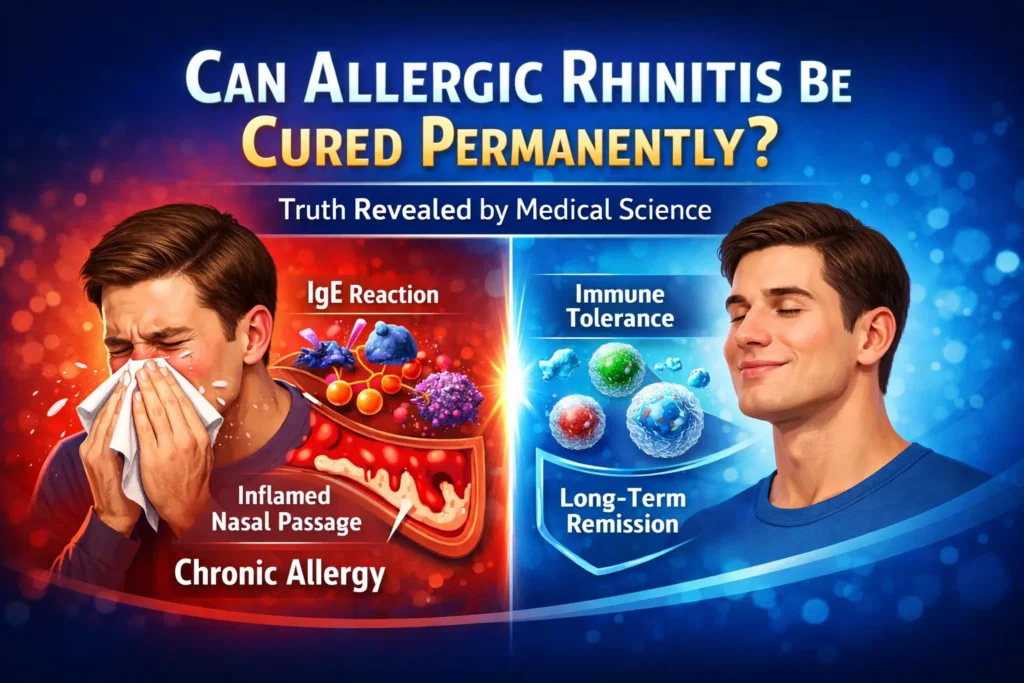
Every day, patients walk into clinics with the same quiet frustration:
👉 “Doctor, can allergic rhinitis be cured permanently?”
👉 “Will I have to live with these allergies forever?”
If you’ve ever asked yourself:
- Can allergic rhinitis go away permanently?
- Is allergic rhinitis a lifelong condition?
- Can allergies be cured forever naturally or medically?
You are not alone.
This question is not just medical—it’s emotional.
Because behind it lies:
- disrupted sleep
- constant sneezing
- blocked nose during important moments
- reduced quality of life
The Truth (Simple but Powerful)
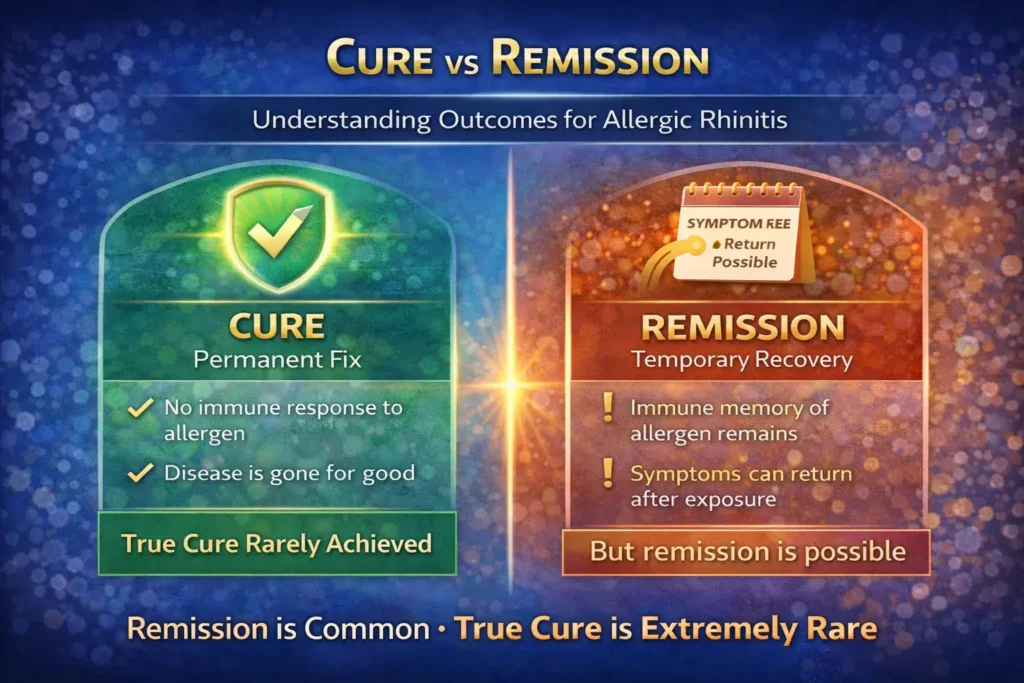
Allergic rhinitis is not permanently curable in the traditional sense, but it can be controlled, modified, and in many cases pushed into long-term remission that feels like a cure.
Let’s go deeper—scientifically, clinically, and realistically.
Is There a Permanent Cure for Allergic Rhinitis?
Allergic rhinitis cannot be cured permanently, but it can be effectively controlled and often goes into long-term remission. Treatments like allergen immunotherapy can reduce the immune system’s sensitivity to allergens, leading to minimal or no symptoms for years. While a complete cure is not guaranteed, many patients experience lasting relief that feels like a permanent solution.
Allergic Rhinitis is a chronic immune disorder, not just a temporary illness.
How to Cure Allergic Rhinitis Permanently: The Honest Answer
There is no guaranteed permanent cure for allergic rhinitis in the simple sense of “take one treatment and the allergy disappears forever.” Allergic rhinitis is driven by immune sensitivity to allergens such as pollen, dust mites, mold, or pet dander. That immune sensitivity can become quieter, but it does not always disappear completely.
The realistic goal is long-term control or remission. This means symptoms become mild, rare, or absent for long periods, and the person may need much less medicine than before.
The closest medical option to a long-term cure is allergen immunotherapy. It does not just cover symptoms like antihistamines do. It trains the immune system to tolerate specific allergens over time. This is why some people feel as if their allergic rhinitis has been “cured,” even though doctors usually describe it as long-term remission or disease modification.
A practical cure-focused plan usually includes:
- confirming the exact allergy trigger
- reducing daily allergen exposure
- controlling nasal inflammation
- using medicines correctly when needed
- considering immunotherapy for persistent or severe allergy
- treating related problems such as sinusitis, asthma, or sleep disturbance
Anyone promising a permanent cure with only food, steam, supplements, or a quick home remedy is overselling the truth.
Why Allergic Rhinitis Cannot Be Completely Cured
Understanding why allergic rhinitis cannot be cured permanently is the key to managing expectations.
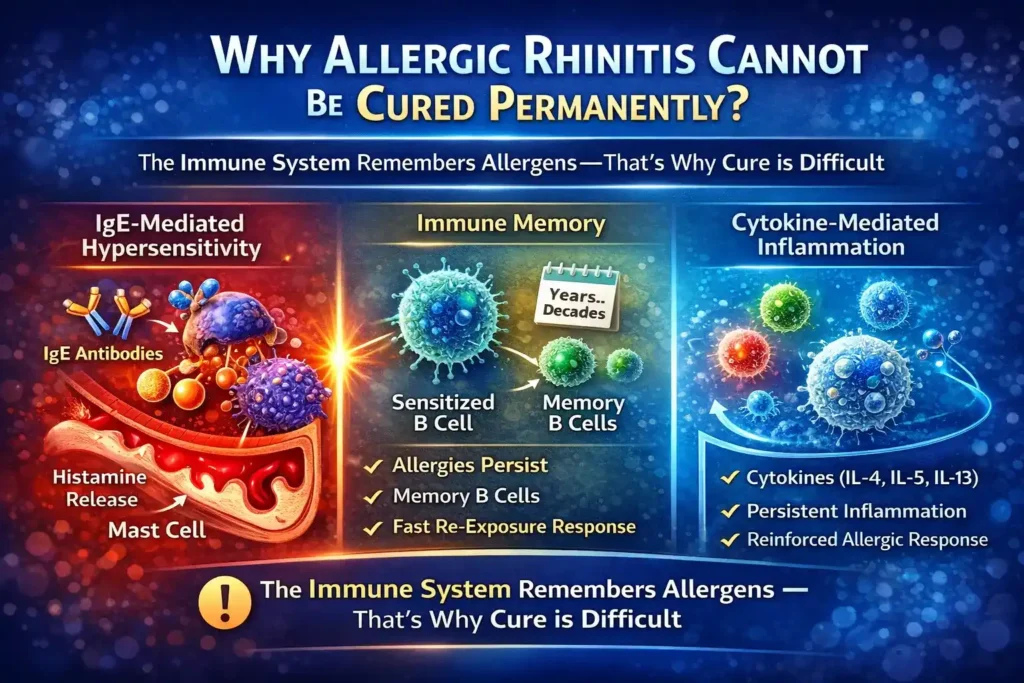
1. IgE-Mediated Immune Response
The condition is driven by IgE.
When exposed to allergens:
- IgE binds to mast cells
- Mast Cell Degranulation occurs
- Histamine causes symptoms
👉 Sneezing, itching, runny nose—all triggered instantly.
2. Immune Memory (The Real Problem)
Your Immune System remembers allergens.
Even after years:
- Dust → triggers symptoms
- Pollen → triggers reaction
👉 This is why people ask:
- Why does allergic rhinitis keep coming back?
- Is allergic rhinitis lifelong?
3. Chronic Inflammatory Pathways
The allergic response is sustained by:
- Cytokines
- Th2-dominant immune activity
This creates a self-perpetuating cycle of inflammation (Klimek, L., et al. 2024).
Can Allergic Rhinitis Go Away on Its Own?
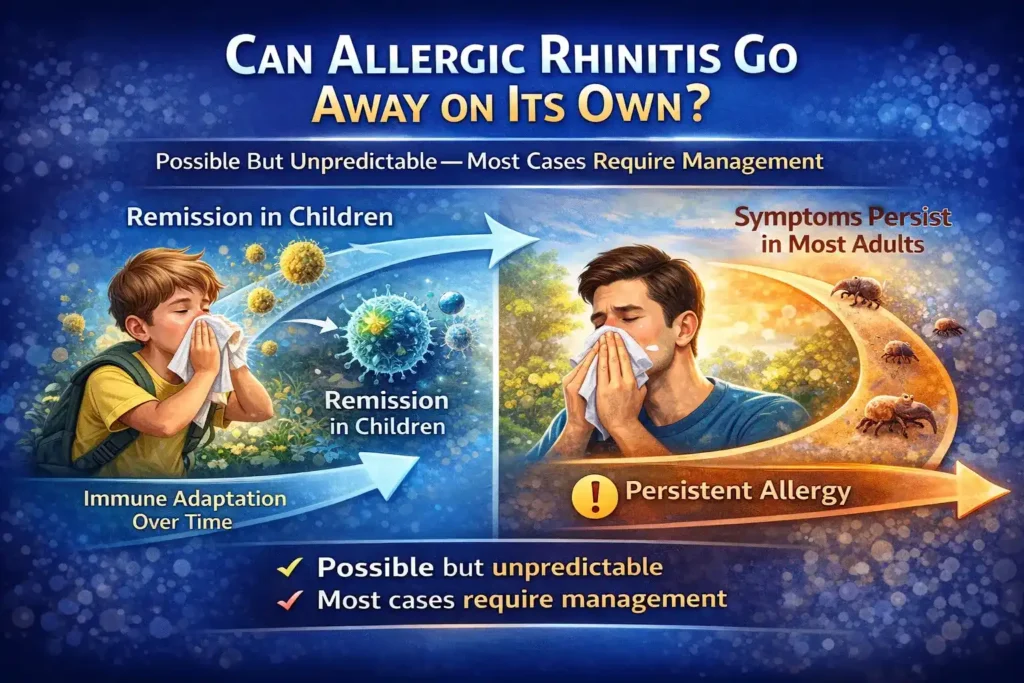
One of the most searched questions globally:
👉 “Can allergic rhinitis go away without treatment?”
✔ Short Answer:
Sometimes—but not reliably.
📊 What happens in real life:
Scenario 1: Young Patient
A 14-year-old with seasonal allergies:
- Symptoms gradually reduce over years
- Possible natural remission
Scenario 2: Adult with Dust Allergy
A 32-year-old office worker:
- Daily exposure to dust mites
- Symptoms persist or worsen
📌 Key Insight:
- Some people “outgrow” allergies
- Most require long-term management
(Pfaar, O., et al. 2024).
How Long Does Allergic Rhinitis Last?
Allergic rhinitis can last for weeks, months, seasons, or many years depending on the trigger. Seasonal allergic rhinitis may flare during pollen season and then improve when pollen levels fall. Perennial allergic rhinitis can continue throughout the year if the trigger is always present, such as dust mites, mold, cockroaches, or pet dander.
For some children, symptoms may reduce with age. For many adults, allergic rhinitis becomes a long-term condition that needs regular management. The pattern depends on genetics, allergen exposure, environment, treatment, and whether the allergy is seasonal or year-round.
If symptoms last more than four weeks, disturb sleep, affect school or work, or keep returning every season, it should be treated as a chronic condition rather than a short cold.
Why Does Allergic Rhinitis Keep Coming Back?
Allergic rhinitis keeps coming back because the immune system remembers the allergen. When a sensitive person meets the same trigger again, the immune system reacts quickly through IgE antibodies, mast cells, histamine, and inflammatory pathways.
Common reasons symptoms return include:
- pollen season comes back every year
- dust mites remain in bedding and mattresses
- pets continue to shed dander indoors
- mold grows in damp rooms
- medicines are stopped too early
- nasal sprays are not used consistently
- allergen exposure is reduced only partly
- the main trigger has not been identified
This is why allergic rhinitis often feels like it “goes away” and then suddenly returns. The inflammation may calm down, but the immune sensitivity can remain active underneath.
Treatments That Can Provide Near-Permanent Relief
Now the most important part:
👉 What is the closest thing to a permanent cure for allergic rhinitis?
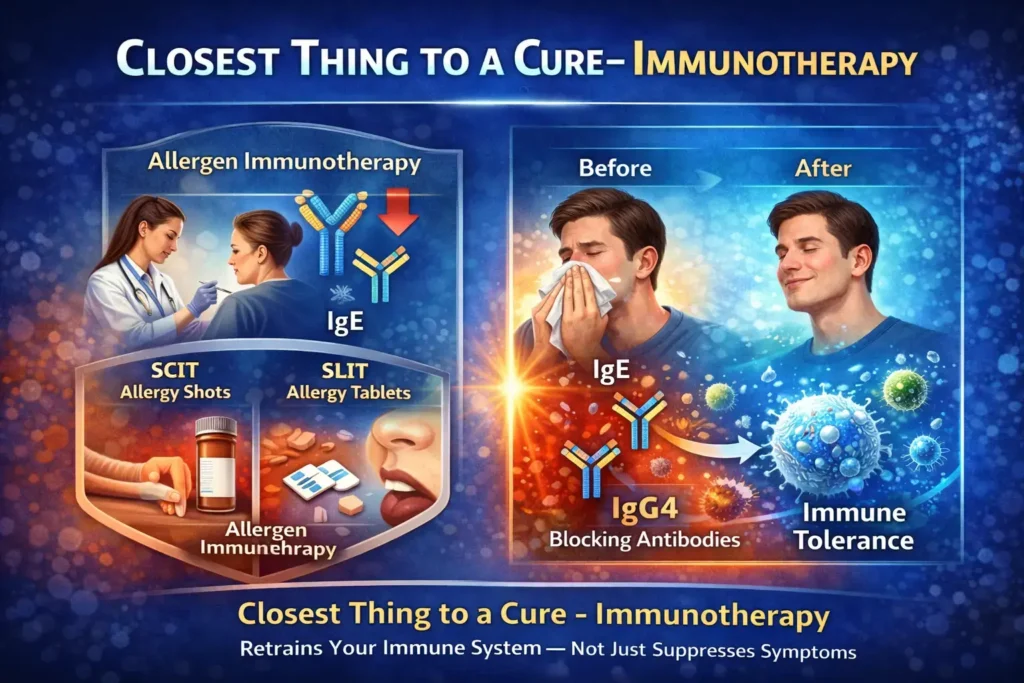
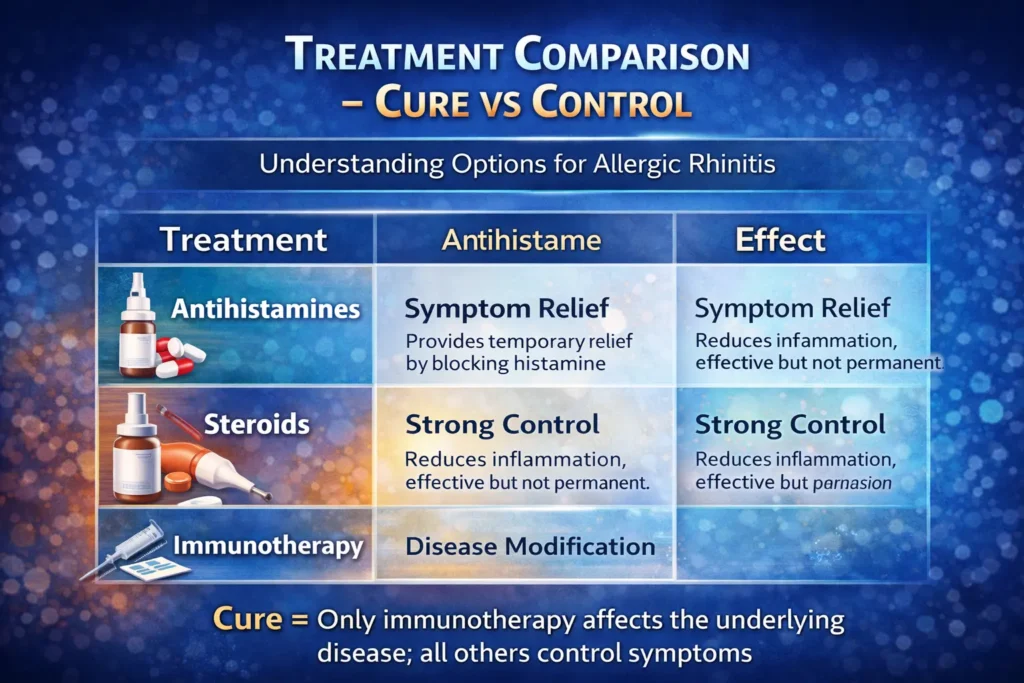
Allergen Immunotherapy – The Only Disease-Modifying Treatment
Allergen Immunotherapy is the gold standard for long-term change.
Types:
- Subcutaneous Immunotherapy
- Sublingual Immunotherapy
🔬 How it works:
- Reduces IgE sensitivity
- Increases IgG4 antibodies
- Builds Immune Tolerance
📈 Clinical Evidence:
- 3–5 years treatment needed
- Effects last years after stopping
(Durham, S. R., et al. 2023).
👉 Many patients experience:
- Minimal symptoms
- No medication need
- Normal life
Can Allergic Rhinitis Be Cured Permanently at Home?
Allergic rhinitis usually cannot be cured permanently at home. Home care can reduce symptoms, prevent flare-ups, and lower allergen exposure, but it does not usually erase the immune sensitivity that causes allergic rhinitis.
Home strategies can still make a big difference. They may help you breathe better, sleep better, and need less medicine.
Useful home steps include:
- saline nasal rinse
- dust-mite-proof pillow and mattress covers
- washing bedding weekly
- HEPA air purification
- humidity control
- mold prevention
- keeping pets out of the bedroom
- closing windows during high-pollen days
- showering after outdoor exposure
- avoiding smoke, incense, perfume, and harsh cleaning sprays
Home treatment is strongest when the trigger is clear. For example, dust mite allergy improves more when the bedroom is controlled properly. Pollen allergy improves more when outdoor exposure and indoor pollen transfer are reduced.
If symptoms remain moderate or severe despite home care, medical treatment or allergy testing may be needed.
Natural Cure for Allergic Rhinitis: What Helps and What Does Not
Natural methods can help allergic rhinitis, but they should be called support strategies, not guaranteed cures. The most useful natural approaches are the ones that reduce allergen exposure or improve nasal hygiene.
Helpful natural strategies include:
- saline nasal irrigation
- clean indoor air
- allergen-proof bedding
- balanced humidity
- washing pollen from hair and skin
- reducing dust, mold, and pet dander
- eating a balanced anti-inflammatory diet
- avoiding smoke and strong odors
These methods may reduce sneezing, runny nose, congestion, post-nasal drip, and morning symptoms. But they do not permanently reprogram the immune system the way immunotherapy may in selected patients.
Be careful with “natural cure” claims. Steam, honey, herbs, supplements, essential oils, and special diets may help some people feel better, but they should not replace proven treatment when symptoms are severe, chronic, or linked with asthma.
Biologic Therapies (Advanced Treatment)
Emerging treatments include:
- Omalizumab
- Biologic Therapy
🔍 Used for:
- Severe allergic rhinitis
- Resistant cases
💡 Reality:
- Not a permanent cure
- But highly effective in selected patients
(Scadding, G. K., et al. 2024).
Medications (Symptom Control Only)
Includes:
- Antihistamines
- Intranasal Corticosteroids
Important clarification:
👉 Do antihistamines cure allergic rhinitis permanently?
❌ No—they only control symptoms.
Does Immunotherapy Cure Allergies Permanently?
This is the most searched long-tail question.
🔍 Scientific Reality:
- ❌ Not a guaranteed cure
- ✅ Can create long-term remission
- ✅ Can change disease course
🧬 What happens biologically:
- Immune system becomes tolerant
- Allergen response weakens
- Symptoms disappear
👉 Clinically, many patients feel:
“My allergies are gone forever”
Even though immunologically, sensitivity may still exist.
Can Allergic Rhinitis Come Back After Immunotherapy?
Yes, allergic rhinitis can come back after immunotherapy, but many people experience long-term improvement after completing a proper course. Immunotherapy is usually given for several years because the immune system needs time to build tolerance.
Symptoms may return if:
- treatment is stopped too early
- the person is exposed to a different allergen
- allergen exposure remains very high
- the original allergy was severe
- asthma or sinus disease is also present
- treatment adherence was poor
Even when symptoms return, they may be milder than before. This is why immunotherapy is often described as disease-modifying rather than a guaranteed permanent cure.
The best results usually happen when immunotherapy is matched to confirmed allergy triggers and completed under specialist supervision.
What Is the Closest Thing to a Permanent Cure?
The answer is clear:
Induction of immune tolerance
This leads to:
- Long-term symptom relief
- Reduced recurrence
- Improved quality of life
💬 Emotional reality:
For many patients, this feels like a cure.
Why Some Patients Get “Cured” and Others Don’t
Key Factors:
- Early treatment initiation
- Allergen type (seasonal vs perennial)
- Genetics
- Duration of disease
- Treatment adherence
📊 Clinical scenario:
Patient A:
- Early immunotherapy
- Mild disease
👉 Achieves remission
Patient B:
- Long-standing untreated allergy
👉 Chronic symptoms persist
(Klimek, L., et al. 2024).
When Does Allergic Rhinitis Become Lifelong?
If ignored:
- Chronic inflammation develops
- Airways become hypersensitive
- Risk of asthma increases
👉 This is why patients often ask:
- Is allergic rhinitis lifelong?
- Can allergies become permanent?
📌 Answer:
They can—but don’t have to be.
Final Expert Conclusion
Let’s answer the question clearly and honestly:
❌ Myth:
“Allergic rhinitis can be completely cured permanently”
✅ Medical Truth:
- No absolute cure exists
- Long-term remission is achievable
- Disease can be modified
Can Allergic Rhinitis Turn Into Asthma?
Allergic rhinitis and asthma are closely connected because the nose and lungs are part of the same airway system. Allergic inflammation in the nose can be associated with lower-airway sensitivity, cough, wheezing, and asthma symptoms in some people.
Allergic rhinitis does not automatically turn into asthma, but uncontrolled allergy may increase breathing problems in susceptible people. This is especially important if symptoms include:
- wheezing
- chest tightness
- shortness of breath
- coughing at night
- coughing during exercise
- repeated breathing problems during pollen season
If allergic rhinitis is frequent or severe, controlling nasal inflammation matters. Proper allergy treatment, trigger control, and medical review may help reduce the overall airway burden.
Final Statement:
Allergic rhinitis is not permanently curable in the classical sense, but modern therapies—especially allergen immunotherapy—can reprogram the immune system, induce long-term tolerance, and provide sustained relief that may clinically resemble a cure.
Medical Disclaimer
The information provided on this website, including this article on allergic rhinitis, is intended for educational and informational purposes only. It is not a substitute for professional medical advice, diagnosis, or treatment.
Although the content is written and reviewed by qualified professionals, including experts in pharmacology and healthcare, it should not be used to make medical decisions without consulting a licensed physician or qualified healthcare provider.
Every individual’s medical condition is unique. Symptoms, treatment responses, and outcomes may vary based on personal health history, environment, and other factors. Always seek the advice of your doctor or another qualified healthcare professional regarding any medical condition or treatment.
Do not ignore or delay seeking professional medical advice because of something you have read on this website.
In case of a medical emergency, seek immediate medical attention or contact your local emergency services.
By using this website, you acknowledge and agree that the authors, reviewers, and publishers are not responsible for any outcomes resulting from the use or misuse of the information provided.
Frequently Asked Questions (FAQs)
Can allergic rhinitis be cured permanently?
No, allergic rhinitis is usually not permanently curable in the traditional sense. However, it can be controlled very well, and some people achieve long-term remission, especially with allergen immunotherapy.
How can I cure allergic rhinitis permanently?
The honest answer is that there is no guaranteed permanent cure. The closest long-term option is allergen immunotherapy, which can train the immune system to tolerate specific allergens and reduce symptoms for years.
Can allergic rhinitis be cured permanently at home?
No, home remedies usually cannot permanently cure allergic rhinitis. They can reduce allergen exposure, improve nasal hygiene, and control symptoms, but they usually do not remove the underlying immune sensitivity.
Can allergic rhinitis go away on its own?
Sometimes allergic rhinitis improves over time, especially in some children or people with mild seasonal allergies. But many cases persist for years and need long-term management.
Is allergic rhinitis lifelong?
Allergic rhinitis can be lifelong, especially when triggers such as dust mites, mold, pets, or pollen remain present. But lifelong does not mean uncontrolled. Many people manage it well with the right treatment plan.
Why does allergic rhinitis keep coming back?
It keeps coming back because the immune system remembers the allergen. When the person is exposed again, the allergic response can restart through IgE, mast cells, histamine, and inflammation.
Can allergic rhinitis be cured naturally?
Natural methods can help symptoms, but they do not usually cure allergic rhinitis permanently. Saline rinses, allergen control, clean air, and bedroom hygiene can reduce flare-ups, but severe cases may need medical treatment.
Does immunotherapy cure allergic rhinitis permanently?
Immunotherapy is not a guaranteed permanent cure, but it is the closest disease-modifying treatment. It can reduce immune sensitivity, improve symptoms, lower medication use, and create long-term remission in many patients.
Can allergic rhinitis come back after immunotherapy?
Yes, symptoms can come back after immunotherapy, especially if treatment is stopped early or new allergens become important. However, symptoms may be milder and easier to control after successful treatment.
Can allergic rhinitis turn into asthma?
Allergic rhinitis does not always turn into asthma, but the two conditions are closely linked. If you have wheezing, chest tightness, shortness of breath, or night cough, you should ask a clinician about asthma evaluation.
References
- Bousquet, J., Khaltaev, N., Cruz, A. A., et al. (2024). Allergic Rhinitis and its Impact on Asthma (ARIA) guidelines update. Allergy.
https://doi.org/10.1111/all.15620 - Durham, S. R., Walker, S. M., Varga, E. M., et al. (2023). Long-term clinical efficacy of allergen immunotherapy. Journal of Allergy and Clinical Immunology.
https://doi.org/10.1016/j.jaci.2023.01.012 - Klimek, L., Bachert, C., Pfaar, O., et al. (2024). Current concepts in allergic rhinitis management. JACI: In Practice.
https://doi.org/10.1016/j.jaip.2024.02.005 - Pfaar, O., Agache, I., Bonini, S., et al. (2024). Perspectives in allergen immunotherapy. Allergy.
https://doi.org/10.1111/all.15910 - Scadding, G. K., Kariyawasam, H. H., Scadding, G. W., et al. (2024). Biologic therapies in allergic rhinitis. Frontiers in Allergy.
https://doi.org/10.3389/falgy.2024.1531788