

Safe Allergy Medicines During Pregnancy and Breastfeeding
Written by: Dr.Muhammad Ihsan Ullah, PhD
Medically reviewed by: Dr. Ambreen Zahra,MBBS,MS
Last updated on July 7,2026
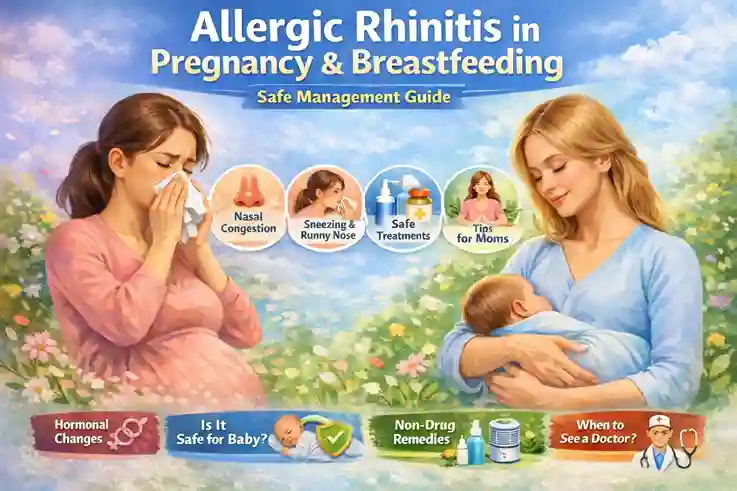
Many readers of this guide are already breastfeeding after giving birth, while others are pregnant now and planning ahead. Because many allergy-medicine questions are about breastfeeding safety, this guide answers breastfeeding medicine questions first, then pregnancy treatment options.
Quick Answer: Can You Take Cetirizine While Breastfeeding?
Yes, cetirizine can usually be taken while breastfeeding when used at normal doses, especially for short-term allergy symptoms such as sneezing, itchy nose, runny nose, watery eyes, and hay fever.
Cetirizine is commonly preferred during breastfeeding because only small amounts are expected to pass into breast milk. Still, larger or prolonged doses may increase the risk of infant drowsiness or reduced milk supply, especially when combined with pseudoephedrine (LactMed, 2025).
Ask a doctor, pharmacist, pediatrician, or lactation consultant before taking cetirizine if your baby is premature, newborn, medically fragile, unusually sleepy, feeding poorly, or if your milk supply is low.
Is Cetirizine Safe While Breastfeeding?
Cetirizine is generally considered a suitable antihistamine while breastfeeding, especially when used at the usual recommended dose for short-term allergy symptoms. It may help with sneezing, itchy nose, runny nose, watery eyes, and hay fever symptoms without usually requiring a mother to stop breastfeeding.
For healthy, full-term babies, cetirizine is commonly used because only small amounts are expected to pass into breast milk. The main safety point is to avoid taking more than the recommended dose or using it for a long time without medical advice.
Breastfeeding mothers should be more careful if the baby is premature, newborn, medically fragile, unusually sleepy, feeding poorly, or not gaining weight well. In those situations, it is better to ask a doctor, pharmacist, pediatrician, or lactation consultant before self-treating.
Can a Breastfeeding Mother Take Cetirizine Tablet?
Yes, a breastfeeding mother can usually take a cetirizine tablet if she needs allergy relief and follows the product label or medical advice. Cetirizine is often used for allergy symptoms such as sneezing, itchy eyes, clear runny nose, itchy nose, and seasonal hay fever.
The safest approach is to use the lowest effective dose for the shortest necessary time. Do not combine cetirizine with other sedating medicines, alcohol, sleep aids, or strong cold-and-flu products unless a healthcare professional says it is safe.
If your allergy symptoms are mainly nasal blockage or sinus congestion, cetirizine alone may not be enough. In that case, saline spray, saline rinse, or a breastfeeding-compatible nasal treatment may be more targeted than relying only on an oral antihistamine.
Cetirizine in Lactation: What Mothers Should Know
In lactation, the goal is to control the mother’s allergy symptoms while keeping the breastfed baby safe. Cetirizine is usually considered a practical option because it is a second-generation antihistamine and is less sedating than many older allergy medicines.
Most breastfeeding concerns with cetirizine are linked to higher doses, prolonged use, combining it with decongestants, or using it before milk supply is well established. A mother who only needs occasional allergy relief may have a lower risk than someone taking multiple allergy or cold medicines every day.
If symptoms are frequent or severe, do not keep increasing the dose on your own. A clinician may suggest a better plan, such as nasal corticosteroid spray, saline irrigation, allergen control, or a different antihistamine depending on your symptoms and baby’s age.
How Much Cetirizine Passes Into Breast Milk?
Only small amounts of cetirizine are expected to pass into breast milk. This is one reason cetirizine is commonly used during breastfeeding, especially for healthy, full-term infants.
Small milk transfer does not mean “zero risk,” but it does mean the risk is usually low when cetirizine is taken correctly. The baby’s age, health, feeding pattern, and the mother’s dose all matter.
Risk may be higher if the mother takes more than the recommended dose, uses cetirizine for a long period without advice, combines it with other sedating medicines, or uses decongestants such as pseudoephedrine.
Can Cetirizine Make a Breastfed Baby Sleepy?
Cetirizine is less sedating than older antihistamines, but unusual sleepiness can still happen in some breastfed babies. This is more important to watch for if the baby is very young, premature, medically fragile, or exposed to multiple medicines through the mother.
Watch your baby for:
- unusual sleepiness
- difficulty waking
- poor feeding
- irritability
- dry mouth
- poor weight gain
- fewer wet diapers than usual
If any of these signs appear, stop self-treating and contact a doctor, pharmacist, pediatrician, or lactation consultant.
Can Cetirizine Reduce Breast Milk Supply?
Normal occasional doses of cetirizine are less likely to reduce breast milk supply. The concern becomes stronger with higher doses, prolonged use, early breastfeeding before supply is well established, or when cetirizine is combined with decongestants such as pseudoephedrine.
Pseudoephedrine is more concerning for milk supply than cetirizine itself. Breastfeeding mothers should be careful with “cold,” “flu,” “sinus,” or “D” allergy products because they may contain decongestants that can affect milk production.
If your milk supply is already low, your baby is not gaining weight well, or breastfeeding has only recently started, ask a healthcare professional before using allergy medicines for several days in a row.
Cetirizine vs Loratadine While Breastfeeding
Cetirizine and loratadine are both commonly preferred antihistamines while breastfeeding. The better choice depends on the mother’s symptoms and how her body responds.
Cetirizine may be useful when sneezing, itching, watery eyes, or stronger allergy symptoms are the main problem. Loratadine may be preferred when the mother wants a very low-drowsiness option for daytime use.
Both medicines should be used according to the label or medical advice. If one antihistamine causes drowsiness, does not work well, or does not control symptoms, do not keep switching or combining medicines without guidance. Ask a doctor or pharmacist for a safer allergy plan.
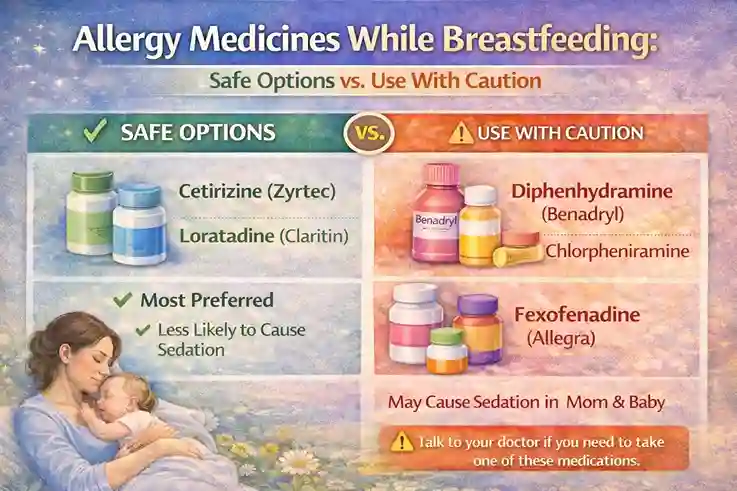
Best Allergy Medicines While Breastfeeding
Medicine | Breastfeeding use | Best for | Caution |
Cetirizine | Commonly preferred | Sneezing, itching, runny nose, watery eyes | Watch baby for drowsiness or poor feeding |
Loratadine | Commonly preferred | Non-drowsy allergy relief | Use lowest effective dose |
Saline spray/rinse | Safest first step | Congestion, mucus, dry nose | Use sterile, distilled, or boiled cooled water |
Budesonide nasal spray | Usually compatible | Nasal congestion and inflammation | Very small milk transfer expected |
Fluticasone nasal spray | Usually compatible | Nasal allergy symptoms | Better for nose symptoms than oral tablets |
Pseudoephedrine | Use with caution | Severe congestion | May reduce milk supply |
Sedating antihistamines | Use carefully | Night symptoms only if advised | May cause baby drowsiness or poor feeding |
Cetirizine and loratadine are commonly preferred antihistamines during breastfeeding for healthy, full-term infants (NHS SPS, 2026).
Cetirizine While Breastfeeding: Safety, Baby Monitoring, Milk Supply
Cetirizine can often be used by breastfeeding mothers when allergy symptoms need treatment. It may help with sneezing, itchy nose, runny nose, watery eyes, and hay fever symptoms.
Use the lowest effective dose and avoid combining cetirizine with other medicines that cause drowsiness unless a healthcare professional advises it.
Watch your baby for unusual sleepiness, poor feeding, irritability, dry mouth, or poor weight gain. If these happen, stop self-treating and contact a doctor, pharmacist, pediatrician, or lactation consultant.
When to Ask a Doctor Before Taking Cetirizine While Breastfeeding
Ask a doctor, pharmacist, pediatrician, or lactation consultant before taking cetirizine while breastfeeding if:
- your baby is premature or newborn
- your baby is unusually sleepy or feeding poorly
- your baby has a medical condition
- your milk supply is low
- you need allergy medicine every day for more than a few days
- you are also taking sleep aids, sedatives, anxiety medicine, pain medicine, or cold-and-flu products
- you are considering a decongestant such as pseudoephedrine
- you have severe nasal congestion, wheezing, chest tightness, or breathing difficulty
Cetirizine can be a reasonable breastfeeding-compatible option for many mothers, but persistent or severe symptoms need a proper treatment plan rather than repeated self-medication.
Why Allergic Rhinitis Worsens During Pregnancy
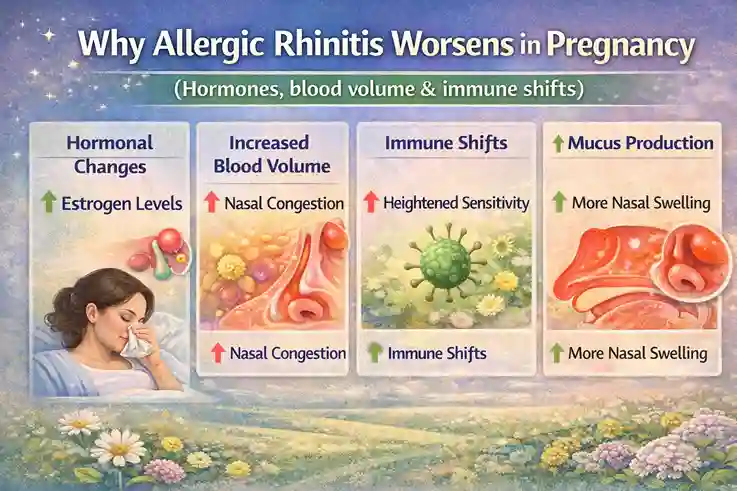
Pregnancy causes multiple physiological changes that affect the nose:
- Increased estrogen → nasal blood vessel swelling
- Increased blood volume → nasal congestion
- Altered immune response → heightened allergy sensitivity
- Increased mucus production
This condition is sometimes called “pregnancy rhinitis,” but allergic rhinitis can coexist or worsen alongside it (Dykewicz et al., 2020; Bousquet et al., 2020).
Common Allergy Symptoms During Pregnancy
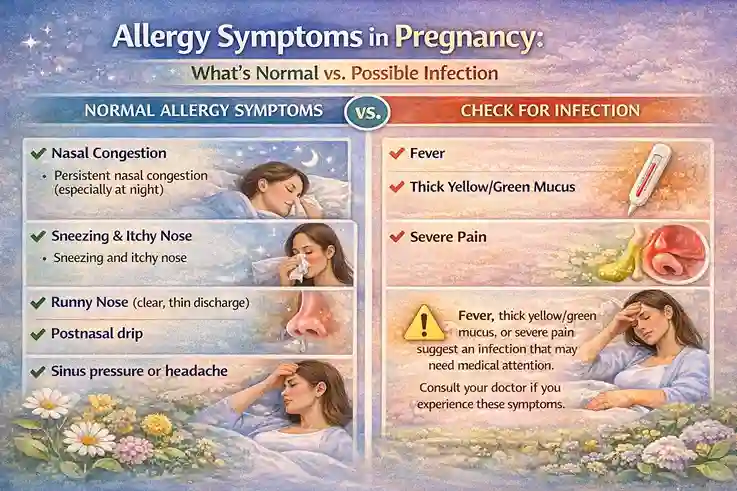
- Persistent nasal congestion (especially at night)
- Sneezing and itchy nose
- Runny nose (clear discharge)
- Postnasal drip
- Sinus pressure or headache
- Mouth breathing and disturbed sleep
Fever, thick yellow/green mucus, or severe pain suggests infection not allergy (Gilbert & Harmon, 2022).
Is Allergic Rhinitis Dangerous During Pregnancy?
👉 Allergic rhinitis itself is NOT dangerous to the baby, but:
- Poor sleep
- Chronic mouth breathing
- Reduced oxygen intake
- Severe congestion
These can affect maternal well-being, energy, and sleep quality indirectly affecting pregnancy health (ACOG Committee Opinion No. 776, 2019).
Safe Treatment Options During Pregnancy
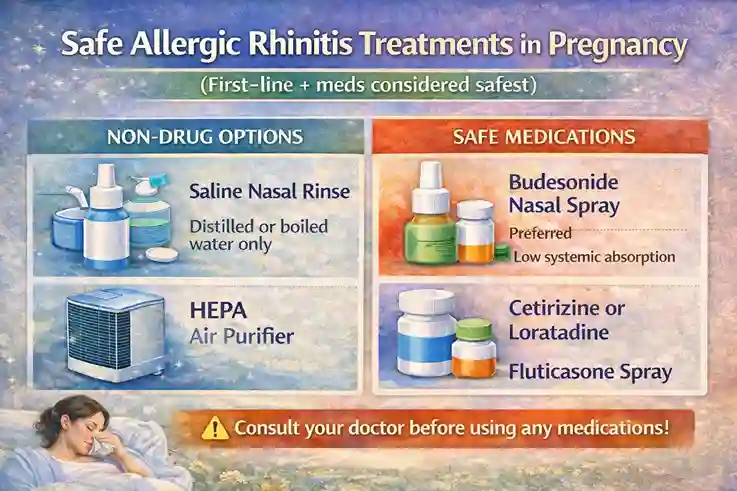
🟢 FIRST-LINE: Non-Drug & Lifestyle Measures
These are always safe and should be started first.
✔ Environmental Control
- Keep windows closed during pollen season
- Use HEPA air purifiers in bedroom
- Wash bedding weekly in hot water
- Avoid pets in sleeping area
- Saline sprays or rinses help clear allergens
- Safe in all trimesters
- Use distilled or boiled water only
🟢 Medications Considered SAFE in Pregnancy
📌 Always consult a doctor, but evidence supports the following:
✔ Intranasal Corticosteroids (Preferred)
- Budesonide → most studied & preferred
- Fluticasone, mometasone (acceptable if already using)
Benefits:
- Reduce congestion and inflammation
- Minimal systemic absorption (Gilbert & Harmon, 2022)
✔ Oral Antihistamines (If Needed)
Preferred options:
- Cetirizine
- Loratadine
Why:
- Non-sedating with strong safety data (ACOG Committee Opinion No. 776, 2019)
🚫 Medications to AVOID or Use With Caution
- ❌ Oral decongestants (pseudoephedrine, phenylephrine)
❌ Long-term nasal decongestant sprays
❌ Systemic steroids (unless severe & supervised)
❌ New immunotherapy initiation during pregnancy (Dykewicz et al., 2020)
Natural & Lifestyle Strategies for Pregnant and Breastfeeding Mothers
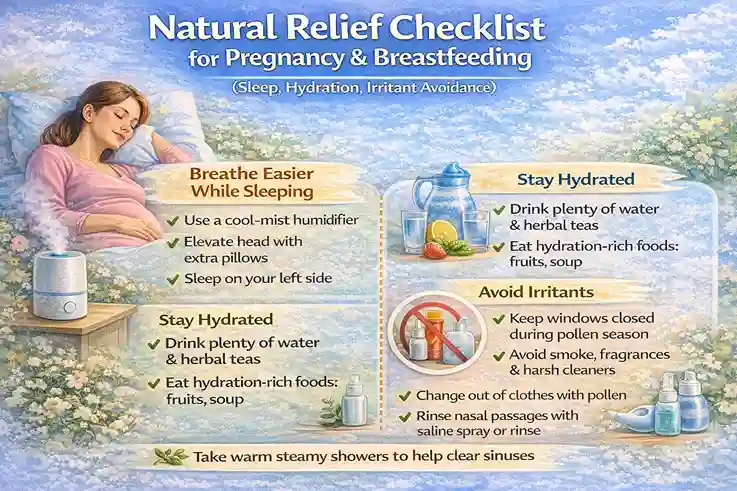
🌿 Breathing & Sleep Support
- Sleep on left side to improve circulation
- Slight head elevation
- Nasal breathing exercises
🌿 Nutrition & Hydration
- Adequate fluid intake to thin mucus
- Anti-inflammatory diet (fruits, vegetables, omega-3 sources)
🌿 Avoid Irritants
- Smoke exposure
- Strong perfumes
- Harsh cleaning chemicals
Can Immunotherapy Be Used?
- Continue immunotherapy if already well-tolerated before pregnancy
- Do NOT start new immunotherapy during pregnancy
- SLIT and SCIT initiation is avoided
When to See a Doctor
✔ Severe congestion affecting sleep
✔ Mouth breathing with snoring
✔ Coexisting asthma
✔ Recurrent sinus infections
✔ Symptoms not controlled with safe options
Key Takeaways
✔ Allergic rhinitis is common in pregnancy
✔ Symptoms may worsen due to hormonal changes
✔ Saline sprays and environmental control are first-line
✔ Budesonide nasal spray is preferred if medication needed
✔ Cetirizine and loratadine are safest antihistamines
✔ Most treatments are compatible with breastfeeding
Medical Review Disclaimer
This article is for informational and educational purposes only and does not constitute medical advice. The content is written by a qualified healthcare professional and medically reviewed for accuracy. However, it should not be used as a substitute for professional medical diagnosis, treatment, or advice. Always consult a licensed healthcare provider regarding any medical condition or health concern.
Frequently Asked Questions (FAQs)
Can I take cetirizine while feeding my baby?
Yes, cetirizine can usually be taken while feeding a breastfed baby when used at the normal recommended dose. Watch the baby for unusual sleepiness, poor feeding, irritability, or poor weight gain.
Is cetirizine safe for lactating mothers?
Cetirizine is commonly considered suitable for lactating mothers, especially when the baby is healthy and full-term. Extra caution is needed for premature, newborn, or medically fragile babies.
Can I take cetirizine every day while breastfeeding?
Occasional or short-term use is usually less concerning. If you need cetirizine every day, ask a doctor or pharmacist so they can check your symptoms, dose, milk supply, baby’s age, and whether a nasal treatment may be better.
Is cetirizine better than loratadine while breastfeeding?
Neither is automatically better for everyone. Cetirizine may feel stronger for some allergy symptoms, while loratadine may be preferred when avoiding drowsiness is the main goal. Both are commonly used while breastfeeding.
Should I stop breastfeeding after taking cetirizine?
Most mothers do not need to stop breastfeeding after taking cetirizine at the usual dose. If the baby becomes unusually sleepy, feeds poorly, or seems unwell, contact a healthcare professional.
References
- National Library of Medicine. (2025). Drugs and Lactation Database (LactMed®). NCBI Bookshelf. https://www.ncbi.nlm.nih.gov/books/NBK501509/
- National Library of Medicine. (2026). Drugs and Lactation Database (LactMed®). NCBI Bookshelf. https://www.ncbi.nlm.nih.gov/books/NBK501009/
- National Library of Medicine. (2026). Drugs and Lactation Database (LactMed®). NCBI Bookshelf. https://www.ncbi.nlm.nih.gov/books/NBK501085/
- National Library of Medicine. (2026). Drugs and Lactation Database (LactMed®). NCBI Bookshelf. https://www.ncbi.nlm.nih.gov/books/NBK501215/
- Specialist Pharmacy Service. (2026). Using antihistamines during breastfeeding. NHS Specialist Pharmacy Service. https://www.sps.nhs.uk/articles/using-antihistamines-during-breastfeeding/
- Specialist Pharmacy Service. (2023). Using inhaled or topical corticosteroids during breastfeeding. NHS Specialist Pharmacy Service. https://www.sps.nhs.uk/articles/using-inhaled-or-topical-corticosteroids-during-breastfeeding/
- (n.d.). Pregnancy, breastfeeding and fertility while using budesonide nasal spray. https://www.nhs.uk/medicines/budesonide-nasal-spray/pregnancy-breastfeeding-and-fertility-while-using-budesonide-nasal-spray/
- American College of Obstetricians and Gynecologists. (n.d.). What medicine can I take for allergies while I’m pregnant? https://www.acog.org/womens-health/experts-and-stories/ask-acog/what-medicine-can-i-take-for-allergies-while-im-pregnant
- Dykewicz, M. S., Wallace, D. V., Amrol, D. J., et al. (2020). Rhinitis 2020: A practice parameter update. Journal of Allergy and Clinical Immunology, 146(4), 721–767. https://doi.org/10.1016/j.jaci.2020.07.007
- Bousquet, J., Schünemann, H. J., Togias, A., et al. (2020). Next-generation Allergic Rhinitis and Its Impact on Asthma (ARIA) guidelines for allergic rhinitis based on Grading of Recommendations Assessment, Development and Evaluation (GRADE) and real-world evidence. Journal of Allergy and Clinical Immunology, 145(1), 70–80.e3. https://doi.org/10.1016/j.jaci.2019.06.049