

How to Treat Allergies Naturally During Pregnancy
Written by: Dr.Muhammad Ihsan Ullah, PhD
Medically reviewed by: Dr. Ambreen Zahra,MBBS,MS
Last updated on May 16,2026
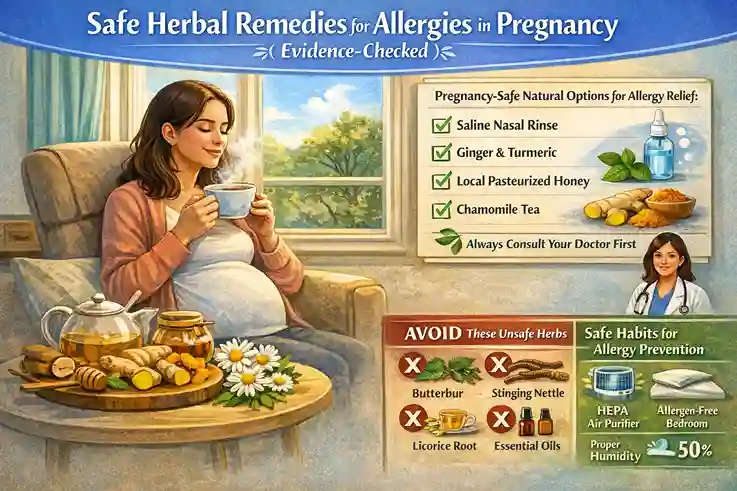
Managing allergies during pregnancy can be difficult, especially when many medications are restricted and safety for the baby is the top priority. Many women search for allergy relief during pregnancy, including natural remedies for allergies while pregnant and safe ways to treat allergies during pregnancy. While some pregnancy-safe natural allergy remedies may help support symptom relief, no herbal option can cure allergic rhinitis. Understanding what is safe for allergies during pregnancy is essential, and all remedies should be used cautiously and under medical guidance (American College of Obstetricians and Gynecologists [ACOG], 2023).
What is the safest natural remedy for allergies during pregnancy?
The safest natural remedy for allergies during pregnancy is saline nasal irrigation, as it helps clear allergens from the nasal passages without any systemic absorption. It is safe in all trimesters and recommended by medical guidelines. Other options like ginger, turmeric (in food amounts), and pasteurized honey may provide mild symptom relief, but they should be used cautiously and only with medical advice.
Important Safety Note
During pregnancy:
- “Natural” does NOT automatically mean “safe”
- Herbs can cross the placenta
- Some herbs affect hormones, blood flow, or uterine tone
📌 Always consult your obstetrician before using any herbal remedy, including teas or supplements (ACOG, 2023).
What Causes Allergy Symptoms During Pregnancy?
Allergy symptoms during pregnancy may result from:
- Allergic rhinitis (IgE-mediated)
- Pregnancy-related nasal congestion
- Increased nasal blood flow
- Heightened immune sensitivity
Common symptoms include nasal congestion, sneezing, runny nose, itchy eyes or nose, and postnasal drip (ARIA, 2020).
Evidence-Checked Herbal & Natural Remedies Considered Safer in Pregnancy
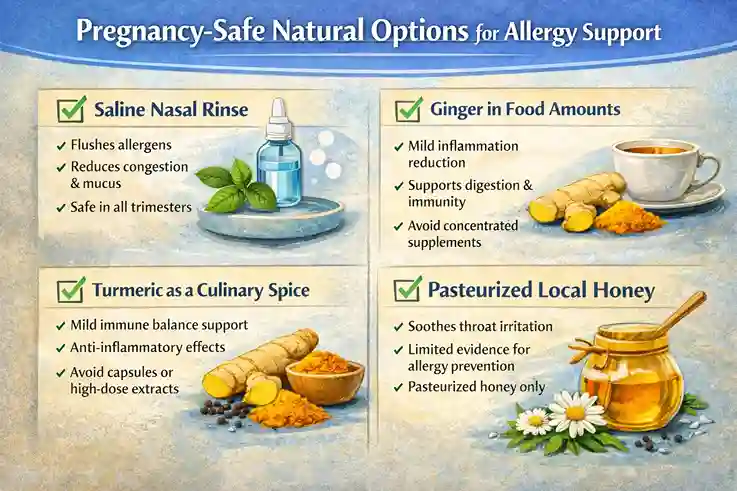
🌿 1️⃣ Saline Nasal Irrigation (Top Recommendation)
Saline nasal irrigation is the safest and most strongly recommended non-drug therapy for allergic rhinitis during pregnancy.
Why it helps:
- Flushes allergens from nasal passages
- Reduces congestion and mucus
- No systemic absorption
Saline sprays or rinses are safe in all trimesters when prepared with distilled or boiled water and are recommended as first-line therapy by allergy and obstetric guidelines (Bousquet et al., 2020; Cochrane Database, 2018).
🌿 2️⃣ Ginger (Zingiber officinale) – In Food Amounts
Ginger has anti-inflammatory properties and is considered safe during pregnancy when consumed in food or tea amounts, not as concentrated supplements (National Center for Complementary and Integrative Health [NCCIH], 2023).
Safe use:
- Ginger tea (1–2 cups per day)
- Fresh ginger in meals
⚠️ Concentrated ginger supplements should be avoided due to insufficient safety data.
🌿 3️⃣ Turmeric (Curcuma longa) – Culinary Use Only
Turmeric is safe when used as a culinary spice during pregnancy. However, high-dose turmeric or curcumin supplements are not recommended due to potential uterine-stimulating effects observed in experimental studies (NCCIH, 2023).
Safe use:
- Turmeric as a food spice
- Avoid capsules or extracts
🌿 4️⃣ Honey (Local, Pasteurized)
Pasteurized honey is safe during pregnancy and may soothe throat irritation from postnasal drip. However, evidence for allergy prevention is limited, and honey should not be considered a treatment for allergic rhinitis (Mayo Clinic, 2024).
Safe use:
- 1–2 teaspoons daily
- Pasteurized honey only
🌿 5️⃣ Chamomile (Occasional, Mild Tea Only)
Chamomile may have mild calming and anti-inflammatory effects, but pregnancy-specific safety data are limited. Occasional weak tea is generally considered low risk, while frequent or medicinal-strength use is discouraged (NCCIH, 2023).
⚠️ Avoid chamomile if allergic to ragweed due to possible cross-reactivity.
Herbal Remedies to Avoid During Pregnancy
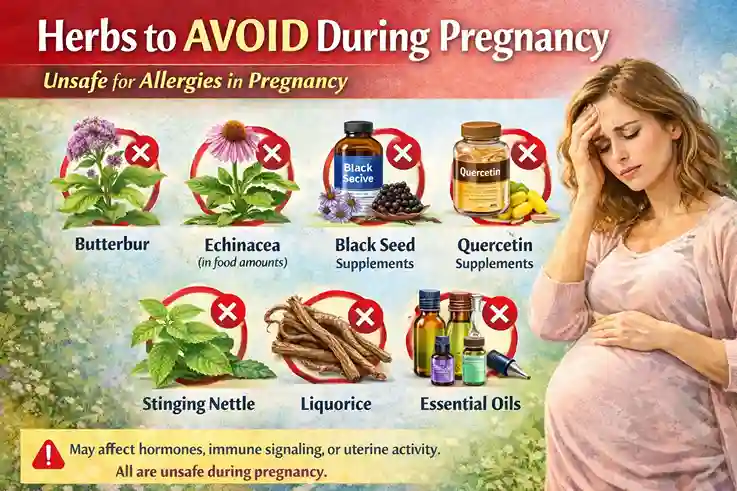
The following herbs and supplements are commonly promoted for allergies but are not considered pregnancy-safe:
- Butterbur
- Quercetin supplements
- Stinging nettle
- Echinacea (long-term use)
- Licorice root
- Black seed (Nigella sativa) supplements
- Essential oils (oral use)
These substances may affect hormones, immune signaling, or uterine activity, and lack adequate pregnancy safety data (NCCIH, 2023; Natural Medicines Database, 2024).
Essential Oils: Special Warning
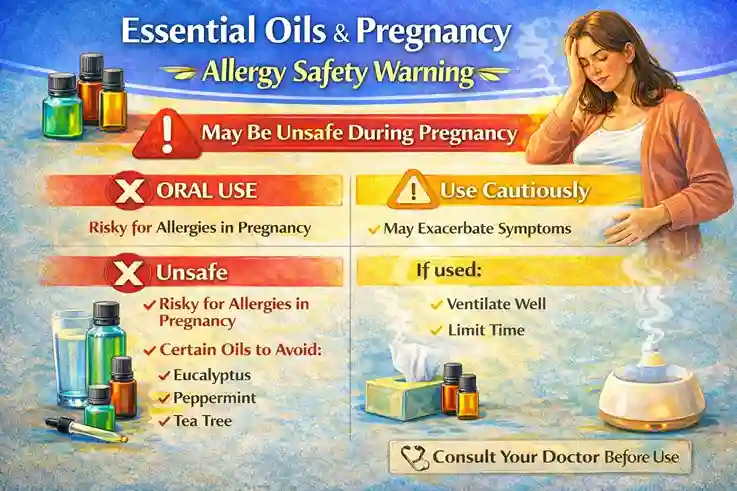
Essential oils are not regulated for pregnancy safety. Oral use is unsafe, and inhalation may worsen respiratory symptoms or trigger reactions.
- Avoid internal use of peppermint, eucalyptus, and tea tree oil
- Diffusers should be used cautiously, if at all
Consult a healthcare professional before any essential oil exposure during pregnancy (NCCIH, 2023).
Lifestyle-Based Natural Strategies (Highly Recommended)
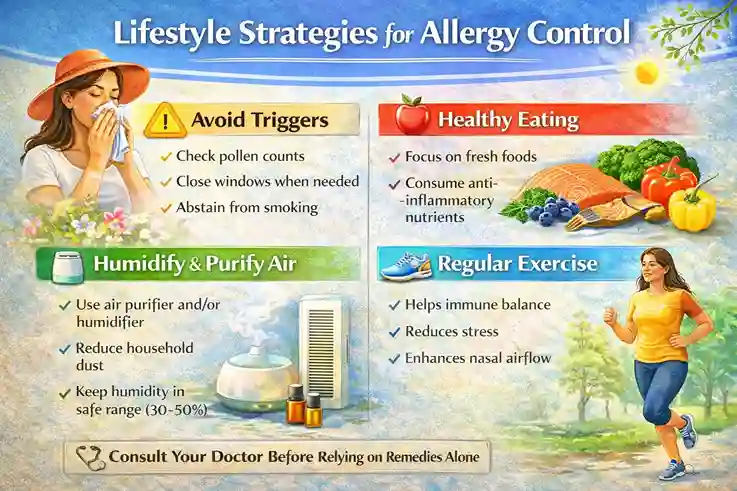
Lifestyle and environmental control measures are safer and more effective than most herbal supplements for managing allergy symptoms during pregnancy (AAAAI, 2023):
- Reduce indoor allergens
- Use HEPA air filtration
- Maintain indoor humidity around 35–50%
- Elevate head during sleep
- Avoid smoke, fragrances, and strong cleaners
Can Herbal Remedies Replace Allergy Medications?
❌ No.
Herbal approaches may support comfort and nasal hygiene but do not replace:
- Saline irrigation
- Prescribed nasal corticosteroids
- Antihistamines considered safe in pregnancy
Medication decisions should always be made with a healthcare provider (ACOG, 2023).
When to Seek Medical Advice
✔ Persistent nasal blockage
✔ Mouth breathing affecting sleep
✔ Sinus pain or headache
✔ Coexisting asthma
✔ Symptoms not improving with safe measures
Key Takeaways
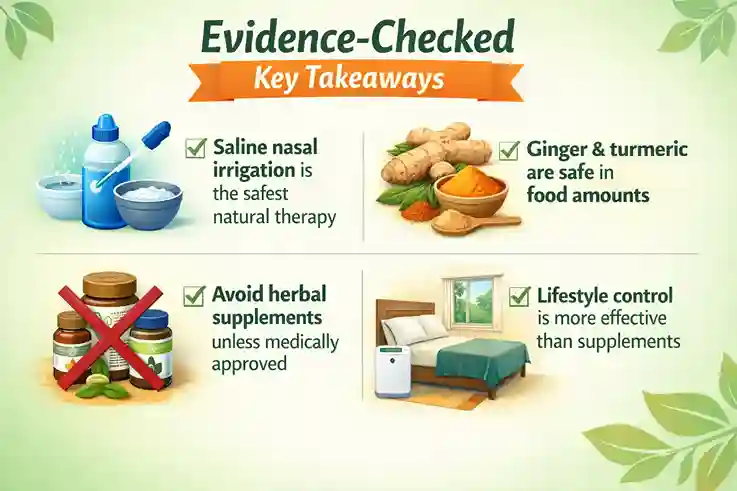
✔ Saline nasal irrigation is the safest natural therapy
✔ Ginger and turmeric are safe in food amounts
✔ Avoid herbal supplements unless medically approved
✔ Many “popular” allergy herbs are unsafe in pregnancy
✔ Lifestyle control is more effective than supplements
Medical Review Disclaimer
This article is for informational and educational purposes only and does not constitute medical advice. The content is written by a qualified healthcare professional and medically reviewed for accuracy. However, it should not be used as a substitute for professional medical diagnosis, treatment, or advice. Always consult a licensed healthcare provider regarding any medical condition or health concern.
Frequently Asked Questions (FAQs)
1. Are herbal remedies safe for allergies during pregnancy?
Some natural options may support allergy comfort during pregnancy, but not all herbs are safe. Always consult your obstetrician before using any herbal remedy, including teas or supplements.
2. What is the safest natural allergy remedy during pregnancy?
Saline nasal irrigation is considered the safest natural option for managing allergy symptoms during pregnancy because it has no systemic absorption and is safe in all trimesters.
3. Can ginger be used for allergy relief during pregnancy?
Yes, ginger is generally safe when used in food or mild tea amounts. Concentrated ginger supplements should be avoided during pregnancy.
4. Is turmeric safe for allergies while pregnant?
Turmeric is safe only when used as a culinary spice. High-dose turmeric or curcumin supplements are not recommended during pregnancy.
5. Can honey help with allergies during pregnancy?
Pasteurized honey is safe during pregnancy and may soothe throat irritation from postnasal drip, but it does not treat allergic rhinitis.
6. Is chamomile tea safe during pregnancy?
Occasional weak chamomile tea may be low risk, but daily or medicinal-strength use is discouraged. Avoid chamomile if you are allergic to ragweed.
7. Which herbal remedies should be avoided during pregnancy?
Herbs and supplements commonly advised against during pregnancy include butterbur, stinging nettle, licorice root, quercetin supplements, black seed supplements, and oral essential oils.
8. Are essential oils safe for allergy relief during pregnancy?
Essential oils are not regulated for pregnancy safety. Oral use is unsafe, and inhalation may worsen symptoms, so caution is advised.
9. Can herbal remedies replace allergy medications during pregnancy?
No. Herbal approaches may support comfort but do not replace prescribed or pregnancy-safe allergy medications recommended by a healthcare provider.
10. When should a pregnant woman seek medical advice for allergy symptoms?
Medical advice should be sought if allergy symptoms are persistent, disrupt sleep, cause sinus pain, worsen asthma, or do not improve with safe measures.
References
American College of Obstetricians and Gynecologists. (2023). Allergy management during pregnancy. https://www.acog.org
American Academy of Allergy, Asthma & Immunology. (2023). Allergic rhinitis treatment guidelines. https://www.aaaai.org
Bousquet, J., et al. (2020). Allergic rhinitis and its impact on asthma (ARIA) guidelines. Allergy, 75(10), 1–35. https://doi.org/10.1111/all.14445
Cochrane Database of Systematic Reviews. (2018). Saline nasal irrigation for allergic rhinitis. https://www.cochranelibrary.com
Mayo Clinic. (2024). Honey: Is it safe during pregnancy? https://www.mayoclinic.org
National Center for Complementary and Integrative Health. (2023). Herbal medicine safety during pregnancy. https://www.nccih.nih.gov
Natural Medicines Database. (2024). Herbal supplement safety in pregnancy. https://naturalmedicines.therapeuticresearch.com