

Foods to avoid during pregnancy for nasal congestion
Written by: Dr.Muhammad Ihsan Ullah, PhD
Medically reviewed by: Dr. Ambreen Zahra,MBBS,MS
Last updated on May 16,2026
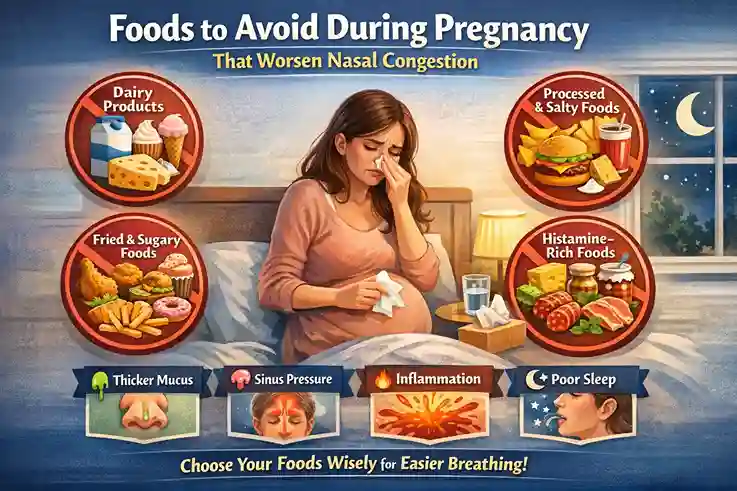
Managing a stuffy nose during pregnancy can be frustrating, especially when symptoms affect sleep and breathing. Many women search for what foods to avoid during pregnancy for nasal congestion and whether diet can make symptoms worse. While hormonal changes are the main cause, certain foods may trigger inflammation, increase mucus, or worsen symptoms in those experiencing pregnancy nasal congestion or pregnancy rhinitis. Understanding which foods worsen nasal congestion during pregnancy can help improve comfort and support easier breathing.
What foods should you avoid for nasal congestion during pregnancy?
Foods that may worsen nasal congestion during pregnancy include dairy products, processed foods, fried foods, sugary desserts, cold drinks, spicy foods if reflux is present, histamine-rich foods, and excess caffeine. These foods may increase mucus thickness, inflammation, reflux, or nasal swelling in sensitive pregnant women.
Why Food Can Affect Nasal Congestion During Pregnancy
During pregnancy:
- Estrogen increases nasal blood vessel swelling
- Histamine sensitivity may increase
- Mucus glands become more active
Certain foods can:
- Trigger histamine release
- Increase mucus thickness
- Promote inflammation
- Cause fluid retention and tissue swelling
The result: worsened stuffy nose, sinus pressure, mouth breathing, and poor sleep (Cleveland Clinic, 2023).
Foods That Commonly Worsen Nasal Congestion in Pregnancy
🚫 1️⃣ Dairy Products (In Some Women)
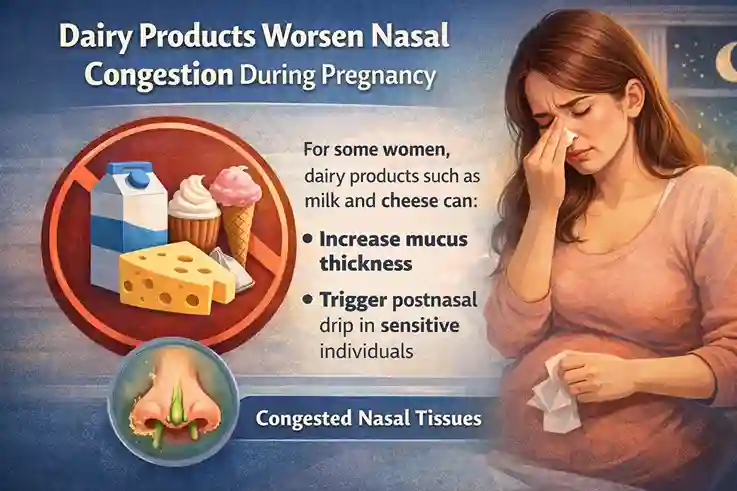
Dairy products such as milk and cheese may worsen nasal congestion in sensitive individuals by increasing mucus thickness and postnasal drip (Cleveland Clinic, 2023).
📌 Not everyone reacts to dairy. If congestion worsens after dairy, consider reducing intake temporarily.
Safer alternatives:
- Almond milk
- Oat milk
- Coconut milk (unsweetened)
🚫 2️⃣ Highly Processed & Packaged Foods
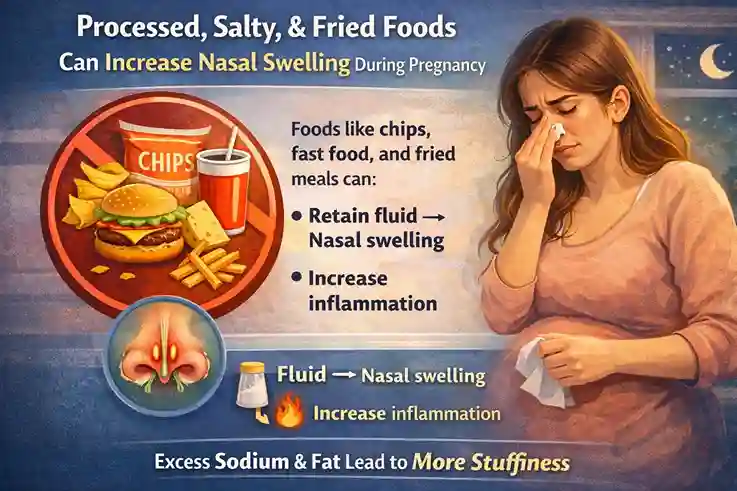
Processed, salty, and fried foods may increase nasal swelling during pregnancy due to fluid retention and inflammatory additives.
Excess sodium intake is known to promote tissue swelling, which can worsen pregnancy-related nasal congestion (Mayo Clinic, 2024).
🚫 3️⃣ Fried & Greasy Foods
Examples:
- Fried chicken
- French fries
- Deep-fried snacks
Why they worsen congestion:
- Promote systemic inflammation
- Slow digestion
- Can increase reflux, which worsens nasal symptoms
🚫 4️⃣ Sugary Foods & Desserts
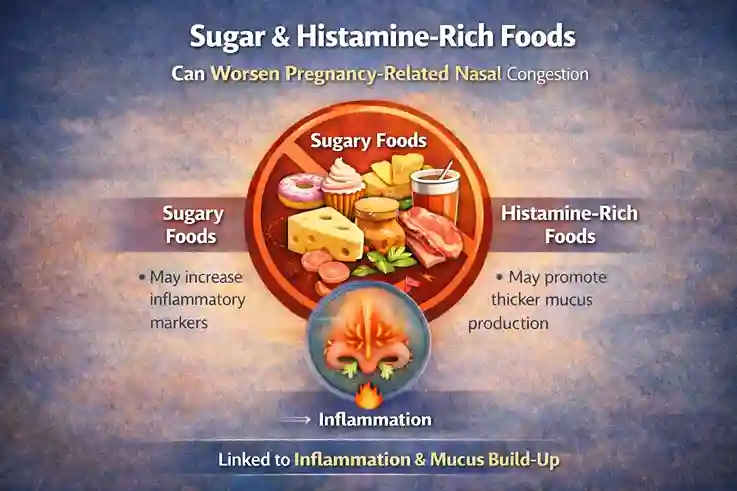
High sugar intake can increase inflammatory markers and affect immune balance, potentially promoting thicker mucus production and worsening congestion (NIH, 2023).
🚫 5️⃣ Cold & Icy Foods
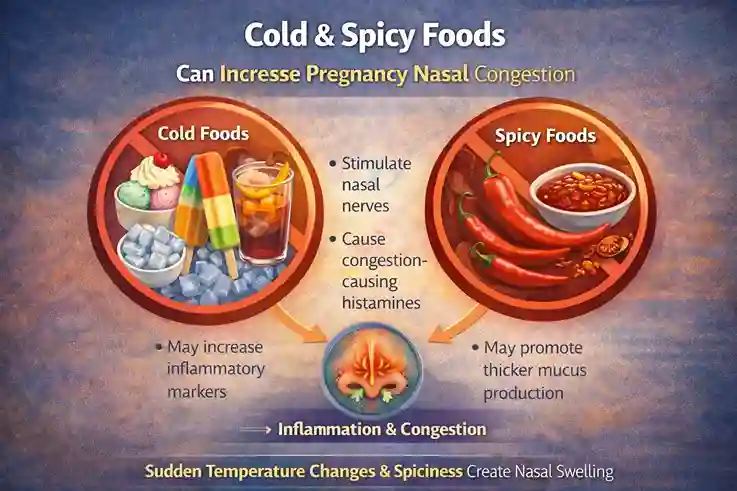
Examples:
- Ice cream
- Cold smoothies
- Ice-cold drinks
Why they worsen congestion:
- Can trigger reflex nasal congestion
- Cause temporary vasoconstriction followed by rebound swelling
Many pregnant women notice immediate stuffiness after cold foods.
🚫 6️⃣ Spicy Foods (If You Have Reflux)
Spicy foods can stimulate nasal nerve reflexes and increase acid reflux, which may worsen nasal blockage and throat irritation in pregnant women prone to reflux (Mayo Clinic, 2024).
🚫 7️⃣ Histamine-Rich or Histamine-Releasing Foods
Histamine increases nasal swelling and mucus production. During pregnancy, histamine breakdown may be reduced in some women, making symptoms more noticeable (NIH, 2023).
🚫 8️⃣ Caffeinated Beverages (Excess Intake)
Examples:
- Coffee
- Energy drinks
- Strong tea
Why:
- Can cause dehydration
- Thicker mucus
- May worsen sleep disruption
📌 Moderate intake is usually safe, but excess caffeine can worsen congestion.
Foods That Are Often Better Tolerated
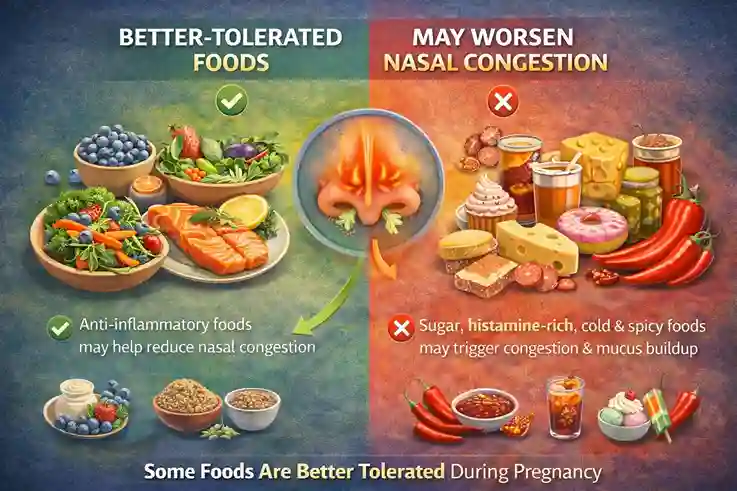
✔ Warm soups and broths
✔ Cooked vegetables
✔ Whole grains (oats, rice)
✔ Fruits rich in vitamin C
✔ Adequate hydration (warm fluids)
Practical Tips for Pregnant Women With Nasal Congestion
- Observe personal triggers — reactions vary
- Avoid eliminating entire food groups unless needed
- Focus on warm, freshly prepared meals
- Stay well hydrated
- Eat smaller, frequent meals to reduce reflux
When to Talk to Your Doctor
✔ Congestion severely affects sleep
✔ Mouth breathing becomes persistent
✔ Headaches or sinus pain develop
✔ Symptoms do not improve with lifestyle measures
Key Takeaways
✔ Certain foods can worsen nasal congestion during pregnancy
✔ Dairy, processed foods, sugar, and fried foods are common triggers
✔ Cold and histamine-rich foods may increase blockage
✔ Dietary awareness can significantly improve breathing comfort
✔ Always prioritize balanced nutrition during pregnancy
Medical Review Disclaimer
This article is for informational and educational purposes only and does not constitute medical advice. The content is written by a qualified healthcare professional and medically reviewed for accuracy. However, it should not be used as a substitute for professional medical diagnosis, treatment, or advice. Always consult a licensed healthcare provider regarding any medical condition or health concern.
Frequently Asked Questions (FAQs)
1. Can certain foods really worsen nasal congestion during pregnancy?
Yes. While foods do not cause allergies, some foods may increase inflammation, histamine activity, or mucus thickness, which can worsen nasal congestion during pregnancy.
2. Why is nasal congestion so common during pregnancy?
Hormonal changes, especially increased estrogen, can cause swelling in nasal blood vessels and increased mucus production, leading to a stuffy nose.
3. Does dairy always cause nasal congestion in pregnant women?
No. Not everyone reacts to dairy. Some women may notice thicker mucus or increased congestion after consuming dairy, while others have no symptoms at all.
4. Can sugar make pregnancy nasal congestion worse?
Yes. High sugar intake may increase inflammatory responses and promote thicker mucus, which can worsen nasal congestion in some pregnant women.
5. Do cold foods affect nasal congestion during pregnancy?
Cold foods and drinks may trigger reflex nasal congestion in some women, causing temporary swelling and stuffiness after consumption.
6. Are spicy foods safe if I have nasal congestion during pregnancy?
Mild spices are usually fine. However, very spicy foods may trigger nasal nerve reflexes or worsen acid reflux, which can increase nasal blockage.
7. What are histamine-rich foods, and why do they matter in pregnancy?
Histamine-rich foods include aged cheeses, fermented foods, and processed meats. Histamine can increase nasal swelling and mucus, and some pregnant women may be more sensitive to its effects.
8. Is caffeine linked to nasal congestion during pregnancy?
Excess caffeine may contribute to dehydration and thicker mucus, which can indirectly worsen nasal congestion. Moderate intake is generally well tolerated.
9. What foods are usually better tolerated when dealing with nasal congestion?
Warm soups, cooked vegetables, whole grains, vitamin-C-rich fruits, and warm fluids are often better tolerated and may help reduce nasal discomfort.
10. When should I talk to a doctor about pregnancy nasal congestion?
You should consult a healthcare provider if congestion severely affects sleep, causes persistent mouth breathing, leads to sinus pain, or does not improve with lifestyle changes.
References
Cleveland Clinic. (2023). Pregnancy rhinitis: Causes, symptoms, and management.
https://health.clevelandclinic.org
Mayo Clinic. (2024). Pregnancy symptoms: Nasal congestion and sinus pressure.
https://www.mayoclinic.org
National Institutes of Health (NIH). (2023). Histamine, inflammation, and immune response.
https://www.ncbi.nlm.nih.gov