

Best Nasal Spray for Allergic Rhinitis: Steroid, Antihistamine or Saline?
Written by: Dr. Muhammad Ihsan Ullah, PhD
Medically reviewed by: Dr. Ali Raza Dogar, MBBS, D-LO — ENT Specialist
Medication safety reviewed by: Dr. Asma Fareed Khan, PhD — Clinical Pharmacy
Last updated June 07,2026
This article was reviewed by Dr. Ali Raza Dogar, MBBS, D-LO, ENT Specialist, to ensure accuracy in nasal allergy, allergic rhinitis, congestion, sinus-related symptoms, and nasal spray technique. Medication safety was additionally reviewed by Dr. Asma Fareed Khan, PhD (Clinical Pharmacy), with focus on nasal spray selection, safe use, side effects, and patient safety.
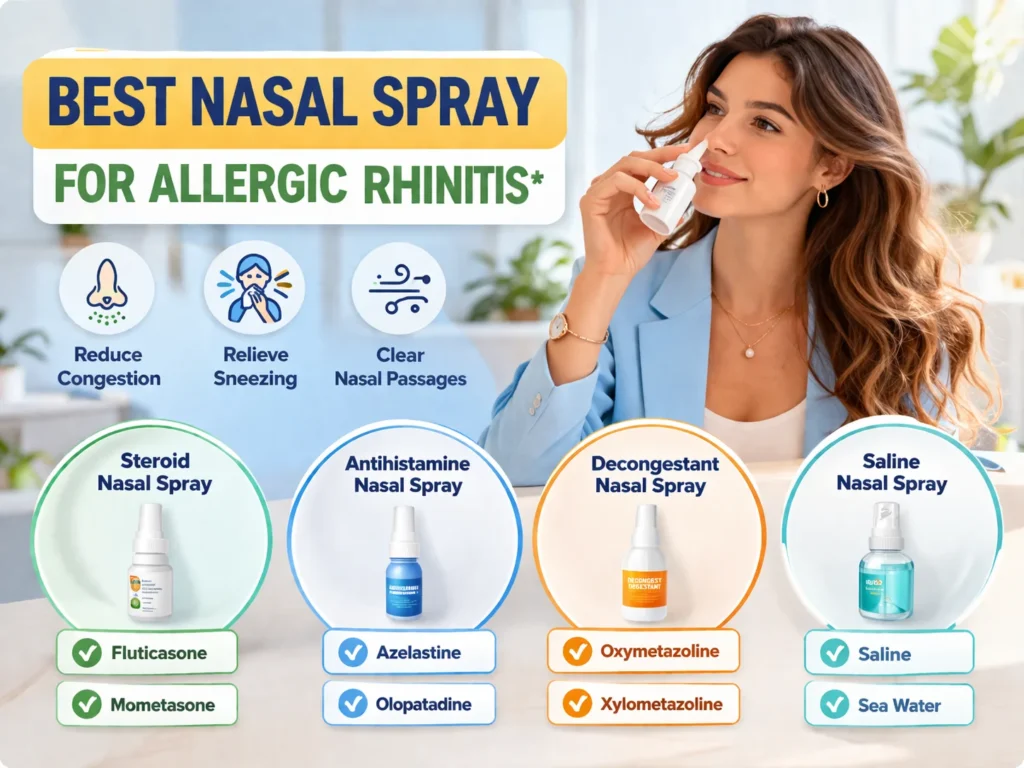
Looking for the best nasal spray for allergic rhinitis? The right choice depends on your main symptom. Steroid nasal sprays are usually best for daily blocked nose and long-term allergy control, antihistamine nasal sprays work faster for sneezing and runny nose, decongestant sprays can unblock the nose quickly but should only be used short-term, and saline sprays are the safest option for daily nasal cleaning (Dykewicz et al., 2020; Bousquet et al., 2020).
This guide compares steroid, antihistamine, decongestant and saline nasal sprays so you can choose the best option for congestion, sneezing, runny nose, post-nasal drip, nighttime blockage and daily prevention.
Quick Answer: Best Nasal Spray by Symptom
Your symptom | Best nasal spray option | Why |
Constant blocked nose | Steroid nasal spray | Reduces nasal inflammation |
Sneezing and runny nose | Antihistamine nasal spray | Works faster on histamine symptoms |
Need instant relief | Decongestant nasal spray | Opens nose within minutes, short-term only |
Mild dryness or daily cleaning | Saline nasal spray | Safe, non-medicated, gentle |
Post-nasal drip from allergies | Steroid or saline spray | Reduces inflammation and clears mucus |
Nighttime congestion | Steroid for control, decongestant only short-term | Avoid overuse |
Pregnancy or children | Saline first, doctor-guided steroid if needed | Safer approach |
What Is the Best Nasal Spray for Allergic Rhinitis?
The best nasal spray for allergic rhinitis is usually a steroid nasal spray for long-term control because it reduces inflammation inside the nose. For faster relief from sneezing and runny nose, an antihistamine nasal spray may be helpful. For instant blocked nose relief, decongestant sprays work quickly but should not be used for more than a few days because they can cause rebound congestion (Soe et al., 2023).
Steroid vs Antihistamine Nasal Spray: Which Is Better?
Comparison | Steroid nasal spray | Antihistamine nasal spray |
Best for | Blocked nose, daily allergy control | Sneezing, runny nose, itching |
Speed | Slower, best after regular use | Faster, often within minutes to an hour |
Long-term use | Usually better for ongoing symptoms | Useful for flare-ups |
Examples | Fluticasone, mometasone, budesonide | Azelastine |
Best user | Chronic allergic rhinitis | Sudden sneezing/runny nose |
If congestion is your main problem, steroid sprays usually work better. If sneezing and runny nose are the main problem, antihistamine sprays may feel faster.
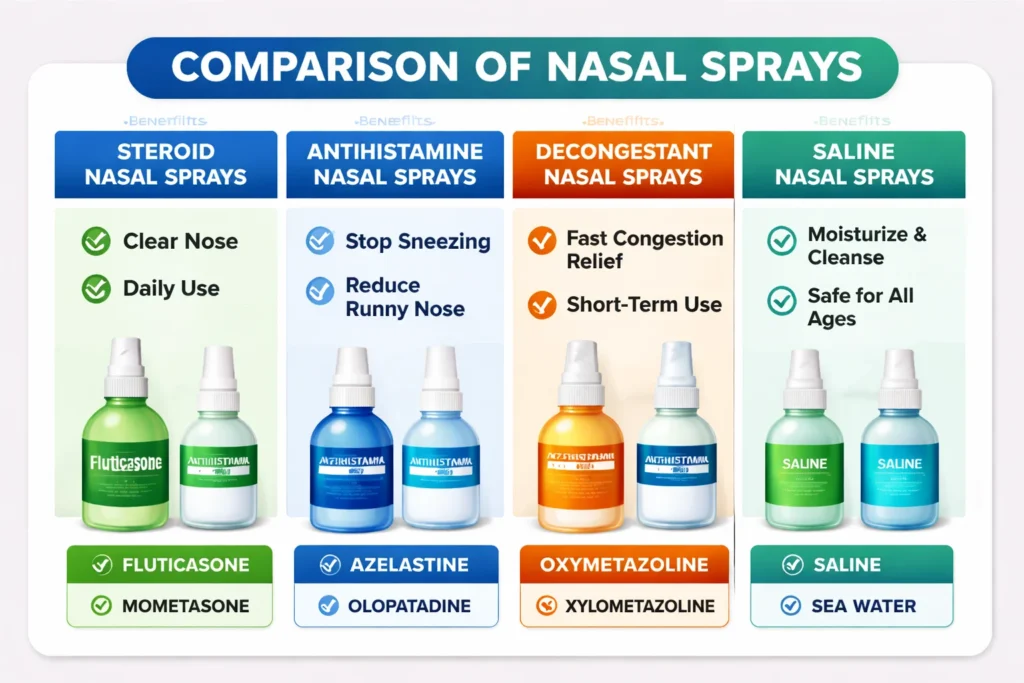
Best Steroid Nasal Spray for Allergic Rhinitis
Steroid nasal sprays are usually the best option for chronic allergic rhinitis, persistent blocked nose and daily congestion. Common options include fluticasone, mometasone and budesonide. They do not always work instantly, but regular daily use can reduce swelling inside the nose and improve breathing over time.
Here’s a quick comparison to help you choose the right nasal spray based on your symptoms:
Spray Type | Best For | How Fast It Works | Common Brands | Best Use |
Steroid Spray | Blocked nose, long-term control | Starts in 2–3 days (full effect in 1–2 weeks) | Flonase, Nasonex, Avamys | Daily use for ongoing allergy management |
Antihistamine Spray | Sneezing, runny nose, itching | 15–60 minutes | Astepro, Astelin | Best for quick relief during flare-ups |
Decongestant Spray | Severe nasal blockage | Within minutes | Afrin, Otrivin | Short-term use only (max 3–5 days) |
Saline Spray | Mild symptoms, nasal cleaning | Immediate (gentle relief) | Simply Saline, Sterimar | Safe for daily use and maintenance |
Best Antihistamine Nasal Spray for Sneezing and Runny Nose
Antihistamine nasal sprays are useful when sneezing; runny nose and nasal itching are stronger than congestion. Azelastine is a common example. These sprays may work faster than steroid sprays, but steroid sprays are usually better for long-term blocked nose control.
Which Nasal Spray Works Fastest for Blocked Nose?
Decongestant nasal sprays usually work fastest for a blocked nose, often within minutes. However, they should only be used for short-term relief because overuse can cause rebound congestion, where the nose becomes more blocked after stopping the spray.
Important: Do not use decongestant sprays such as oxymetazoline or xylometazoline for long periods unless your doctor advises it. For long-term allergic rhinitis, steroid sprays are usually safer and more effective.
NHS describes decongestants as short-term relief for blocked nose, and rebound congestion is a known risk with overuse (NHS, n.d.).
Saline Nasal Spray for Allergic Rhinitis: Safest Daily Option
Saline nasal sprays do not treat allergic inflammation directly, but they can help rinse pollen, dust, mucus and irritants from the nose. They are usually the safest option for daily nasal cleaning, mild symptoms, children and pregnancy support.
If making saline at home, use distilled, sterile, or previously boiled and cooled water — not straight tap water (CDC, 2025).
Allergy Pills vs Nasal Spray: Which Works Better?
Allergy tablets can help sneezing, itching and eye symptoms, but nasal sprays often work better for nasal congestion because they act directly inside the nose. If your main problem is a blocked nose, a steroid nasal spray may work better than an antihistamine tablet. If your symptoms are mild and occasional, an oral antihistamine may still be enough.
Read more: Best Antihistamines for Allergic Rhinitis
Nasal Spray Names and Examples
Spray type | Common active ingredients | Common examples |
Steroid spray | Fluticasone, mometasone, budesonide | Flonase, Nasonex, Rhinocort, Avamys |
Antihistamine spray | Azelastine | Astepro, Astelin |
Decongestant spray | Oxymetazoline, xylometazoline | Afrin, Otrivin |
Saline spray | Sodium chloride solution | Sterimar, Simply Saline |
Brand names vary by country. Always check the active ingredient and ask a pharmacist or clinician if you are unsure
Nasal Spray vs Nasal Strips: Which Is Better?
Nasal sprays and nasal strips work differently. Nasal sprays treat symptoms inside the nose, while nasal strips mechanically open the nostrils from the outside. Nasal strips may help airflow at night, but they do not treat allergic inflammation. If allergic rhinitis is the cause of congestion, a steroid nasal spray usually targets the root inflammation better.
Read more: Best Nasal Strips and Nasal Dilators for Nighttime Congestion
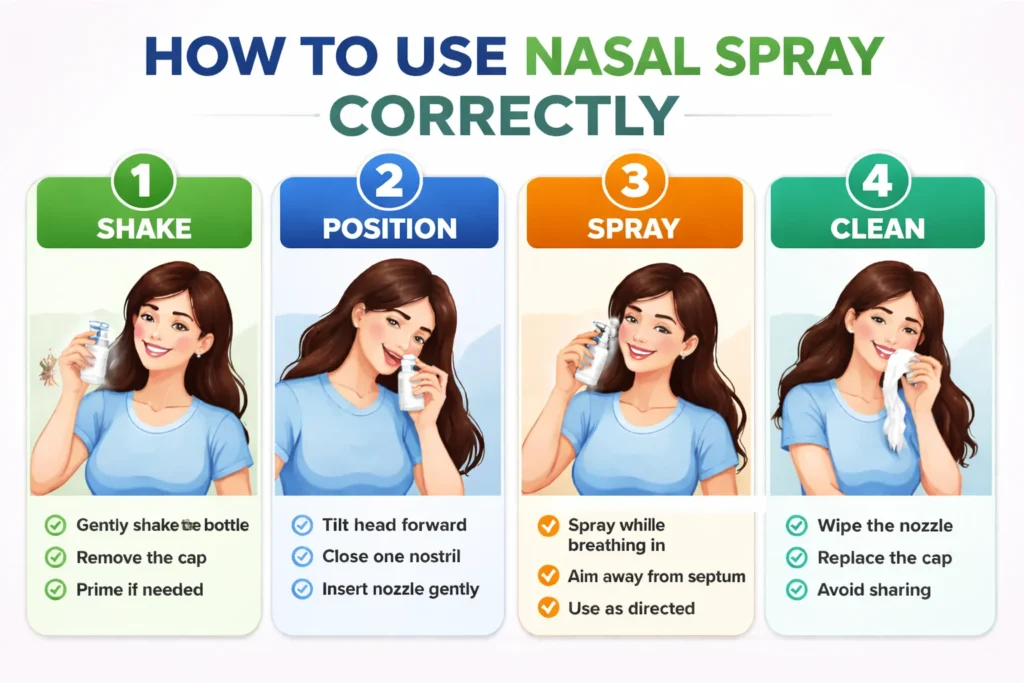
How to Use a Nasal Spray Correctly for Allergic Rhinitis
Use this step list:
- Gently blow your nose first.
- Shake the bottle if the label says so.
- Tilt your head slightly forward.
- Insert the nozzle into one nostril.
- Aim slightly outward, away from the nasal septum.
- Spray gently while breathing in lightly.
- Do not sniff too hard.
- Wipe the nozzle after use.
Poor technique can make even the best nasal spray feel ineffective (Cleveland Clinic, 2026).
Why Is My Nasal Spray Not Working?
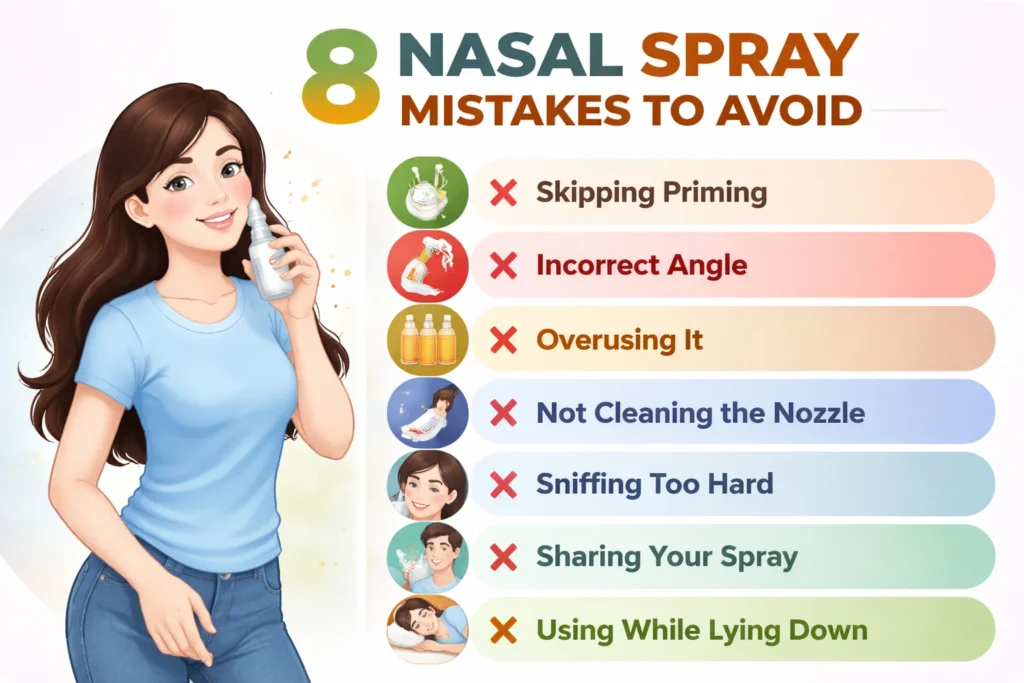
If your nasal spray is not giving relief, it does not necessarily mean it has failed. Many people experience this and assume the medicine is ineffective, but the issue is often:
Your nasal spray may not work because:
- You are using the wrong type of spray.
- You are using poor technique.
- You stopped steroid spray too early.
- You are overusing decongestant spray.
- Your symptoms are not allergic rhinitis.
- You may need combination treatment or allergy testing.
Safety and Side Effects
Steroid Sprays
- Very safe
- Minimal absorption into the body
Antihistamine Sprays
- May cause mild taste disturbance
Decongestants
- Should only be used short-term
Special Situations
Children
Saline and steroid sprays are generally safe.
Pregnancy
Saline sprays are the safest option; steroid sprays may be used under medical guidance.
Long-Term Allergies
Steroid sprays provide the most reliable control.
Expert Insight
Intranasal corticosteroids remain the most effective first-line treatment because they directly reduce inflammation and improve overall nasal symptoms (Dykewicz et al., 2020; Soe et al., 2023).
Who Should Ask a Doctor Before Using Nasal Spray?
Ask a doctor or pharmacist before using medicated nasal sprays if you are pregnant, breastfeeding, treating a child, have frequent nosebleeds, glaucoma, uncontrolled high blood pressure, severe asthma, repeated sinus infections, or symptoms that do not improve after regular treatment.
Final Takeaway
- Best overall → Steroid nasal sprays
- Fast relief → Decongestants (short-term only)
- Sneezing relief → Antihistamine sprays
- Safest option → Saline sprays
👉 The most effective approach is choosing the right spray for your symptoms and using it correctly.
Medical Disclaimer
The information provided on this website, including this article on Allergic Rhinitis, is for educational and informational purposes only and is not intended as medical advice, diagnosis, or treatment.
All content is written by a qualified professional with a background in pharmacology and reviewed by a medical review board. However, it should not be considered a substitute for consultation with a licensed physician or other qualified healthcare provider.
Always seek the advice of your doctor or a qualified healthcare professional before starting, stopping, or changing any medication, including nasal sprays or other treatments for allergic rhinitis. This is especially important if you are pregnant, breastfeeding, have underlying health conditions, or are taking other medications.
Individual responses to treatment may vary. The use of any information provided on this website is at your own risk.
If you experience severe symptoms or a medical emergency, seek immediate medical attention or contact your local emergency services.
By using this website, you agree to this disclaimer and its terms
Frequently Asked Questions (FAQs)
What is the best nasal spray for allergic rhinitis?
A steroid nasal spray is usually the best overall nasal spray for allergic rhinitis because it reduces nasal inflammation and helps blocked nose, sneezing and congestion with regular use.
Which nasal spray works fastest for blocked nose?
Decongestant nasal sprays usually work fastest for blocked nose, often within minutes, but they should only be used short-term because overuse can cause rebound congestion.
Is antihistamine nasal spray better than steroid nasal spray?
Antihistamine nasal sprays may work faster for sneezing, runny nose and itching, while steroid nasal sprays are usually better for long-term congestion and daily allergic rhinitis control.
Can I use nasal spray every day?
Saline sprays can usually be used daily. Steroid nasal sprays are also commonly used daily for allergic rhinitis when used as directed. Decongestant nasal sprays should not be used daily for long periods.
What is the safest nasal spray for allergic rhinitis?
Saline nasal spray is usually the safest non-medicated option. For persistent allergic rhinitis, steroid nasal sprays may be recommended, but people with special conditions should ask a clinician.
Why is my nasal spray not working?
A nasal spray may not work if you are using the wrong type, using poor technique, stopping too early, or expecting instant relief from a steroid spray. Persistent symptoms may need medical review.
What is the best nasal spray for post-nasal drip from allergies?
For post-nasal drip caused by allergic rhinitis, steroid nasal sprays and saline rinses may help by reducing inflammation and clearing mucus. If mucus is thick, discolored, or painful, seek medical advice.
References
[1] Dykewicz, M. S., Wallace, D. V., Amrol, D. J., Baroody, F. M., Bernstein, J. A., Craig, T. J., et al. (2020). Rhinitis 2020: A practice parameter update. Journal of Allergy and Clinical Immunology, 146(4), 721–767. https://doi.org/10.1016/j.jaci.2020.07.007
[2] Bousquet, J., Schünemann, H. J., Togias, A., Bachert, C., Erhola, M., Hellings, P. W., et al. (2020). Next-generation Allergic Rhinitis and Its Impact on Asthma (ARIA) guidelines for allergic rhinitis based on Grading of Recommendations Assessment, Development and Evaluation (GRADE) and real-world evidence. Journal of Allergy and Clinical Immunology, 145(1), 70–80.e3. https://doi.org/10.1016/j.jaci.2019.06.049
[3] Soe, K. K., Krikeerati, T. K., Pheerapanyawaranun, C., Niyomnaitham, S. N., Phinyo, P., & Thongngarm, T. (2023). Comparative efficacy and acceptability of licensed dose intranasal corticosteroids for moderate-to-severe allergic rhinitis: A systematic review and network meta-analysis. Frontiers in Pharmacology, 14, 1184552. https://doi.org/10.3389/fphar.2023.1184552
[4] National Health Service. (n.d.). Decongestants. NHS. Retrieved June 8, 2026, from https://www.nhs.uk/medicines/decongestants/
[5] Centers for Disease Control and Prevention. (2025). How to safely rinse sinuses. CDC. Retrieved June 8, 2026, from https://www.cdc.gov/naegleria/prevention/sinus-rinsing.html
[6] Cleveland Clinic. (2026). How to correctly use nasal spray. Cleveland Clinic. Retrieved June 8, 2026, from https://health.clevelandclinic.org/how-to-use-nasal-spray