

Allergic Rhinitis in Pregnancy and Breastfeeding: Safe Management Guide
Written by: Dr.Muhammad Ihsan Ullah, PhD
Medically reviewed by: Dr. Ambreen Zahra,MBBS,MS
Last updated on February 13,2026
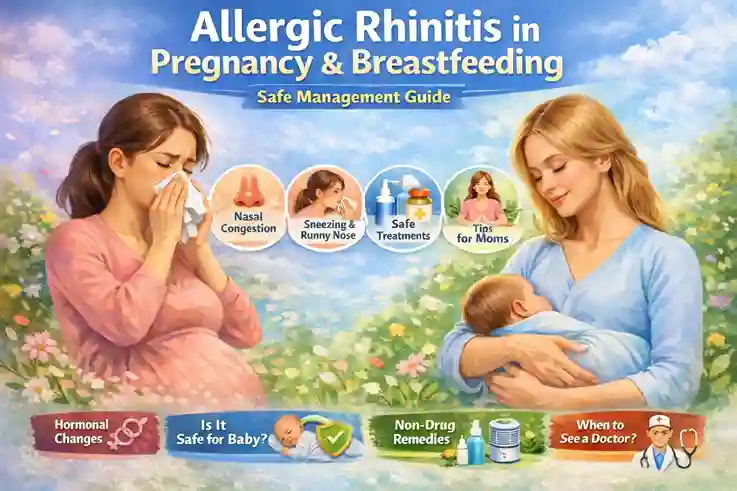
Allergic rhinitis (hay fever) is very common during pregnancy and breastfeeding. Hormonal changes, increased blood flow to nasal tissues, and immune system shifts can worsen nasal congestion, sneezing, runny nose, and sinus pressure, even in women who previously had mild allergies.
The challenge during pregnancy and lactation is symptom control without harming the baby. This guide explains why allergies worsen, which treatments are safe, what to avoid, and how lifestyle strategies can help manage allergic rhinitis naturally and safely.
Why Allergic Rhinitis Worsens During Pregnancy
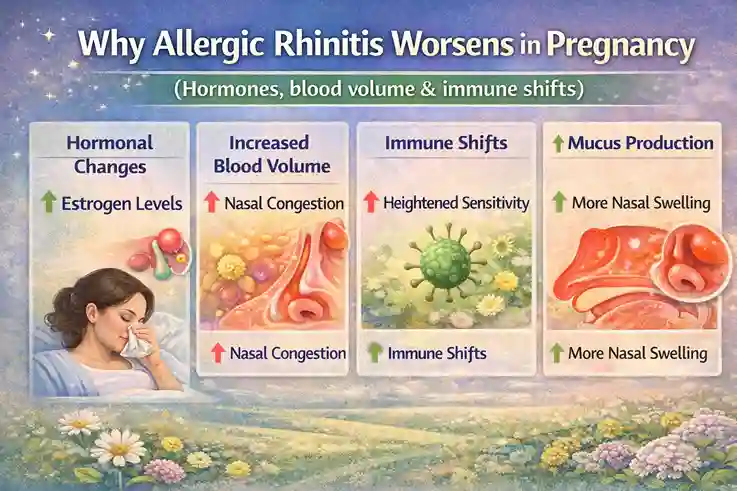
Pregnancy causes multiple physiological changes that affect the nose:
- Increased estrogen → nasal blood vessel swelling
- Increased blood volume → nasal congestion
- Altered immune response → heightened allergy sensitivity
- Increased mucus production
This condition is sometimes called “pregnancy rhinitis,” but allergic rhinitis can coexist or worsen alongside it (Dykewicz et al., 2020; Bousquet et al., 2020).
Common Allergy Symptoms During Pregnancy
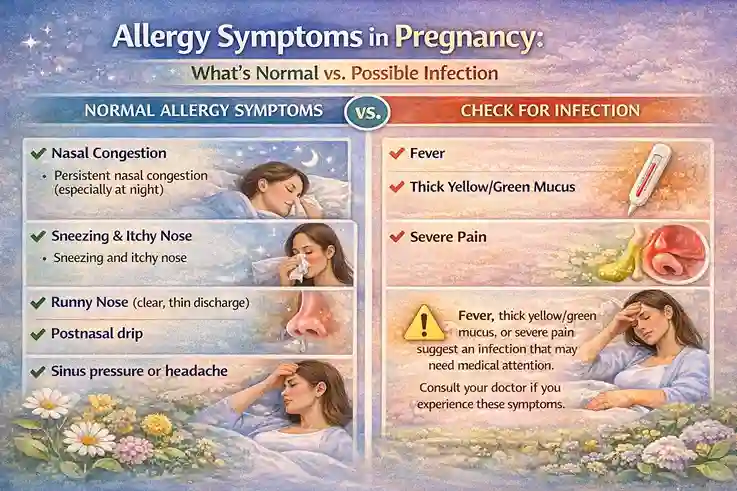
- Persistent nasal congestion (especially at night)
- Sneezing and itchy nose
- Runny nose (clear discharge)
- Postnasal drip
- Sinus pressure or headache
- Mouth breathing and disturbed sleep
Fever, thick yellow/green mucus, or severe pain suggests infection not allergy (Gilbert & Harmon, 2022).
Is Allergic Rhinitis Dangerous During Pregnancy?
👉 Allergic rhinitis itself is NOT dangerous to the baby, but:
- Poor sleep
- Chronic mouth breathing
- Reduced oxygen intake
- Severe congestion
These can affect maternal well-being, energy, and sleep quality indirectly affecting pregnancy health (ACOG Committee Opinion No. 776, 2019).
Safe Treatment Options During Pregnancy
🟢 FIRST-LINE: Non-Drug & Lifestyle Measures
These are always safe and should be started first.
✔ Environmental Control
- Keep windows closed during pollen season
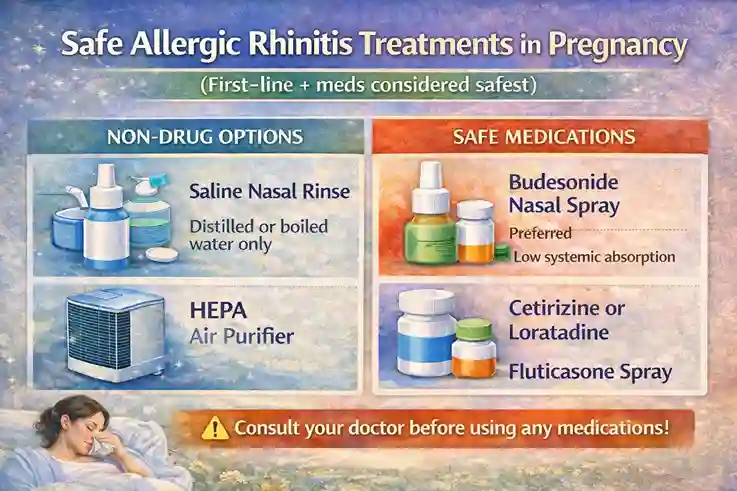
- Use HEPA air purifiers in bedroom
- Wash bedding weekly in hot water
- Avoid pets in sleeping area
- Saline sprays or rinses help clear allergens
- Safe in all trimesters
- Use distilled or boiled water only
🟢 Medications Considered SAFE in Pregnancy
📌 Always consult a doctor, but evidence supports the following:
✔ Intranasal Corticosteroids (Preferred)
- Budesonide → most studied & preferred
- Fluticasone, mometasone (acceptable if already using)
Benefits:
- Reduce congestion and inflammation
- Minimal systemic absorption (Gilbert & Harmon, 2022)
✔ Oral Antihistamines (If Needed)
Preferred options:
- Cetirizine
- Loratadine
Why:
- Non-sedating with strong safety data (ACOG Committee Opinion No. 776, 2019)
🚫 Medications to AVOID or Use With Caution
- ❌ Oral decongestants (pseudoephedrine, phenylephrine)
❌ Long-term nasal decongestant sprays
❌ Systemic steroids (unless severe & supervised)
❌ New immunotherapy initiation during pregnancy (Dykewicz et al., 2020)
Allergic Rhinitis During Breastfeeding
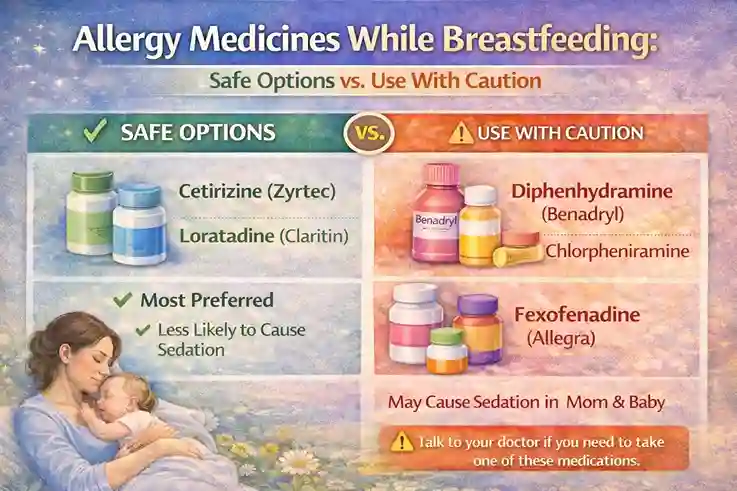
Most allergy treatments are compatible with breastfeeding (LactMed Database, 2024).
🟢 Safe Options While Breastfeeding
✔ Saline nasal sprays
✔ Budesonide nasal spray
✔ Fluticasone nasal spray
✔ Cetirizine
✔ Loratadine
📌 Very small amounts pass into breast milk and are not clinically significant.
⚠️ Medications to Use Carefully While Breastfeeding
- Sedating antihistamines (may cause infant drowsiness)
- Oral decongestants (may reduce milk supply) (Bousquet et al., 2020)
Natural & Lifestyle Strategies for Pregnant and Breastfeeding Mothers
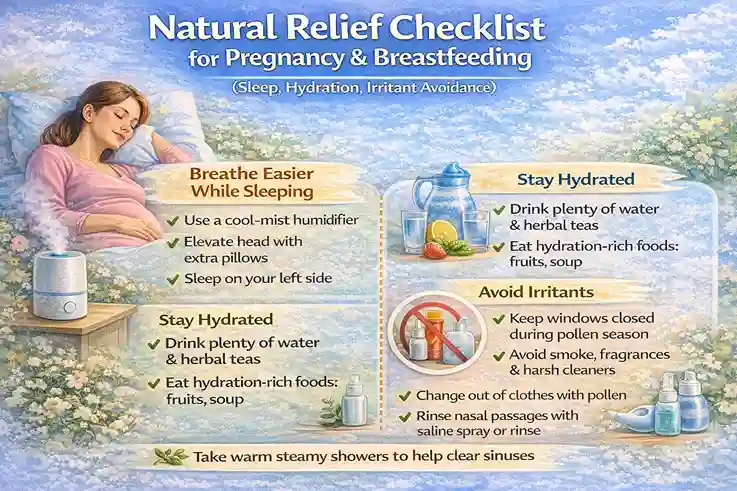
🌿 Breathing & Sleep Support
- Sleep on left side to improve circulation
- Slight head elevation
- Nasal breathing exercises
🌿 Nutrition & Hydration
- Adequate fluid intake to thin mucus
- Anti-inflammatory diet (fruits, vegetables, omega-3 sources)
🌿 Avoid Irritants
- Smoke exposure
- Strong perfumes
- Harsh cleaning chemicals
Can Immunotherapy Be Used?
- Continue immunotherapy if already well-tolerated before pregnancy
- Do NOT start new immunotherapy during pregnancy
- SLIT and SCIT initiation is avoided
When to See a Doctor
✔ Severe congestion affecting sleep
✔ Mouth breathing with snoring
✔ Coexisting asthma
✔ Recurrent sinus infections
✔ Symptoms not controlled with safe options
Key Takeaways
✔ Allergic rhinitis is common in pregnancy
✔ Symptoms may worsen due to hormonal changes
✔ Saline sprays and environmental control are first-line
✔ Budesonide nasal spray is preferred if medication needed
✔ Cetirizine and loratadine are safest antihistamines
✔ Most treatments are compatible with breastfeeding
Medical Review Disclaimer
This article is for informational and educational purposes only and does not constitute medical advice. The content is written by a qualified healthcare professional and medically reviewed for accuracy. However, it should not be used as a substitute for professional medical diagnosis, treatment, or advice. Always consult a licensed healthcare provider regarding any medical condition or health concern.
Frequently Asked Questions (FAQs)
1: Why does allergic rhinitis worsen during pregnancy?
Hormonal changes, increased blood flow, and immune shifts can cause nasal congestion and heightened allergy sensitivity during pregnancy.
2: Is allergic rhinitis harmful to my baby?
It’s not harmful, but poor sleep and severe congestion can affect maternal well-being, indirectly impacting pregnancy health.
3: What treatments are safe for allergic rhinitis during pregnancy?
Non-drug measures like saline nasal sprays and air purifiers are safe. Budesonide nasal spray and Cetirizine are preferred medications.
4: Can I take allergy medications while breastfeeding?
Yes, medications like Cetirizine and Loratadine are safe. Avoid sedating antihistamines and decongestants as they may affect milk supply.
5: What natural remedies can help during pregnancy and breastfeeding?
Stay hydrated, use a humidifier, sleep on your left side, and avoid irritants like smoke and strong perfumes for relief.
References
- Dykewicz, M. S., et al. (2020). Rhinitis 2020: A practice parameter update. Journal of Allergy and Clinical Immunology, 146(4), 721–767. https://doi.org/10.1016/j.jaci.2020.08.045
- Bousquet, J., et al. (2020). Allergic rhinitis and its impact on asthma (ARIA). Journal of Allergy and Clinical Immunology, 145(3), 895–909. https://doi.org/10.1016/j.jaci.2019.12.856
- Gilbert, C., & Harmon, J. (2022). Safety of antihistamines and nasal steroids in pregnancy. American Journal of Obstetrics & Gynecology, 227(2), 193–201. https://doi.org/10.1016/j.ajog.2022.06.001
- ACOG Committee Opinion No. 776. (2019). Use of medications in pregnancy and lactation. Obstetrics & Gynecology, 133(2), e128–e150. https://doi.org/10.1097/AOG.0000000000003109
- LactMed Database (2024). Drugs and Lactation Database. National Library of Medicine. Retrieved from https://www.ncbi.nlm.nih.gov/books/NBK501922/