

How to know if you have allergies or a cold
Written by: Dr.Muhammad Ihsan Ullah, PhD
Medically reviewed by: Dr. Jamal Ud Din Khan,FCPS
Last updated on May 29, 2026
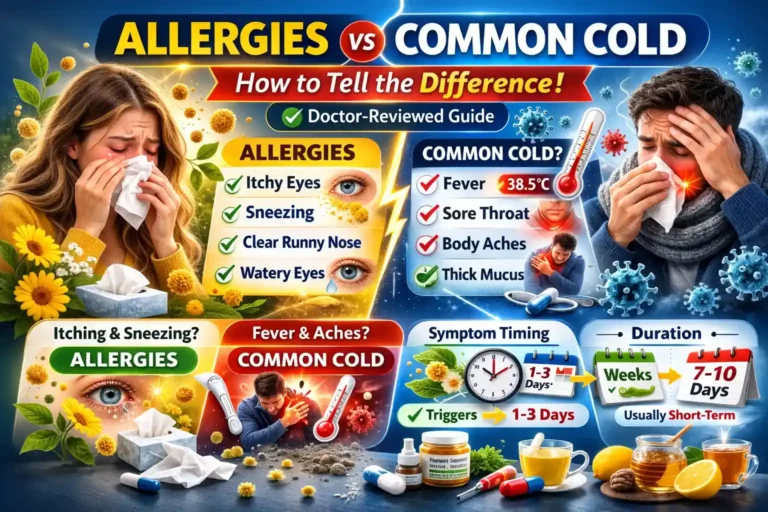
If you are sneezing, congested, and feeling tired, you may be wondering “is it allergies or a common cold” and how to tell the difference quickly. Many people also search for “allergies vs common cold symptoms” or ask “how to know if I have allergies or a cold” because both conditions can look very similar at first. The confusion is common since symptoms like runny nose, sneezing, and nasal congestion overlap in cold vs allergies comparison cases. In some situations, people even look for a “quick allergies vs cold symptoms check” to understand whether they are dealing with seasonal allergies or a viral infection. This guide explains the key differences between allergies and the common cold using clear, practical, and medically reviewed information.
Is It Allergies or a Cold?
In many cases:
- Allergies are more likelyif you have:
- Itchy eyes / itchy nose / itchy throat
- Repeated sneezing fits
- Clear runny nose
- Symptoms that start after exposureto pollen, dust, pets, or mold
- Symptoms that come and goor last for weeks during a season
- A common cold is more likelyif you have:
- Sore throatearly on
- Feeling run-down / body aches
- Fever (especially in children)
- Symptoms that develop over 1–3 days
- Symptoms that usually improve within about 7–10 days(sometimes longer)
This “allergies vs cold symptoms chart” style comparison is useful, but symptoms can still overlap and sometimes both can happen together (for example, a person with allergic rhinitis can also catch a viral cold) (Wise, S. K., et al. 2023;Eccles, R. 2023).
How Can You Tell If It’s Allergies or a Common Cold?
You can tell the difference between allergies and a common cold by looking at symptoms and triggers. Allergies usually cause itchy eyes, itchy nose, and repeated sneezing after exposure to dust, pollen, or pets, while a common cold often includes fever, sore throat, and body aches. Allergies last for weeks or as long as exposure continues, while a cold usually improves within 7–10 days.
Allergies vs Common Cold Symptoms Chart (How to Tell the Difference)
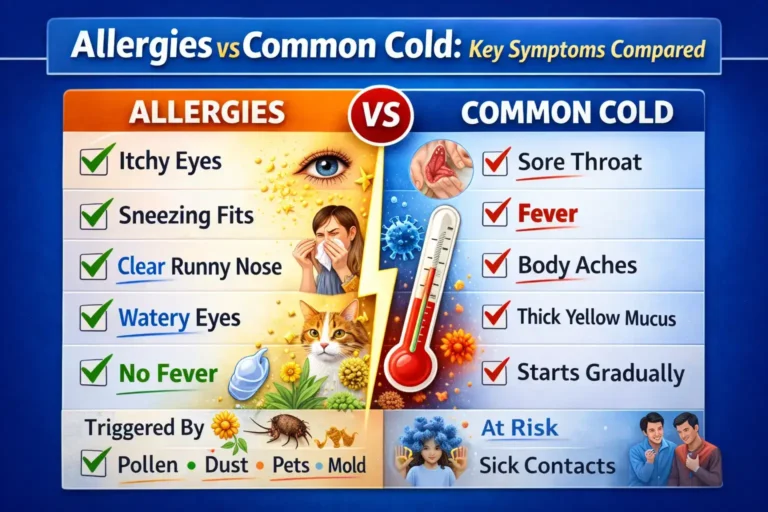
Symptom / Clue | More Common in Allergies | More Common in Common Cold |
Sneezing | ✅ Very common (often frequent) | ✅ Common |
Itchy eyes / nose / throat | ✅ Strong clue | ❌ Usually not prominent |
Watery eyes | ✅ Common | ⚠️ Can occur, but less typical |
Fever | ❌ Rare/uncommon | ✅ More likely (especially children) |
Body aches | ❌ Uncommon | ✅ Can happen |
Sore throat | ⚠️ Can occur (postnasal drip) | ✅ Common, especially early |
Nasal congestion | ✅ Common | ✅ Common |
Clear runny nose | ✅ Common | ✅ Common (often early) |
Thick/yellow mucus | ⚠️ Can happen later due to inflammation | ✅ Can happen during cold recovery |
Duration | Weeks / seasonal / trigger-related | Usually 7–10 days (sometimes longer) |
Trigger pattern | Pollen, dust, pets, mold | Sick contacts / viral exposure |
What Is the Main Difference Between Allergies and a Cold?
The main difference between allergies and a common cold is the cause and duration. Allergies are caused by immune reactions to triggers like pollen or dust and can last for weeks or months. A common cold is caused by a viral infection and usually lasts about 7–10 days. Allergies do not cause fever, while colds may include fever, fatigue, and body aches.
The Best Clues Doctors Use to Tell Allergies vs a Cold
1) Itching is a major clue (especially eyes and nose)
When patients ask, “How do I know if it’s allergies or a cold?”, one of the most useful clues is itching.
- Allergiescommonly cause:
- itchy nose
- itchy eyes
- itchy palate/throat
- eye watering (allergic conjunctival irritation)
- Coldscan cause irritation, but itching is usually not the dominant symptom
This is one of the strongest “common cold vs seasonal allergies” differences in day-to-day practice (Wise, S. K., et al. 2023 ;Kaliner, M. A. 2024).
2) Fever usually points away from allergies
A very common question asked by patients is: “Can allergies cause fever?”
- Allergies typically do not cause fever
- Fever is more consistent with infection, such as a common cold, influenza, or another viral illness
That said, not every cold causes fever (especially mild adult colds), so fever is helpful when present, but its absence does not rule out a cold (Eccles, R. 2023; Wise, S. K., et al. 2023).
3) Symptom timing matters (sudden exposure vs viral progression)
Allergies often:
- Start soon after exposure(pollen, mowing grass, dust cleaning, pet contact)
- Flare at certain times:
- morning (dust mites)
- outdoors on high pollen days
- windy days
- cleaning old rooms/storage
- Improve when you leave the trigger environment
Colds often:
- Begin after viral exposure(someone sick at home/work/school)
- Start gradually over 1–3 days
- Follow a short course and then improve
This “pattern recognition” is often more helpful than any single symptom (Kaliner, M. A. 2024).
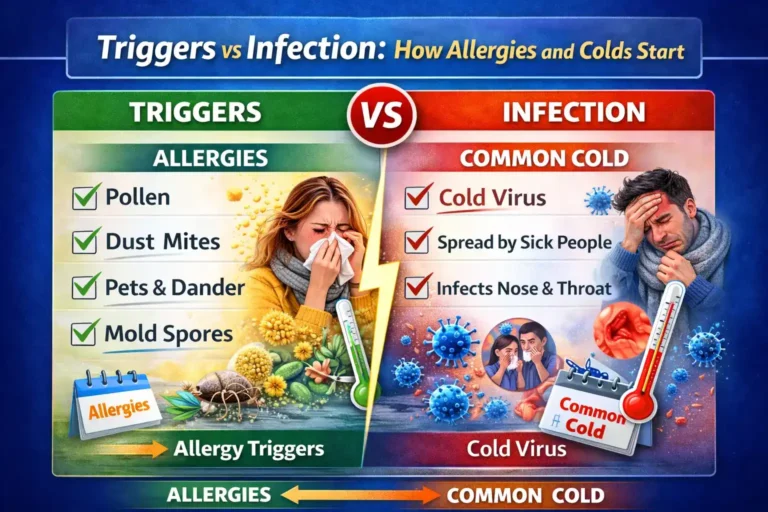
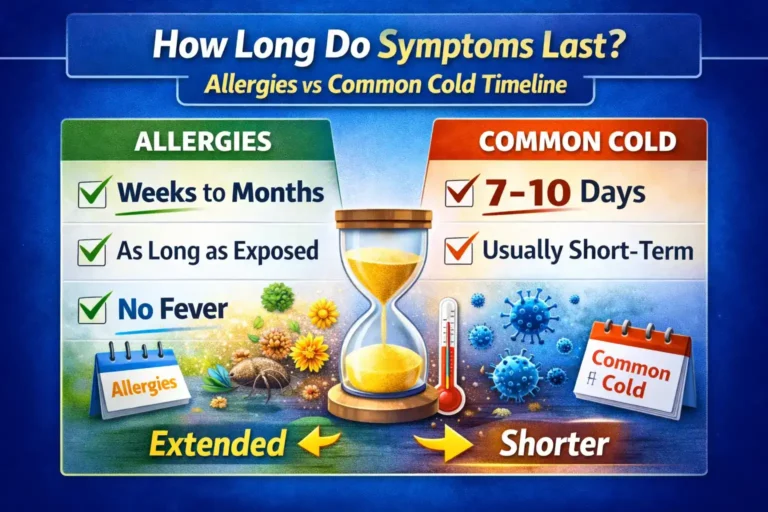
4) How long symptoms last (allergy duration vs cold duration)
This is one of the most common questions: “How long do allergy symptoms last vs a cold?”
- Common cold:typically lasts about 7–10 days, though cough or congestion may linger longer in some people (Išerić, E., & Verster, J. C. 2024).
- Allergies:can last weeks or months if exposure continues (for example, pollen season, dust mites, indoor mold, pet dander) (Wise, S. K., et al. 2023; Kaliner, M. A. 2024).
If your symptoms keep returning in the same environment or season, allergies become much more likely.
5) Sore throat: allergies or cold?
People often ask: “Sore throat allergies or cold?”
- Cold-related sore throatis usually due to viral inflammation and often appears early
- Allergy-related sore throatis often from:
- postnasal drip
- mouth breathing from congestion
- throat irritation (scratchy feeling)
So yes, allergies can make your throat feel irritated — but a painful sore throat with fatigue/fever is more suggestive of infection (Wise, S. K., et al. 2023).
6) Mucus color can help a little — but not as much as people think
A common myth is: “If mucus is yellow, it must be infection.”
Reality:
- Clear mucusis common in both allergies and early cold
- Thicker/yellowish mucuscan happen during recovery or due to inflammation and does not automatically mean bacterial infection
So use mucus color as a small clue, not the main deciding factor (Eccles, R. 2023).
Is It Allergies or a Cold? Use This 60-Second Self-Check
It’s more likely allergies if most of these are true:
- I have itchy eyes/nose/throat
- I’m sneezing a lot, especially in bursts
- Symptoms happen after dust, pollen, pets, or mold
- I don’t have fever
- Symptoms improve indoors / after showering / after changing clothes (pollen exposure)
- Symptoms return in the same season or place
It’s more likely a common cold if most of these are true:
- I feel tired, “off,” or mildly achy
- I had a sore throat first
- I may have a fever (or my child does)
- Someone around me was sick
- Symptoms developed over a few days
- I’m improving within a week or so
If the picture is mixed, you may need a clinician evaluation — especially if symptoms are severe or persistent (Kaliner, M. A. 2024).
What About COVID-19, Flu, or Sinus Infection?
This guide focuses on allergies vs common cold, but in real life, other illnesses can look similar.
Consider testing / medical advice if you have:
- High fever
- Significant body aches / chills
- Loss of taste or smell (can occur with multiple causes, but still a key clue in some infections)
- Shortness of breath
- Severe headache
- Worsening symptoms after initial improvement
- Symptoms lasting unusually long or becoming severe
Red flags that need urgent or prompt medical care
Seek medical attention urgently if you have:
- Trouble breathing / wheezing not improving
- Chest pain
- Blue lips
- Confusion
- Dehydration
- Severe weakness
- Very high fever
- Symptoms in infants, older adults, or high-risk patients that are worsening
Allergies vs Cold in Children (A Common Confusion for Parents)
Parents often ask: “Is my child’s runny nose allergies or a cold?”
Allergies may be more likely in children if:
- There is frequent nose rubbing(“allergic salute” behavior)
- Itchy eyes/nose are obvious
- Symptoms repeat in the same season
- Symptoms worsen around pets, dust, or outdoors
- Child seems okay in energy level (except poor sleep from congestion)
Cold may be more likely if:
- Child has fever
- Lower appetite
- Tiredness / crankiness
- Sore throat
- Recent school/daycare exposure
Children can also have both allergies and frequent viral infections, especially during school months.
Why Correctly Telling the Difference Matters
Knowing whether it’s allergies or a cold helps avoid the wrong treatment.
If it’s allergies (allergic rhinitis)
Treatment often focuses on:
- Trigger reduction(pollen, dust mites, pets, mold)
- Intranasal corticosteroids
- Antihistamines(oral or intranasal)
- Saline rinses (for some patients)
- In selected cases: immunotherapy evaluation
Recent evidence and guideline work continue to support the role of intranasal therapy as a core treatment option in allergic rhinitis management (Sousa-Pinto, B., et al. 2025).
If it’s a common cold
Treatment is usually supportive, such as:
- Rest
- Fluids
- Symptom relief (depending on age and health conditions)
- Time (most colds improve on their own)
The common cold is still extremely common worldwide and continues to create a major quality-of-life and productivity burden, which is why symptom management remains such a frequent reason for self-care and clinic visits (GBD 2021 Upper Respiratory Infections Otitis Media Collaborators, 2025).
Common Mistakes People Make When Comparing Allergies vs Cold
Mistake #1: “No fever means it must be allergies”
Not always. Many adult colds happen without fever.
Mistake #2: “It’s sneezing, so it’s definitely allergies”
Colds also cause sneezing, especially early on.
Mistake #3: “Yellow mucus means bacterial infection”
Mucus color alone is not enough to diagnose bacterial infection.
Mistake #4: “If antihistamines help, it must be allergies”
Some cold medicines contain antihistamines that can reduce runny nose and sneezing symptoms, so improvement alone is not a perfect diagnostic test (Išerić, E., & Verster, J. C. 2024).
When to See a Doctor (or Allergy Specialist)
Book a medical visit if:
- Symptoms last more than 10–14 dayswithout improvement
- You have frequent “colds” that seem to happen every season (possible allergies)
- Your sleep is affected by congestion/snoring
- Symptoms trigger asthma/wheezing
- You have sinus infection or ear issues
- Over-the-counter treatment is not helping
- You are pregnant, immune compromised, or managing chronic illness and symptoms are severe
Consider allergy testing if:
- Symptoms are recurrent and trigger-linked
- You suspect pollen, pets, dust mites, or mold
- You want a long-term management plan (including environmental controls or immunotherapy discussion)
Guidance documents for allergic rhinitis emphasize structured evaluation, diagnosis, and personalized management rather than guessing based only on one symptom (Bousquet, J., et al. 2025).
Practical “Allergies vs Common Cold” Decision Guide (At Home)
Use this mini-decision pathway:
Likely Allergies
- Itching prominent ✅
- Watery eyes prominent ✅
- Trigger/season pattern ✅
- No fever ✅
- Ongoing or recurrent ✅
Likely Cold
- Sore throat first ✅
- Fatigue/achiness ✅
- Fever (sometimes) ✅
- Sick contact ✅
- Improves within ~1 week ✅
Could Be Something Else / Needs Evaluation
- Severe symptoms ✅
- Breathing difficulty ✅
- Persistent/worsening symptoms ✅
- High fever or unusual symptoms ✅
Frequently Asked Questions(FAQs)
1. How can I tell if I have allergies or a cold?
Allergies are more likely if you have itchy eyes, nose, or throat, frequent sneezing, and symptoms after exposure to pollen, dust, or pets. A cold is more likely if you have a sore throat, fatigue, fever, and symptoms that improve within about 7–10 days.
2. Can allergies cause fever?
No, allergies usually do not cause fever. Fever is more commonly associated with infections like the common cold or flu.
3. How long do allergy symptoms last compared to a cold?
A common cold typically lasts about 7–10 days. Allergy symptoms can last for weeks or months, especially if exposure to triggers continues.
4. Is a sore throat more common with allergies or a cold?
A sore throat is more common with a cold, especially early in the illness. Allergies can cause throat irritation, but it is usually due to postnasal drip rather than infection.
5. Does mucus color help tell the difference between allergies and a cold?
Not always. Clear mucus can occur in both conditions, and yellow or thicker mucus does not automatically mean infection. Other symptoms and timing are more helpful clues.
References
- Sousa-Pinto, B., et al.(2025). Allergic Rhinitis and Its Impact on Asthma (ARIA)-EAACI Guidelines-2024-2025 Revision: Part I-Guidelines on Intranasal Treatments. Allergy. Advance online publication. https://doi.org/10.1111/all.70131
DOI:1111/all.70131 - Bousquet, J., et al.(2025). Methodology for the Development of the Allergic Rhinitis and Its Impact on Asthma (ARIA)-EAACI 2024–2025 Guidelines: From Evidence-to-Decision Frameworks to Digitalised Shared Decision-Making Algorithms. Allergy, 81(2), 427–453. https://doi.org/10.1111/all.70100
DOI:1111/all.70100 - Wise, S. K., Damask, C., Greenhawt, M., Oppenheimer, J., Roland, L. T., Shaker, M. S., Wallace, D. V., & Lang, D. M.(2023). A Synopsis of Guidance for Allergic Rhinitis Diagnosis and Management From ICAR 2023. The Journal of Allergy and Clinical Immunology: In Practice, 11(3), 773–796. https://doi.org/10.1016/j.jaip.2023.01.007
DOI:1016/j.jaip.2023.01.007 - Kaliner, M. A.(2024). Allergic Rhinitis. Medical Clinics of North America, 108(4), 609–628. https://doi.org/10.1016/j.mcna.2023.08.013
DOI:1016/j.mcna.2023.08.013 - Eccles, R.(2023). The common cold, SARS-CoV-2 infection, and other upper respiratory tract infections. Frontiers in Allergy, 4, 1224988. https://doi.org/10.3389/falgy.2023.1224988
DOI:3389/falgy.2023.1224988 - Išerić, E., & Verster, J. C.(2024). The common cold: The need for an effective treatment amid the FDA discussion on oral phenylephrine. JACI: Global, 3(4), 100318. https://doi.org/10.1016/j.jacig.2024.100318
DOI:1016/j.jacig.2024.100318
GBD 2021 Upper Respiratory Infections Otitis Media Collaborators. (2025). Global, regional, and national burden of upper respiratory infections and otitis media, 1990-