

Immunotherapy for Allergic Rhinitis: Allergy Shots (SCIT) vs Sublingual Tablets (SLIT)
Written by: Dr.Muhammad Ihsan Ullah, PhD
Medically reviewed by: Dr. Jamal ud Din Khan, FCPS & Dr. Muhammad Muzamil Khan, PhD
Last updated on February 08,2026
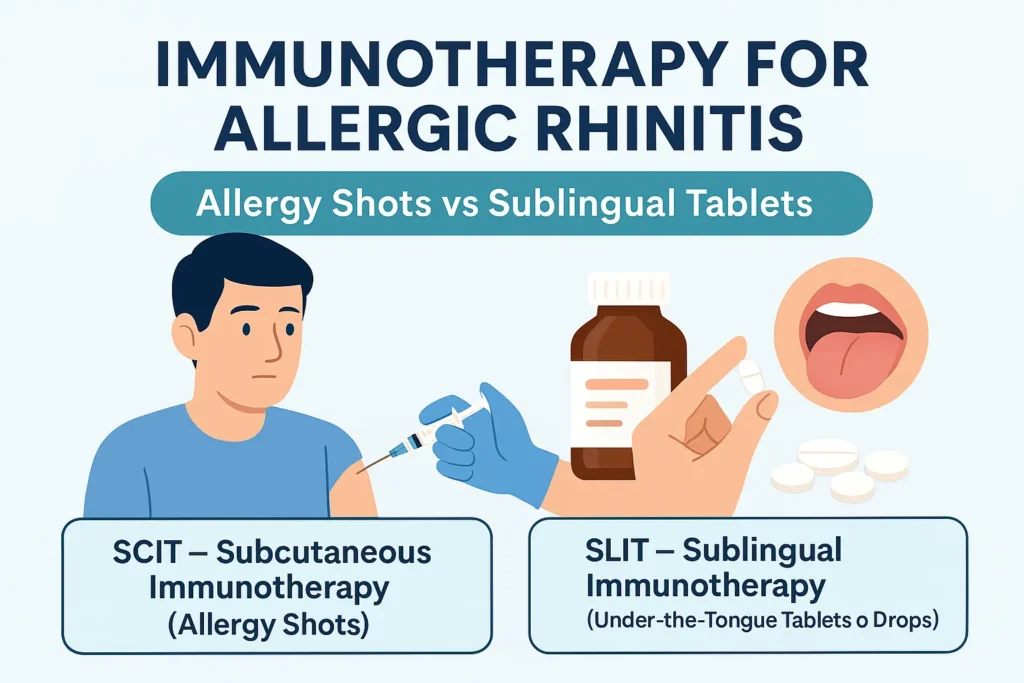
Allergen immunotherapy is a disease-modifying treatment for allergic rhinitis that aims to reduce immune sensitivity to specific allergens over time. Unlike symptomatic medications, immunotherapy targets the underlying allergic mechanism through controlled allergen exposure (Blaiss et al., 2024; Wang et al., 2025).
Two major forms exist:
- SCIT – Subcutaneous Immunotherapy (Allergy Shots)
- SLIT – Sublingual Immunotherapy (Under-the-Tongue Tablets or Drops)
Both are recommended in international ARIA and AAAAI guidelines for long-term allergy control (Bousquet et al., 2020).
What Is Allergen Immunotherapy?
This approach is commonly referred to as allergen immunotherapy for allergic rhinitis.
- Dust mites
- Grass pollen
- Ragweed
- Tree pollens
- Mold spores
- Pet dander
Over time, your body produces blocking antibodies and reduces the allergic inflammatory response (Klimek et al., 2024).
How Immunotherapy Works
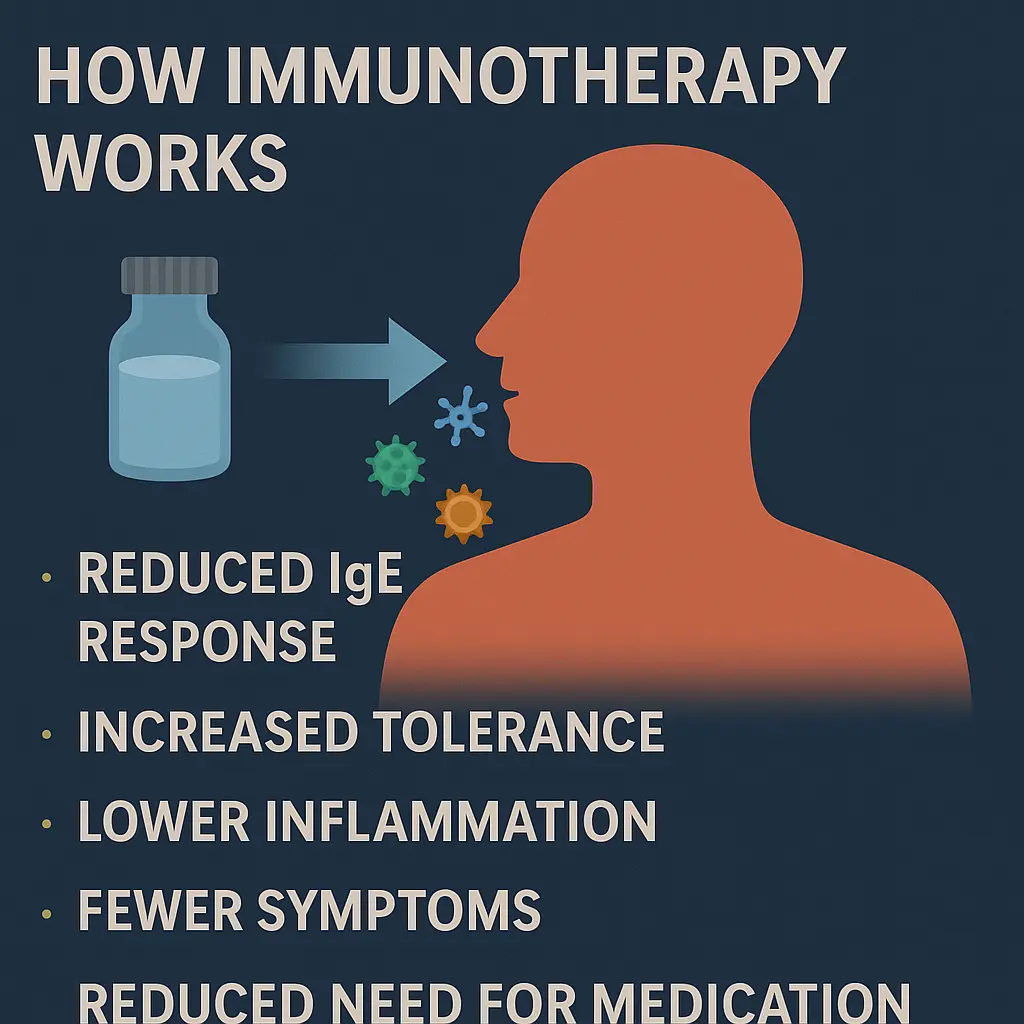
How immunotherapy works for allergic rhinitis involves repeated exposure to small allergen doses to induce immune tolerance.Each dose contains a tiny, controlled amount of the allergen.
Repeated exposure leads to:
✔ Reduced IgE response
✔ Increased tolerance
✔ Lower inflammation
✔ Fewer symptoms
✔ Reduced need for medication
The longer you continue therapy, the stronger and longer-lasting the improvement (Blaiss et al., 2024).
Who Should Consider Immunotherapy?
You are a good candidate if:
- OTC medications don’t control your symptoms
- You have moderate-to-severe allergic rhinitis
- You want a long-term solution
- You prefer reducing medication use
- Your allergies last most of the year
- You have dust mite, grass, ragweed, mold, or pet allergies
- You have allergic rhinitis with asthma
- You want to prevent your allergies from worsening over time (Jin et al., 2025)
Immunotherapy is especially helpful for:
- Students
- Outdoor workers
- People with strong seasonal allergies
- People with perennial dust mite allergies
- Children (safe & effective in pediatrics)
When to avoid immunotherapy:
- Uncontrolled asthma
- Severe immune disorders
- Active autoimmune disease
- Pregnancy (starting treatment is avoided)
Types of Immunotherapy (SCIT vs SLIT)
There are two main evidence-supported forms:
SCIT — Subcutaneous Immunotherapy (Allergy Shots)
It is often asked about allergy shots for allergic rhinitis effectiveness. Studies have shown that SCIT has been used for over 100 years and remains the gold standard.
✔ How SCIT Works
- Allergy injections given at a clinic
- Weekly injections during buildup phase
- Monthly injections during maintenance phase
- Total duration: 3–5 years
✔ Benefits
- Very strong symptom reduction (Jin et al., 2025)
- Works for multiple allergens at once
- Long-lasting improvement even after stopping
- Can help prevent asthma progression
✔ Limitations
- Requires clinic visits
- Small risk of systemic reactions
- Time commitment
SCIT is commonly referred to as allergy shots for allergic rhinitis.
SLIT — Sublingual Immunotherapy Tablets or Drops
SLIT is a modern, safer, home-based alternative.SLIT tablets are used for dust mite and grass allergies.
✔ How SLIT Works
- Tablets dissolve under the tongue
- First dose is supervised; remaining doses taken at home
- Daily dosing for 3–5 years
✔ FDA-Approved SLIT Tablets
- Dust mite
- Grass pollen
- Ragweed pollen
✔ Benefits
- Can be taken at home
- Extremely low risk of systemic reactions
- Good for patients who dislike needles
- Safer for children
- Strong evidence for dust mite and grass pollen (Blaiss et al., 2024; Wang et al., 2025)
✔ Limitations
- Treats fewer allergens than SCIT
- Requires strict daily adherence
- Mild mouth or throat irritation in some users
This method is known as sublingual immunotherapy for allergic rhinitis.
SCIT vs SLIT
Feature | SCIT (Allergy Shots) | SLIT (Sublingual Tablets) |
How Taken | Injections at clinic | Tablet under tongue |
Frequency | Weekly → Monthly | Daily at home |
FDA Approval | Multi-allergen mixes | Dust mite, grass, ragweed |
Works For | Most allergens | Limited allergens |
Best For | Severe/complex allergies | Needle-averse or home users |
Safety | Small risk of anaphylaxis | Very low systemic risk |
Age Suitability | Adults & older children | Children-friendly |
Adherence Needs | Clinic schedule | Daily dosing |
Cost | Higher (clinic fees) | Moderate |
Long-Term Results | Excellent | Excellent for approved allergens |
Long-Term Benefits of Immunotherapy
Immunotherapy offers unique long-term health advantages not achievable with medication alone.
✔ 1. Reduces Symptoms for Years
Many patients continue to experience relief long after finishing therapy (Wang et al., 2025).
✔ 2. Decreases Medication Use
Most people use fewer antihistamines and nasal sprays.
✔ 3. Prevents New Allergies
Children receiving immunotherapy may develop fewer new allergies.
✔ 4. Reduces Risk of Asthma
Immunotherapy lowers asthma progression risk in allergic patients (Jin et al., 2025).
✔ 5. Improves Quality of Life
Patients report better sleep, productivity, and fewer sinus issues (Blaiss et al., 2024).
Risks and Safety Considerations
✔ SCIT Risks
- Local redness at injection site
- Mild swelling
- Rare but serious systemic allergic reaction (requires clinic monitoring)
✔ SLIT Risks
- Mild mouth or throat itching
- Minor swelling under tongue
- Rare stomach discomfort
- Extremely low risk of systemic reactions
✔ Serious risks are very rare
Most reactions occur early and are manageable under clinic supervision (Klimek et al., 2024).
How Long Does Immunotherapy Take to Work?

- SLIT improvement often begins within 3–6 months
- SCIT improvement begins within 4–8 months
- Full benefit appears after 1–2 years
- Treatment course lasts 3–5 years
Long-term improvement can last several years after stopping treatment.
Who Should Start SLIT vs SCIT?
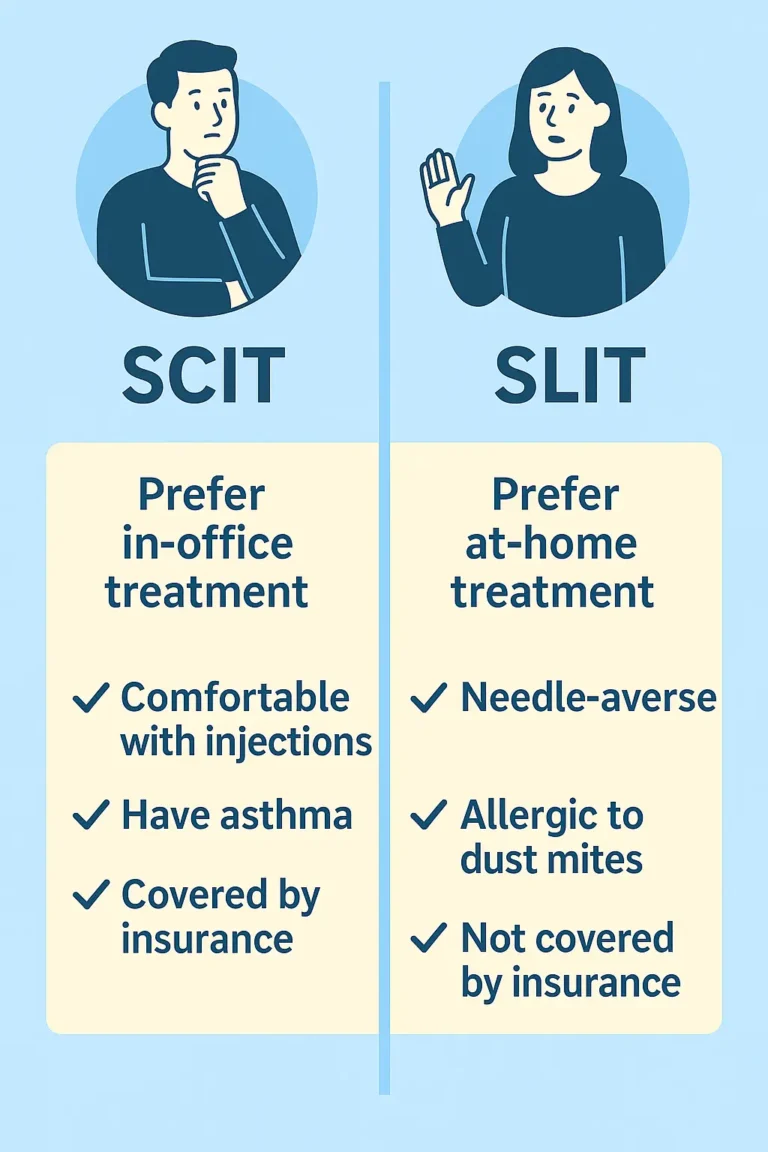
Choose SCIT if:
✔ You have multiple allergies
✔ You prefer a stronger, clinic-supervised approach
✔ You want personalized allergen mixes
✔ You are okay with injections
Choose SLIT if:
✔ You prefer home treatment
✔ You have dust mite, grass, or ragweed allergy
✔ You dislike needles
✔ You want a safer option for children
✔ You prefer daily small doses
Key Takeaways
- Immunotherapy is the only treatment that modifies allergic disease long-term.
- SLIT and SCIT are both effective and strongly supported by research.
- SCIT treats more allergens; SLIT is safer and easier to use at home.
- Treatment lasts 3–5 years but provides years of lasting benefit.
- Talk to an allergist to choose the right type for your allergy profile.
Medical Review Disclaimer
This article is for informational and educational purposes only and does not constitute medical advice. The content is written by a qualified healthcare professional and medically reviewed for accuracy. However, it should not be used as a substitute for professional medical diagnosis, treatment, or advice. Always consult a licensed healthcare provider regarding any medical condition or health concern.
Frequently Asked Questions (FAQs)
1. Is immunotherapy a cure for allergic rhinitis?
Immunotherapy does not cure allergies, but it can significantly reduce symptoms and make the immune system less reactive for many years.
2. How long do allergy shots (SCIT) or tablets (SLIT) take to work?
Symptom improvement usually starts within 3–8 months, with full benefits developing after 1–2 years of continuous treatment.
3. Is SLIT safer than allergy shots?
Yes. SLIT has a very low risk of systemic allergic reactions and is generally safer for children and needle-averse patients.
4. Can immunotherapy reduce the need for allergy medications?
Yes. Most patients gradually rely less on antihistamines and nasal sprays during and after successful immunotherapy.
5. Who should not start immunotherapy?
People with uncontrolled asthma, severe immune disorders, or active autoimmune disease should avoid immunotherapy unless advised by a specialist.
6. Can children receive immunotherapy?
Yes. Both SCIT and SLIT are considered safe and effective for children when prescribed and monitored by an allergist.
7. Does immunotherapy help prevent asthma?
Evidence shows immunotherapy may reduce the risk of asthma development and progression in patients with allergic rhinitis.
References
Blaiss, M. S., Nolte, H., Lu, S., Maloney, J., & Skoner, D. P. (2024). Sublingual tablet immunotherapy improves quality of life in adults with allergic rhinoconjunctivitis. Journal of Allergy and Clinical Immunology: In Practice, 12(4), 1015–1024. https://doi.org/10.1016/j.jaip.2024.01.015
Bousquet, J., Klimek, L., Togias, A., Zuberbier, T., Agache, I., Ansotegui, I. J., … Wallace, D. V. (2020). Next-generation allergic rhinitis and its impact on asthma (ARIA). Journal of Allergy and Clinical Immunology, 145(3), 895–909. https://doi.org/10.1016/j.jaci.2019.12.898
Jin, L., Fan, K., Zhou, S., Wang, Y., Tan, S., Long, B., & Yu, S. (2025). Age-stratified analysis of subcutaneous immunotherapy clinical efficacy. Biomedicines, 13(11), 2831. https://doi.org/10.3390/biomedicines13112831
Klimek, L., Bousquet, J., Pfaar, O., Bachert, C., Hellings, P. W., & Agache, I. (2024). Current management of allergic rhinitis: Pharmacologic treatments and allergen immunotherapy. Journal of Allergy and Clinical Immunology: In Practice, 12(2), 215–229. https://doi.org/10.1016/j.jaip.2023.11.012
Wang, Z., Li, Y., Chen, X., & Zhang, H. (2025). Efficacy and safety of sublingual immunotherapy: An overview of systematic reviews. European Archives of Oto-Rhino-Laryngology, 282(7), 3121–3135. https://doi.org/10.1007/s00405-025-09664-7