

Best Medicine for Allergic Rhinitis: Nasal Spray or Tablet?
Written by: Dr.Muhammad Ihsan Ullah, PhD
Medically reviewed by: Dr. Muhammad Mudassar Hassan Bhatti, MD & Dr. Jamal ud Din Khan, FCPS
Last updated on July 9, 2026
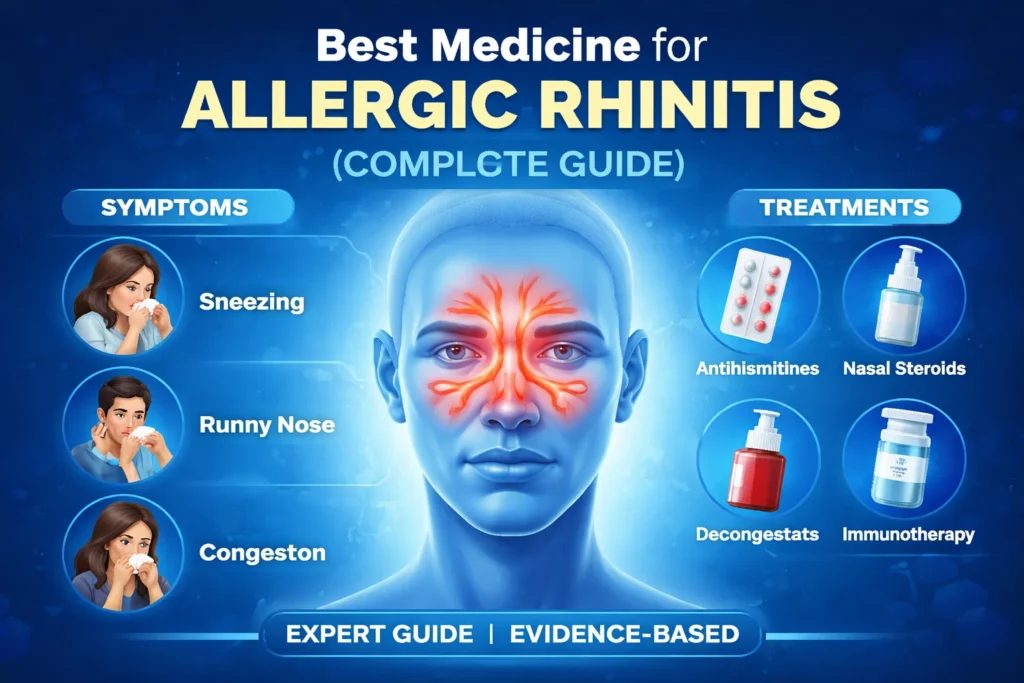
What Is the Best Medicine for Allergic Rhinitis?
The right treatment depends on your main symptoms, because sneezing, runny nose, itchy eyes, nasal congestion, and blocked nose do not always respond to the same medicine. For many people, the best nasal spray for allergic rhinitis is an intranasal corticosteroid, while the best tablet for allergic rhinitis is usually a non-drowsy antihistamine for sneezing, itching, and runny nose. If symptoms are severe or persistent, a combination of allergy medicines may work better than one treatment alone. This guide explains the best medicine for allergic rhinitis, the best allergy medicine for sneezing and runny nose, and the best treatment for allergic rhinitis nasal congestion based on your symptoms.
Nasal Spray or Tablet: Which Is Better for Allergic Rhinitis?
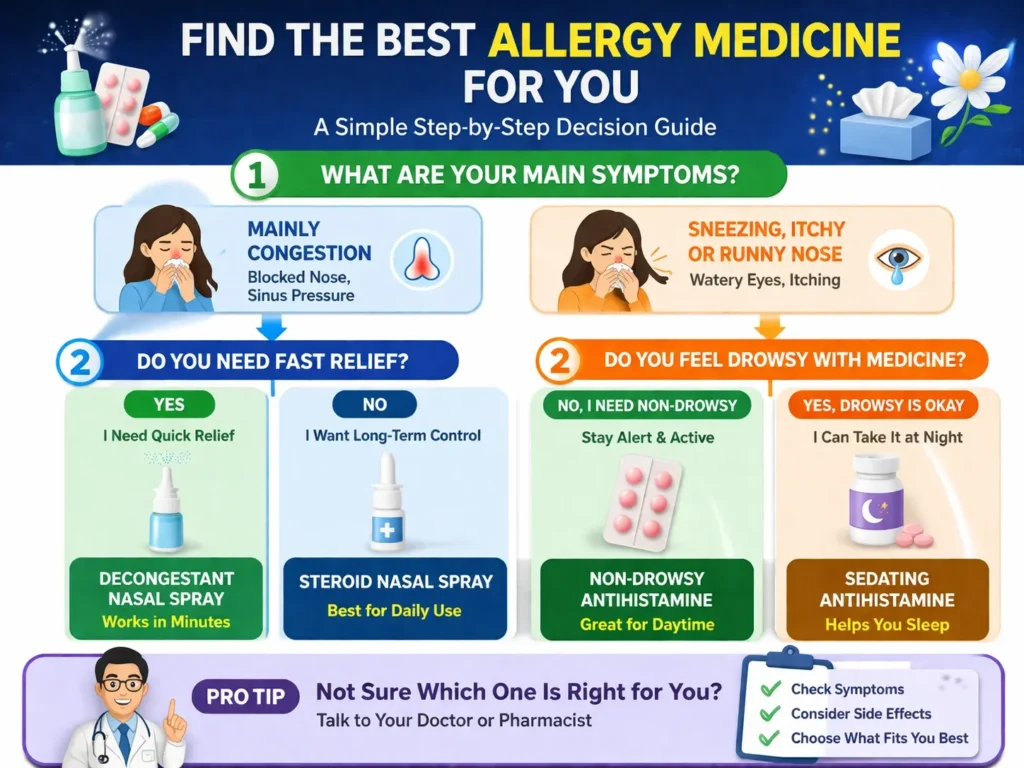
A nasal spray is usually better if your main problem is nasal congestion, blocked nose, post-nasal drip, or symptoms that happen every day. A tablet is usually better if your main symptoms are sneezing, itching, watery eyes, and runny nose.
For many people, the best choice is not “spray or tablet” forever. It depends on the symptom pattern.
Choose a nasal spray if:
- your nose feels blocked most days
- you wake up congested
- symptoms affect sleep
- you have post-nasal drip
- antihistamine tablets are not enough
- you need long-term control
Choose an allergy tablet if:
- sneezing is your main symptom
- your nose is runny but not badly blocked
- your eyes or nose itch
- symptoms are mild or occasional
- you want a simple once-daily option
- you need faster relief for histamine symptoms
A nasal corticosteroid spray is usually stronger for overall nasal inflammation, especially congestion. Antihistamine tablets are useful for sneezing, itching, and runny nose, but they may not fully open a blocked nose.
Antihistamine Tablet vs Nasal Steroid Spray
Antihistamine tablets and nasal steroid sprays work differently. Antihistamines block histamine, which is one of the chemicals responsible for sneezing, itching, watery eyes, and runny nose. Nasal steroid sprays reduce inflammation inside the nose, which makes them more useful for congestion and long-term control.
Antihistamine tablets may be better for:
- sneezing
- itchy nose
- itchy eyes
- watery eyes
- clear runny nose
- mild seasonal allergies
- quick daily relief
Nasal steroid sprays may be better for:
- blocked nose
- swollen nasal passages
- post-nasal drip
- night congestion
- morning congestion
- moderate to severe allergic rhinitis
- symptoms that last for weeks
If your symptoms are mild and mainly sneezing or itching, a non-drowsy antihistamine may be enough. If your symptoms are persistent, congested, or affecting sleep, a nasal steroid spray may be the better first choice.
Why Choosing the Right Medicine Matters More Than the Strongest Medicine
Many people search:
- “best tablet for allergy”
- “strongest allergy medicine”
- “why my allergy medicine is not working”
The real issue is not strength—it’s mismatch.
Allergic rhinitis involves:
- Histamine release (causes sneezing, itching)
- Inflammation (causes blockage)
- Mucus production (causes runny nose)
👉 No single medicine targets all three effectively.
That’s why a personalized approach works best.
Quick Comparison of Allergy Medicines
Medicine Type | Best For | How Fast It Works | Duration | Overall Effectiveness |
Antihistamines | Sneezing, itching | 1–2 hours | 24 hours | ⭐⭐⭐ |
Nasal Steroids | All symptoms | 3–7 days | Long-term | ⭐⭐⭐⭐⭐ |
Decongestants | Blocked nose | Minutes | Short-term | ⭐⭐ |
Combination Therapy | Severe symptoms | Fast + sustained | Long-term | ⭐⭐⭐⭐⭐ |
Best Medicine Based on Your Symptoms
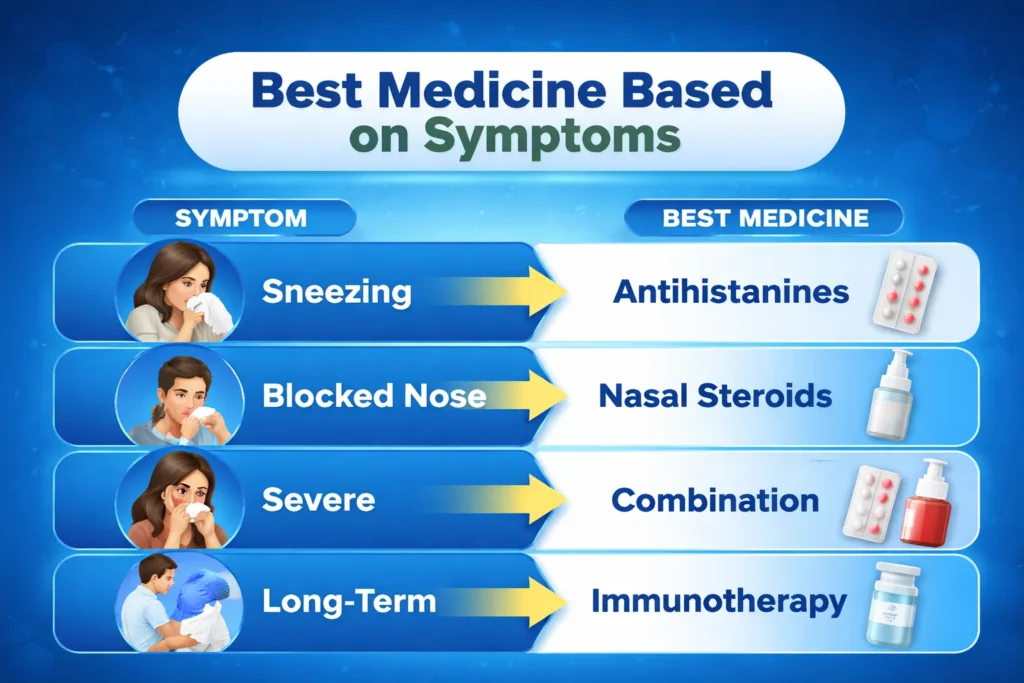
1. Best Medicine for Nasal Congestion (Blocked Nose)
Intranasal corticosteroids such as fluticasone, mometasone, and budesonide are the most effective option.
They reduce inflammation in the nasal passages and improve airflow significantly better than antihistamines (Torres, M. I., et al. 2024).
They also improve sleep quality and reduce nighttime symptoms (Karger Study Group 2024).
Real-Life Situation
Sara, a 32-year-old teacher, had persistent nasal blockage and poor sleep. After using a nasal spray regularly, her breathing improved within a week, and she started sleeping comfortably again.
2. Best Medicine for Sneezing, Runny Nose, and Itching
Second-generation antihistamines such as cetirizine, loratadine, and fexofenadine provide fast relief.
They block histamine and reduce sneezing and itching but are less effective for nasal congestion (Juel-Berg, N., et al. 2017).
Real-Life Situation
Ali experienced frequent sneezing during pollen season. After taking an antihistamine, his symptoms improved within hours.
3. Best Medicine for Severe or Persistent Allergies
Combination therapy is recommended when symptoms are moderate to severe.
This includes:
- Antihistamine + nasal steroid
- Dual nasal therapy
This approach provides better symptom control than single therapy (Sousa-Pinto, B., et al. 2024).
Real-Life Situation
Ahmed had severe symptoms affecting his sleep and productivity. After combining treatments, his symptoms improved significantly.
4. Best Medicine for Night-Time Symptoms
Night symptoms are common due to indoor allergens and body position.
Intranasal corticosteroids improve nasal airflow and sleep quality (Karger Study Group 2024).
5. Best Long-Term Treatment
Immunotherapy gradually reduces sensitivity to allergens and provides long-term improvement.
Real-Life Situation
Fatima’s seasonal allergies reduced significantly after undergoing immunotherapy.
Best Medicine for Blocked Nose, Sneezing, Runny Nose, and Itchy Eyes
The best medicine for allergic rhinitis depends on which symptom bothers you most.
For blocked nose:
A nasal corticosteroid spray is usually the best option because congestion comes from inflammation and swelling inside the nose. Antihistamine tablets may help other symptoms but often do not fully relieve blockage.
For sneezing:
A second-generation antihistamine such as cetirizine, loratadine, fexofenadine, or levocetirizine may help because sneezing is strongly linked with histamine release.
For runny nose:
Antihistamine tablets or intranasal antihistamine sprays may help. Saline rinse may also help remove pollen, dust, and mucus from the nose.
For itchy eyes:
Antihistamines may help, but allergy eye drops may be needed if eye itching and watering are strong.
For post-nasal drip:
Saline rinse plus a nasal steroid spray may help by reducing mucus, allergens, and nasal inflammation.
For nighttime symptoms:
A nasal steroid spray, bedroom allergen control, dust-mite-proof bedding, and HEPA filtration may help if congestion or post-nasal drip worsens during sleep.
Top Medicines Ranked (Simple and Practical)
#1 Best Overall
👉 Intranasal corticosteroids
#2 Best for Fast Relief
👉 Antihistamines
#3 Best for Severe Symptoms
👉 Combination therapy
#4 Best for Long-Term Control
👉 Immunotherapy
How Each Medicine Works (Simple Explanation)
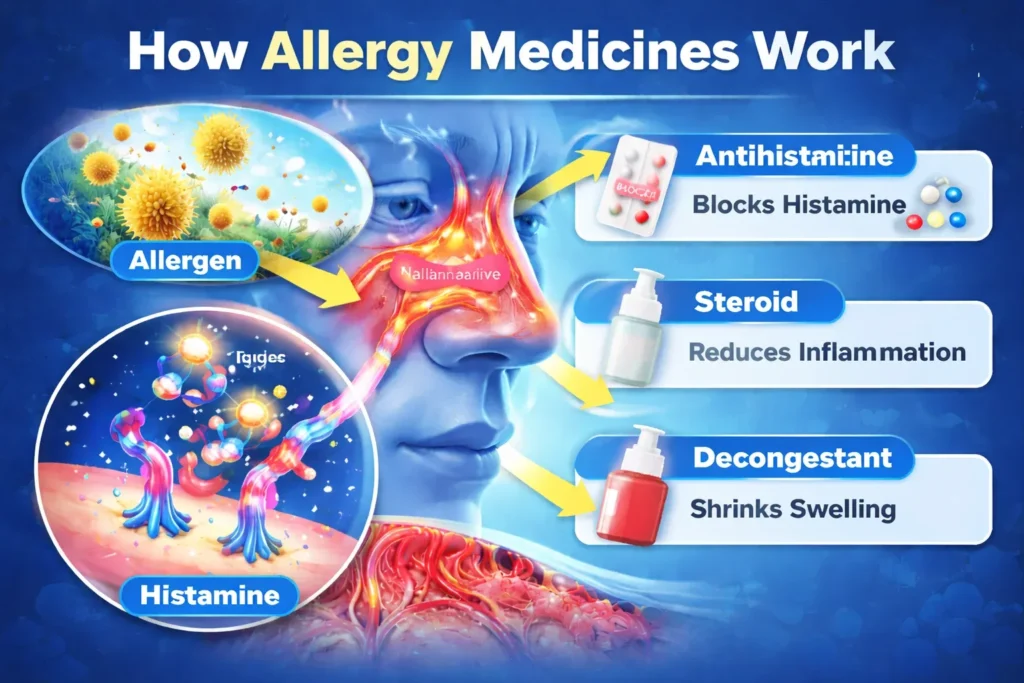
Antihistamines
Block histamine → reduce sneezing and itching
Nasal Steroids
Reduce inflammation → improve all symptoms
Decongestants
Constrict blood vessels → relieve blockage quickly
How Long Each Medicine Takes to Work
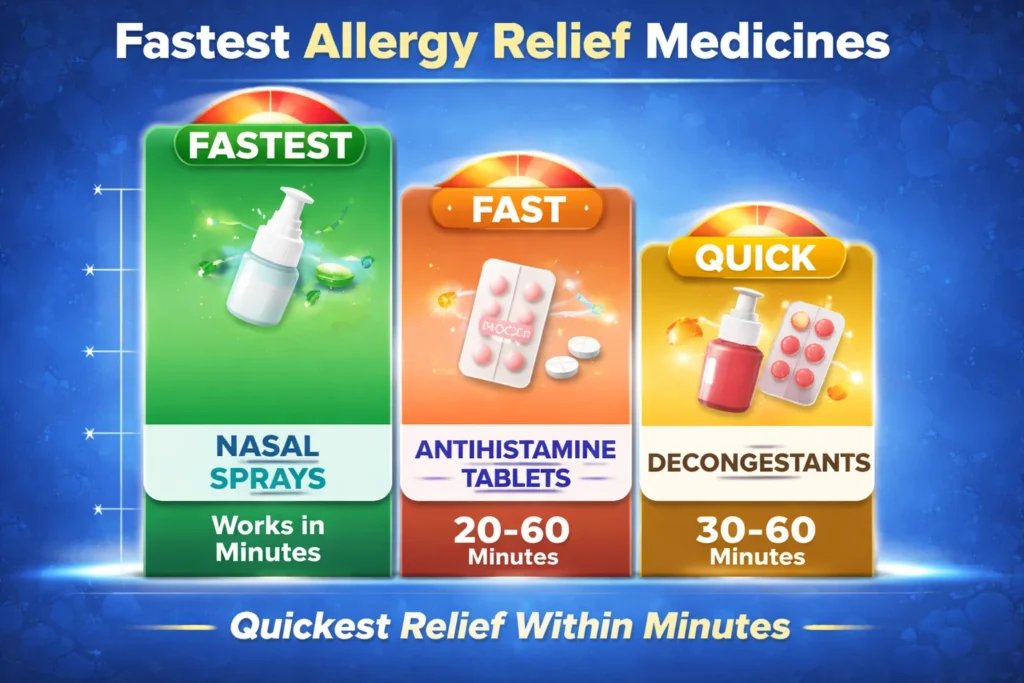
Medicine | Time to Start | Full Effect |
Antihistamines | 1–2 hours | Same day |
Nasal Steroids | 2–3 days | 1–2 weeks |
Decongestants | Minutes | Immediate |
Which Medicine Works Fastest?
If you need immediate relief:
- Antihistamines → fastest oral option
- Nasal antihistamines → even faster
- Decongestants → fastest for blockage
However, fast relief does not always mean long-term control.
Best Non-Drowsy Allergy Medicine for Allergic Rhinitis
Non-drowsy allergy medicines are often preferred for daytime allergic rhinitis because they are less likely to affect work, study, driving, and focus.
Common non-drowsy or low-drowsiness antihistamines include:
- loratadine
- fexofenadine
- desloratadine
- levocetirizine
- cetirizine
Fexofenadine and loratadine are often chosen when avoiding drowsiness is a priority. Cetirizine may feel stronger for some people, but it can cause sleepiness in sensitive users.
If your main issue is congestion, a non-drowsy tablet may not be enough. In that case, a nasal corticosteroid spray may control blocked nose better than relying only on tablets.
Which Medicine Is Safest for Long-Term Use?
- Nasal steroids → safest and most effective
- Modern antihistamines → safe for regular use
Decongestants should only be used short-term.
Side Effects and Safety Comparison
Medicine | Common Side Effects | Safety |
Antihistamines | Mild drowsiness | Safe |
Nasal Steroids | Mild irritation | Very safe |
Decongestants | Increased BP | Short-term only |
What NOT to Use (Common Mistakes)
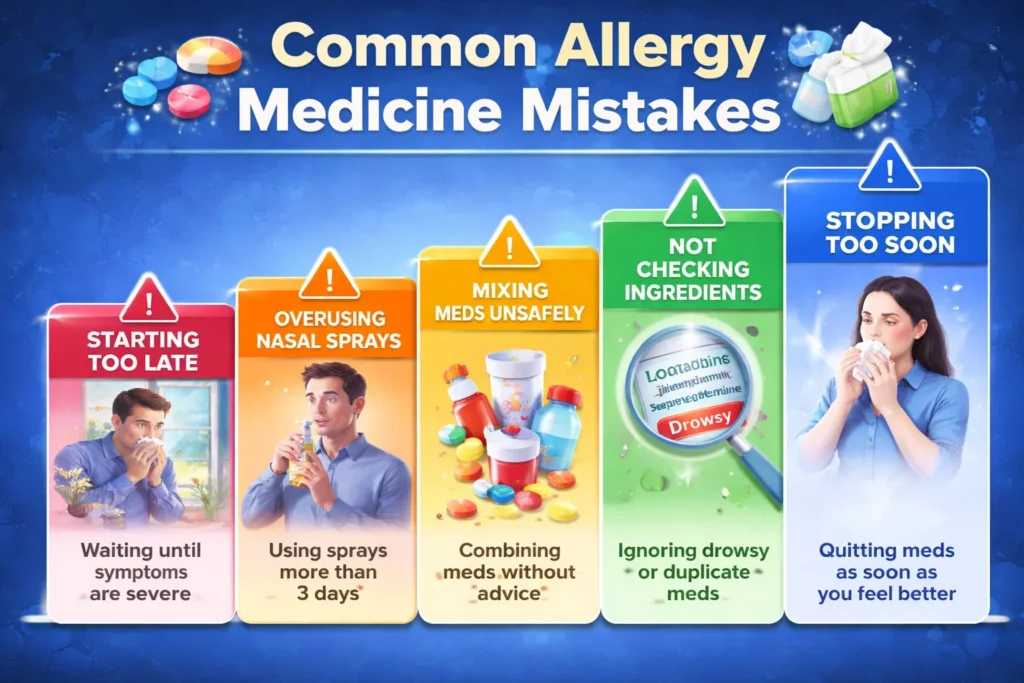
Overusing Nasal Decongestants
Can cause rebound congestion (rhinitis medicamentosa)
Using Sedating Antihistamines Daily
Can cause fatigue and reduced productivity
Step-by-Step Guide to Choosing the Right Medicine
Step 1 → Identify your main symptom
Step 2 → Choose appropriate medicine
Step 3 → Use consistently
Step 4 → Combine treatments if needed
Why Your Allergy Medicine Might Not Be Working
- Wrong medicine selection
- Incorrect usage
- Stopping too early
Adjusting treatment often solves the problem.
When to Combine Nasal Spray and Allergy Tablets
Combination treatment may be useful when one medicine does not control allergic rhinitis symptoms well enough. This is common in people with moderate to severe symptoms, mixed symptoms, or allergy symptoms that disturb sleep and daily life.
A combination may be considered when:
- nasal spray improves congestion but sneezing continues
- antihistamine helps itching but the nose stays blocked
- symptoms are severe during pollen season
- symptoms affect sleep, school, work, or exercise
- one treatment works only partly
- allergy symptoms keep returning despite correct use
Common combinations include:
- nasal steroid spray plus oral antihistamine
- nasal steroid spray plus intranasal antihistamine
- saline rinse plus nasal steroid spray
- allergy tablet plus eye drops for eye symptoms
Do not keep adding medicines randomly. If treatment is not working, check whether you are using the spray correctly, using it long enough, avoiding triggers, and treating the right condition. Sinusitis, non-allergic rhinitis, nasal polyps, asthma, or overuse of decongestant sprays can make allergy treatment seem ineffective.
When to Switch or Upgrade Your Treatment
Consider changing treatment if:
- No improvement after 1–2 weeks
- Symptoms worsen
- Daily life is affected
When You Should See a Doctor
- Severe symptoms
- Breathing difficulty
- Poor sleep quality
Special Situations
Children
Use age-appropriate medicines
Pregnancy
Only doctor-approved options
Allergy with Asthma
Montelukast may be considered
Expert Insight
Intranasal corticosteroids remain the most effective first-line treatment due to their anti-inflammatory effects (Soe, K. K., et al. 2023).
Combination therapy is recommended for moderate to severe allergic rhinitis.
Final Takeaway
- No single best medicine for everyone
- Treatment must match symptoms
- Combination therapy often works best
👉 The right strategy matters more than the strongest drug.
Medical Disclaimer
The information provided on this website, including this article on Allergic Rhinitis, is for educational and informational purposes only and is not intended as medical advice, diagnosis, or treatment.
While the content is written by a qualified professional with a background in pharmacology and reviewed by a medical review board, it should not be used as a substitute for professional medical advice from a licensed physician or healthcare provider.
Always consult your doctor or a qualified healthcare professional before starting, stopping, or changing any medication, especially if you are pregnant, breastfeeding, have underlying medical conditions, or are taking other medications.
Individual responses to treatments may vary. The use of any information provided on this website is solely at your own risk.
In case of a medical emergency, seek immediate medical attention or contact your local healthcare services.
By using this website, you agree to this disclaimer and its terms.
Frequently Asked Questions (FAQs)
What is the best medicine for allergic rhinitis?
The best medicine depends on your main symptom. A nasal corticosteroid spray is usually best for blocked nose and long-term control, while antihistamine tablets are useful for sneezing, itching, watery eyes, and runny nose.
Which is better for allergic rhinitis: nasal spray or tablet?
A nasal spray is usually better for congestion, post-nasal drip, and daily symptoms. A tablet is usually better for sneezing, itching, watery eyes, and mild or occasional symptoms.
What is the best tablet for allergic rhinitis?
Common tablet options include cetirizine, loratadine, fexofenadine, levocetirizine, and desloratadine. The best choice depends on symptom severity, drowsiness risk, age, pregnancy or breastfeeding status, and other medicines.
What is the best nasal spray for allergic rhinitis?
A nasal corticosteroid spray is usually the best nasal spray for allergic rhinitis because it reduces inflammation and helps congestion, sneezing, itching, and runny nose. Antihistamine nasal sprays may work faster for sneezing and runny nose.
What is the best medicine for allergic rhinitis nasal congestion?
A nasal corticosteroid spray is usually better for nasal congestion than an antihistamine tablet. Congestion is mainly caused by swelling and inflammation inside the nose, so anti-inflammatory nasal treatment is often more effective.
Which allergy medicine works fastest?
Antihistamine tablets may work within hours for sneezing, itching, and runny nose. Nasal antihistamine sprays may work even faster for nasal symptoms. Decongestant sprays can open the nose quickly but should only be used short-term.
Can I use allergy tablets and nasal spray together?
Some people may use an allergy tablet and nasal spray together, especially when symptoms are moderate or severe. Combination treatment should match your symptoms and medical history, especially if you are pregnant, breastfeeding, have high blood pressure, or take other medicines.
Why is my allergy medicine not working?
Your allergy medicine may not work if it does not match your main symptom, you stop too early, nasal spray technique is wrong, allergen exposure is still high, or the problem is sinusitis, non-allergic rhinitis, nasal polyps, asthma, or decongestant spray overuse.
Are nasal steroid sprays safe for long-term allergic rhinitis?
Modern nasal steroid sprays are commonly used for long-term allergic rhinitis control when used as directed. They act mainly inside the nose and are often preferred for persistent congestion and inflammation.
What should I avoid when choosing allergy medicine?
Avoid overusing decongestant nasal sprays, taking sedating antihistamines when you need to drive or focus, and combining multiple allergy medicines without guidance. Also be careful with “D” allergy products if you have high blood pressure, heart disease, anxiety, insomnia, pregnancy, or other medical concerns.
References
- Torres, M. I., et al. (2024). DOI: 10.1016/j.jaip.2024.09.001
- Juel-Berg, N., et al. (2017). DOI: 10.2500/ajra.2017.31.4401
- Sousa-Pinto, B., et al. (2024). DOI: 10.1016/j.jaci.2024.04.016
- Soe, K. K., et al. (2023). DOI: 10.3389/fphar.2023.1184552