

Best Sleeping Position for Child With Nasal Blockage
Written by: Dr.Muhammad Ihsan Ullah, PhD
Medically reviewed by: Dr. Muhammad Sohail,FCPS
Last updated on February 10,2026
Reduce Night Congestion, Snoring & Mouth Breathing Naturally
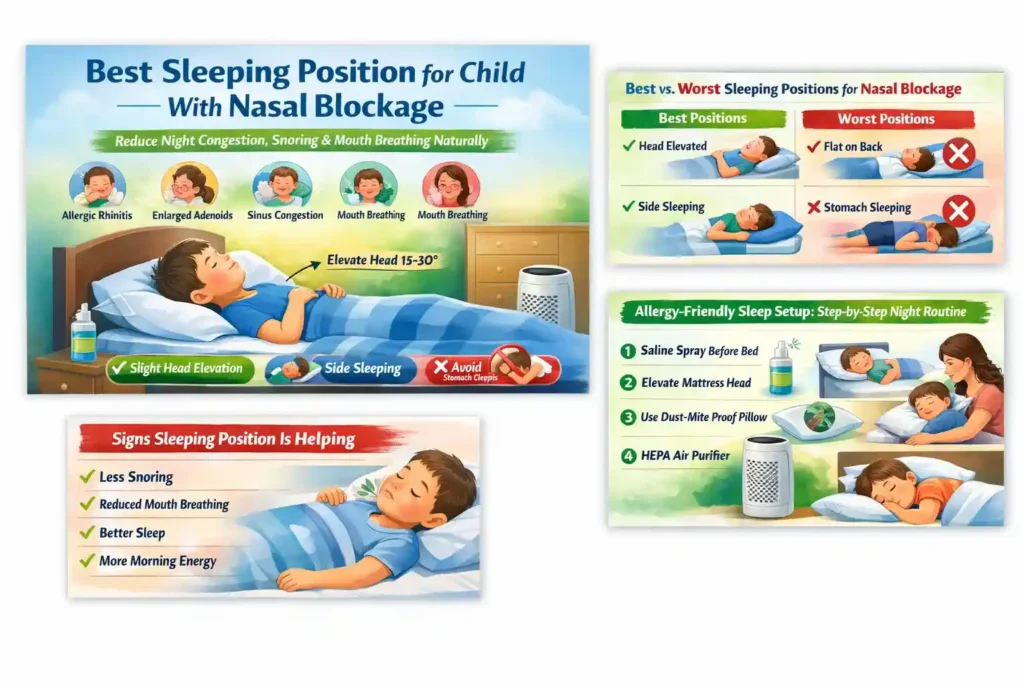
If your child sleeps with a blocked nose, snoring, mouth breathing, or restless nights, you’re not alone. Parents frequently ask:
“What is the best sleeping position for a child with nasal blockage?”
The right sleeping position can significantly improve nasal airflow, sleep quality, and breathing, especially in children with allergic rhinitis, colds, enlarged adenoids, or sinus congestion.
This guide explains which positions help, which worsen congestion, and how to optimize sleep safely.
Why Sleeping Position Matters in Nasal Blockage
During sleep:
- Gravity affects nasal drainage
- Blood flow to nasal tissues increases
- Lying flat worsens swelling of nasal lining
In children, this can lead to:
- Increased nasal congestion
- Mouth breathing
- Snoring
- Poor sleep quality
Correct positioning helps keep nasal passages more open.
🥇 Best Sleeping Position for Child With Nasal Blockage
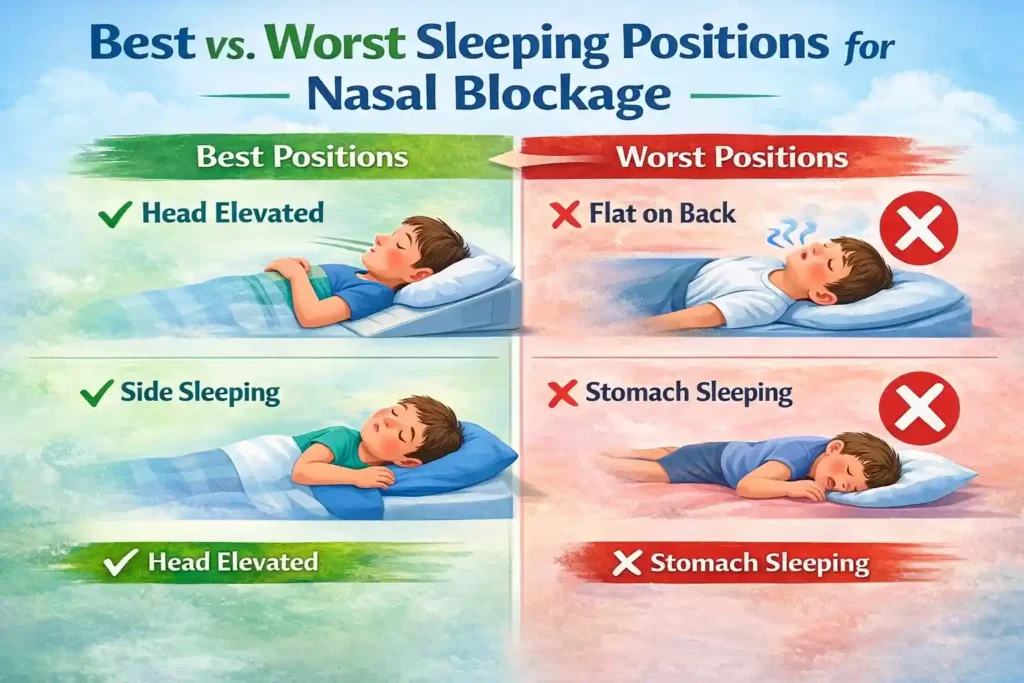
✅ 1Slight Head Elevation
Best overall position:
➡️ Back sleeping with head slightly elevated
Why it helps:
- Reduces nasal blood pooling
- Improves sinus drainage
- Decreases post-nasal drip
- Reduces nighttime congestion
How to do it safely:
- Place a small pillow under the upper mattress (not directly under the neck)
- Use a thin pillow under the head
- Elevate the head by 15–30 degrees only
⚠️ Avoid high pillows that bend the neck.
✅ 2️⃣ Side Sleeping (Alternative)
Side sleeping can help if back sleeping worsens snoring.
Benefits:
- Reduces airway collapse
- Improves airflow
- Helpful for children who snore or mouth-breathe
👉 Tip:
If one nostril is more blocked, let the child sleep on the opposite side (the upper nostril drains better).
❌ Worst Sleeping Positions for Nasal Blockage
🚫 1️⃣ Flat Back Sleeping (No Elevation)
Problems:
- Increases nasal swelling
- Worsens congestion
- Triggers mouth breathing
🚫 2️⃣ Stomach Sleeping
Why it’s bad:
- Compresses chest
- Twists neck
- Can worsen breathing
- Unsafe for young children
👉 Not recommended for nasal blockage or overall sleep health.
Special Situations & Best Positions
👶 Allergic Rhinitis
✔ Head elevation + side sleeping
✔ Allergy-free bedding
😴 Snoring or Mouth Breathing
✔ Side sleeping preferred
✔ Head elevation essential
👃 Enlarged Adenoids
✔ Side sleeping
✔ ENT evaluation if persistent
🤧 Cold or Sinus Congestion
✔ Head elevation
✔ Saline spray before bed
How to Set Up an Allergy-Friendly Sleep Position
Step-by-Step Night Routine

1️⃣ Saline nasal spray or rinse (child-safe)
2️⃣ Clear nose gently (no forceful blowing)
3️⃣ Elevate mattress head slightly
4️⃣ Use dust-mite-proof pillow cover
5️⃣ Keep bedroom air clean (HEPA purifier if possible)
Does Sleeping Position Cure Nasal Blockage?
Signs Sleeping Position Is Helping
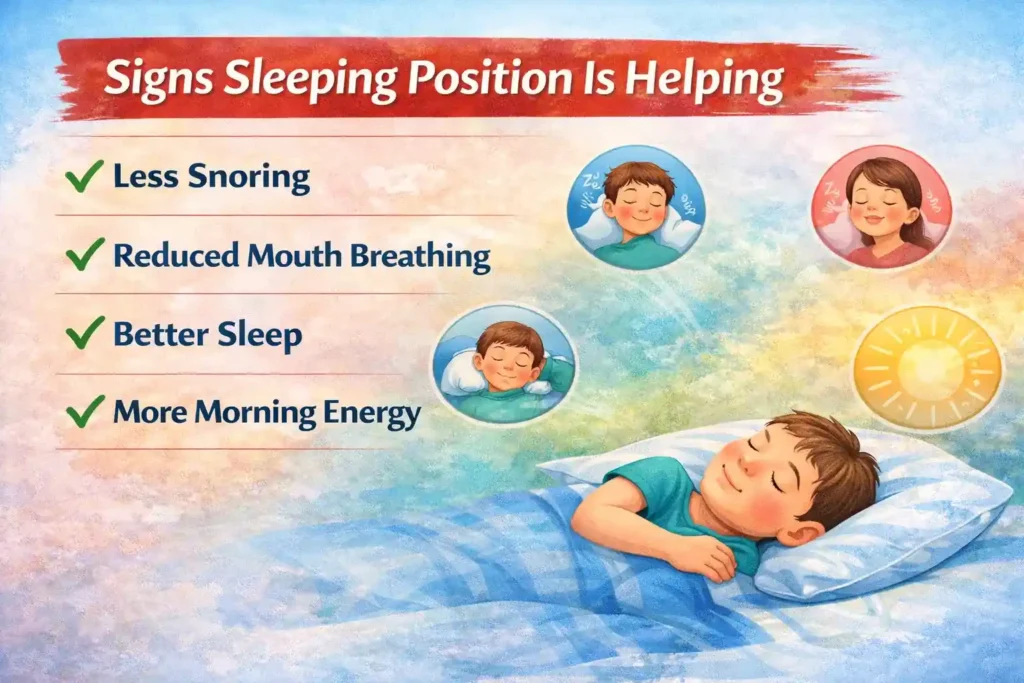
✔ Less snoring
✔ Reduced mouth breathing
✔ Better sleep continuity
✔ Improved morning energy
✔ Less nighttime waking
When Sleeping Position Is Not Enough
See a doctor if your child has:
- Loud nightly snoring
- Breathing pauses during sleep
- Persistent mouth breathing
- Poor growth
- Daytime sleepiness
- Recurrent ear or sinus infections
Key Takeaways for Parents
✔ Slight head elevation is the best position
✔ Side sleeping helps snoring & mouth breathing
✔ Flat sleeping worsens nasal blockage
✔ Positioning improves sleep but doesn’t replace treatment
✔ Persistent symptoms need medical evaluation
Medical Review Disclaimer
This article is for informational and educational purposes only and does not constitute medical advice. The content is written by a qualified healthcare professional and medically reviewed for accuracy. However, it should not be used as a substitute for professional medical diagnosis, treatment, or advice. Always consult a licensed healthcare provider regarding any medical condition or health concern.
Frequently Asked Questions (FAQs)
1. What is the best sleeping position for a child with nasal blockage?
Back sleeping with the head slightly elevated is the best position to improve nasal airflow and reduce congestion.
2. Does side sleeping help a child with a blocked nose?
Yes. Side sleeping can reduce snoring and mouth breathing, especially if back sleeping worsens symptoms.
3. Which sleeping positions make nasal blockage worse?
Flat back sleeping without elevation and stomach sleeping can worsen nasal congestion and breathing.
4. How much head elevation is safe for children?
A gentle elevation of about 15–30 degrees is enough. Avoid high pillows that bend the neck.
5. Can sleeping position cure nasal blockage in children?
No. Sleeping position helps reduce nighttime symptoms but does not cure the underlying cause.
6. When should parents see a doctor?
If a child has loud nightly snoring, breathing pauses during sleep, or persistent mouth breathing despite changes in position.