

Can Allergic Rhinitis Affect a Child’s Growth?
Written by: Dr.Muhammad Ihsan Ullah, PhD
Medically reviewed by: Dr. Muhammad Sohail,FCPS
Last updated on February 08,2026
The Hidden Link Between Nasal Allergy, Sleep, Appetite & Development
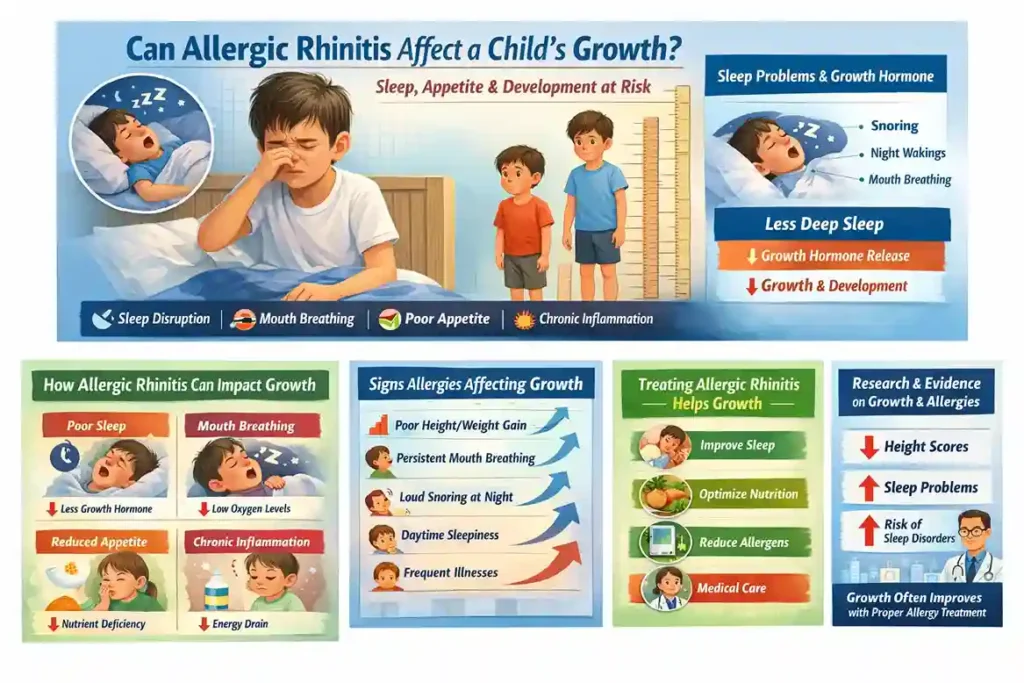
Many parents worry when their child has poor height gain, low weight, frequent illness, or disturbed sleep and ask:
“Can allergic rhinitis affect my child’s growth?”
The honest answer:
✔ Yes — indirectly, especially when allergic rhinitis is chronic, untreated, or severe.
This article explains how nasal allergies can influence growth, when to worry, and how early treatment protects normal development.
When the allergic symptoms persist for months or years, they can start affecting growth-related factors.
How Can Allergic Rhinitis Affect Growth?
Allergic rhinitis does not directly stunt bones, but it can affect growth through four major pathways:
1️⃣ Poor Sleep → Reduced Growth Hormone Release
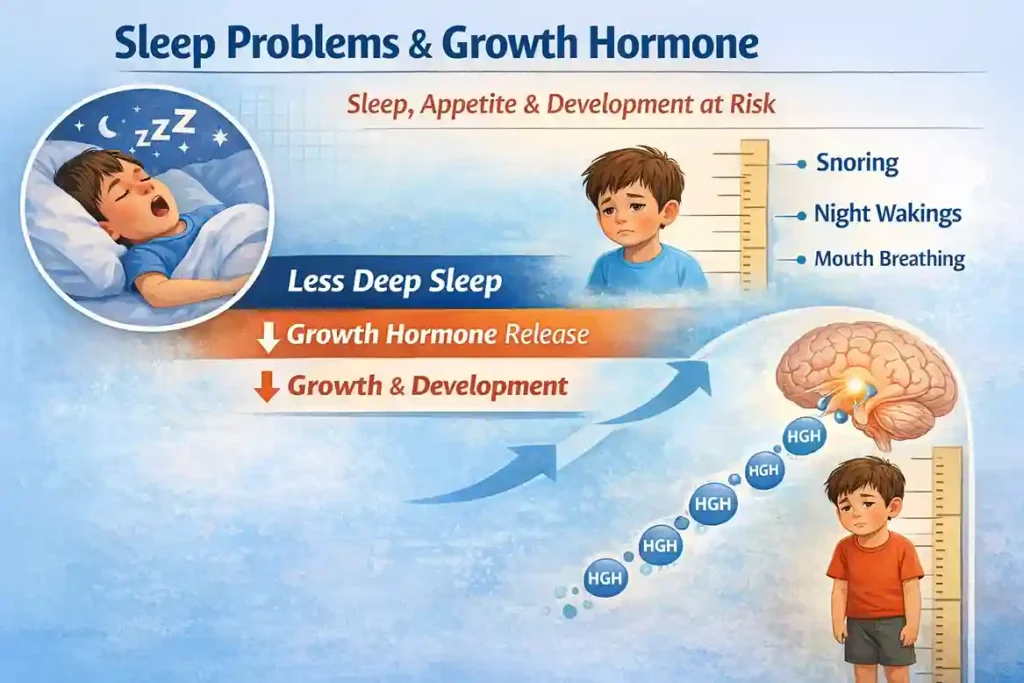
Why sleep matters:
Growth hormone is released mainly during deep sleep, and chronic sleep disruption from nasal obstruction may reduce normal growth hormone secretion in children (Bousquet et al., 2020; Kheirandish-Gozal & Gozal, 2016).
Children with untreated allergic rhinitis may experience:
- Frequent night awakenings
- Snoring or noisy breathing
- Poor sleep quality
Less deep sleep = less growth hormone secretion
2️⃣ Chronic Mouth Breathing & Sleep-Disordered Breathing
Persistent nasal congestion forces children to breathe through the mouth.
This can lead to:
- Fragmented sleep
- Daytime fatigue
- Reduced oxygenation at night
- In severe cases, sleep-disordered breathing
These factors are associated with:
✔ Poor height velocity
✔ Delayed weight gain
✔ Behavioral and learning issues
3️⃣ Reduced Appetite & Poor Nutrition
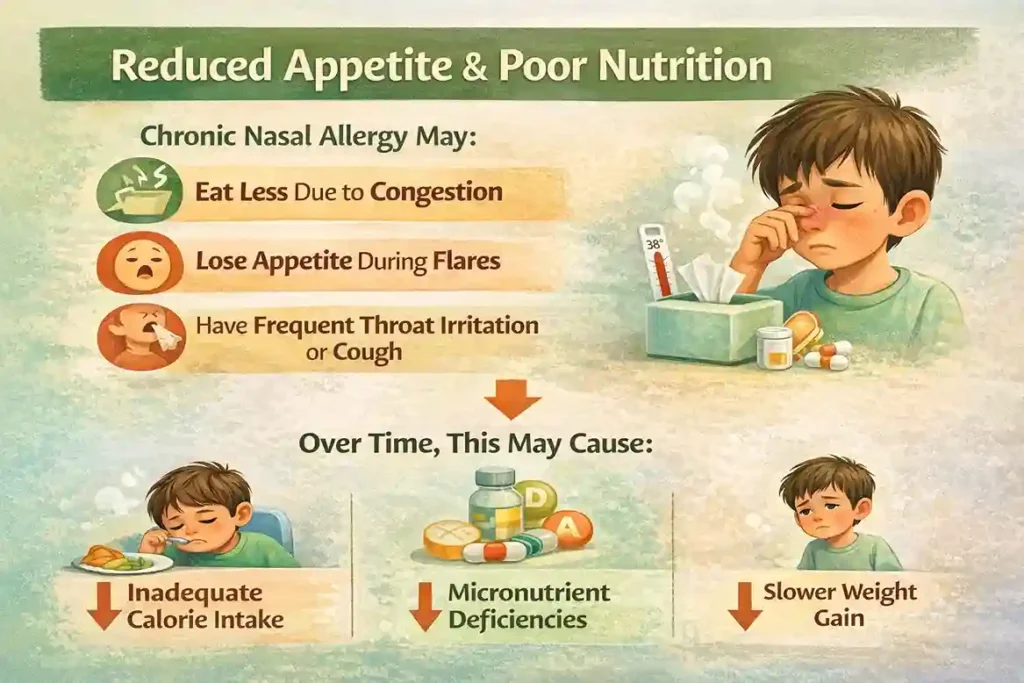
Children with chronic nasal allergy may:
- Eat less due to congestion
- Lose appetite during flares
- Have frequent throat irritation or cough
- Experience altered taste and smell
Over time, this may cause:
- Inadequate calorie intake
- Micronutrient deficiencies
- Slower weight gain
4️⃣ Chronic Inflammation & Energy Drain
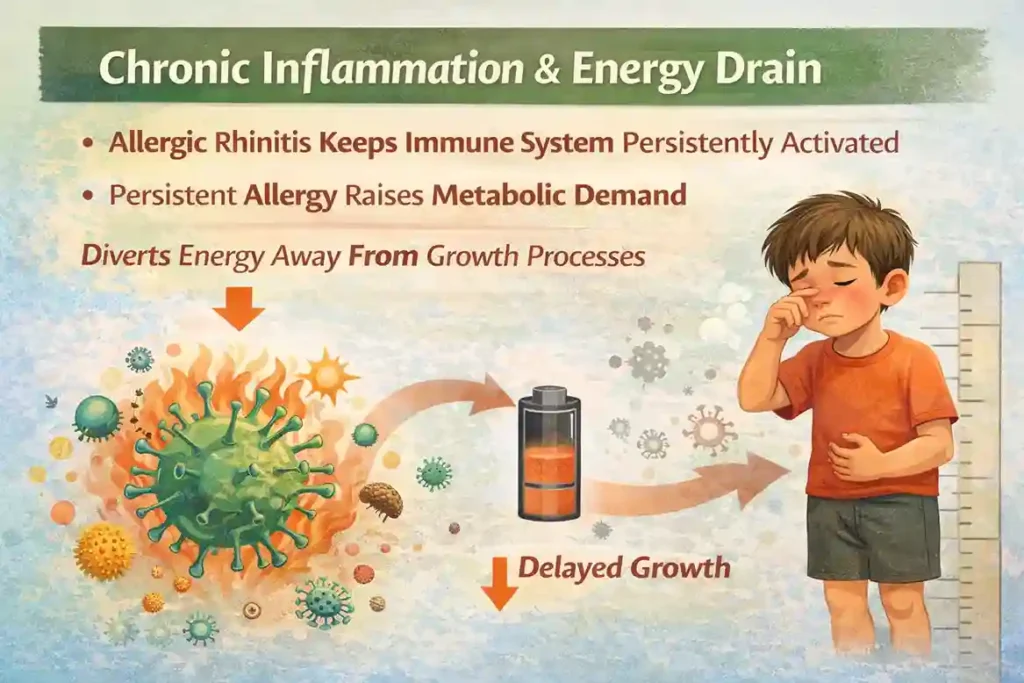
Persistent allergic inflammation:
- Increases metabolic demand
- Keeps immune system constantly activated
- Diverts energy away from growth processes
This effect is subtle, but long-standing inflammation can contribute to growth delay.
Is There Scientific Evidence?
Yes. Multiple studies show that children with moderate to severe allergic rhinitis may have poorer sleep quality and lower height-for-age scores, with improvement seen after adequate allergy control. Importantly, growth often improves once allergic rhinitis is well controlled (Dykewicz et al., 2020
Does Allergy Medication Affect Growth?
Nasal Steroid Sprays (Common Parent Fear)
✔ Modern intranasal corticosteroids:
- Act locally in the nose
- Have minimal systemic absorption
- Are considered safe for long-term use in children
Large studies show no significant impact on final adult height when modern intranasal corticosteroids are used appropriately in children. Untreated allergy is more harmful to growth than proper treatment (Allen et al., 2014).
Oral Antihistamines
✔ Second-generation antihistamines (cetirizine, loratadine, fexofenadine):
- Do NOT affect growth
- Are safe when used appropriately
Signs That Allergic Rhinitis May Be Affecting Growth
Parents should be alert if a child with allergies has:
✔ Poor height or weight gain
✔ Persistent mouth breathing
✔ Loud nightly snoring
✔ Daytime sleepiness
✔ Poor school performance
✔ Recurrent infections
✔ Reduced appetite
When Is Growth Impact More Likely?
Risk is higher when:
- Symptoms last year-round
- Nasal blockage is severe
- Sleep is consistently disturbed
- Adenoids are enlarged
- Allergy is untreated for years
- Asthma coexists
Can Treating Allergic Rhinitis Improve Growth?
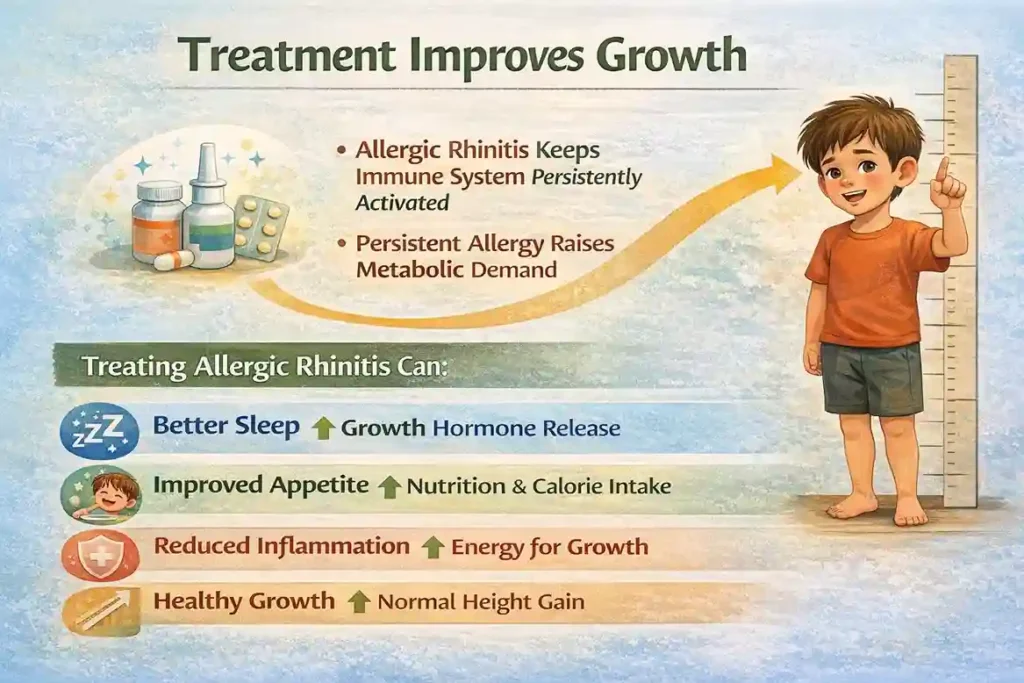
Yes — very often
Once allergies are controlled:
- Sleep quality improves
- Appetite returns
- Growth hormone secretion normalizes
- Energy levels increase
Many children show catch-up growth after proper treatment.
Best Growth-Protective Strategies for Allergic Children
✔ Control Nasal Inflammation
- Saline nasal sprays
- Intranasal corticosteroids (as prescribed)
✔ Improve Sleep Quality
- Treat nasal congestion
- Elevate head slightly at night
- Maintain allergy-friendly bedroom
✔ Optimize Nutrition
- Anti-inflammatory diet
- Adequate protein intake
- Correct vitamin deficiencies (e.g., vitamin D)
✔ Reduce Allergen Exposure
- HEPA air purifier
- Dust-mite-proof bedding
- Regular cleaning
✔ Consider Specialist Care
- Pediatrician
- Allergist
- ENT (if adenoids suspected)
When Should Parents See a Doctor?
Seek evaluation if:
- Growth chart shows slowing height or weight
- Snoring is loud and nightly
- Child has breathing pauses during sleep
- Symptoms persist despite basic treatment
- Appetite remains poor
Key Takeaways for Parents
✔ Allergic rhinitis can indirectly affect growth
✔ Sleep disruption is the biggest factor
✔ Proper treatment is safe and protective
✔ Growth often improves after allergy control
✔ Early management prevents long-term issues
Medical Review Disclaimer
This article is for informational and educational purposes only and does not constitute medical advice. The content is written by a qualified healthcare professional and medically reviewed for accuracy. However, it should not be used as a substitute for professional medical diagnosis, treatment, or advice. Always consult a licensed healthcare provider regarding any medical condition or health concern.
Frequently Asked Questions
1. Can allergic rhinitis affect a child’s growth?
Yes. It can indirectly affect growth by disturbing sleep, appetite, and overall energy levels when symptoms are long-lasting.
2. Does poor sleep from allergies impact height growth?
Yes. Growth hormone is released during deep sleep, and nasal congestion can reduce sleep quality.
3. Can mouth breathing from nasal allergy cause problems?
Yes. Chronic mouth breathing can disrupt sleep and oxygen levels, which may affect growth and learning.
4. Can allergic rhinitis reduce a child’s appetite?
Yes. Nasal blockage and throat irritation may reduce appetite and lead to slower weight gain over time.
5. Is allergy treatment safe for a child’s growth?
Yes. Properly used allergy treatments, including nasal sprays, are considered safe and may help support normal growth.
6. Can growth improve after treating allergic rhinitis?
Often, yes. Many children show improvement in sleep, appetite, and growth after effective allergy control.
References
Bousquet, J., et al. (2020). Next-generation allergic rhinitis and its impact on asthma (ARIA). Journal of Allergy and Clinical Immunology, 145(3), 895–909.
https://doi.org/10.1016/j.jaci.2019.12.903
Dykewicz, M. S., et al. (2020). Rhinitis 2020: A practice parameter update. Journal of Allergy and Clinical Immunology, 146(4), 721–767.
https://doi.org/10.1016/j.jaci.2020.07.007
Allen, D. B., Meltzer, E. O., Lemanske, R. F., et al. (2014). No growth suppression in children treated with intranasal corticosteroids. Pediatrics, 134(5), e1208–e1215.
https://doi.org/10.1542/peds.2014-1020