

Can Allergies Cause Shortness of Breath & Chest Tightness?
Written by: Dr.Muhammad Ihsan Ullah, PhD
Medically reviewed by: Dr. Jamal ud Din Khan, FCPS & Arifa Sarfaraz,DPT
Last updated on July 7,2026
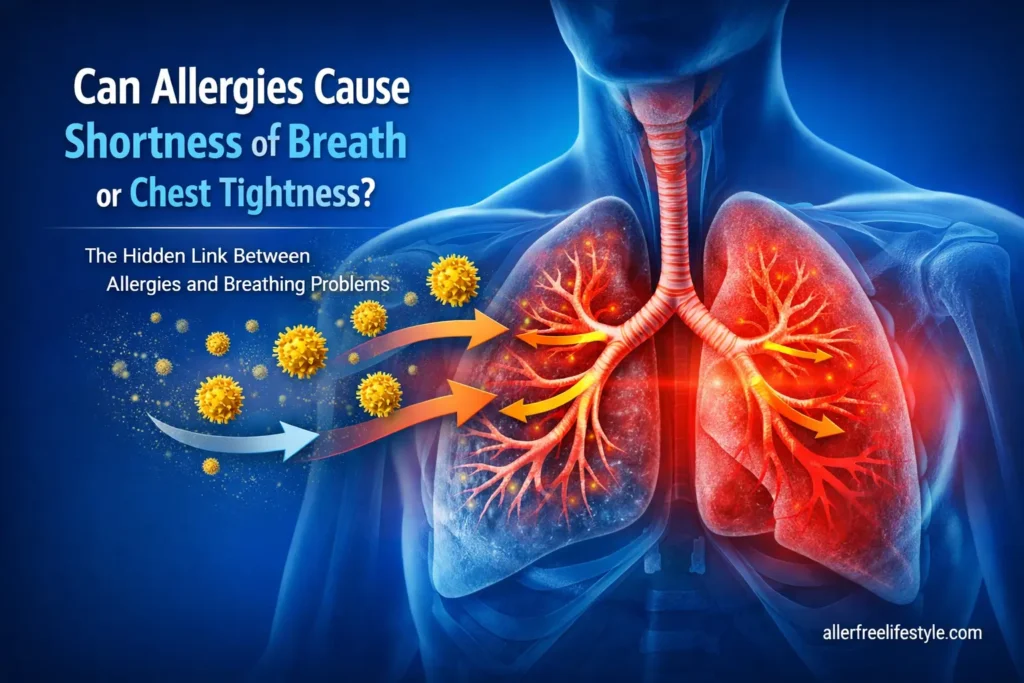
Yes — allergies can sometimes make it hard to breathe, especially when pollen, dust mites, mold, or pet dander irritate the airways. During allergy season, these triggers may cause airway inflammation, mucus buildup, wheezing, chest pressure, and allergy-related breathing problems. This is why many people search for answers like “can allergies cause shortness of breath,” “can allergies cause chest tightness,” “why does my chest feel tight during allergies,” and “can seasonal allergies cause breathing problems.” In this guide, you’ll learn why allergies affect breathing, when chest tightness may be linked to allergic asthma, and when shortness of breath needs urgent medical attention.
Can Allergies Make It Hard to Breathe?
Yes, allergies can make it hard to breathe when allergens irritate the lower airways, not just the nose and eyes. Pollen, dust mites, mold spores, and pet dander can trigger inflammation, mucus production, airway narrowing, coughing, wheezing, or a tight feeling in the chest.
This can feel like:
- you cannot take a deep breath
- your chest feels tight or heavy
- breathing feels harder during pollen season
- you feel short of breath around dust, pets, mold, or outdoor allergens
- symptoms worsen at night or after allergen exposure
Mild nasal allergies usually cause sneezing, runny nose, itchy eyes, and congestion. But when breathing symptoms appear, allergic asthma, airway sensitivity, infection, anxiety, or heart-related causes may also need to be considered. Shortness of breath should never be ignored, especially if it is new, severe, worsening, or linked with chest pain, wheezing, blue lips, fainting, or throat swelling.
🔬 Why Do Allergies Affect Your Breathing?
When your body encounters allergens like pollen, dust mites, mold, or pet dander, it activates an immune response driven by Immunoglobulin E (IgE).
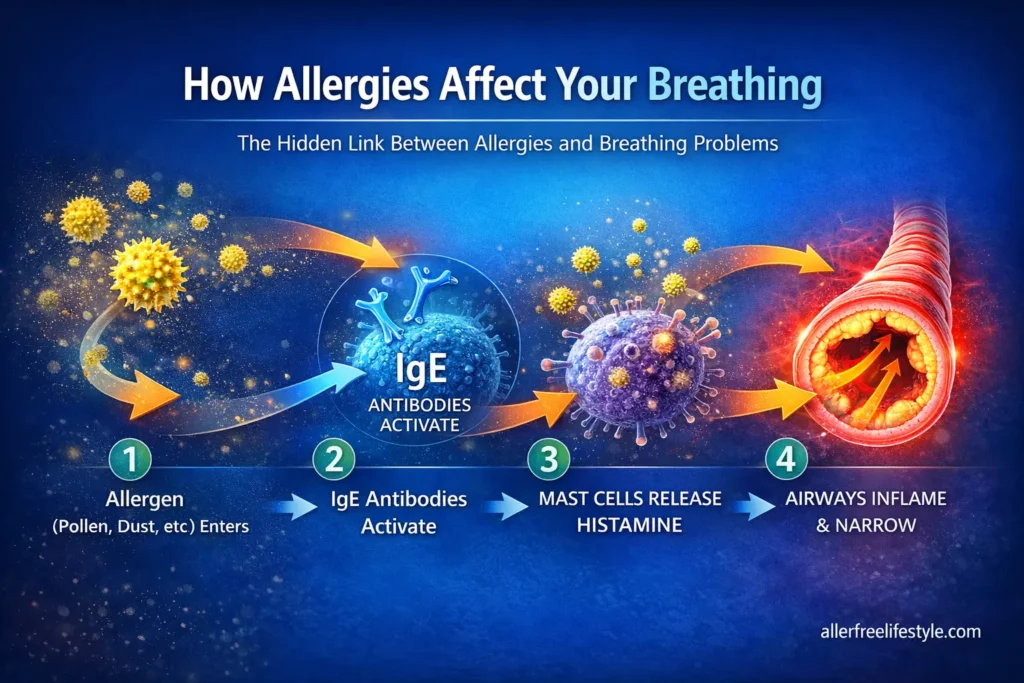
What happens step by step:
- IgE antibodies recognize allergens
- Mast cells release histamine and inflammatory mediators
- Airways become inflamed and narrowed
- Mucus production increases
👉 The result:
- Shortness of breath
- Chest tightness
- Wheezing
This mechanism is well-established in immunology and respiratory medicine, where allergen exposure leads to airway inflammation and bronchoconstriction (Pawankar, R., et al. 2023).a
🫁 What Happens Inside Your Lungs?
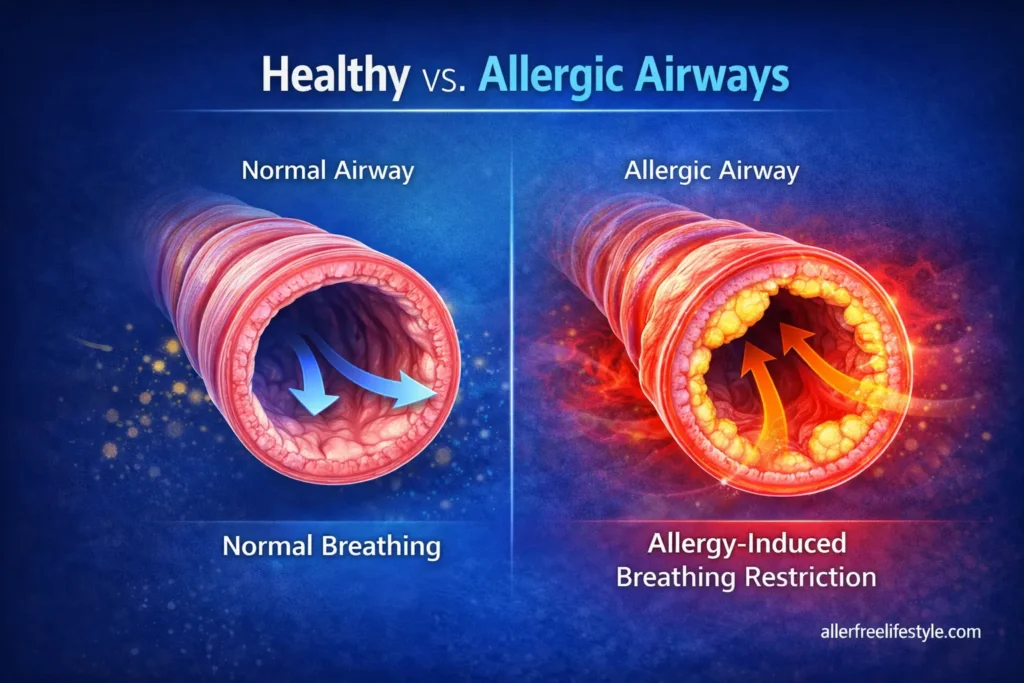
Your airways are flexible tubes that allow air to pass freely.
During an allergic reaction:
- The airway lining swells (inflammation)
- Smooth muscles tighten (bronchospasm)
- Mucus blocks airflow
👉 This creates the sensation:
“I can’t take a deep breath.”
This airway hyperresponsiveness is a hallmark of allergic respiratory conditions (Galli, S. J., et al. 2023).
⚠️ Is It Normal to Feel Chest Tightness During Allergies?
Yes — but it depends on severity.
Chest tightness occurs when:
- Airways constrict
- Breathing muscles work harder
- Airflow becomes restricted
This is especially common when allergies involve the lower respiratory tract, often overlapping with allergic asthma (Global Initiative for Asthma, 2024).
How to Relieve Chest Tightness From Allergies
To relieve chest tightness from allergies, the first step is to reduce allergen exposure and check whether the symptom may be related to asthma or another serious condition. Chest tightness is not the same as a simple runny nose. It can mean the lower airways are irritated, narrowed, or inflamed.
If chest tightness is mild and clearly linked with allergies, these steps may help:
- move away from pollen, dust, smoke, pets, mold, or strong odors
- sit upright instead of lying flat
- use your prescribed rescue inhaler if you have asthma and your doctor has given you one
- rinse your nose with saline if nasal drainage is worsening cough or throat irritation
- use a HEPA air purifier indoors if symptoms are triggered by dust, pollen, or pet dander
- avoid exercise outdoors during high pollen or poor air quality days
- follow your asthma or allergy action plan if you have one
Do not rely only on oral antihistamines if you have chest tightness, wheezing, or shortness of breath. Antihistamines may help sneezing, itching, and runny nose, but they do not directly open narrowed lower airways the way asthma medicines can.
Get urgent medical help if chest tightness is severe, sudden, worsening, associated with chest pain, or comes with trouble speaking, blue lips, fainting, throat swelling, or severe wheezing.
What Helps Shortness of Breath Due to Allergies?
What helps depends on the cause. If allergies are irritating the nose only, saline spray, allergen control, antihistamines, or nasal sprays may improve symptoms. But if allergies are affecting the lungs, the treatment plan may need asthma-focused care.
Helpful options may include:
- avoiding the trigger that started the breathing problem
- using a prescribed inhaler if you have asthma
- treating nasal allergies to reduce postnasal drip and cough
- keeping windows closed during high pollen days
- showering and changing clothes after outdoor pollen exposure
- controlling dust mites with hot-washed bedding and allergen-proof covers
- using a HEPA air purifier in the bedroom
- checking for mold, pet dander, smoke, or strong fragrance exposure
- seeing a clinician if symptoms keep returning
If shortness of breath happens repeatedly during allergy season, after dust exposure, around pets, or at night, you may need evaluation for allergic asthma. A doctor may recommend lung function testing, allergy testing, an inhaler plan, or anti-inflammatory treatment depending on your symptoms.
Why Do Allergies Cause Shortness of Breath?
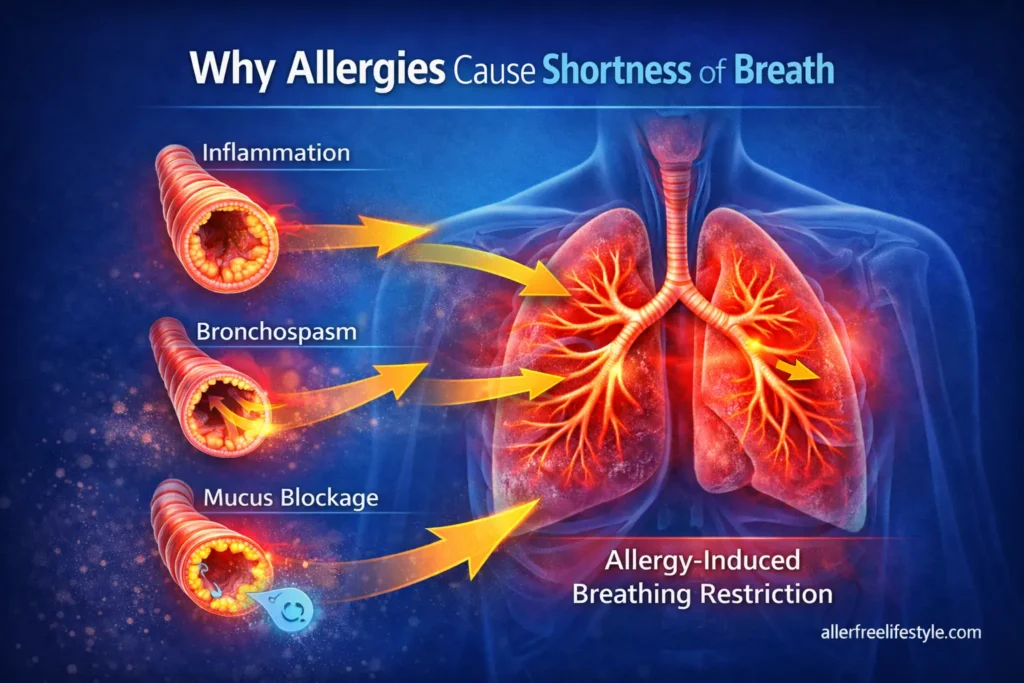
Several mechanisms contribute:
🔹 Airway Inflammation
Histamine causes swelling → reduced airway diameter
🔹 Bronchoconstriction
Muscles tighten → airflow restriction
🔹 Mucus Overproduction
Blocks airflow pathways
🔹 Neural Response
Triggers sensation of breathlessness
Together, these create the feeling of difficulty breathing or chest pressure.
🌬️ Can Seasonal Allergies Cause Breathing Problems?
Yes.
Seasonal allergens such as pollen can penetrate deep into the lungs and trigger inflammation.
Common triggers:
- Pollen
- Dust mites
- Mold spores
- Pet dander
These allergens are known to provoke airway inflammation and breathing difficulty, especially in sensitive individuals (Bousquet, J., et al. 2023).
Can Pollen Cause Shortness of Breath and Chest Tightness?
Yes, pollen can cause shortness of breath and chest tightness in sensitive people, especially those with allergic asthma or reactive airways. Pollen usually causes sneezing, itchy eyes, runny nose, and congestion, but in some people it can also irritate the lower airways.
Pollen-related breathing symptoms may include:
- chest tightness during pollen season
- coughing after outdoor exposure
- wheezing
- shortness of breath while walking or exercising outside
- symptoms that worsen on windy days
- breathing problems after mowing grass or being near trees, weeds, or flowers
If pollen makes your breathing difficult, do not treat it like a simple seasonal allergy. Track pollen exposure, stay indoors during high pollen periods when possible, keep windows closed, shower after outdoor exposure, and ask a clinician whether asthma or airway inflammation is part of the problem.
Can Dust Allergy Cause Shortness of Breath?
Yes, dust allergy can cause shortness of breath in some people, especially when dust mites or indoor allergens trigger airway inflammation. Dust mite allergy is often worse in bedrooms because dust mites collect in mattresses, pillows, blankets, carpets, curtains, and upholstered furniture.
Dust-related breathing symptoms may include:
- chest tightness after cleaning
- coughing in bed or after waking
- wheezing in dusty rooms
- shortness of breath while vacuuming
- worse symptoms in old bedding, carpets, or humid rooms
To reduce dust-related breathing symptoms, wash bedding weekly, use allergen-proof mattress and pillow covers, reduce bedroom clutter, avoid dry dusting, use a HEPA vacuum if possible, and keep indoor humidity under control. If the dust exposure repeatedly causes wheezing or shortness of breath, ask a doctor about allergic asthma testing.
⚖️ Allergy vs Asthma vs Anxiety (Critical Distinction)
Understanding the difference is essential.
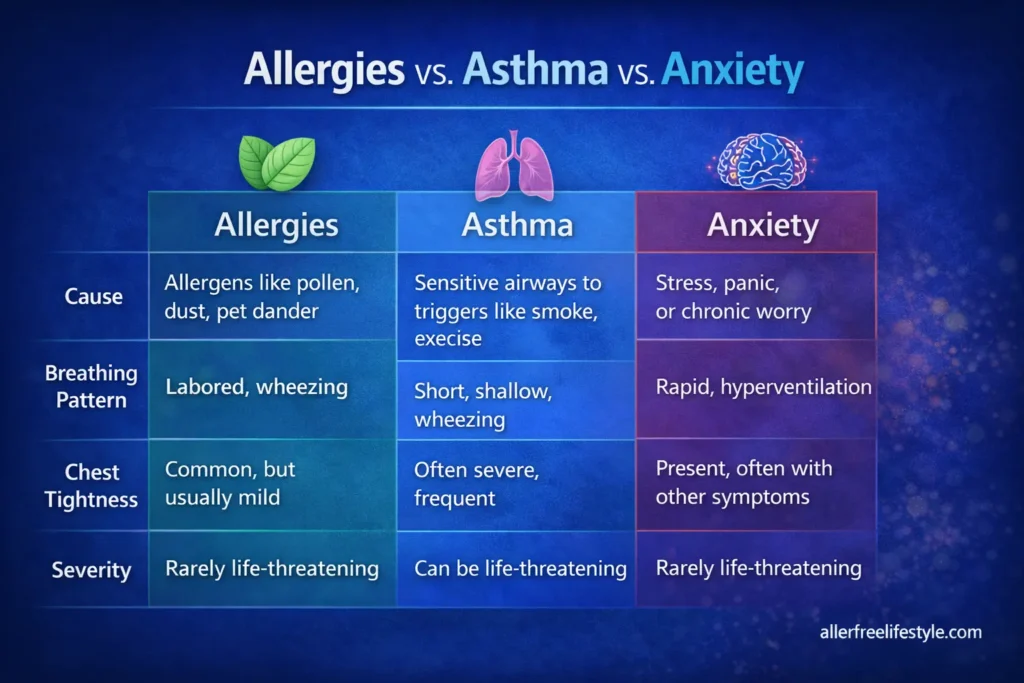
Allergy vs Asthma Shortness of Breath
Feature | Allergies | Asthma |
Cause | Immune reaction | Chronic airway disease |
Severity | Mild–moderate | Moderate–severe |
Chest tightness | Occasional | Common |
Wheezing | Less common | Frequent |
👉 Allergies can trigger allergic asthma, a condition where airway inflammation becomes chronic.
Anxiety vs Allergies Chest Tightness
Anxiety can mimic breathing difficulty.
👉 Key difference:
- Allergy → physical airway obstruction
- Anxiety → altered breathing pattern
However, both can coexist and worsen symptoms.
Can Allergies Mimic Heart Problems?
Yes, chest tightness from allergies can feel alarming.
👉 But:
- Allergy symptoms often include sneezing, congestion
- Heart-related symptoms worsen with exertion
Proper evaluation is essential when symptoms are unclear.
Why Do I Feel Short of Breath During Allergy Season?
During high pollen exposure:
- Airways become hypersensitive
- Inflammation increases
- Breathing becomes more difficult
In severe cases, allergens can trigger acute respiratory episodes, especially in individuals with underlying asthma (Global Initiative for Asthma, 2024).
Can Allergies Cause Wheezing and Chest Tightness?
Yes.
These symptoms are interconnected:
- Wheezing → narrowed airways
- Chest tightness → muscle constriction
- Shortness of breath → reduced airflow
These are classic signs of airway inflammation and bronchial hyperresponsiveness (Pawankar, R., et al. 2023).
Allergy Chest Tightness at Night: Why It Feels Worse
Allergy-related chest tightness may feel worse at night because indoor allergens build up in the sleeping area. Dust mites, pet dander, mold, and pollen carried into the bedroom can continue irritating the airways while you sleep.
Night symptoms may also worsen because lying flat can increase postnasal drip, mucus movement, coughing, and the sensation of chest pressure. If you already have asthma, nighttime chest tightness or waking up short of breath can be a sign that your asthma or airway inflammation is not well controlled.
Common nighttime triggers include:
- dust mites in pillows and mattresses
- pet dander on bedding
- mold in damp rooms
- pollen on hair, clothes, or open windows
- cold air
- strong fragrances or cleaning products
- poor indoor air quality
If chest tightness wakes you from sleep, keeps returning, or comes with wheezing, coughing, or breathlessness, do not ignore it. Nighttime breathing symptoms should be discussed with a clinician because they may need asthma-focused treatment.
When to Worry About Shortness of Breath from Allergies
Seek Emergency Care Immediately If:
- Severe breathing difficulty
- Blue lips or face
- Chest pain worsening
- Inability to speak full sentences
These may indicate anaphylaxis or severe asthma attack
Consult a Doctor If:
- Symptoms persist for several days
- Breathing worsens at night
- Frequent episodes occur
Do Antihistamines Help with Shortness of Breath?
Not effectively.
👉 Why?
- Antihistamines target nasal symptoms
- Breathing issues involve airway muscles and inflammation
Better options include:
- Bronchodilators (inhalers)
- Corticosteroids
These directly improve airway function (Global Initiative for Asthma, 2024).
How to Relieve Allergy-Related Breathing Problems
🟢 Immediate Relief
- Use prescribed inhaler
- Avoid allergen exposure
- Sit upright
- Practice controlled breathing
🔵 Long-Term Management
- Allergen avoidance
- Air purification
- Immunotherapy
- Asthma management plans
🧪 Advanced Treatment Options
- Biologic therapies targeting IgE
- Leukotriene receptor antagonists
- Inhaled corticosteroids
These treatments address underlying inflammatory pathways.
The Underlying Science
Allergic respiratory symptoms are driven by:
- IgE antibodies
- Mast cell activation
- Eosinophilic inflammation
- Cytokines (IL-4, IL-5, IL-13)
These processes lead to:
👉 Airway narrowing
👉 Increased sensitivity
👉 Chronic breathing symptoms
Modern research confirms that these immune pathways are central to allergic airway disease (Galli, S. J., et al. 2023).
Key Takeaways
✔ Allergies can cause shortness of breath
✔ Chest tightness results from airway constriction
✔ Often linked to allergic asthma
✔ Severe symptoms require urgent medical attention
✔ Proper diagnosis is essential
Medical Disclaimer
The information provided on this website is for educational and informational purposes only and is not intended as medical advice, diagnosis, or treatment. While content is written and reviewed by qualified professionals, it should not replace consultation with a licensed physician or healthcare provider. Always seek medical advice for any symptoms, including shortness of breath or chest tightness, as these may indicate serious conditions requiring immediate attention. Never disregard professional medical advice or delay seeking care based on information from this website.
Frequently Asked Questions (FAQs)
Can allergies make it hard to breathe?
Yes, allergies can make it hard to breathe if allergens irritate the lower airways and trigger inflammation, mucus production, or airway narrowing. This is more likely in people with allergic asthma, reactive airways, or strong sensitivity to pollen, dust mites, mold, or pet dander.
How do you relieve chest tightness from allergies?
Move away from the trigger, sit upright, avoid smoke or strong odors, and use your prescribed inhaler if you have asthma. If chest tightness is severe, sudden, worsening, or linked with chest pain, blue lips, fainting, throat swelling, or trouble speaking, seek urgent medical care.
Can pollen cause shortness of breath?
Yes, pollen can cause shortness of breath in sensitive people, especially those with allergic asthma. Pollen usually affects the nose and eyes, but it can also trigger coughing, wheezing, chest tightness, and breathing difficulty in the lower airways.
Can dust allergy cause shortness of breath?
Yes, dust allergy can cause shortness of breath when dust mites or indoor allergens irritate the airways. Symptoms may worsen while cleaning, sleeping, or spending time in dusty rooms. Repeated wheezing or breathlessness around dust should be checked by a clinician.
What helps shortness of breath due to allergies?
Avoid the trigger, treat nasal allergy symptoms, improve indoor air quality, and follow your asthma or allergy action plan if you have one. If breathing symptoms keep returning, you may need evaluation for allergic asthma or another lung condition.
Do antihistamines help allergy-related shortness of breath?
Antihistamines may help sneezing, itching, runny nose, and watery eyes, but they may not be enough for shortness of breath, wheezing, or chest tightness. Breathing symptoms may need asthma-focused treatment such as inhalers or anti-inflammatory medicines prescribed by a clinician.
Why does my chest feel tight during allergy season?
Your chest may feel tight during allergy season because pollen or other allergens can trigger airway inflammation, mucus buildup, bronchospasm, or allergic asthma symptoms. If chest tightness is new, severe, or recurrent, it should be medically evaluated.
Can allergies cause shortness of breath at night?
Yes, allergies can contribute to shortness of breath at night, especially if bedroom allergens such as dust mites, pet dander, mold, or pollen irritate the airways. The nighttime chest tightness, wheezing, or waking up breathless may also suggest asthma that needs better control.
Can allergies feel like a heart problem?
Sometimes chest tightness from allergies or asthma can feel alarming, but heart-related chest symptoms can also be serious. If chest pressure occurs with pain spreading to the arm, jaw, or back, sweating, fainting, severe weakness, or breathlessness with exertion, seek emergency care.
When should I worry about shortness of breath from allergies?
Worry if shortness of breath is sudden, severe, worsening, recurrent, happens at night, or comes with wheezing, chest pain, blue lips, fainting, throat swelling, or trouble speaking. These symptoms need urgent medical attention.
References
- Pawankar, R., Canonica, G. W., Holgate, S. T., & Lockey, R. F. (2023). WAO White Book on Allergy: Update 2023. World Allergy Organization.
DOI: https://doi.org/10.1016/j.waojou.2023.100794 - Galli, S. J., Tsai, M., & Piliponsky, A. M. (2023). The development of allergic inflammation. Nature Reviews Immunology, 23(2), 123–138.
DOI: https://doi.org/10.1038/s41577-022-00788-1 - Global Initiative for Asthma. (2024). Global Strategy for Asthma Management and Prevention.
DOI: https://doi.org/10.1183/13993003.00045-2024 - Bousquet, J., Anto, J. M., Bachert, C., et al. (2023). Allergic rhinitis and its impact on asthma. Allergy, 78(4), 1023–1045.
DOI: https://doi.org/10.1111/all.15620