

Can Stress Make Allergies Worse? How Stress Triggers Allergy Symptoms
Written by: Dr.Muhammad Ihsan Ullah, PhD
Medically reviewed by: Dr.Hafiz Muhammad Kashif, MD
Last updated on May 30,2026
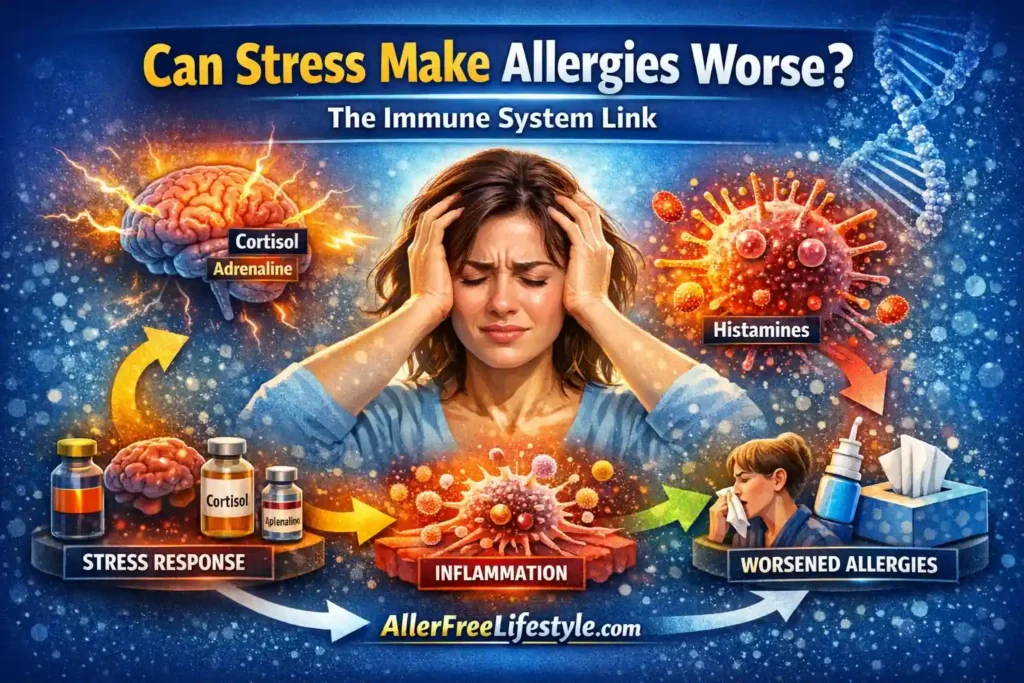
Yes, stress does not usually cause allergies on its own, but it can make allergy symptoms feel stronger, last longer, and flare up more often. During emotional stress, work pressure, poor sleep, exams, or anxiety, your immune system can become more reactive to allergens such as pollen, dust, mold, or pet dander. This is why many people notice that allergies get worse when stressed, or search for answers about stress and allergy symptoms, anxiety and allergies, and how stress affects the immune system, histamine release, inflammation, sneezing, congestion, itching, and other allergy flare-ups.
It doesn’t usually cause allergies, but it intensifies how your immune system reacts, leading to stronger symptoms like sneezing, congestion, itching, and inflammation (Dhabhar, F. S., et al. 2014).
Why You May Notice Your Allergies Get Worse During Stress
Have you ever felt like your allergies suddenly flare up during:
- Work pressure
- Exams
- Emotional stress
- Poor sleep
Even when nothing else has changed?
You’re not imagining it.
There is a real biological reason behind this.
Your brain, nervous system, and immune system are constantly communicating.
When stress enters the picture, that communication changes — and your body becomes more reactive.
The Immune System Link: What’s Actually Happening
Allergies are not just random reactions.
They are a misfiring of the immune system
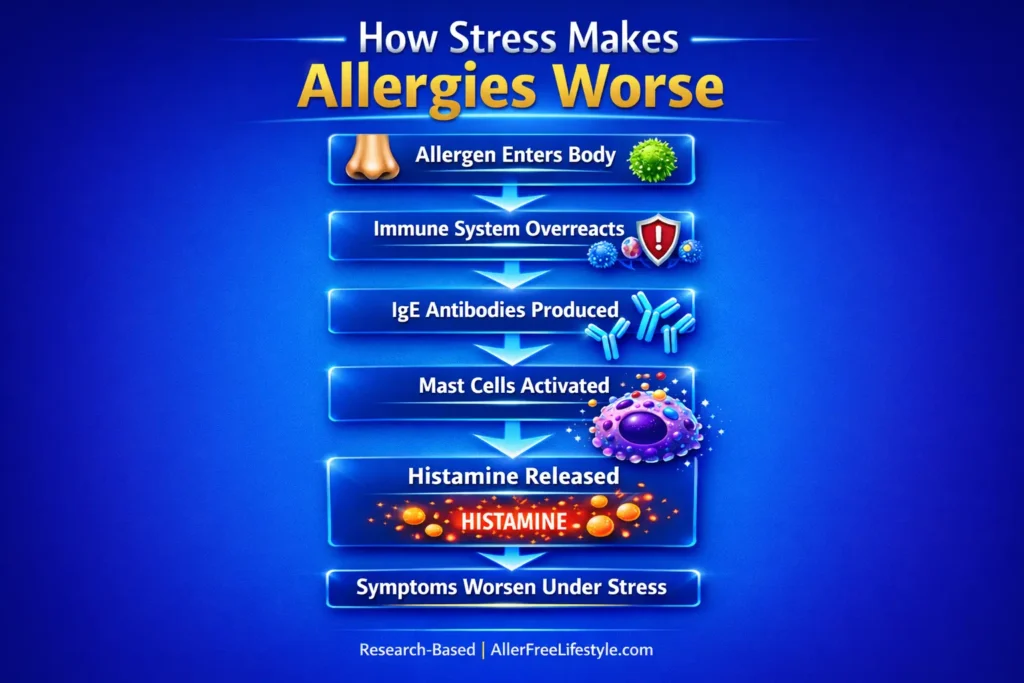
Here’s how it works in simple terms:
- Your body encounters something harmless like pollen
- Your immune system treats it as a threat
- It produces IgE antibodies
- These activate mast cells
- Mast cells release histamine
- Symptoms appear
That’s the basic allergic response.
Now here’s the important part:
👉 Stress doesn’t start this process
👉 But it makes every step stronger
What Stress Does Inside Your Body
When you feel stressed, your body switches into fight-or-flight mode.
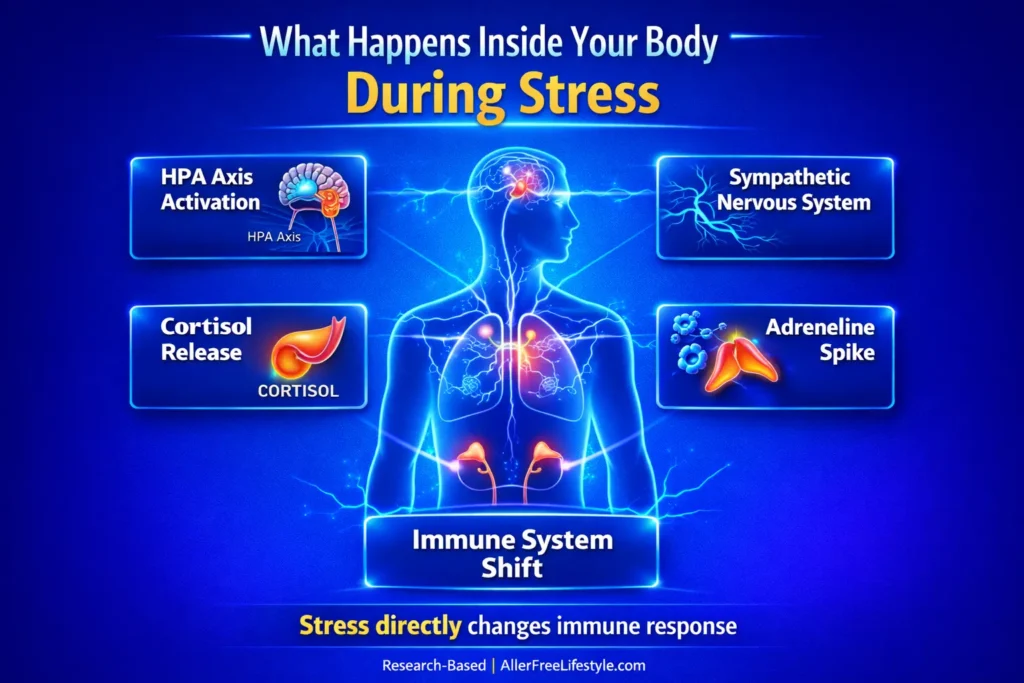
Two major systems activate:
- The HPA axis
- The sympathetic nervous system
These systems release:
- Cortisol
- Adrenaline
- Norepinephrine
These are not just stress hormones.
They directly influence how your immune system behaves.
And this is where things start to shift.
How Stress Makes Allergies Worse
Stress affects your immune system in multiple ways at the same time.
It can:
- Increase inflammation
- Make immune cells more reactive
- Lower your tolerance to allergens
- Prolong the allergic response
So instead of a mild reaction, your body responds more aggressively.
That’s why symptoms feel worse, last longer, and become harder to control (Segerstrom, S. C., et al. 2004).
Histamine, Mast Cells, and Why Symptoms Intensify
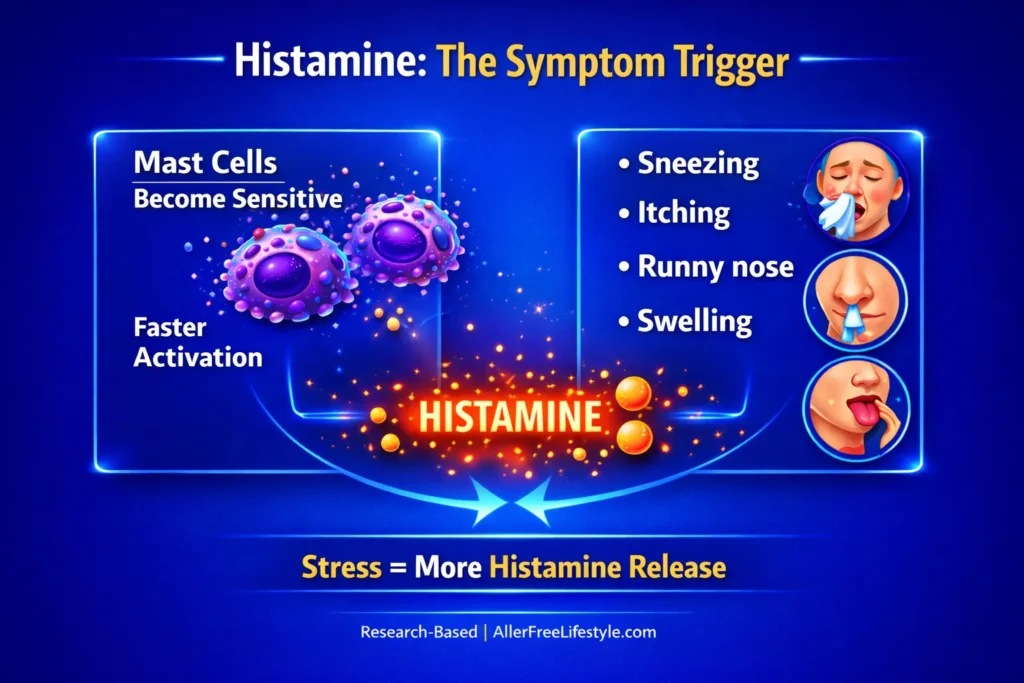
Histamine is the chemical responsible for most allergy symptoms.
It causes:
- Sneezing
- Itching
- Runny nose
- Swelling
Histamine is stored in mast cells.
Under stress:
- Mast cells become more sensitive
- They release more histamine
- They react faster than usual
So even a small trigger can lead to a strong reaction.
This is one of the main reasons allergies feel worse when you’re stressed (Theoharides, T. C., et al. 2012).
Cortisol and Chronic Stress: The Hidden Problem
In short bursts, stress isn’t always harmful.
But chronic stress is a different story.
When stress continues for days or weeks:
- Cortisol stays elevated
- The immune system becomes unbalanced
- Inflammation increases
- The body stops regulating itself properly
Over time, the body may even become less responsive to cortisol.
This is known as glucocorticoid resistance (Silverman, M. N., et al. 2010).
👉 The result:
More inflammation and worse allergy symptoms
Acute Stress vs Chronic Stress
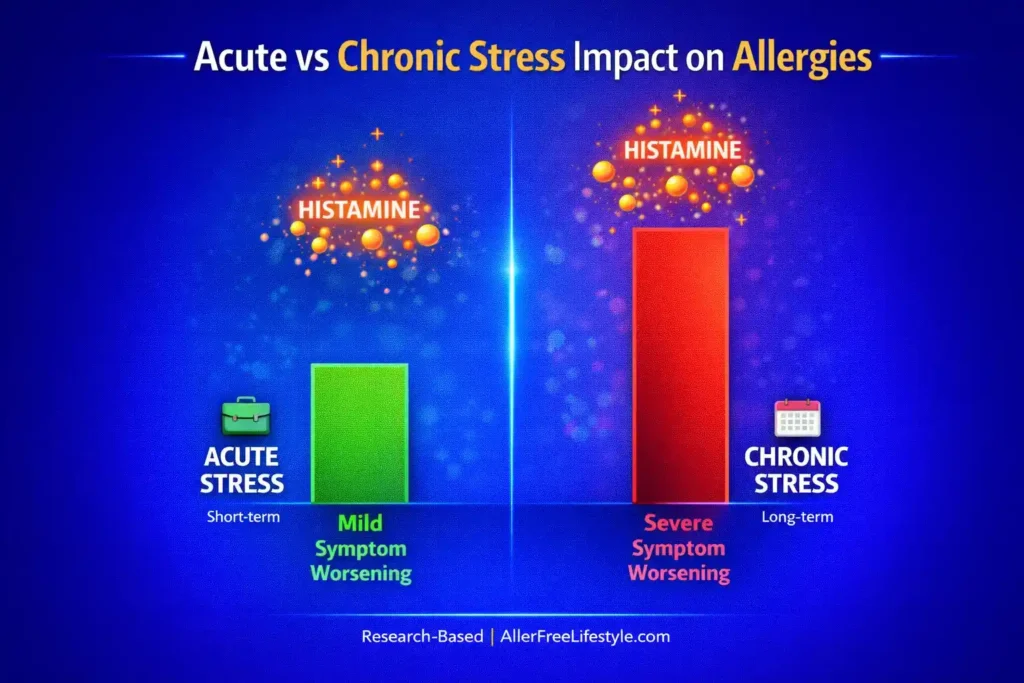
Not all stress affects allergies in the same way.
Acute stress
- Short-term
- Temporary effect
- Minimal long-term impact
Chronic stress
- Long-lasting
- Disrupts immune balance
- Drives inflammation
- Worsens allergy severity
👉 Chronic stress is the real problem
The Stress–Allergy Cycle
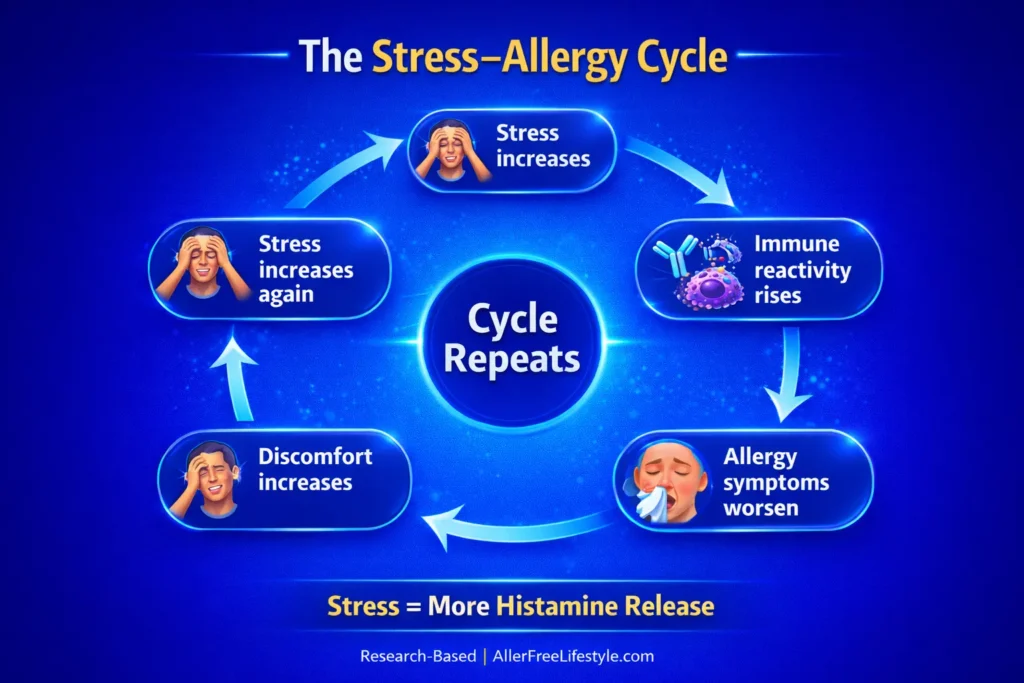
This is something many people experience but don’t realize.
It works like this:
- Stress increases immune reactivity
- Allergy symptoms worsen
- Symptoms cause discomfort
- Discomfort increases stress
- The cycle repeats
Breaking this cycle is key to better control.
What New Research Is Showing
Recent research is helping us understand this connection more deeply.
1.Inflammation increases
Stress raises inflammatory markers like:
- IL-6
- TNF-alpha
These chemicals make allergic reactions stronger (Segerstrom, S. C., et al. 2004).
2.Mast cells become hypersensitive
Stress lowers the threshold needed to activate mast cells.
This means:
👉 Even minor triggers can cause strong symptoms (Theoharides, T. C., et al. 2012).
3.Brain–immune communication changes
Stress alters how the brain and immune system communicate.
This is called neuroimmune interaction.
It affects how your body responds to allergens (Dhabhar, F. S., et al. 2014).
4.Immune regulation weakens
With ongoing stress:
- The immune system becomes less controlled
- Inflammation stays active longer
- Symptoms become persistent
5.IgE responses may be influenced
Some evidence suggests that stress may affect IgE-related pathways, linking emotional stress with allergy severity (Marshall, G. D., et al. 1998).
Why Symptoms Feel Stronger When You’re Stressed
There are two reasons:
Physical changes
- More histamine
- More inflammation
Sensory perception
- Increased sensitivity
- Heightened awareness of discomfort
So symptoms are not just worse — they also feel worse
Can Stress Cause Allergies on Its Own?
Generally, no.
Stress alone does not create allergies.
But it can:
- Lower your tolerance
- Make small exposures feel big
- Trigger flare-ups more easily
What This Means for You
Stress management is important, but it is not a cure.
It should be part of a broader approach that includes:
- Proper medical treatment
- Avoiding triggers
- Supporting your immune system
Practical Ways to Reduce Stress and Support Your Immune System
Mindfulness and relaxation
- Helps lower cortisol
- Improves immune balance
Regular physical activity
- Reduces inflammation
- Supports overall health
Better sleep
- Regulates hormones
- Strengthens immune function
Cognitive behavioral strategies
- Reduces emotional stress
- Improves long-term control
Key Takeaways
- Stress does not cause allergies, but it makes them worse
- The immune system becomes more reactive under stress
- Histamine release increases
- Inflammation becomes stronger and longer-lasting
- Chronic stress has the biggest impact
Conclusion
The link between stress and allergies is real and scientifically supported.
Stress changes how your immune system behaves.
It increases inflammation, activates mast cells, and amplifies allergic responses.
This is why your symptoms can feel stronger, last longer, and become harder to manage during stressful periods.
Understanding this connection allows you to take a more complete approach to managing allergies — one that includes both medical treatment and stress control.
Medical Disclaimer
This content is for informational and educational purposes only and does not constitute medical advice, diagnosis, or treatment. Always consult a qualified healthcare professional or licensed physician regarding any medical condition, symptoms, or treatment decisions. Do not ignore professional medical advice or delay seeking care based on information provided here.
Frequently Asked Questions (FAQs)
1.Can stress really make allergies worse?
Yes. Stress can make allergy symptoms worse by increasing inflammation and making the immune system more reactive.
2.Does stress cause allergies?
No. Stress does not usually cause allergies, but it can intensify existing allergic reactions and make symptoms feel stronger.
3.Why do allergies flare up during stressful times?
Stress affects hormones, immune cells, and histamine release. This can make your body respond more strongly to allergens.
4.Can anxiety make allergy symptoms feel worse?
Yes. Anxiety can increase both physical inflammation and your awareness of symptoms, making allergies feel more severe.
5.How can I reduce stress-related allergy flare-ups?
Managing stress through better sleep, exercise, relaxation, and proper treatment can help reduce flare-ups and improve symptom control.
References
- Dhabhar, F. S. (2014). Effects of stress on immune function. Brain, Behavior, and Immunity, 40, 94–103.
https://doi.org/10.1016/j.bbi.2014.03.002 - Segerstrom, S. C., & Miller, G. E. (2004). Psychological stress and the human immune system: A meta-analytic study. Psychological Bulletin, 130(4), 601–630.
https://doi.org/10.1037/0033-2909.130.4.601 - Theoharides, T. C., et al. (2012). Mast cells and inflammation. Biochimica et Biophysica Acta, 1822(1), 21–33.
https://doi.org/10.1016/j.bbadis.2010.12.014 - Silverman, M. N., et al. (2010). Stress, glucocorticoids, and immune regulation. Journal of Neuroimmunology, 226(1–2), 1–8.
https://doi.org/10.1016/j.jneuroim.2010.04.008 - Marshall, G. D., et al. (1998). Stress, immune function, and allergic disease. Journal of Allergy and Clinical Immunology, 101(3), 335–343.
https://doi.org/10.1016/S0091-6749(98)70245-9