

How to Stop Allergic Rhinitis Immediately (Fast Relief Guide 2026)
Written by: Dr.Muhammad Ihsan Ullah, PhD
Medically reviewed by: Dr. Jamal ud Din Khan, FCPS
Last updated on May 30,2026
When allergy symptoms hit suddenly
There are days when allergy symptoms start all at once. You may be completely fine, and then within minutes you are dealing with nonstop sneezing, a blocked nose, clear watery discharge, itching in the nose, and irritated eyes. In that moment, most people are not looking for a textbook explanation. They want to know how to stop allergic rhinitis immediately, what works fast for hay fever, and how to get quick relief from allergy symptoms at home.
The good news is that there are several practical steps that can calm symptoms quickly. The fastest relief usually comes from combining the right nasal treatment, a saline rinse, a suitable antihistamine, and immediate reduction of allergen exposure. When used properly, this approach can help with how to stop sneezing immediately, how to unblock the nose instantly, and how to reduce allergy symptoms quickly (Bousquet, J., et al. 2020).
The fastest way to stop allergic rhinitis symptoms
If symptoms are already active, the most helpful immediate plan is usually this:
- Use a fast-acting nasal spray.
- Rinse the nose with saline.
- Take an antihistamine if needed.
- Remove allergens from your body and surroundings.
- Rest in a cleaner, calmer indoor environment.
This is often the most effective answer for people who want fast relief for allergic rhinitis, instant relief for hay fever, or the fastest way to stop allergies right now.
Use a nasal spray first if the nose is blocked
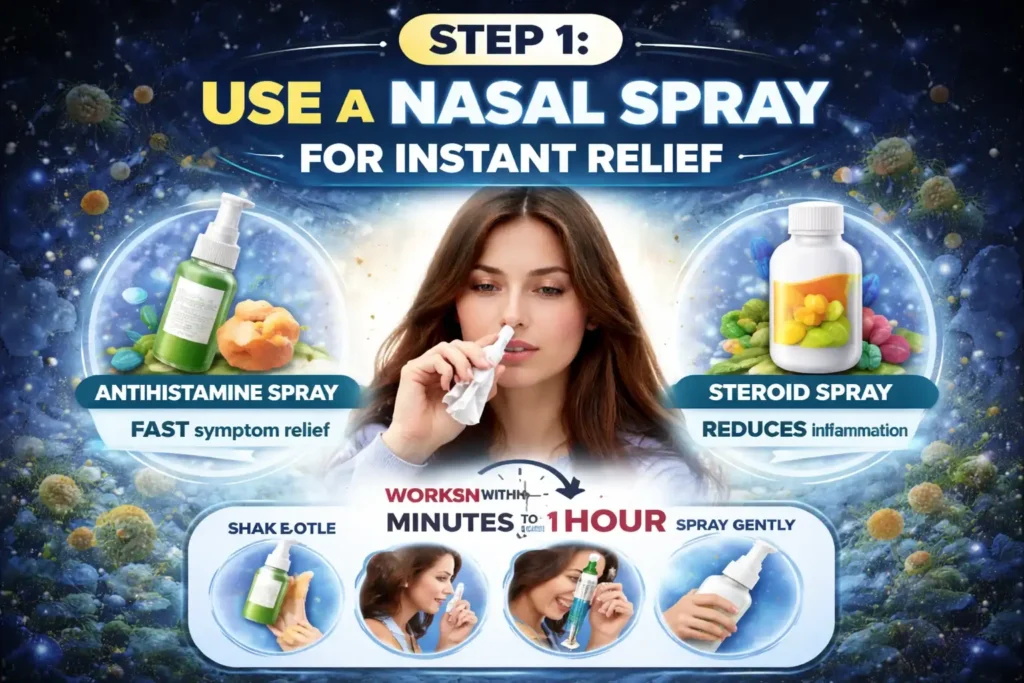
For many people, the quickest improvement comes from using a nasal spray. This is especially true when the main problem is a blocked nose, pressure inside the nose, or difficulty breathing through the nostrils. If you are wondering how to clear a blocked nose instantly or what is the best nasal spray for allergies fast relief, nasal treatment is often the most useful first step.
Two common types are used:
- intranasal antihistamine sprays such as azelastine
- intranasal steroid sprays such as fluticasone or mometasone
A nasal antihistamine may help more quickly with sneezing, itching, and runny nose. A nasal steroid is often better for swelling and congestion, especially if symptoms are repeated or more persistent. Many patients asking how to get rid of nasal congestion fast from allergies benefit from this type of treatment because it acts directly where the inflammation is happening.
These sprays help by reducing swelling, calming irritation, and improving airflow through the nose. When used correctly, some people notice relief within minutes, while others begin to feel improvement over the next hour. This makes them one of the strongest options for how to unblock the nose immediately from allergies and fastest treatment for allergy congestion (Sousa-Pinto, B., et al. 2024).
How to use a nasal spray properly
A lot of people do not get the full benefit because the spray is used incorrectly. A better technique is to:
- shake the bottle first
- keep the head slightly forward
- aim the spray outward, away from the center of the nose
- avoid sniffing too hard afterward
This small correction often improves results and reduces irritation.
Common side effects
Most nasal sprays are well tolerated, but possible side effects include:
- mild dryness
- slight burning
- bitter taste with some antihistamine sprays
- occasional nosebleeds
If symptoms are frequent, this is often the best answer to what works better for allergies, nasal spray or antihistamine, because the two can help in different ways depending on whether the main problem is blockage or sneezing.
Rinse the nose to wash allergens out quickly
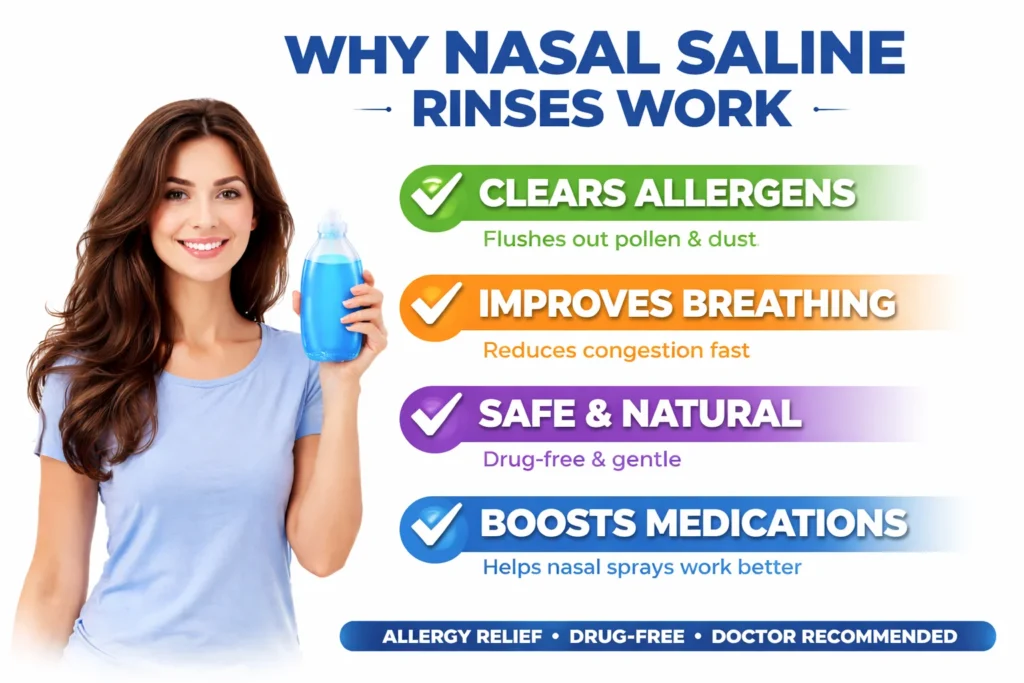
Saline nasal rinsing is one of the simplest and most useful things a person can do at home. It can help remove pollen, dust, pet dander, mucus, and irritating particles from the nasal passages. For someone asking how to clean the nose from inside, how to stop a runny nose immediately, or home remedy for blocked nose fast, a saline rinse is often a very practical option.
It works by gently washing away the material that keeps triggering the allergy response. Many people feel lighter, clearer breathing soon after rinsing. It can also improve the effect of a nasal spray if used before medication.
This is particularly useful for:
- how to remove pollen from the nose quickly
- natural way to unblock the nose instantly
- saline rinse for allergies and sinus relief
- how to reduce allergy symptoms at home naturally
Saline irrigation has good support as part of allergic rhinitis care and can improve comfort and nasal function (Klimek, L., et al. 2024).
Practical tips for using saline safely
- use sterile, distilled, or previously boiled water
- use a clean rinse bottle or neti pot
- rinse gently, not forcefully
- clean the device after each use
Many people find it especially helpful:
- after coming home from outdoors
- after cleaning dusty rooms
- before going to bed
- before using a medicated nasal spray
Take an antihistamine if sneezing and itching are the main problem
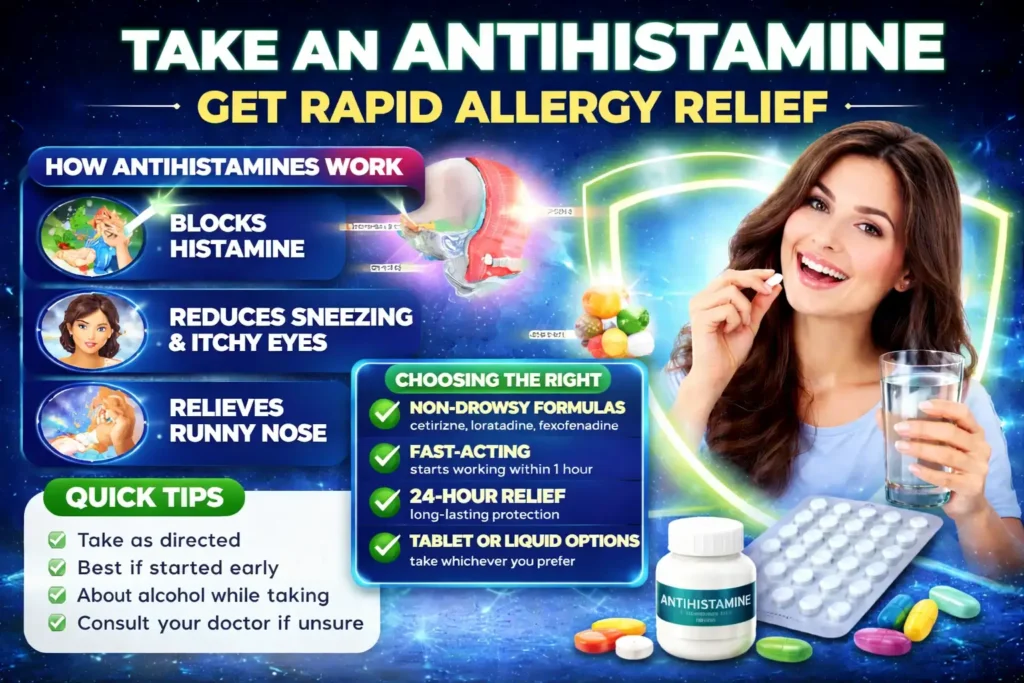
If your worst symptoms are sneezing, itching, a dripping nose, or watery eyes, an antihistamine can be very helpful. This is often the answer to best medicine for allergic rhinitis fast, fastest antihistamine for allergies, and what tablet works quickly for allergy symptoms.
Common options include:
- cetirizine
- loratadine
- fexofenadine
These medicines work by blocking histamine, one of the main chemicals involved in the allergic reaction. They are especially useful if you are trying to figure out how to stop sneezing from allergies immediately, how to stop itchy nose from allergies, or how to calm hay fever symptoms quickly.
Many oral antihistamines begin helping within 30 to 60 minutes, although the exact speed can vary from person to person (Dykewicz, M. S., et al. 2020).
Which one may suit better
- Cetirizine may work well, but can cause mild drowsiness in some people.
- Loratadine is commonly chosen when daytime alertness matters.
- Fexofenadine is also less sedating for many users.
How to take them
Most can be taken with or without food. Fexofenadine should not be taken with fruit juice because juice can reduce absorption. If symptoms keep recurring at the same time each day, some people do better when the medicine is taken regularly rather than waiting until the reaction becomes severe.
This section is especially relevant for readers searching for:
- best antihistamine for hay fever
- non-drowsy allergy medicine for sneezing
- what helps itchy eyes and runny nose fast
- best tablet for allergy relief at home
Remove allergens from your body right away
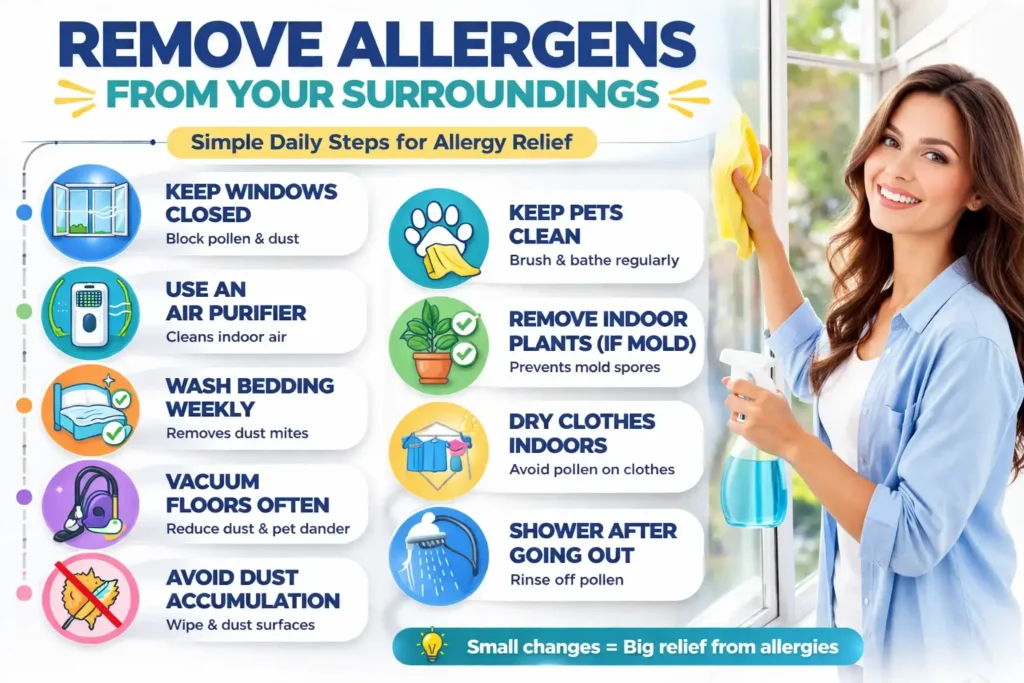
One of the most overlooked steps in fast allergy relief is getting the allergen off your body. If you have been outdoors in pollen season, around dust, or near pets, allergens can cling to your hair, face, skin, and clothes. Even after coming indoors, that exposure can continue.
That is why a quick routine can make a surprising difference:
- wash your face
- rinse your hands
- change your clothes
- take a shower if possible
This is often useful for people wondering:
- how to stop allergies after coming home
- how to remove pollen from skin and hair
- why allergy symptoms continue indoors
- how to reduce allergy exposure quickly
For many people, symptoms start settling faster once this ongoing exposure is interrupted.
What to do in the room around you
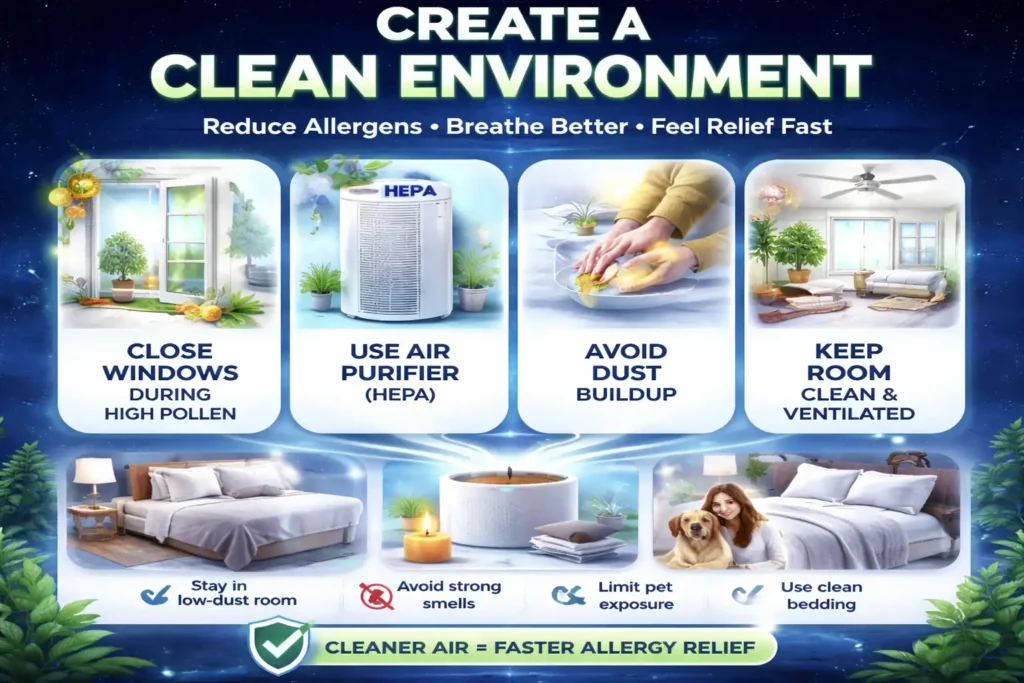
Sometimes the problem is not only inside the nose. It is also the environment around you. If the air around you still contains pollen, dust, strong odors, or pet allergens, symptoms can continue even after medicine.
A few immediate changes can help:
- close windows during high pollen times
- move away from dusty rooms
- avoid sweeping dry dust into the air
- switch on air filtration if available
- sit in a cleaner room with fewer triggers
This can help answer common real-life concerns such as:
- how to reduce allergens at home quickly
- how to stop dust allergy immediately
- best way to prevent allergies indoors
- how to get quick allergy relief in the bedroom
Environmental control is not dramatic, but it often improves the effect of every other step.
Real-life example: morning sneezing that kept getting worse
Ali, a 32-year-old office worker, had months of severe morning sneezing. He would wake up with repeated sneezes, a dripping nose, and heaviness in the head. At first he ignored it and assumed it was just “weather sensitivity,” but the pattern kept repeating.
After proper evaluation, allergic rhinitis was identified, with dust and early morning allergen exposure as the main triggers. He was advised to start a nasal spray, use a saline rinse in the evening, and reduce bedroom dust exposure. He also began changing his pillow covers more regularly and keeping the windows closed early in the morning.
Within a few days, the morning attacks became less intense. He still had allergies, but he no longer felt helpless each morning. His case is a good example of how fast relief for allergic rhinitis often comes from doing several small things correctly rather than relying on one single medicine.
Real-life example: symptoms during house cleaning
Sara, 40, noticed that every time she cleaned the house, she developed sneezing, nasal blockage, and pressure around the face. The symptoms became strong enough that she started avoiding cleaning tasks.
After assessment, her symptoms were linked to dust-triggered allergic rhinitis. She was advised to wear a mask while cleaning, use a saline rinse afterward, avoid shaking dusty fabrics indoors, and use medication during flare periods when necessary.
Once she started doing this, the difference was clear. The same cleaning routine no longer led to severe attacks. This kind of case reflects what many people mean when they ask how to stop dust allergy at home, how to prevent sneezing while cleaning, or how to control allergic rhinitis naturally indoors.
Real-life example: a child with night-time congestion
An 8-year-old child was brought for evaluation because of mouth breathing, restless sleep, and repeated night-time nasal blockage. The family thought it might just be “a weak nose,” but allergic rhinitis was identified as the main issue.
The child was advised a simple plan that included saline nasal care before bedtime, improving bedding hygiene, and using a child-appropriate treatment plan under supervision. Over several days, sleep improved and the night-time blockage became less disruptive.
This is very similar to what many parents are really trying to solve when they look for how to unblock a child’s nose at night, best treatment for child allergy congestion, or how to help a child breathe better with allergies.
Natural remedies that can support quick comfort
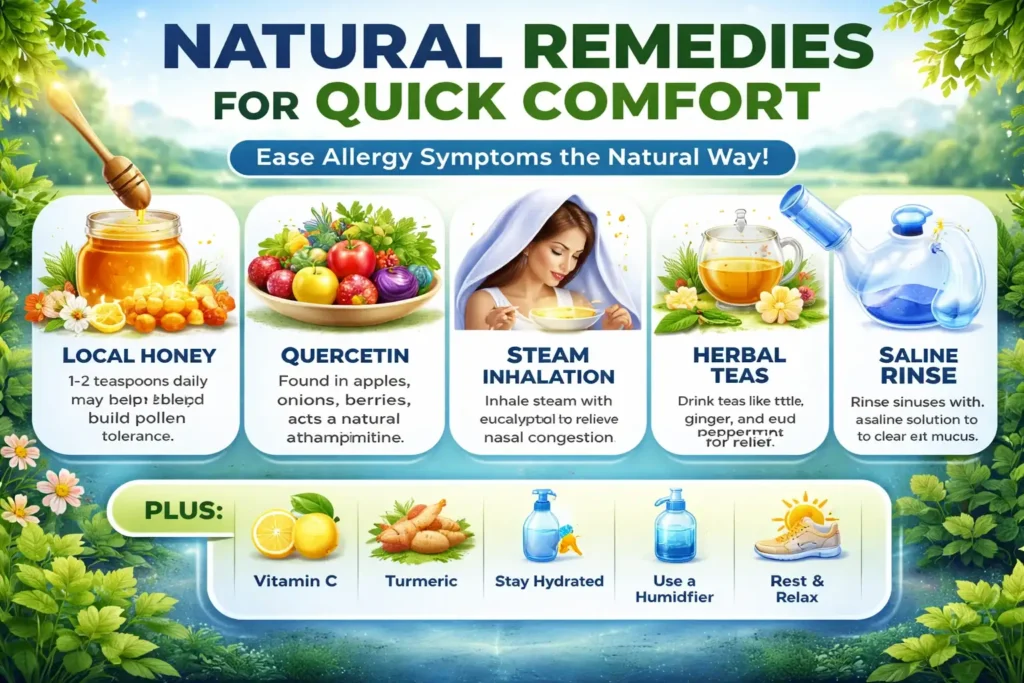
Natural methods do not replace proper treatment when symptoms are strong, but they can add comfort and sometimes speed up relief.
Steam inhalation
Warm steam can help loosen mucus and temporarily ease the feeling of blockage. It may not treat the underlying allergy itself, but it can make breathing feel easier for a while.
Warm fluids
Warm drinks can feel soothing and may help thin mucus. They are not a cure, but they can be part of a useful comfort routine.
Resting away from triggers
If symptoms started after outdoor exposure, moving into a cleaner indoor space and limiting further exposure can help the body settle down.
These measures are often part of what people mean by:
- home remedies for allergies fast
- natural relief for hay fever
- how to unblock nose naturally at home
how to get instant allergy relief without strong medicine
In many cases:
- Allergies are more likelyif you have:
- Itchy eyes / itchy nose / itchy throat
- Repeated sneezing fits
- Clear runny nose
- Symptoms that start after exposureto pollen, dust, pets, or mold
- Symptoms that come and goor last for weeks during a season
- A common cold is more likelyif you have:
- Sore throatearly on
- Feeling run-down / body aches
- Fever (especially in children)
- Symptoms that develop over 1–3 days
- Symptoms that usually improve within about 7–10 days(sometimes longer)
This “allergies vs cold symptoms chart” style comparison is useful, but symptoms can still overlap and sometimes both can happen together (for example, a person with allergic rhinitis can also catch a viral cold) (Wise, S. K., et al. 2023;Eccles, R. 2023).
Foods and daily habits that may help
Food does not usually stop an active allergy flare immediately, but your daily habits can influence how well you cope.
Helpful habits include:
- drinking enough water
- eating fresh fruits and vegetables
- keeping meals balanced and light
- getting enough sleep when possible
Some people notice that alcohol, heavy processed foods, or poor sleep make symptoms feel worse. While food alone is not the main treatment, people often do better overall when the body is well supported.
This fits common concerns like:
- foods that help with allergies
- what to drink for allergy congestion
- best foods for hay fever relief
- foods to avoid when allergies flare up
When nasal steroids are especially useful
If symptoms are mostly about blockage, swelling, and chronic congestion, a nasal steroid may be one of the most effective treatments overall. These sprays reduce inflammation inside the nose and are widely recommended in allergic rhinitis care (Bousquet, J., et al. 2020).
They are especially useful when someone keeps struggling with:
- best treatment for allergic rhinitis congestion
- how tocongestion from allergies long term
- what works for constant nasal swelling
- how to stop allergy nose blockage every day
They may not feel as dramatic in the first few minutes as some other treatments, but they often provide stronger overall control when used properly and consistently.
When decongestants may help, and why caution matters
Some people turn to decongestants when they want the nose opened quickly. These can sometimes provide short-term relief, but they are not ideal for everyone, and nasal decongestant sprays should not be overused. Used for too many days in a row, they can cause rebound congestion, where the nose becomes even more blocked once the medicine wears off.
So while they may come up when someone is looking for how to open a blocked nose instantly, they need more caution than regular allergy treatment.
Special situations
Children
Children often need a gentler and more supervised approach. Saline care, trigger reduction, and age-appropriate medication choices are especially important.
Pregnancy
During pregnancy, non-drug steps such as saline rinses and allergen reduction are often preferred first. Any medicine choice should be guided by a qualified clinician.
Older adults
In older adults, non-sedating options are often better. Other health conditions and regular medicines should also be taken into account.
These concerns often come up as:
- safe allergy medicine in pregnancy
- how to treat allergic rhinitis while breastfeeding
- best allergy medicine for elderly patients
- safe treatment for child hay fever
When symptoms are not improving
If symptoms do not settle despite using the right steps, the treatment plan may need adjustment. Some people benefit from combination therapy, better trigger control, or specialist assessment. This becomes more important when symptoms are frequent, sleep is affected, or daily functioning is being disturbed (Sousa-Pinto, B., et al. 2024).
This is often the point behind questions like:
- why are my allergy symptoms not getting better
- what to do when allergy medicine is not working
- when to see a doctor for allergic rhinitis
- how to treat severe hay fever that will not stop
Common mistakes that slow down relief
A few mistakes keep symptoms going longer than necessary:
- waiting too long to start treatment
- using the wrong type of medicine for the main symptom
- ignoring allergen exposure
- using the nasal spray incorrectly
- stopping treatment too early
Someone with blockage may need a different approach from someone whose main problem is sneezing and itching. Choosing based on the actual symptom pattern matters.
A practical and natural-feeling routine that works
For many people, the most realistic fast-relief routine looks like this:
- come indoors and reduce exposure
- wash face and hands or shower
- rinse the nose with saline
- use the appropriate nasal spray
- take an antihistamine if sneezing, itching, and runny nose are significant
- rest in a cleaner indoor setting
That is often the most useful real-life answer to how to stop allergic rhinitis immediately at home, how to get fast relief from hay fever, and what to do when allergy symptoms suddenly flare up.
Key takeaways
- If you want to know how to stop allergic rhinitis immediately, start with local treatment, not just tablets.
- Nasal sprays are often the fastest help for blockage and airflow.
- Saline rinsing is one of the simplest ways to get quick comfort.
- Antihistamines are especially useful for sneezing, itching, and runny nose.
- Reducing allergen exposure matters just as much as medicine.
- The best fast relief usually comes from combining several small steps.a
Medical disclaimer
This article is for educational purposes only and should not be used as a substitute for professional medical advice, diagnosis, or treatment. Always consult a qualified healthcare professional for individual care.
Frequently Asked Questions (FAQs)
1.How can I stop sneezing from allergies quickly?
A fast-acting nasal treatment, saline rinsing, and an antihistamine can all help reduce sneezing more quickly than waiting it out.
2.What is the fastest way to unblock the nose from allergies?
For many people, a nasal spray works fastest, especially when swelling and congestion are the main problems.
3.What helps a runny nose immediately?
Saline rinsing and antihistamines are often helpful when the nose is dripping and irritation is strong.
4.Can allergic rhinitis improve quickly?
Yes, symptoms can settle surprisingly fast when the right steps are taken early, especially if further allergen exposure is reduced.
References
- Bousquet, J., Klimek, L., Togias, A., Zuberbier, T., Agache, I., Ansotegui, I. J., et al. (2020). Next-generation allergic rhinitis and its impact on asthma (ARIA). Journal of Allergy and Clinical Immunology, 145(3), 895–909. https://doi.org/10.1016/j.jaci.2019.12.898
- Klimek, L., Bousquet, J., Pfaar, O., Bachert, C., Hellings, P. W., & Agache, I. (2024). Current management of allergic rhinitis. Journal of Allergy and Clinical Immunology: In Practice, 12(2), 215–229. https://doi.org/10.1016/j.jaip.2023.11.012
- Sousa-Pinto, B., Vieira, R. J., Brożek, J. L., Cardoso-Fernandes, A., Lourenço-Silva, N., Ferreira-da-Silva, R., et al. (2024). Intranasal antihistamines and corticosteroids. Journal of Allergy and Clinical Immunology, 154(2), 340–354. https://doi.org/10.1016/j.jaci.2024.02.012
- Dykewicz, M. S., Wallace, D. V., Baroody, F., Bernstein, J., Craig, T., Finegold, I., et al. (2020). Rhinitis 2020: A practice parameter update. Journal of Allergy and Clinical Immunology, 146(4), 721–767. https://doi.org/10.1016/j.jaci.2020.07.007