

Cold Air Rhinitis: Can Cold Weather Worsen Allergies?
Written by: Dr.Muhammad Ihsan Ullah, PhD
Medically reviewed by:Dr Ali Raza Dogar,MBBS,D-LO
Last updated on June 06,2026
Cold Air Rhinitis and Allergic Rhinitis: What Really Happens
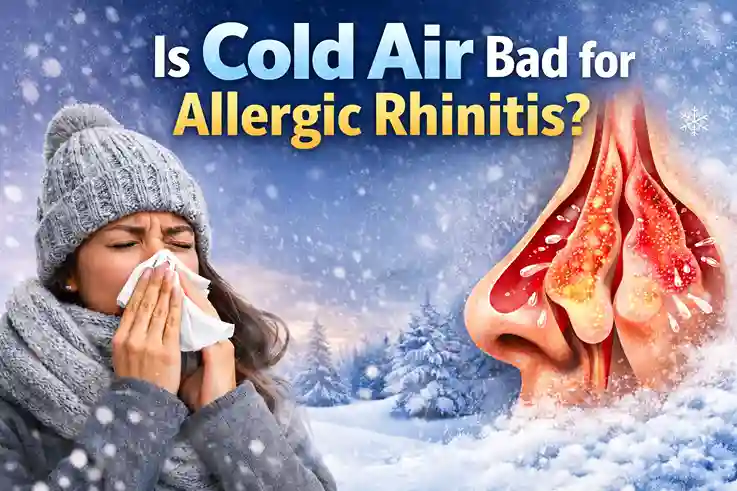
Many people with allergic rhinitis notice worse nasal congestion, sneezing, runny nose, or sinus pressure in cold weather. This is often called cold air rhinitis or cold weather rhinitis, but cold air itself is not an allergen. Instead, cold, dry air irritates already inflamed nasal passages and can trigger reflex swelling, thicker mucus, and nasal dryness. Cold air triggers can make symptoms worse too, especially when heating systems dry the air or indoor allergens like dust mites, mold, and pet dander build up.
Is cold air bad for allergic rhinitis?
Cold air is not bad for allergic rhinitis in the same way pollen, dust mites, or mold are. It is not an allergen. However, cold, dry air can worsen allergic rhinitis symptoms by drying the nasal lining, thickening mucus, and triggering reflex congestion. This can make your nose feel blocked, irritated, or runny during winter.
Is Cold Air Rhinitis the Same as Allergic Rhinitis?
No. Cold air rhinitis usually refers to nasal symptoms triggered by cold temperature or dry air. Allergic rhinitis is caused by an immune reaction to allergens such as pollen, dust mites, mold, or pet dander.
The two can overlap. If you already have allergic rhinitis, your nasal lining may be inflamed and more sensitive, so cold air can make symptoms feel worse even when no new allergen is present.
Can You Be Allergic to Cold Air?
Usually, no. Most people are not truly allergic to cold air. Cold air does not contain allergy proteins like pollen, dust mites, mold spores, or pet dander. Instead, it works as an irritant. It can dry the nose, stimulate sensitive nasal nerves, and cause swelling inside the nasal passages.
If symptoms happen mainly with temperature changes, wind, smoke, perfume, or strong smells, nonallergic rhinitis may also be involved.
How Cold Air Affects the Nose and Airways
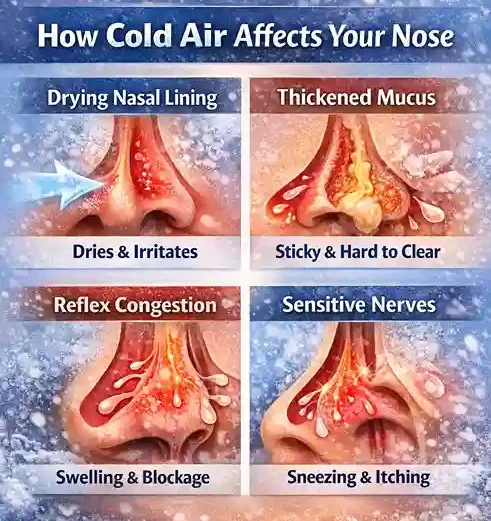
Cold air can affect the nose in four main ways:
- It dries the nasal lining.
- It can make mucus thicker and harder to clear.
- It may trigger reflex swelling inside the nose.
- It can stimulate sensitive nasal nerves, leading to sneezing or a runny nose.
For people with allergic rhinitis, whose nasal tissues are already inflamed, these effects are more noticeable. Cold air acts as an irritant, not an allergen, increasing symptoms without triggering an allergic immune response (Eccles, 2002; Dykewicz et al., 2020).
Why Cold Air Can Worsen Allergic Rhinitis Symptoms
1. Drying of the Nasal Mucosa
Cold air contains very little moisture. When inhaled, it dries the nasal mucosa, leading to:
- Nasal dryness and burning
- Thick, sticky mucus
- Reduced natural mucus clearance
- Increased irritation
Dry nasal tissue becomes more reactive, which worsens allergic symptoms during winter (Dykewicz et al., 2020).
Reflex Nasal Congestion (Inferior Turbinates)
Cold exposure triggers a protective reflex in the nose. Blood vessels in the inferior turbinates briefly constrict and then dilate, causing:
- Swelling of nasal tissues
- Increased blockage
- Difficulty breathing through the nose
This reflex nasal congestion can mimic or worsen allergic rhinitis symptoms even without allergen exposure (Bousquet et al., 2020).
Increased Sensitivity of Nasal Nerves
Allergic rhinitis increases sensory nerve sensitivity. Cold air may trigger:
- Sneezing
- Runny nose
- Nasal itching
This reaction is irritation-based rather than allergic, explaining why cold air feels especially aggravating for people with allergies (Eccles, 2002).
Cold Air, Mucus Thickness, and Sinus Pressure
Cold, dry air can:
- Thicken nasal and sinus mucus
- Slow sinus drainage
- Increase facial pressure or headaches
It may also worsen postnasal drip by reducing normal mucus flow. These effects are more noticeable in individuals with allergic rhinitis and sinus sensitivity (Bousquet et al., 2020).
Can Cold Air Ever Help Allergic Rhinitis?
In some cases, cold outdoor air may temporarily reduce symptoms due to lower pollen levels.
Potential benefits include:
- Reduced grass and weed pollen
- Lower outdoor allergen exposure
However, these benefits are often offset by:
- Dry indoor heating
- Increased dust mite exposure
- Mold in poorly ventilated spaces
- Pet dander accumulating indoors
For many people, indoor winter air is a bigger trigger than outdoor cold air (Dykewicz et al., 2020).
Indoor Winter Air: The Hidden Problem
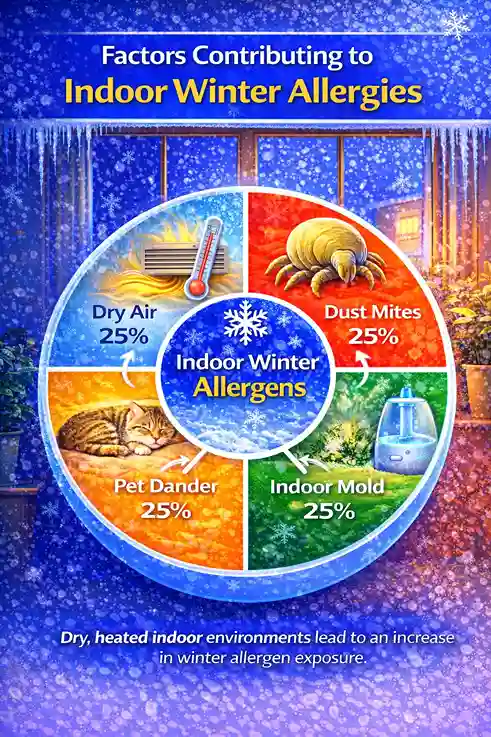
Indoor environments frequently worsen allergic rhinitis during winter.
Common triggers include:
- Dry air from heating systems
- Dust mites in bedding and carpets
- Mold in bathrooms or basements
- Pet dander trapped indoors
Indoor heating often lowers relative humidity below 30%, increasing nasal dryness, irritation, and allergen sensitivity. Managing indoor air quality is essential for winter symptom control (Eccles, 2002).
Cold Air Irritation vs Allergic Rhinitis vs Common Cold
Cold air exposure is often mistaken for illness. Understanding the differences prevents unnecessary
Feature | Cold Air Rhinitis/Irritation | Allergic Rhinitis | Common Cold |
Main cause | Cold, dry air or temperature change | Allergen exposure | Virus |
Immune allergy reaction | No | Yes | No |
Fever | No | No | Sometimes |
Itchy eyes/nose | Mild or absent | Common | Rare |
Nasal discharge | Clear/watery | Clear/watery | May become thick |
Duration | Short or trigger-based | Recurrent or persistent | Usually several days |
Contagious | No | No | Yes |
Cold air does not cause infection but can worsen existing allergic symptoms (Dykewicz et al., 2020).
Cold Air and Nonallergic (Vasomotor) Rhinitis
Cold air can also trigger symptoms in people with nonallergic (vasomotor) rhinitis, a form of noninfectious rhinitis. In this condition, temperature changes—not allergens—cause nasal congestion and runny nose.
This explains why some individuals experience cold-induced nasal symptoms even without allergies.
How to Protect Your Nose in Cold Weather
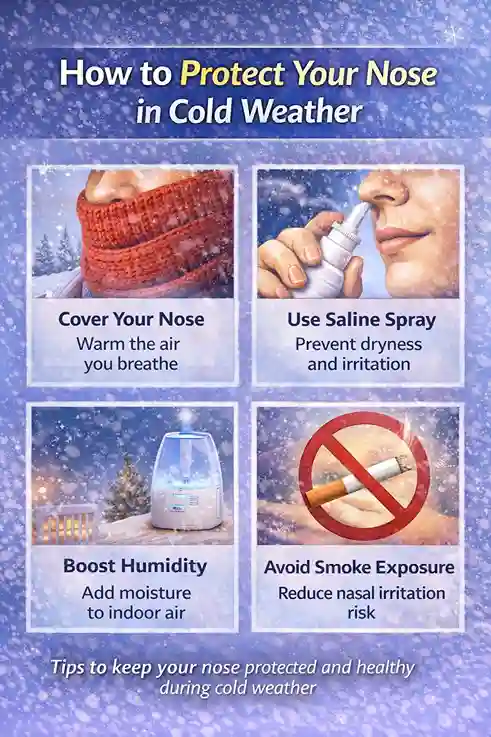
Warm and Humidify Inhaled Air
- Cover the nose and mouth with a scarf outdoors
- Breathe through the nose when possible
- Avoid sudden temperature changes
Maintain Healthy Indoor Humidity
Aim for about 30–50% indoor humidity. Very dry air can irritate the nose, while too much humidity can encourage mold and dust mites.
If you use a humidifier, clean it regularly. A dirty humidifier can spread mold or bacteria into the air and may worsen symptoms in people with allergies or asthma.
- Prevent nasal dryness
- Improve mucus clearance
- Reduce dust mite survival
Avoid excessive humidity, which promotes mold.
Support Nasal Moisture
- Saline nasal sprays
- Proper saline irrigation
- Adequate hydration
Moist nasal tissues are less reactive to cold air.
Reduce Indoor Allergens in Winter
- Wash bedding weekly in hot water
- Keep pets out of bedrooms
- Clean dust-collecting surfaces
- Ventilate kitchens and bathrooms
Dress and Exercise Smartly
- Warm up gradually before outdoor activity
- Protect the face and airways
- Choose indoor exercise during extreme cold
Example: Managing Winter Rhinitis with Humidity Control
Some individuals notice improvement after maintaining indoor humidity and using gentle nasal care. Individual responses vary, depending on personal triggers, environment, and overall health.
Do Cold Drinks Worsen Allergic Rhinitis?
There is no strong evidence that cold drinks directly cause allergic rhinitis. However, some people feel more nasal blockage, throat irritation, or mucus discomfort after cold drinks. This is usually due to temperature sensitivity, throat irritation, or reflux tendency rather than a true allergy. If cold drinks clearly worsen your symptoms, limit them during flare-ups, but do not treat them as the main cause of allergic rhinitis.
When to See a Doctor
Consult a healthcare professional if:
- Symptoms persist despite lifestyle measures
- Sinus infections become frequent
- Breathing difficulty or asthma symptoms appear
- Nasal bleeding occurs regularly
Key Takeaways
- Cold air does not cause allergic rhinitis
- It worsens symptoms through dryness and reflex congestion
- Inferior turbinate swelling plays a major role
- Indoor winter air is often more problematic than outdoor cold
- Managing humidity and allergens improves comfort
Medical Review Disclaimer
This article is for informational and educational purposes only and does not constitute medical advice. The content is written by a qualified healthcare professional and medically reviewed for accuracy. However, it should not be used as a substitute for professional medical diagnosis, treatment, or advice. Always consult a licensed healthcare provider regarding any medical condition or health concern.
Frequently Asked Questions (FAQs)
1. What is cold air rhinitis?
Cold air rhinitis means nasal symptoms that are triggered by cold temperature or dry air. It can cause a blocked nose, runny nose, sneezing, burning, or nasal dryness. It is usually irritation-based, not a true allergy.
2. Can cold air worsen allergic rhinitis?
Yes. Cold air can worsen allergic rhinitis symptoms by drying the nasal lining, thickening mucus, and triggering swelling inside the nose. If your nasal passages are already inflamed from allergies, cold weather may make congestion, sneezing, and sinus pressure feel worse.
3. Can you be allergic to cold air?
Most people are not truly allergic to cold air. Cold air does not work like pollen, dust mites, mold, or pet dander. Instead, it acts as an irritant that can trigger sensitive nasal nerves and cause cold air rhinitis symptoms.
4. Why does my nose get blocked in cold weather?
Your nose may get blocked in cold weather because cold, dry air can irritate the nasal lining and trigger reflex swelling of the blood vessels inside the nose. This swelling can make it harder to breathe through your nose, especially if you already have allergic rhinitis.
5. Is cold weather rhinitis allergic or nonallergic?
Cold weather rhinitis is often nonallergic because the trigger is temperature change or dry air, not an allergen. However, people with allergic rhinitis may notice worse symptoms in winter because their nasal passages are already sensitive and inflamed.
6. Why are my allergies worse indoors during winter?
Winter allergies can feel worse indoors because people spend more time inside with dust mites, mold, pet dander, and dry heated air. Heating systems can also lower indoor humidity, which may dry the nose and make irritation worse.
7. What indoor humidity is best for cold air rhinitis and winter allergies?
A good indoor humidity range is about 30% to 50%. Very dry air can irritate the nose, while too much humidity can encourage mold and dust mites. If you use a humidifier, clean it regularly to avoid spreading mold or bacteria.
8. Do cold drinks make allergic rhinitis worse?
Cold drinks do not directly cause allergic rhinitis. However, some people feel more throat irritation, mucus discomfort, or nasal blockage after cold drinks. If cold drinks clearly worsen your symptoms during flare-ups, it may help to limit them temporarily.
9. How can I protect my nose from cold air?
You can protect your nose by covering your nose and mouth with a scarf in cold weather, breathing through your nose when possible, using saline spray, keeping indoor humidity balanced, and reducing indoor allergens like dust mites, mold, and pet dander.
10. When should I see a doctor for cold weather nasal symptoms?
See a doctor if your nasal congestion lasts for weeks, symptoms keep returning, sinus infections become frequent, you have breathing trouble, asthma symptoms worsen, or you notice regular nosebleeds. Persistent symptoms may need proper diagnosis and treatment.
References
Bousquet, J., Klimek, L., Togias, A., et al. (2020). Next-generation allergic rhinitis and its impact on asthma (ARIA). Journal of Allergy and Clinical Immunology, 145(3), 895–909.
Dykewicz, M. S., Wallace, D. V., Baroody, F., et al. (2020). Rhinitis 2020: A practice parameter update. Journal of Allergy and Clinical Immunology, 146(4), 721–767.
Eccles, R. (2002). Seasonality of upper respiratory symptoms. Acta Oto-Laryngologica, 122(2), 183–191.