

Mouth Breathing in Children: Causes, Risks & How to Fix It Naturally
Written by: Dr.Muhammad Ihsan Ullah, PhD
Medically reviewed by: Dr. Muhammad Sohail,FCPS
Last updated on February 10,2026
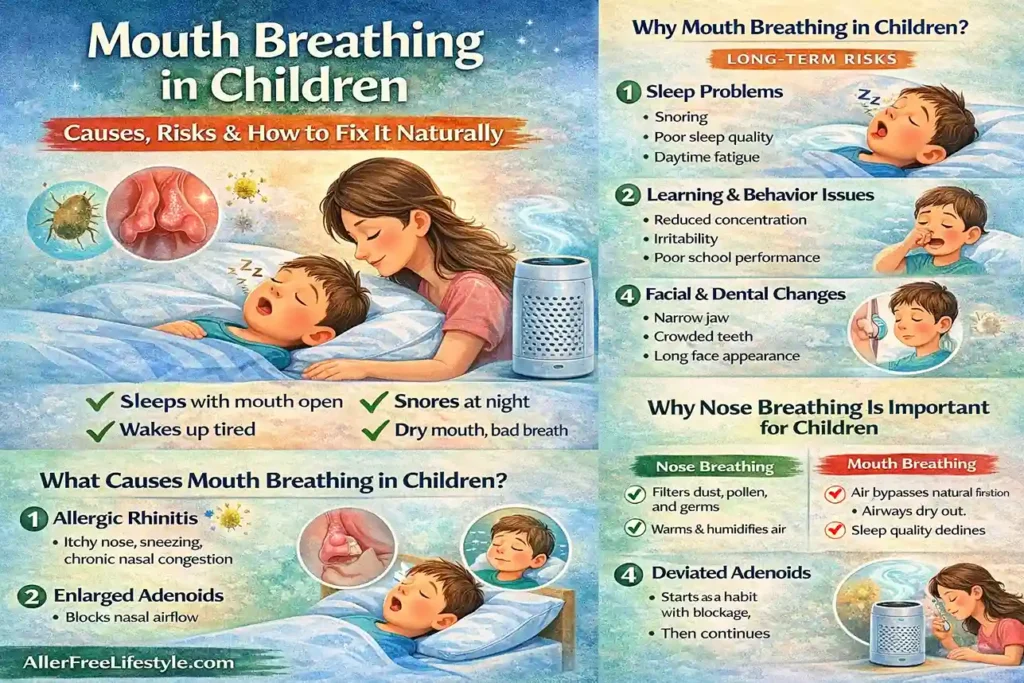
Mouth breathing in children is not just a habit — it is often a sign of an underlying problem such as allergic rhinitis, nasal blockage, enlarged adenoids, or chronic congestion.
Many parents notice that their child:
- Sleeps with an open mouth
- Snores at night
- Wakes up tired
- Has a dry mouth or bad breath
- Struggles with focus during the day
This guide explains why children mouth breathe, why it matters, and how to fix it safely and naturally.
What Is Mouth Breathing in Children?
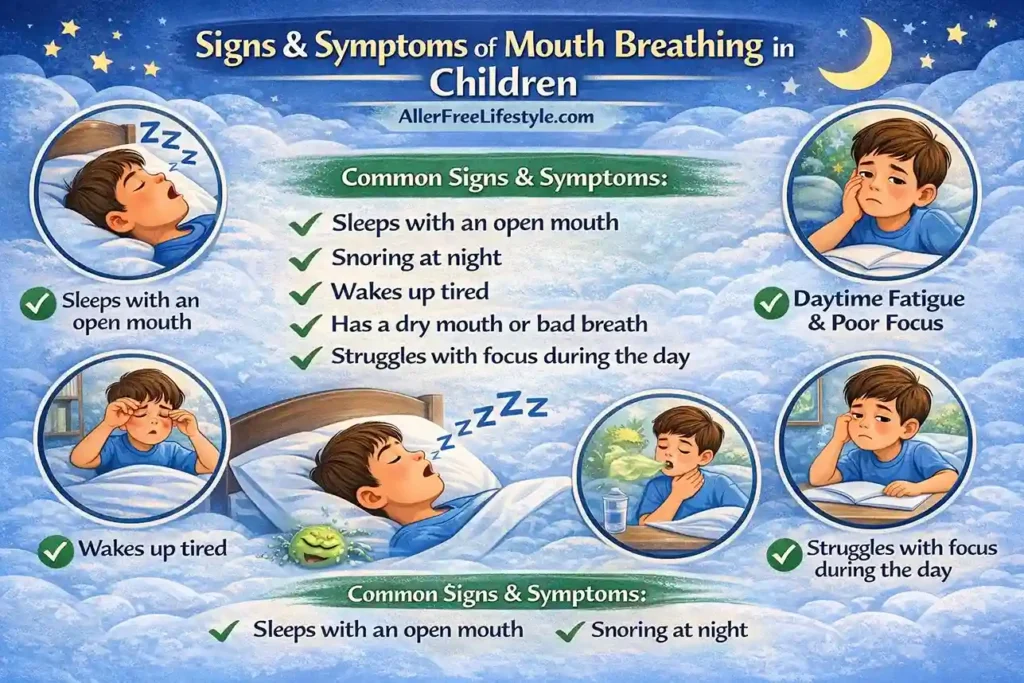
Mouth breathing occurs when a child breathes primarily through the mouth instead of the nose, during sleep or even while awake.
➡ Occasional mouth breathing during a cold is normal.
⚠ Persistent mouth breathing is NOT normal and needs attention.
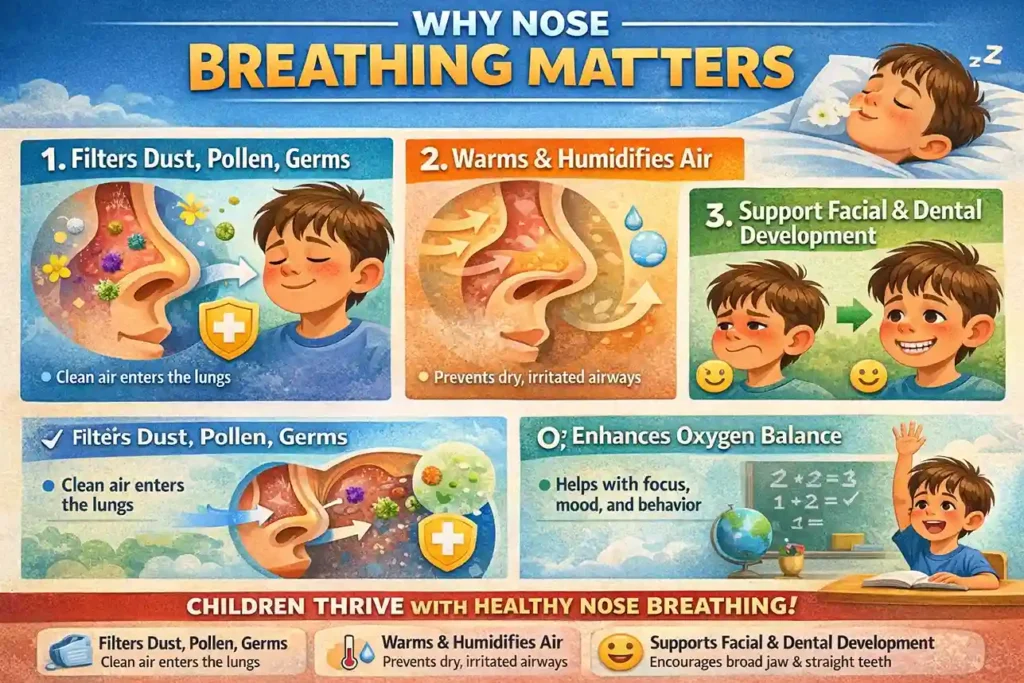
Why Nose Breathing Is Important for Children
The nose:
- Filters dust, pollen, and germs
- Warms and humidifies air
- Supports proper facial and jaw development
- Helps maintain oxygen balance
When a child breathes through the mouth:
- Air bypasses natural filtration
- Airways dry out
- Sleep quality declines
Common Causes of Mouth Breathing in Children
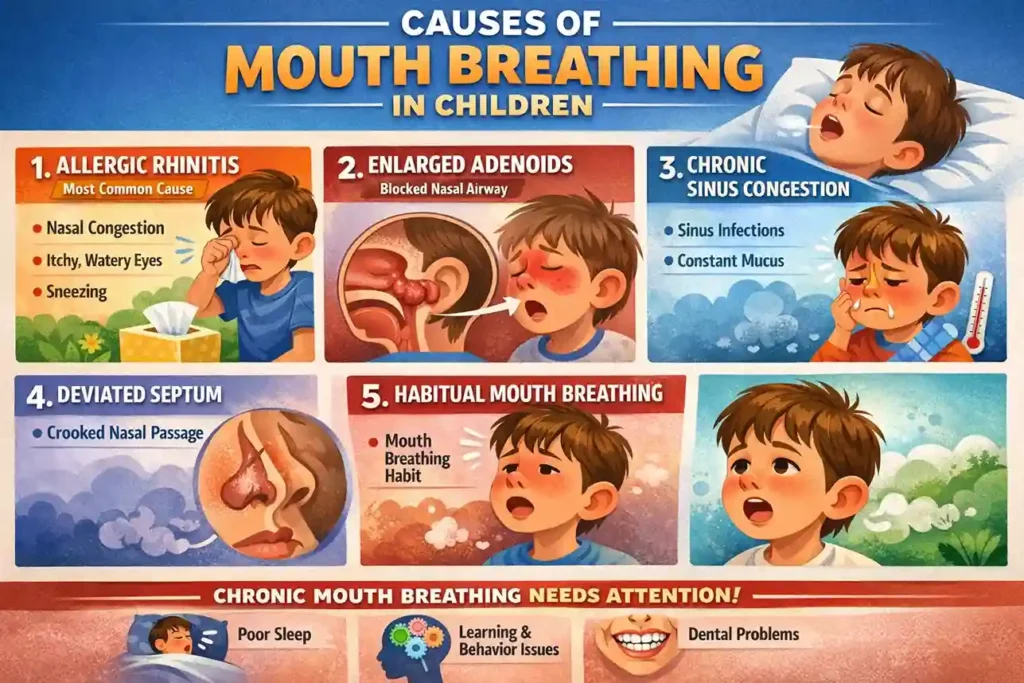
🥇 1️⃣ Allergic Rhinitis (Most Common Cause)
Allergic rhinitis causes:
- Chronic nasal congestion
- Swollen nasal lining
- Blocked airflow
➡ Child opens mouth to compensate.
Signs:
- Itchy nose or eyes
- Sneezing
- Clear nasal discharge
- Seasonal or year-round symptoms
🥈 2️⃣ Enlarged Adenoids
Adenoids sit behind the nose and can block airflow when enlarged.
Clues:
- Loud snoring
- Nasal speech
- Recurrent ear infections
- Mouth breathing even when awake
🥉 3️⃣ Chronic Nasal Congestion / Sinus Issues
- Recurrent colds
- Chronic sinus inflammation
- Thick nasal mucus
4️⃣ Deviated Nasal Septum (Less Common in Kids)
- Structural narrowing of nasal passage
- Usually noticed later in childhood
5️⃣ Habitual Mouth Breathing
Sometimes mouth breathing starts due to blockage and then becomes a habit — even after congestion improves.
Why Mouth Breathing Is a Problem (Long-Term Risks)
If untreated, chronic mouth breathing can lead to:
😴 Sleep Problems
- Snoring
- Poor sleep quality
- Daytime fatigue
🧠 Learning & Behavior Issues
- Reduced concentration
- Irritability
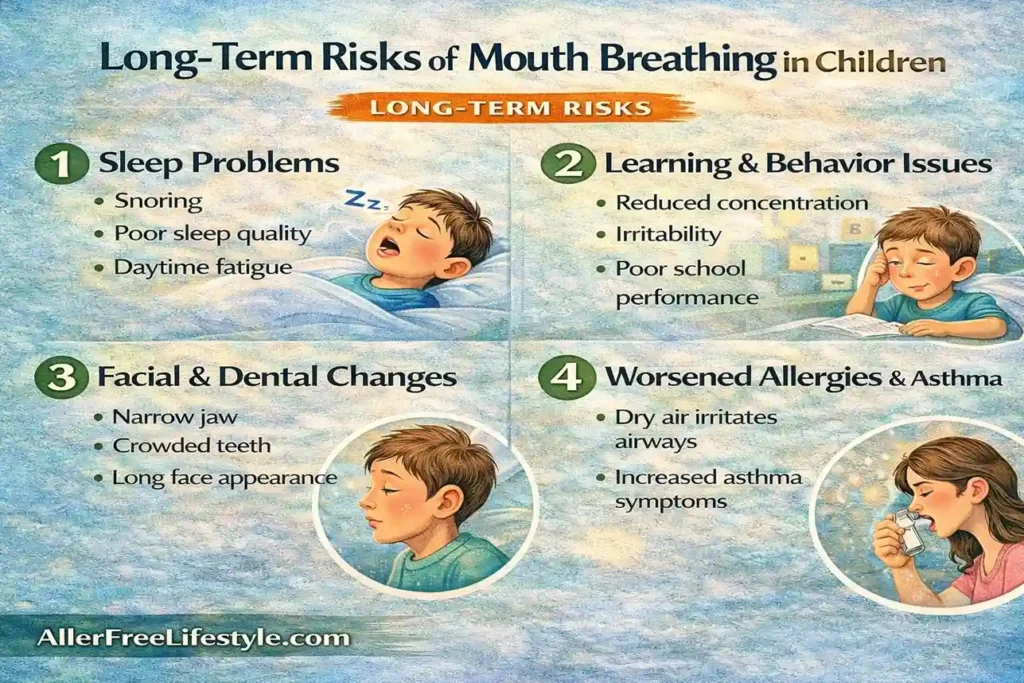
😬 Facial & Dental Changes (Long-Term)
- Narrow jaw
- Crowded teeth
- Long face appearance
- Misaligned bite
🫁 Worsened Allergies & Asthma
- Dry air irritates airways
- Increased asthma symptoms
How to Fix Mouth Breathing in Children (Step-by-Step)
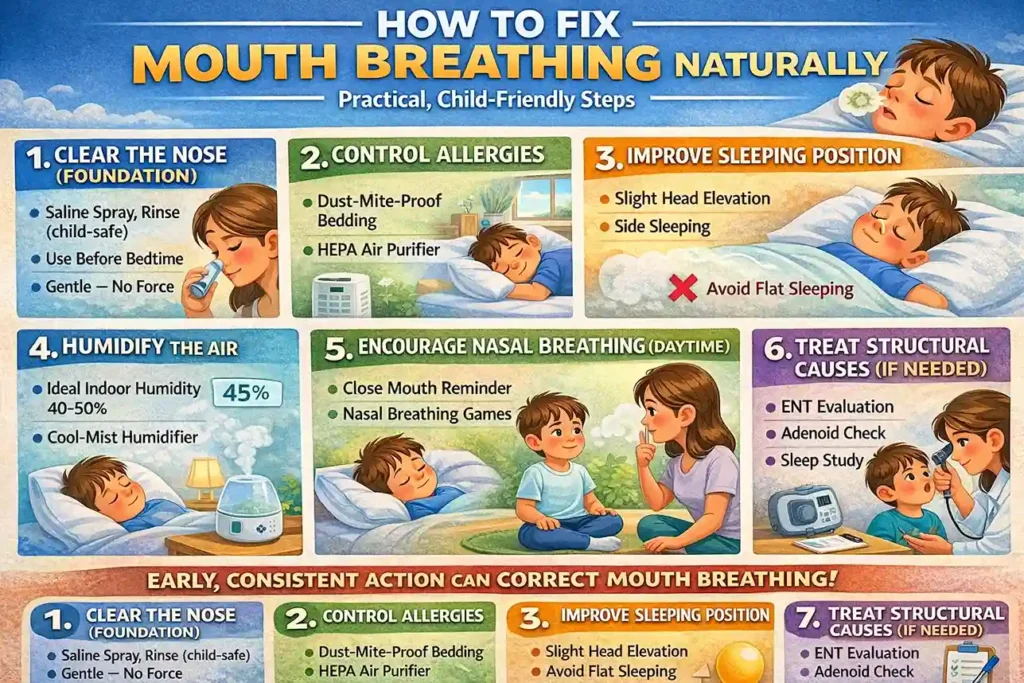
✅ Step 1: Clear the Nose (FOUNDATION)
Before correcting breathing, nasal airflow must be restored.
✔ Saline nasal spray or rinse (child-safe)
✔ Use before bedtime
✔ Gentle — no force
✅ Step 2: Control Allergies
If allergic rhinitis is present:
- Dust-mite-proof bedding
- Wash bedding weekly in hot water
- Keep pets out of bedroom
- Use HEPA air purifier
👉 Medical treatment may be needed (under doctor guidance).
✅ Step 3: Improve Sleeping Position
Best positions:
- Slight head elevation
- Side sleeping (if snoring present)
❌ Avoid flat sleeping without elevation.
✅ Step 4: Humidify the Air
Dry air worsens congestion.
✔ Ideal indoor humidity: 40–50%
✔ Use a cool-mist humidifier if air is dry
✅ Step 5: Encourage Nasal Breathing (Daytime)
Simple techniques:
- Remind child gently to close mouth
- Nasal breathing during calm activities
- Avoid scolding
✅ Step 6: Breathing Exercises (Child-Friendly)
Examples:
- Slow nose breathing games
- Balloon blowing (improves nasal airflow awareness)
- Gentle breathing through nose during rest
✅ Step 7: Treat Structural Causes (If Needed)
If mouth breathing persists despite good allergy control:
- ENT evaluation
- Adenoid assessment
- Sleep study if severe snoring
When to See a Doctor Urgently
Seek medical evaluation if your child has:
- Loud nightly snoring
- Breathing pauses during sleep
- Daytime sleepiness
- Poor growth
- Frequent ear infections
- Persistent mouth breathing beyond age 4–5
Can Mouth Breathing Be Reversed?
✅ Yes — especially in children, if addressed early.
Best outcomes occur with:
- Allergy control
- Nasal hygiene
- Proper sleep environment
- Early ENT involvement if needed
Key Takeaways for Parents
✔ Mouth breathing is usually a symptom, not a habit
✔ Allergic rhinitis is the most common cause
✔ Nasal airflow must be fixed first
✔ Early treatment prevents facial & sleep problems
✔ Persistent cases need ENT evaluation
Medical Review Disclaimer
This article is for informational and educational purposes only and does not constitute medical advice. The content is written by a qualified healthcare professional and medically reviewed for accuracy. However, it should not be used as a substitute for professional medical diagnosis, treatment, or advice. Always consult a licensed healthcare provider regarding any medical condition or health concern.
Frequently Asked Questions (FAQs)
1. Is mouth breathing normal in children?
Occasionally during a cold, yes. Persistent mouth breathing is not normal.
2. What is the most common cause of mouth breathing in children?
Allergic rhinitis causing chronic nasal blockage.
3. Can mouth breathing affect sleep and learning?
Yes. It can lead to poor sleep, fatigue, and reduced focus.
4. Can mouth breathing be corrected naturally?
Yes, especially when treated early with nasal care and allergy control.
5. When should parents see a doctor?
If mouth breathing persists beyond age 4–5 or sleep is affected.