

Why Do Certain Fruits Make Your Mouth Itch During Ragweed Season?
Written by: Dr. Muhammad Ihsan Ullah, PhD (Pharmacology)
Medically reviewed by: Dr. Jamal ud Din Khan, FCPS (Pulmonology)
Last updated on August 24, 2026
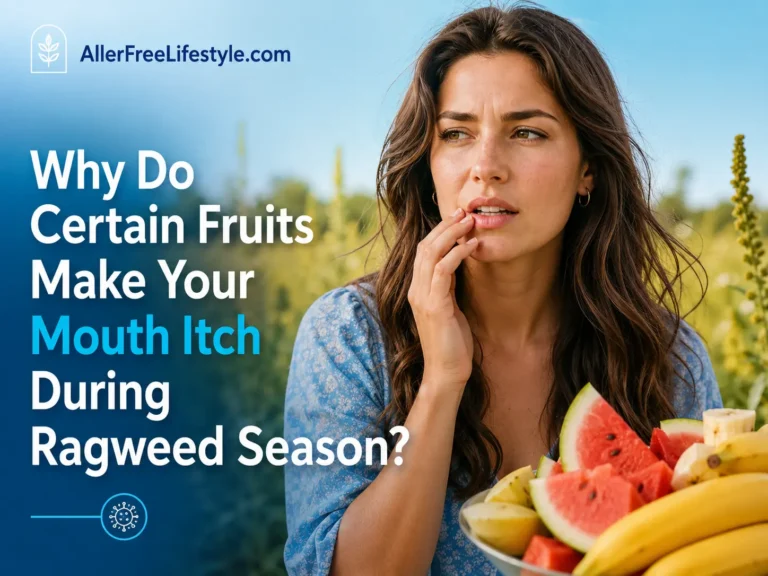
You eat a slice of watermelon or a banana and, within minutes, the roof of your mouth starts itching or tingling. If this happens during ragweed season, the fruit may not be the original reason your immune system became sensitized. Instead, your body may be recognizing similarities between ragweed pollen proteins and proteins naturally present in certain raw fruits and vegetables—a reaction known as pollen-food allergy syndrome (PFAS), also called oral allergy syndrome.
Quick answer:
During ragweed season, some raw fruits can make your mouth itch because IgE antibodies directed against pollen may also recognize similar proteins in foods. This cross-reaction is called pollen-food allergy syndrome and is especially associated with melon, watermelon, banana, cucumber, and zucchini (1).
Why Does Ragweed Allergy Make Certain Fruits Itch Your Mouth?
Ragweed allergy begins with sensitization to pollen. Your immune system produces specific IgE antibodies against particular ragweed allergens.
The problem is that some proteins in fruits and vegetables have molecular structures similar enough to pollen proteins that the same IgE antibodies may recognize them.
This is called cross-reactivity.
When a cross-reactive raw food touches the lips, tongue, palate, or throat, IgE-mediated activation of mast cells can release histamine and other inflammatory mediators. The reaction may appear rapidly as itching, tingling, mild burning, or localized swelling.
In PFAS, the initial sensitization is generally to airborne pollen rather than to the food itself. Current research describes this pollen-to-food cross-reactivity as the defining mechanism of the syndrome (1).
Which Fruits Cross-React with Ragweed Pollen?

The foods most often associated with ragweed-related pollen-food allergy syndrome include:
- watermelon
- cantaloupe
- honeydew
- banana
- cucumber
- zucchini
Not everyone with ragweed allergy reacts to these foods. One person may notice an itchy mouth only after watermelon, another may react to banana and cantaloupe, while many people with ragweed sensitization tolerate all of them.
Watermelon, cantaloupe, honeydew, cucumber, and zucchini belong to the Cucurbitaceae, or gourd family. Banana belongs to a different botanical family but can still participate in the ragweed-associated cross-reactivity pattern.
Why Do Watermelon, Cantaloupe, and Honeydew Make My Mouth Itch?
Melons are particularly important in the well-recognized ragweed–melon association.
One molecular explanation involves profilins, a family of structurally related proteins found throughout the plant kingdom. Ragweed contains a profilin allergen called Amb a 8, while profilins are also present in several fruits and vegetables.
In a sensitized person, IgE directed against a pollen profilin may recognize a similar profilin in food. This molecular resemblance can trigger oral itching soon after the raw fruit contacts the mouth (2).
This also explains why the reaction is not simply caused by watermelon being acidic, cold, or irritating. It is an immune cross-reaction in susceptible individuals.
Why Can Banana Cause an Itchy Mouth With Ragweed Allergy?
Banana may seem unrelated to ragweed or melon, yet it is part of the classic ragweed–melon–banana cross-reactivity pattern.
Cross-reactive plant proteins, including profilins, can provide the immunological connection even when the plants themselves are botanically different.
Someone with ragweed allergy may therefore develop rapid itching or tingling after eating raw banana without having the same reaction to every other fruit.
Importantly, having ragweed allergy does not mean you should automatically avoid bananas. Sensitization patterns vary widely, and foods that cause no symptoms generally should not be removed from the diet solely because they appear on a cross-reactivity list.
Can Cucumber and Zucchini Trigger Ragweed Oral Allergy Too?
Yes. Cucumber and zucchini belong to the same Cucurbitaceae family as melons and are recognized among foods that can be involved in ragweed-associated PFAS.
This is why the term “fruit allergy” can be misleading in this context. Raw vegetables can also cause pollen-related mouth itching when they contain proteins sufficiently similar to the pollen allergen.
A person who experiences oral itching after raw cucumber during ragweed season may therefore be showing the same cross-reactive pattern as someone who reacts to cantaloupe.
Why Are Raw Fruits More Likely to Make Your Mouth Itch Than Cooked Foods?
Many allergens responsible for classic PFAS are relatively heat-labile, meaning heat can change their three-dimensional structure.
Once that structure is altered, IgE may be less able to recognize the protein.
That helps explain why some people can react to a raw food yet tolerate it when it has been sufficiently:
- cooked;
- baked;
- canned; or
- otherwise heat-processed.
Profilins are among the plant allergens that are generally vulnerable to heat and digestion (1).
However, this pattern is not universal. Reacting to cooked versions of a food, developing stronger reactions, or having symptoms beyond the mouth deserves medical assessment rather than experimenting with the food at home.
Why Can Oral Allergy Syndrome Feel Worse During Ragweed Season?
Some pollen-allergic people notice that a normally mild food reaction becomes more obvious while their relevant pollen season is active.
During ragweed season, ongoing exposure to ragweed pollen may coincide with increased allergic reactivity. For a susceptible person, this can make oral responses to a cross-reactive raw food easier to notice.
That means watermelon or banana may seem more troublesome during periods of heavy ragweed exposure, even if the same food has caused little or no noticeable discomfort at another time.
The pattern is not identical in every patient, so seasonal timing is a useful clue rather than proof of the diagnosis.
Is an Itchy Mouth From Fruit the Same as a Primary Food Allergy?
Not necessarily.
A typical pollen-food allergy syndrome pattern often involves:
- a known or suspected pollen allergy;
- symptoms beginning soon after eating a raw plant food;
- itching, tingling, or mild swelling concentrated in the mouth or throat; and
- better tolerance of a sufficiently cooked form in some individuals.
A primary food allergy may involve sensitization to different, potentially more stable food proteins and can carry a different risk profile.
That distinction cannot always be made from symptoms alone. When the diagnosis is uncertain, an allergist may use the clinical history together with skin testing, specific IgE testing, component-resolved testing when appropriate, or a medically supervised food challenge.
A positive IgE test by itself shows sensitization, not necessarily that the food is clinically responsible for the reaction.
When Is Mouth Itching After Fruit More Concerning?
PFAS is usually mild and concentrated around the mouth and throat, but it should not automatically be dismissed as harmless.
International expert consensus recognizes that systemic reactions can occur in a minority of patients, so the severity and pattern of each person’s reactions matter (3).
Seek urgent medical care for symptoms such as:
- difficulty breathing or wheezing;
- progressive throat or tongue swelling;
- difficulty swallowing;
- widespread hives;
- repeated vomiting;
- dizziness or fainting; or
- symptoms rapidly spreading beyond the mouth.
A reaction that is becoming progressively stronger, occurs with cooked foods, or no longer remains limited to the mouth should also be evaluated by an allergist.
Bottom Line
If watermelon, cantaloupe, honeydew, banana, cucumber, or zucchini makes your mouth itch during ragweed season, pollen-food allergy syndrome may provide the connection.
The key pattern is not simply “fruit allergy.” Instead, pollen-specific IgE can recognize structurally similar proteins in certain raw foods. Ragweed-associated PFAS is particularly linked with melon-family foods and banana, with cross-reactive proteins such as profilins contributing in some patients.
A mild, immediate oral reaction to a raw food can fit PFAS. Symptoms that become severe, involve cooked food, or spread beyond the mouth deserve further medical evaluation.
Medical Disclaimer
This article is for educational purposes only and does not replace professional medical advice, diagnosis, or treatment. If food-related itching is severe, worsening, or spreads beyond the mouth, consult a qualified healthcare professional or allergist.
Frequently Asked Questions(FAQs)
1. Can ragweed allergy make fruit itch my mouth?
Yes. Ragweed allergy can cross-react with proteins in certain raw fruits and vegetables, causing pollen-food allergy syndrome.
2. Which fruits commonly cross-react with ragweed?
Commonly associated foods include watermelon, cantaloupe, honeydew, banana, cucumber, and zucchini.
3. Why does watermelon make my mouth itch during ragweed season?
Watermelon contains plant proteins that can resemble certain pollen allergens, allowing the immune system to cross-react in susceptible people.
4. Why can I eat cooked fruit but not raw fruit?
Many PFAS-related proteins are sensitive to heat, so cooking can change their structure and reduce IgE recognition in some people.
5. Is mouth itching from fruit always a serious food allergy?
No. It may be pollen-food allergy syndrome, but stronger reactions or symptoms spreading beyond the mouth require medical evaluation.
6. Can oral allergy syndrome get worse during ragweed season?
Yes. Some people notice more pronounced food reactions while exposure to their relevant pollen allergen is high.
References
- Kato Y, Morikawa T, Fujieda S. Comprehensive review of pollen-food allergy syndrome: Pathogenesis, epidemiology, and treatment approaches. Allergology International.2025;74(1):42–50. DOI: 10.1016/j.alit.2024.08.007.
- Haidar L, Bănărescu CF, Uța C, et al. Pollen–Food Allergy Syndrome: Allergens, Clinical Insights, Diagnostic and Therapeutic Challenges. Applied Sciences.2025;15(1):66. DOI: 10.3390/app15010066.
- Al-Shaikhly T, Cox A, Nowak-Wegrzyn A, et al. An International Delphi Consensus on the Management of Pollen-Food Allergy Syndrome: A Work Group Report of the AAAAI Adverse Reactions to Foods Committee. Journal of Allergy and Clinical Immunology: In Practice.2024;12(12):3242–3249.e1. DOI: 10.1016/j.jaip.2024.09.037.