

Why Do My Teeth and Jaws Hurt During a Severe Allergy Flare-Up? Sinus Pathways Explained
Written by: Dr. Muhammad Ihsan Ullah, PhD
Medically reviewed by: Dr. Ali Raza Dogar, MBBS, ENT
Last updated on September 19, 2026
Have you ever noticed aching teeth or jaw pressure during a severe allergy flare-up, even when your dental check-up shows no obvious problems? This confusing experience is more common than many people realize.
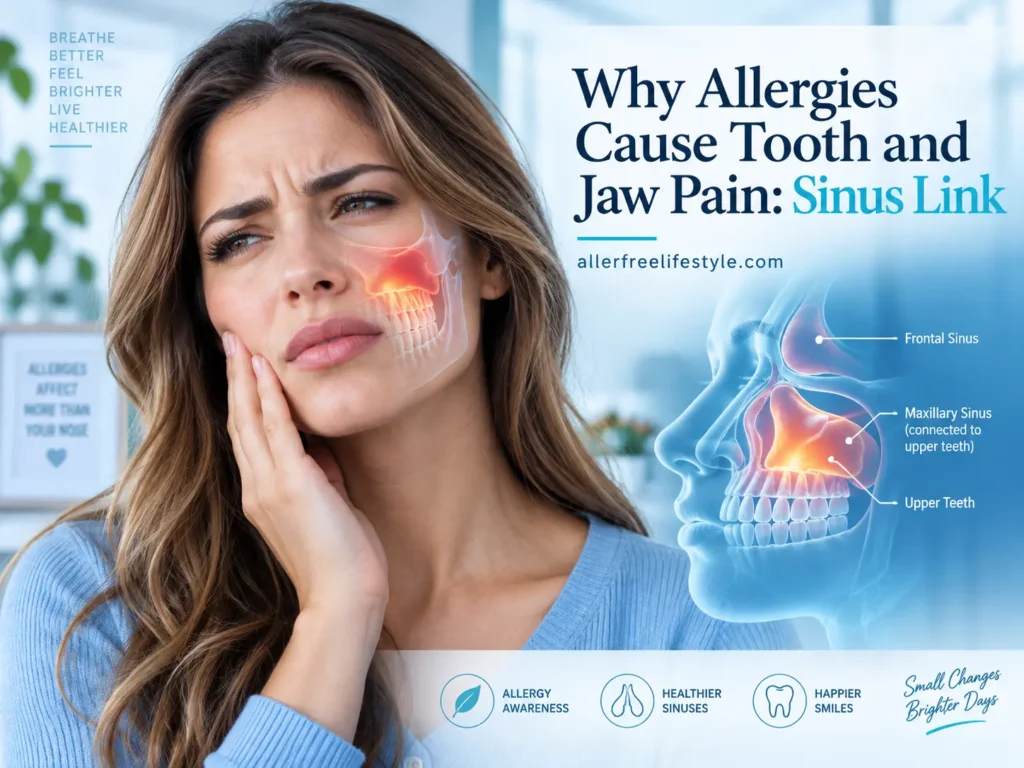
The discomfort may not actually begin inside the teeth. Instead, inflammation triggered by allergies can affect the connected sinus pathways, creating pressure near facial nerves and producing pain that feels like a toothache.
Understanding the relationship between allergic inflammation, sinus anatomy, and nerve pathways can help explain why healthy teeth may hurt during intense allergy episodes.
During a severe allergy flare-up, teeth and jaw pain can occur because allergic inflammation causes swelling inside the nasal passages and sinus cavities, especially the maxillary sinuses located near the upper tooth roots. This pressure can stimulate nearby facial nerves, creating referred pain that feels like a toothache even when the teeth themselves are healthy.
- Allergic reactions increase inflammation in sinus tissues.
- The maxillary sinuses sit close to upper tooth roots.
- Sinus pressure can stimulate nerves responsible for facial and dental sensation.
- Pain often improves when allergy-related inflammation decreases.
Can Allergies Cause Tooth Pain Without a Dental Problem?
Yes, allergies can cause tooth discomfort even when there is no cavity, cracked tooth, or dental infection.
During an allergic reaction, the immune system releases inflammatory chemicals such as histamine. These substances contribute to swelling of the nasal mucosa and sinus lining, reducing normal sinus drainage and increasing pressure within the sinus spaces (1).
The upper teeth are especially vulnerable because their roots are positioned close to the maxillary sinuses. When these sinuses become inflamed, the surrounding nerves can transmit pain signals that the brain interprets as coming from the teeth.
This type of discomfort is called referred pain, where the source of pain and the location where it is felt are different.
Why Do Upper Teeth Hurt During a Severe Allergy Flare-Up?
Upper teeth may hurt during severe allergy episodes because of the close anatomical relationship between the maxillary sinuses and the upper jaw.
The maxillary sinuses are located behind the cheeks and above the roots of many upper molars and premolars. When allergies trigger sinus swelling, pressure changes can affect nearby sensory pathways.
The trigeminal nerve, which provides sensation to the face, jaw, and teeth, plays an important role in transmitting these signals. This is why allergy-related tooth pain can feel like it originates from the teeth even when the actual source is sinus inflammation (2).
This is why allergy-related tooth pain often feels like:
- A dull ache in several upper teeth
- Pressure around the cheeks
- A heavy feeling in the upper jaw
- Discomfort that changes with congestion levels
How Does Sinus Inflammation Create a Toothache-Like Sensation?

The connection between allergies and tooth pain follows a clear biological pathway:
Allergen exposure
↓
Immune activation and histamine release
↓
Swelling of nasal and sinus tissues
↓
Reduced sinus drainage
↓
Pressure changes inside the maxillary sinus
↓
Stimulation of nearby nerve pathways
↓
Pain felt in teeth or jaw
Because the teeth and sinuses share sensory nerve pathways, the brain may misinterpret sinus-related signals as dental pain.
This explains why some people experience tooth discomfort even when dental imaging and examinations do not reveal a tooth-related cause.
Can Severe Allergies Cause Jaw Pain and Facial Pressure?
Severe allergies can contribute to jaw discomfort, particularly when sinus inflammation becomes significant.
The upper jaw region contains several structures affected by sinus changes, including the maxillary sinus, facial tissues, and sensory nerves.
During an allergy flare-up, people may notice:
- Pressure around the cheeks
- Aching near the upper jaw
- Facial heaviness
- A sensation of tightness around the face
In addition, prolonged nasal congestion may encourage mouth breathing, which can increase tension in facial and jaw muscles. This combination of sinus pressure and muscle strain may contribute to jaw discomfort during intense allergy episodes.
Why Does Sinus Pressure Feel Like a Toothache?
Sinus pressure can feel like a toothache because the nervous system does not always identify the exact origin of pain signals.
The upper teeth, maxillary sinus tissues, and facial structures communicate through overlapping branches of the trigeminal nerve. When inflammation affects one area, the brain may perceive the discomfort in another nearby structure.
Allergy-related sinus pain usually has certain patterns:
- Several upper teeth may hurt together
- Pain may occur with nasal congestion or facial pressure
- Symptoms may worsen during allergy exposure
- Discomfort may improve as inflammation settles
A dental problem, however, is often more localised and may involve a single tooth.
Allergy-Related Tooth Pain vs. Dental Tooth Pain: How to Tell the Difference
Feature | Allergy or Sinus-Related Pain | Dental-Related Pain |
Main source | Sinus inflammation and pressure | Tooth decay, infection, cracks, or nerve problems |
Location | Often several upper teeth | Usually one specific tooth |
Sensation | Pressure, dull ache, facial heaviness | Sharp, intense, localized pain |
Allergy connection | Appears with congestion or allergy symptoms | Usually unrelated to allergy seasons |
Other signs | Sneezing, blocked nose, sinus pressure | Gum swelling, chewing pain, temperature sensitivity |
Improvement pattern | Improves as sinus inflammation decreases | Usually continues until dental treatment is provided |
Which Sinus Is Linked to Tooth Pain?
The maxillary sinus is the sinus most commonly associated with tooth discomfort because of its close relationship with the roots of the upper teeth. Dental conditions can also affect this area, creating a connection between oral health and sinus inflammation (3).
Its location explains the connection: the sinus cavity lies directly above the roots of many upper back teeth. When inflammation develops inside this space, pressure can affect nearby nerves and create pain that feels dental in origin.
This relationship is especially important during allergy flare-ups because allergic rhinitis can cause swelling of the nasal and sinus tissues without necessarily causing a dental problem.
Understanding this anatomy helps explain why sinus-related tooth pain often involves upper teeth rather than lower teeth.
Why Do My Teeth Hurt Only During Allergy Season?
When tooth discomfort appears mainly during allergy season, allergic inflammation may be the underlying trigger.
Seasonal allergens such as pollen can repeatedly activate immune responses, causing swelling in the nasal passages and sinus cavities.
A typical pattern may include:
- Tooth or jaw discomfort during pollen exposure
- Symptoms occurring alongside congestion or sneezing
- Improvement after allergy symptoms settle
- Normal dental examination findings
However, recurring pain should not automatically be assumed to be allergy-related. Dental conditions can sometimes develop alongside allergies, so persistent symptoms require proper evaluation.
When Should Tooth and Jaw Pain Be Evaluated?
Although allergies can explain many cases of sinus-related dental discomfort, some symptoms require professional assessment.
Seek medical or dental advice if you experience:
- Severe or worsening pain
- Facial swelling
- Fever
- Gum swelling
- Pain limited to one tooth
- Symptoms that continue after allergy symptoms improve
- Repeated unexplained episodes
A dentist, allergist, or ENT specialist can help determine whether the pain originates from sinus inflammation, allergic disease, or a dental condition.
The Bottom Line
Severe allergy flare-ups can cause teeth and jaw pain because inflammation in the sinus pathways can affect nearby nerves and create referred pain.
The maxillary sinus–tooth relationship explains why upper teeth may ache during periods of congestion and allergic inflammation. Recognizing this connection can help distinguish sinus-related discomfort from true dental problems and guide appropriate care.
Medical Disclaimer
This article is for educational purposes only and does not replace professional medical advice, diagnosis, or treatment. If you experience persistent, severe, or unexplained tooth or jaw pain, consult a qualified healthcare professional or dentist for proper evaluation.
Frequently Asked Questions
Can allergies cause tooth pain without cavities?
Yes. Allergy-related sinus inflammation can create pressure near tooth roots and stimulate nearby nerves, causing tooth discomfort even when teeth are healthy.
Why do my upper teeth hurt when my allergies are bad?
The maxillary sinuses are close to upper tooth roots. Inflammation and pressure in these sinuses can create pain that feels like a toothache.
Can severe allergies cause jaw pain?
Yes. Sinus pressure and inflammation can contribute to aching or heaviness in the upper jaw and facial area.
How can I tell if my tooth pain is from allergies or a dental problem?
Allergy-related pain often affects multiple upper teeth and occurs with congestion, while dental pain is more likely to focus on one tooth.
Which sinus is linked to tooth pain?
The maxillary sinus is most commonly linked to tooth pain because of its close position to the roots of upper teeth.
References
- Fokkens WJ, et al. European Position Paper on Rhinosinusitis and Nasal Polyps 2020. Rhinology. 2020;58(Suppl S29):1-464.
DOI: 10.4193/Rhin20.600 - Patel ZM, et al. Diagnosis and management of chronic rhinosinusitis and its relationship with facial pain. Otolaryngologic Clinics of North America. 2020.
DOI: 10.1016/j.otc.2020.02.001 - Craig JR. Odontogenic sinusitis: A review of the current literature. Current Opinion in Otolaryngology & Head and Neck Surgery. 2022.
DOI: 10.1097/MOO.0000000000000832