

Can Allergies Cause Ear Pain and Blocked Ears? Causes and Treatments Explained
Written by: Dr.Muhammad Ihsan Ullah, PhD
Medically reviewed by: Dr Ali Raza Dogar ,MBBS,ENT
Last updated on July 9, 2026
Yes, allergies can cause ear pain, ear pressure, fullness, muffled hearing, and a blocked ear sensation. These symptoms are often due to Eustachian tube dysfunction caused by allergies, which affects how your ear regulates pressure. While many people associate allergies with sneezing, itchy eyes, and sinus congestion, they are also a common cause of ear pressure from allergies and blocked ears during allergy season. Understanding how allergies cause muffled hearing and ear fullness is crucial for finding effective treatments and managing symptoms.
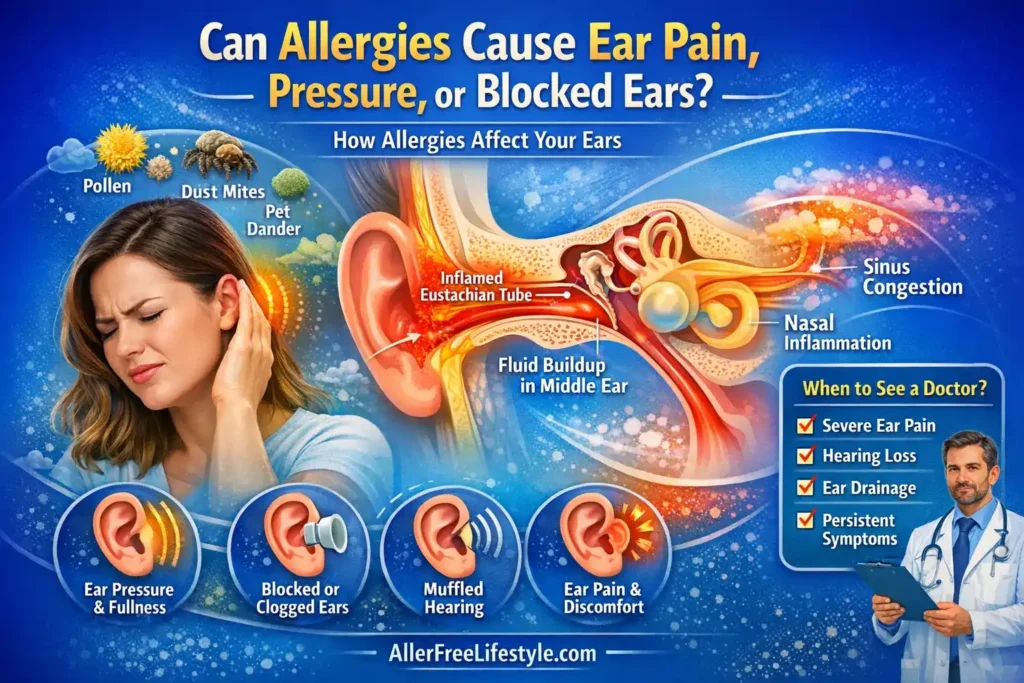
That surprises many people because allergies are usually associated with sneezing, itchy eyes, a runny nose, or sinus congestion. But the ears, nose, and throat are closely connected. When allergic inflammation affects the tissues around the Eustachian tube—the small passage that helps equalize pressure in the middle ear—your ears can start to feel clogged, tight, painful, or “underwater” (Yu, X., et al. 2024; Klimek, L., et al. 2025).
For many people, the first symptom is not severe pain. It is more often a feeling of pressure, fullness, popping, crackling, or temporary muffled hearing. In some cases, the pressure becomes uncomfortable enough to feel like a true earache. In others, fluid can build up behind the eardrum, which may make the ear feel blocked for days or even weeks if the underlying allergy flare is not controlled (Yu, X., et al. 2024; Kim, H. Y. 2025).
This is why people often ask their healthcare providers like:
- can allergies cause ear pain
- can allergies cause ear pressure
- can allergies cause blocked ears
- why do my ears feel clogged during allergies
- can seasonal allergies cause muffled hearing
- can allergies make your ears feel plugged
- can allergies cause ear fullness
All of those questions point to the same core issue: allergy-related Eustachian tube dysfunction and middle-ear pressure changes (Yu, X., et al. 2024).
If you want the direct answer in one line:
Yes, allergies can cause ear pain, pressure, fullness, and blocked ears, mainly by triggering inflammation that disrupts Eustachian tube function and sometimes contributes to fluid buildup in the middle ear (Yu, X., et al. 2024; Klimek, L., et al. 2025).
Can Allergies Cause Clogged Ears?
Yes, allergies can cause clogged ears. This usually happens when allergic inflammation affects the nose, throat, and the opening of the Eustachian tube. When the Eustachian tube does not open and close properly, pressure behind the eardrum can become unbalanced.
This can make the ear feel:
- clogged
- plugged
- full
- blocked
- underwater
- muffled
- hard to pop
Allergy-related clogged ears are often worse during pollen season, dust exposure, pet dander exposure, mold exposure, or when nasal congestion is strong. The problem is usually not earwax in the outer ear. It is often pressure and ventilation trouble behind the eardrum.
If the clogged feeling comes with sneezing, itchy eyes, runny nose, post-nasal drip, or nasal congestion, allergies may be involved. If it comes with fever, severe pain, drainage, dizziness, or sudden hearing loss, medical evaluation is needed.
How Allergies Affect the Ears
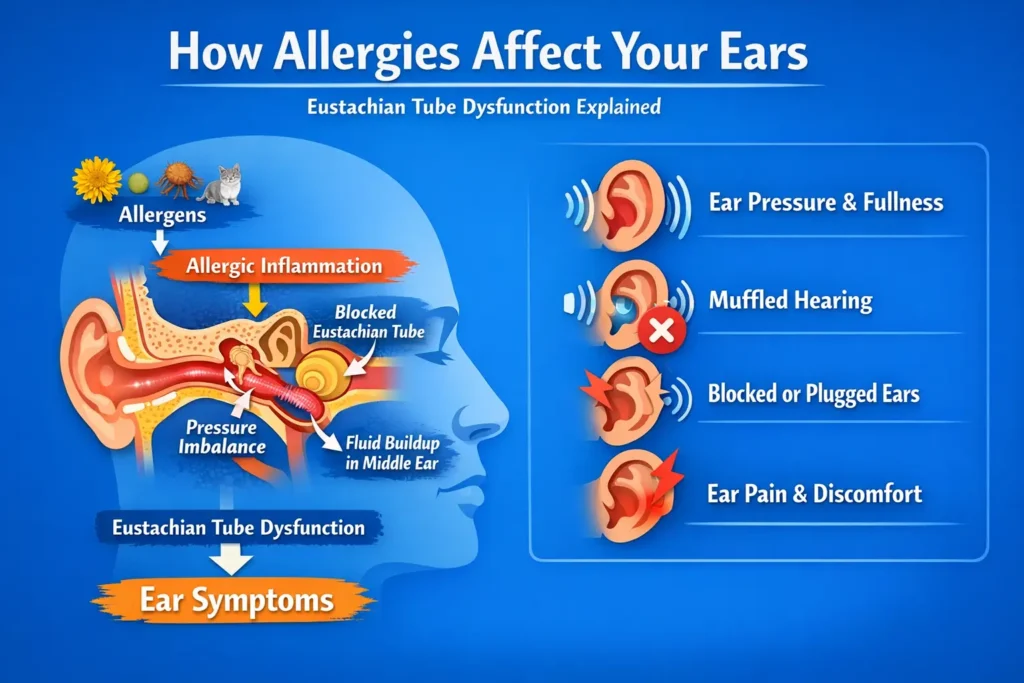
The key structure here is the Eustachian tube. This narrow channel connects the middle ear to the back of the nose and upper throat. Its main jobs are to:
- balance pressure on both sides of the eardrum
- allow normal airflow into the middle ear
- help clear secretions from the middle ear
When allergies flare up, the lining of the nose and nasopharynx becomes inflamed. That swelling can extend to the opening of the Eustachian tube. Once the tube does not open well, pressure regulation becomes abnormal, and that is when symptoms start: blocked ears, fullness, pressure, popping, muffled hearing, and sometimes pain (Yu, X., et al. 2024; Kim, H. Y. 2025).
This is why allergy-related ear symptoms often happen alongside:
- nasal congestion
- sneezing
- postnasal drip
- itchy nose or eyes
- sinus pressure
The ear symptoms are not separate from the allergy flare. They are often part of the same upper-airway inflammatory process (Bernstein, J. A., et al. 2024).
Why Allergies Can Cause Ear Pressure
Ear pressure is often the first thing people notice.
You may feel:
- one ear or both ears are “stopped up”
- your ears need to pop but will not
- your hearing feels dull
- your own voice sounds louder inside your head
This happens because the middle ear is supposed to stay ventilated. When the Eustachian tube does not open properly, pressure can become negative inside the middle ear. That changes how the eardrum moves and creates the sensation of pressure, fullness, and blockage (Yu, X., et al. 2024; Kim, H. Y. 2025).
In simple terms, your ear feels blocked not because something is physically stuffed in the ear canal, but because the pressure system behind the eardrum is not working normally (Kim, H. Y. 2025).
How to Relieve Ear Pressure From Allergies
To relieve ear pressure from allergies, the main goal is to reduce nasal and Eustachian tube inflammation. Ear pressure usually improves when the allergy flare and nasal congestion are controlled.
Helpful steps may include:
- treating nasal allergies consistently
- using a nasal corticosteroid spray if recommended
- using a second-generation antihistamine if sneezing, itching, or runny nose are present
- using saline spray or saline rinse to clear mucus and allergens
- avoiding pollen, dust mites, mold, smoke, perfume, and pet dander triggers
- keeping windows closed during high-pollen days
- showering after outdoor exposure
- using a HEPA air purifier in the bedroom
- swallowing, yawning, or chewing gum gently to help pressure equalization
Avoid forceful ear popping if you have pain, infection symptoms, or a damaged eardrum. Also avoid putting cotton swabs, oils, or random drops deep into the ear unless a clinician has checked the ear.
If ear pressure lasts more than a couple of weeks, keeps returning, affects hearing, or is mainly one-sided, see a doctor or ENT specialist.
How Long Do Blocked Ears From Allergies Last?
Blocked ears from allergies may last a few hours, a few days, or sometimes longer if the allergy flare continues. The duration depends on how much inflammation is around the Eustachian tube and whether fluid has built up behind the eardrum.
Mild pressure may improve as congestion improves. But if the Eustachian tube stays swollen, the blocked feeling can last for days or weeks.
Blocked ears may last longer when:
- pollen exposure stays high
- dust mite or pet exposure continues
- nasal congestion is untreated
- fluid collects behind the eardrum
- sinus inflammation is also present
- symptoms are one-sided or recurrent
- an infection is developing
If the blocked ear feeling does not improve after a couple of weeks, or if it comes with hearing loss, fever, drainage, dizziness, or severe pain, medical assessment is important.
Can Allergies Cause a Blocked or Plugged Ear Feeling?
Yes. This is one of the most common allergy-related ear complaints.
People describe it in different ways:
- blocked ears
- plugged ears
- clogged ears
- fullness in the ear
- underwater sensation
- muffled hearing
These descriptions are usually pointing to the same mechanism: impaired middle-ear ventilation from Eustachian tube dysfunction (Yu, X., et al. 2024).
This is also why allergy-related blocked ears can come and go. On some days, the inflammation is milder and the tube opens better. On other days—especially during heavy pollen exposure, dust exposure, or worsening congestion—the blockage feeling becomes much more noticeable (Bernstein, J. A., et al. 2024).
Can Allergies Cause Ear Pain?
Yes, but the pain is often different from the pain of an acute ear infection.
Allergy-related ear pain is more often:
- dull
- pressure-like
- aching
- intermittent
- linked with fullness or popping
The discomfort usually comes from pressure imbalance, retraction of the eardrum, and irritation within the middle-ear system, rather than from a bacterial infection. If the pressure persists long enough or fluid accumulates, the discomfort can become more obvious and more bothersome (Kim, H. Y. 2025; Klimek, L., et al. 2025).
That said, severe pain should never be brushed off automatically as “just allergies.” If the pain is intense, associated with fever, drainage, or marked hearing loss, a different diagnosis such as infection may need to be considered (Klimek, L., et al. 2025).
Why Muffled Hearing Can Happen During Allergies
When pressure is abnormal or fluid collects in the middle ear, sound is transmitted less efficiently. That can lead to a temporary reduction in hearing clarity. People often describe this as:
- muffled hearing
- sounds being far away
- needing others to repeat themselves
- hearing as if under water
This type of hearing change is often conductive, meaning the problem is with sound transmission through the middle ear rather than damage to the inner ear itself. Recent review data on Eustachian tube dysfunction and hearing pathways supports this mechanism, including the effects of negative pressure and effusion on sound conduction (Kim, H. Y. 2025).
Can Allergies Cause Ear Popping, Crackling, or Tinnitus?
Yes, allergies can contribute to ear popping and crackling when the Eustachian tube opens and closes poorly. These sounds often happen when pressure is changing behind the eardrum.
You may notice popping or crackling when:
- swallowing
- yawning
- chewing
- changing altitude
- waking up congested
- symptoms are worse during allergy season
Allergies may also contribute to ringing or buzzing in the ear, called tinnitus, especially when ear pressure, congestion, or Eustachian tube dysfunction is present. However, tinnitus has many possible causes, including noise exposure, earwax, infection, medication effects, hearing loss, and inner-ear problems.
If tinnitus is new, one-sided, persistent, severe, or linked with sudden hearing loss or dizziness, do not assume it is just allergies. It should be checked by a healthcare professional.
Can Allergies Lead to Fluid Behind the Eardrum?
They can.
If the Eustachian tube remains dysfunctional, fluid may build up in the middle ear. This is often called otitis media with effusion or middle-ear effusion. It does not always mean infection. Sometimes it reflects ventilation failure and inflammation rather than bacteria (Klimek, L., et al. 2025).
This is an important point because many people assume any ear pressure or fluid must mean they need antibiotics. That is not always true. In allergy-related cases, the more important step may be treating the underlying inflammation and restoring Eustachian tube function rather than automatically assuming a bacterial cause (Klimek, L., et al. 2025; Bernstein, J. A., et al. 2024).
Common Ear Symptoms Allergies Can Cause
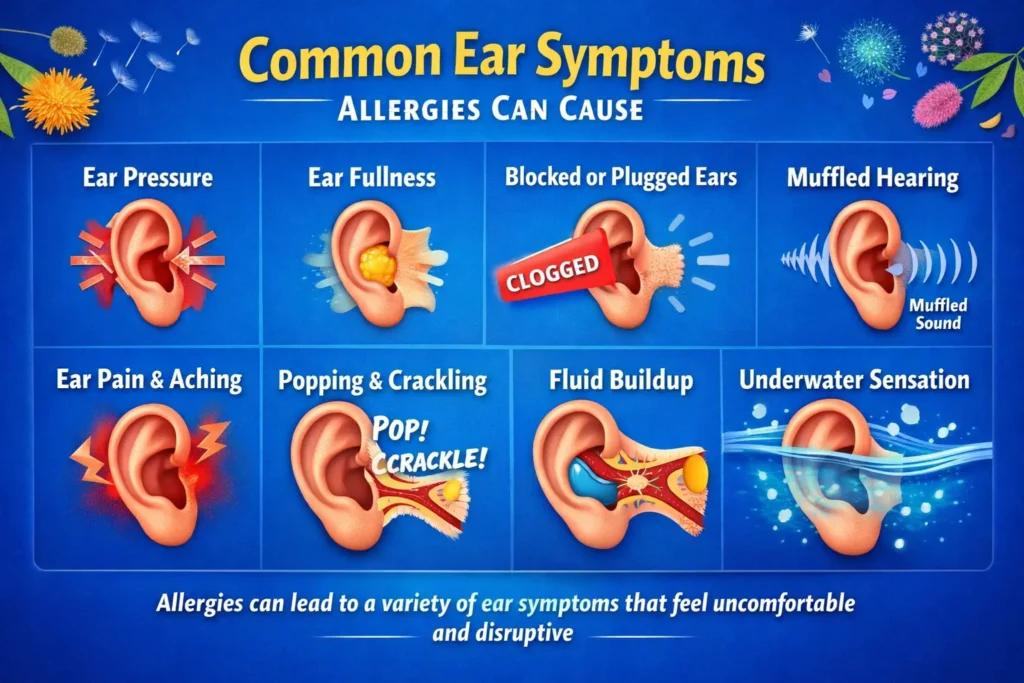
Allergies can affect the ears in several ways. The most relevant symptoms for this topic include:
- ear pressure
- ear fullness
- blocked or plugged ears
- mild to moderate ear pain
- muffled hearing
- popping or crackling
- needing to swallow repeatedly to “open” the ears
- intermittent changes that worsen during allergy flares
These symptoms are especially likely when nasal congestion is prominent, because congestion around the back of the nose can interfere with Eustachian tube opening (Yu, X., et al. 2024; Bernstein, J. A., et al. 2024).
Allergies vs Ear Infection
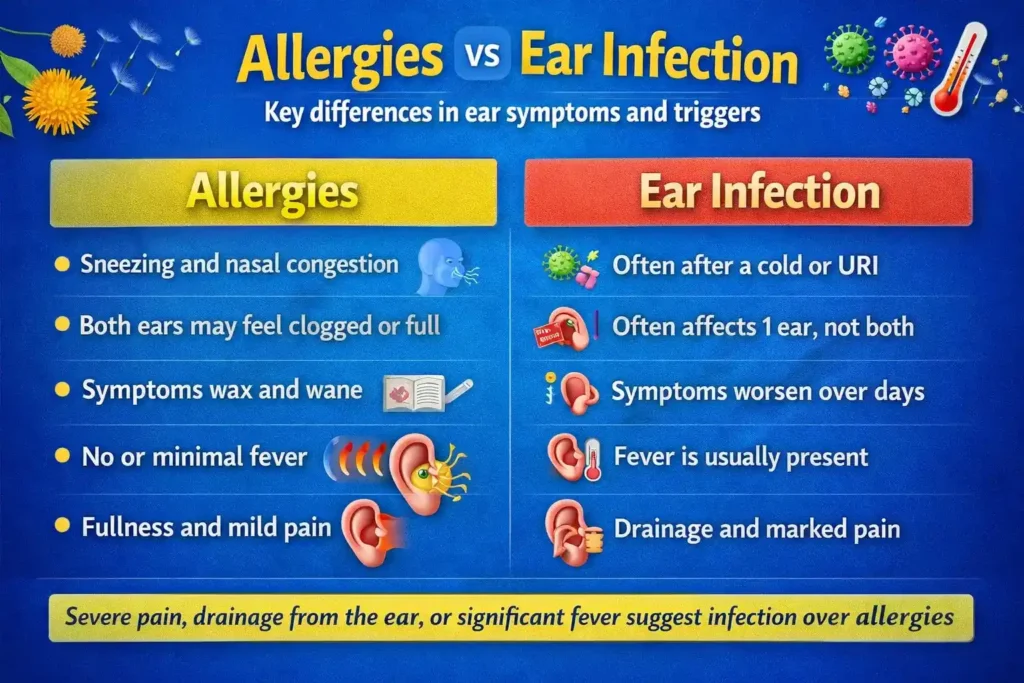
This is one of the most important clinical distinctions.
Features that may fit allergies more closely
- symptoms come with sneezing, itchy eyes, or nasal congestion
- both ears may feel full or blocked
- symptoms wax and wane
- there is little or no fever
- the main sensation is pressure or fullness rather than severe pain
Features that may suggest ear infection or another problem
- severe or worsening ear pain
- fever
- ear drainage
- symptoms after a recent viral illness that keep worsening
- significant hearing loss
- marked tenderness or feeling very unwell
Allergies can mimic some infection symptoms, especially fullness and discomfort, but severe pain, drainage, and systemic illness deserve medical assessment (Klimek, L., et al. 2025).
Allergy Ear Pain vs Ear Infection: Quick Comparison
Allergy-related ear pain and ear infection can feel similar, but the pattern is often different.
Allergy-related ear symptoms are more likely when:
- ear pressure comes with sneezing or itchy eyes
- both ears feel full or clogged
- symptoms come and go with allergy exposure
- there is little or no fever
- the main feeling is fullness, popping, or muffled hearing
- nasal congestion is also present
Ear infection is more likely when:
- pain is severe or worsening
- fever is present
- fluid or pus drains from the ear
- hearing loss is more noticeable
- symptoms started after a cold or viral illness
- the person feels very unwell
- symptoms are mainly in one ear
Allergies can cause pressure and discomfort, but severe ear pain, fever, drainage, or sudden hearing loss should not be treated as a simple allergy flare.
Why Ear Symptoms May Feel Worse During Allergy Season
Seasonal allergic rhinitis can sharply increase inflammation in the upper airway. During high pollen seasons, many patients notice:
- more nasal obstruction
- more sinus pressure
- more postnasal drip
- more ear fullness and popping
That pattern makes physiological sense. More allergic inflammation around the nose generally means a greater chance that the Eustachian tube opening is also affected (Bernstein, J. A., et al. 2024).
Perennial allergies, such as dust mite or pet dander allergy, can do the same thing year-round. The difference is that the symptoms may feel more chronic and less obviously seasonal (Bernstein, J. A., et al. 2024).
What Usually Helps Allergy-Related Ear Pressure or Blocked Ears
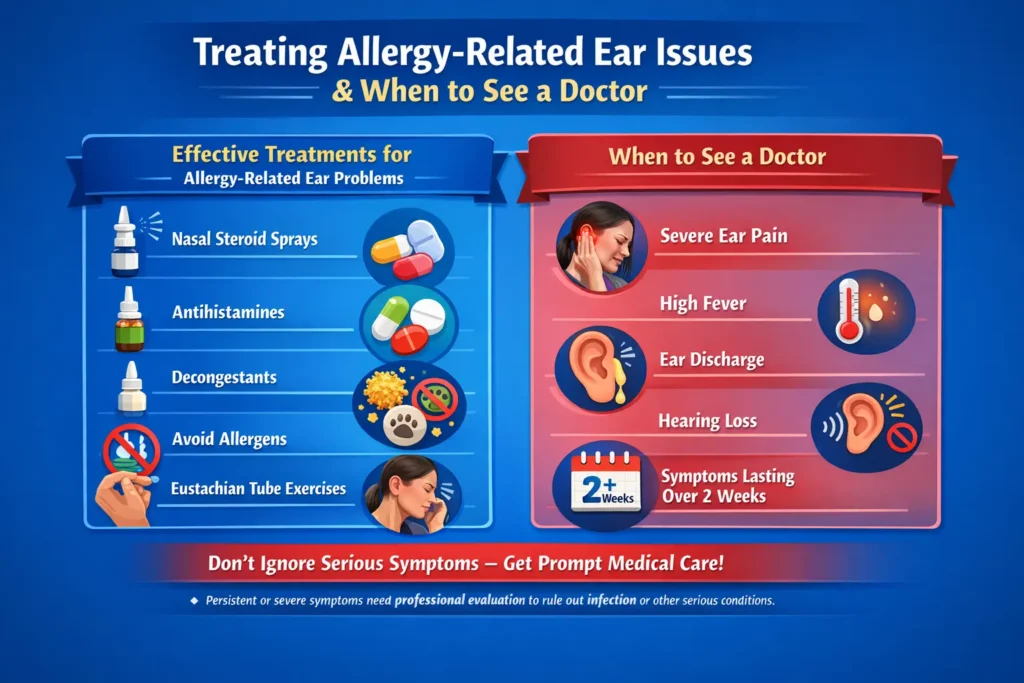
The best treatment is usually aimed at the allergy and the inflammation driving the Eustachian tube dysfunction.
1.Intranasal corticosteroid sprays
These are a mainstay for allergic rhinitis and are strongly supported in recent reviews. They help reduce inflammation in the nose and around the Eustachian tube opening, which can improve pressure regulation over time (Bernstein, J. A., et al. 2024).
Common examples include fluticasone, mometasone, budesonide, and triamcinolone. They usually work best when used correctly and consistently rather than only once in a while (Bernstein, J. A., et al. 2024).
2.Intranasal antihistamines or combination intranasal therapy
Recent evidence supports intranasal therapy as an important treatment pathway in allergic rhinitis. Systematic review data show that intranasal antihistamines and corticosteroids improve allergic rhinitis symptoms and quality of life, with differences among individual agents (Sousa-Pinto, B., et al. 2024).
3.Second-generation oral antihistamines
These can be helpful, especially when itching, sneezing, and watery symptoms are prominent. They may not directly “pop” the ears, but by reducing the overall allergic response they can help the upper-airway inflammation that contributes to ear symptoms (Bernstein, J. A., et al. 2024).
Examples commonly used in practice include loratadine, cetirizine, and fexofenadine (Bernstein, J. A., et al. 2024).
4.Allergen avoidance
If you know your trigger, reducing exposure matters. For some patients that means:
- keeping windows closed during heavy pollen days
- showering after outdoor exposure
- controlling indoor dust exposure
- using bedding protection for dust mites
- reducing pet dander exposure when relevant
Avoidance will not instantly clear blocked ears, but it can reduce the inflammatory burden that keeps symptoms going (Bernstein, J. A., et al. 2024).
Time and pressure normalization
Some allergy-related ear pressure settles as the allergy flare improves. Repeated swallowing, yawning, and gentle pressure equalization may help some people, but forceful maneuvers should be used carefully, especially if pain is significant or the diagnosis is uncertain. Persistent symptoms deserve evaluation rather than repeated self-treatment (Klimek, L., et al. 2025).
What Not to Do When Your Ears Feel Blocked From Allergies
When your ears feel blocked from allergies, avoid treatments that can irritate the ear or delay proper care.
Avoid:
- pushing cotton swabs deep into the ear
- using ear candles
- forcing the ear to pop aggressively
- using random ear drops without knowing the cause
- ignoring one-sided hearing loss
- assuming all ear pain is allergy-related
- overusing nasal decongestant sprays
- delaying care if fever, drainage, dizziness, or severe pain appears
A blocked ear feeling from allergies often comes from pressure behind the eardrum, not from dirt in the ear canal. Treating the nose and allergy inflammation is usually more useful than trying to “clean out” the ear.
What the Latest Evidence Suggests
The most clinically useful recent evidence points in a consistent direction:
- allergy can contribute to Eustachian tube dysfunction and middle-ear symptoms (Yu, X., et al. 2024).
- allergy and immunity are important considerations in otitis media with effusion and Eustachian tube dysfunction, especially when symptoms are persistent or recurrent (Klimek, L., et al. 2025).
- modern allergic rhinitis management continues to favor anti-inflammatory intranasal treatment as a core strategy (Bernstein, J. A., et al. 2024).
- meta-analysis data show that intranasal medications are effective for improving rhinitis symptoms and quality of life (Sousa-Pinto, B., et al. 2024).
That means the question is no longer whether allergies can affect the ears at all. They can. The more practical question is whether the person’s ear symptoms fit allergy-driven Eustachian tube dysfunction alone or whether another diagnosis also needs attention (Yu, X., et al. 2024; Klimek, L., et al. 2025).
When to See a Doctor
You should not ignore ear symptoms that are severe, one-sided, or persistent.
Seek medical assessment if you have:
- severe ear pain
- fever
- drainage from the ear
- notable hearing loss
- symptoms lasting more than a couple of weeks
- recurrent episodes that keep coming back
- dizziness that is significant or worsening
- symptoms mainly in one ear and not improving
Those features can point to infection, prolonged effusion, more significant Eustachian tube dysfunction, or another ENT issue that needs direct examination (Klimek, L., et al. 2025).
Key Takeaway
If you have been wondering, “Can allergies cause ear pain, pressure, or blocked ears?” the answer is yes.
The most likely reason is not wax in the ear canal. It is usually allergy-related inflammation affecting the Eustachian tube and middle-ear pressure system. That can make your ears feel blocked, full, painful, or muffled, and in some cases it can contribute to fluid behind the eardrum (Yu, X., et al. 2024; Klimek, L., et al. 2025).
The most evidence-based approach is to address the underlying allergic inflammation, especially with appropriate rhinitis treatment, while staying alert for warning signs that suggest infection or another ear disorder (Bernstein, J. A., et al. 2024; Sousa-Pinto, B., et al. 2024).
Medical Disclaimer
This content is for informational and educational purposes only and is not intended as medical advice, diagnosis, or treatment. Always consult a qualified healthcare professional or your physician regarding any medical concerns or symptoms. Do not ignore professional medical advice or delay seeking care based on the information provided in this article.
Frequently Asked Questions (FAQs)
Can allergies cause ear pain?
Yes, allergies can cause ear pain by triggering inflammation around the Eustachian tube. This can create pressure changes behind the eardrum and lead to a dull ache, fullness, or discomfort.
Can allergies cause clogged ears?
Yes, allergies can cause clogged ears when nasal inflammation affects Eustachian tube function. This may make the ear feel blocked, plugged, full, muffled, or underwater.
Can allergies cause ear pressure without infection?
Yes. Ear pressure can happen from allergy-related Eustachian tube dysfunction even when there is no ear infection. Fever, severe pain, drainage, or worsening illness suggests another cause may be present.
How do you relieve ear pressure from allergies?
Treat the allergy and nasal inflammation first. Saline rinse, trigger avoidance, antihistamines, nasal corticosteroid sprays, and bedroom allergen control may help. See a doctor if symptoms persist, worsen, or affect hearing.
How long do blocked ears from allergies last?
Mild blocked ears may improve within days as allergy symptoms calm down. If blockage lasts more than a couple of weeks, keeps returning, is one-sided, or affects hearing, it should be checked by a clinician.
Can seasonal allergies cause muffled hearing?
Yes, seasonal allergies can cause temporary muffled hearing if Eustachian tube dysfunction or fluid behind the eardrum affects sound transmission. Sudden or severe hearing loss should be medically evaluated.
Can allergies cause ear popping or crackling?
Yes, allergies can cause popping or crackling sounds when the Eustachian tube struggles to equalize pressure. This may happen during swallowing, yawning, chewing, or allergy flares.
Can allergies cause ringing in the ears?
Allergies may contribute to ringing or buzzing in the ears if congestion and Eustachian tube dysfunction affect ear pressure. But tinnitus has many possible causes, so persistent or one-sided ringing should be checked.
How can I tell if ear pain is allergies or an ear infection?
Allergy-related ear pain often comes with sneezing, itchy eyes, congestion, and pressure or fullness. Ear infection is more likely with fever, severe pain, drainage, feeling very unwell, or significant hearing loss.
When should I see a doctor for blocked ears from allergies?
See a doctor if blocked ears last more than two weeks, keep returning, affect hearing, are mainly one-sided, or come with severe pain, fever, drainage, dizziness, ringing, or sudden hearing loss.
References
- Yu, X., Zhang, H., Zong, S., & Xiao, H. (2024). Allergy in pathogenesis of Eustachian tube dysfunction. World Allergy Organization Journal, 17(1), 100860. doi:10.1016/j.waojou.2023.100860.
- Klimek, L., Brough, H. A., Arasi, S., Toppila-Salmi, S., Bergmann, C., Jutel, M., Bousquet, J., Hox, V., Gevaert, P., Tomazic, P. V., Rondón Segovia, C., Cingi, C., Cuevas, M., Gröger, M., Huber, P., Reitsma, S., Rudenko, M., Maza-Solano, J., Gane, S., … Torres Jaén, M. J. (2025). Otitis media with effusion (OME) and Eustachian tube dysfunction: The role of allergy and immunity—An EAACI position paper. Allergy, 80(9), 2429–2441. doi:10.1111/all.16554.
- Bernstein, J. A., Bernstein, J. S., Makol, R., & Ward, S. (2024). Allergic rhinitis: A review. JAMA, 331(10), 866–877. doi:10.1001/jama.2024.0530.
- Sousa-Pinto, B., Vieira, R. J., Brozek, J., Cardoso-Fernandes, A., Lourenço-Silva, N., Ferreira-da-Silva, R., Ferreira, A., Gil-Mata, S., Bedbrook, A., Klimek, L., Fonseca, J. A., Zuberbier, T., Schünemann, H. J., & Bousquet, J. (2024). Intranasal antihistamines and corticosteroids in allergic rhinitis: A systematic review and meta-analysis. Journal of Allergy and Clinical Immunology, 154(2), 340–354. doi:10.1016/j.jaci.2024.04.016.