

Daily Lifestyle Routine to Reduce Allergic Rhinitis Symptoms Naturally
Written by: Dr.Muhammad Ihsan Ullah, PhD
Medically reviewed by: Dr. Jamal Ud Din Khan,FCPS
Last updated on February 13,2026
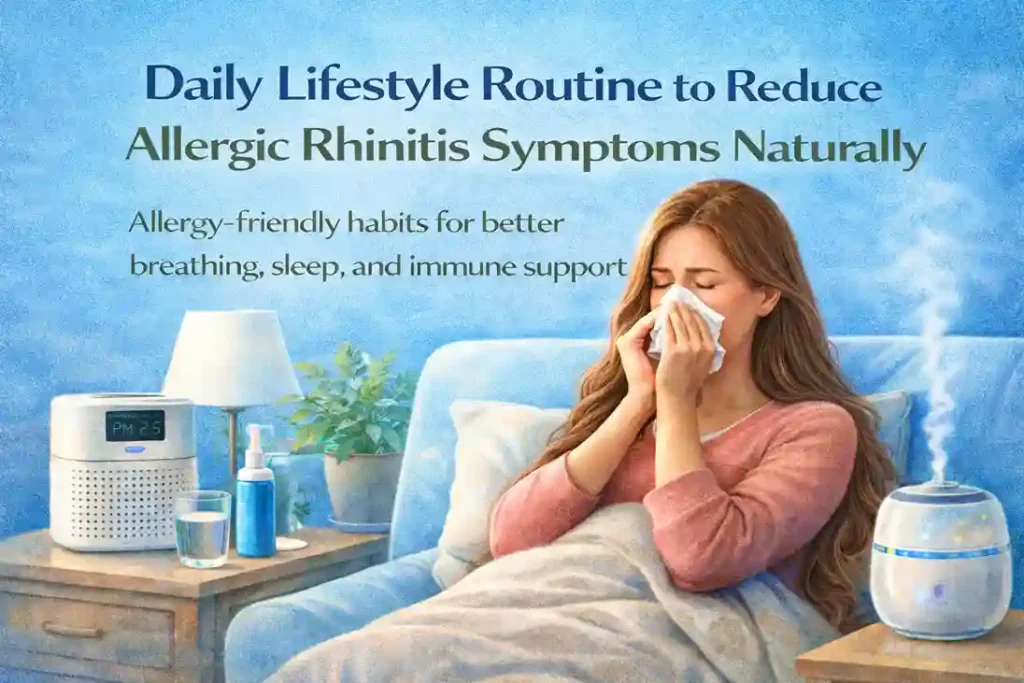
Living with allergic rhinitis (hay fever) can feel like a constant battle—sneezing, nasal congestion, itchy eyes, sinus pressure, poor sleep, and low daytime energy often become part of everyday life.
While medications like antihistamines and nasal sprays help control symptoms, daily lifestyle habits play a critical role in reducing allergen exposure, calming nasal inflammation, and preventing frequent flare-ups.
This evidence-based daily routine focuses on environmental control, nasal hygiene, breathing techniques, sleep optimization, and natural lifestyle strategies to support people with allergic rhinitis—alongside medical care when needed.
Why a Daily Lifestyle Routine Matters in Allergic Rhinitis
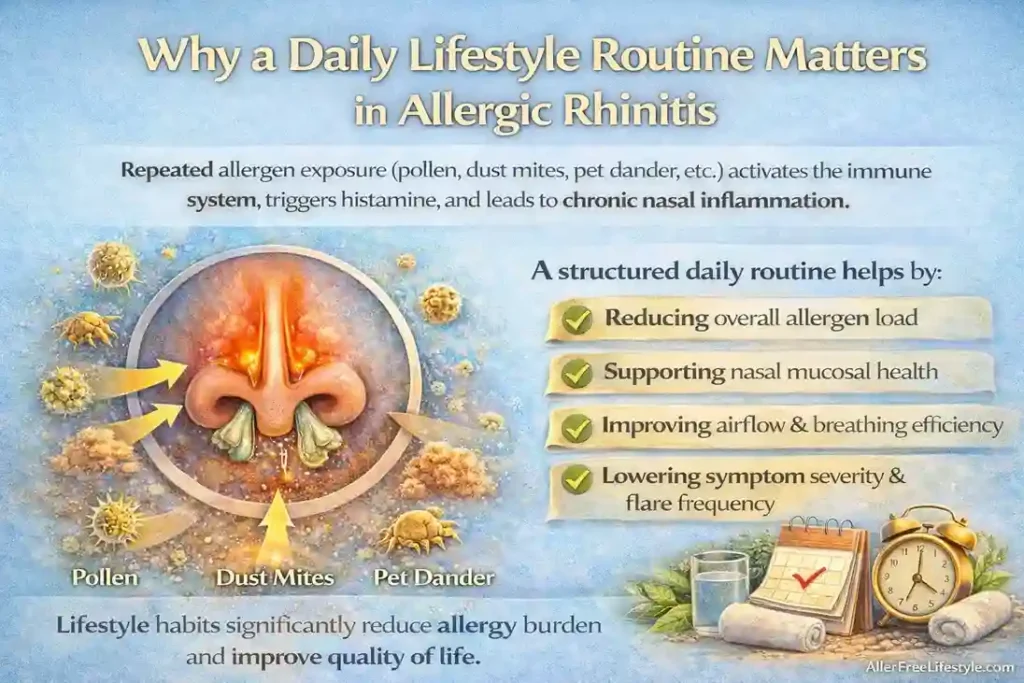
Allergic rhinitis is triggered by repeated exposure to airborne allergens such as pollen, dust mites, pet dander, mold spores, and indoor irritants.
Each exposure activates the immune system, releases histamine, and leads to chronic nasal inflammation.
A structured daily routine helps by:
- Reducing overall allergen load
- Supporting nasal mucosal health
- Improving airflow and breathing efficiency
- Enhancing sleep quality
- Lowering symptom severity and flare frequency
Lifestyle measures alone may not “cure” allergies, but they significantly reduce disease burden and improve quality of life.
Morning Routine for Allergic Rhinitis Relief
Wake-Up Nasal Care (First 10 Minutes)
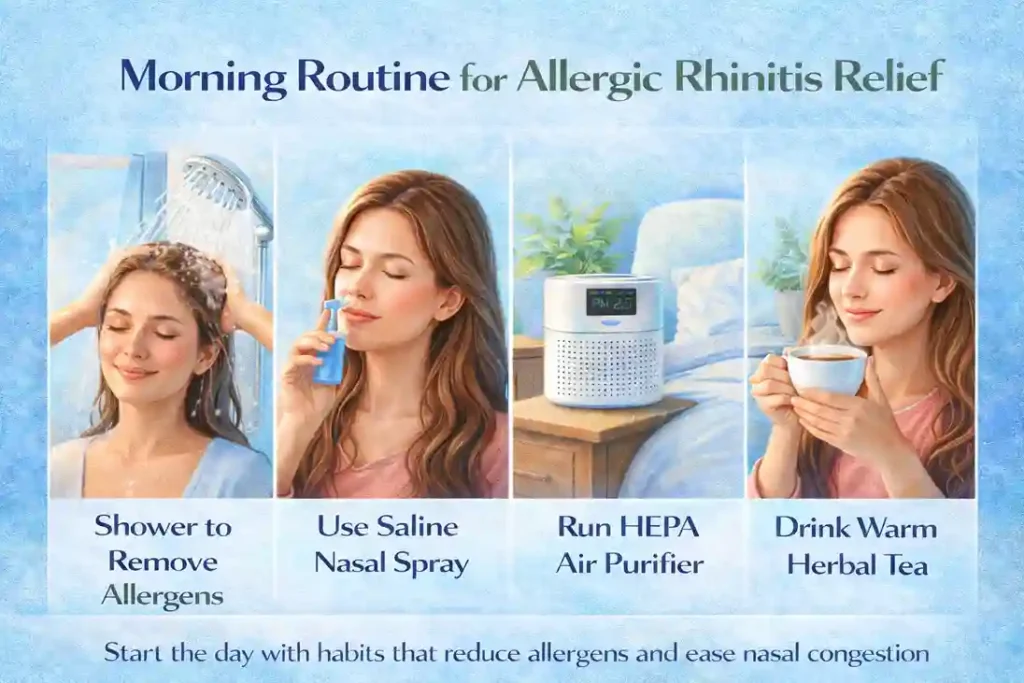
Morning is often the worst time for allergy symptoms due to overnight allergen accumulation.
What to do:
- Rinse your nose using a saline nasal spray or saline irrigation
- Gently blow your nose (avoid forceful blowing)
- Avoid dry indoor air
Why it helps:
Saline rinses remove pollen, dust mites, mucus, and inflammatory mediators, improving nasal airflow and reducing congestion.
Morning Breathing & Chest Opening
Shallow mouth breathing worsens nasal dryness and congestion.
Simple breathing practice (5 minutes):
- Sit upright
- Inhale slowly through the nose (diaphragmatic breathing)
- Expand the chest and rib cage
- Exhale slowly through the nose
Benefits:
- Improves nasal airflow
- Supports lung expansion
- Enhances oxygen delivery
Reduces airway irritation
Bedroom Air Check Before Leaving Home
Your bedroom is the most important environment for allergy control.
Checklist:
- Windows closed during pollen season
- HEPA air purifier running
- Indoor humidity maintained around 35–50%
- No pets on the bed
This step alone can significantly reduce morning symptoms.
Daytime Lifestyle Habits That Prevent Allergy Flare-Ups
Outdoor Exposure Control
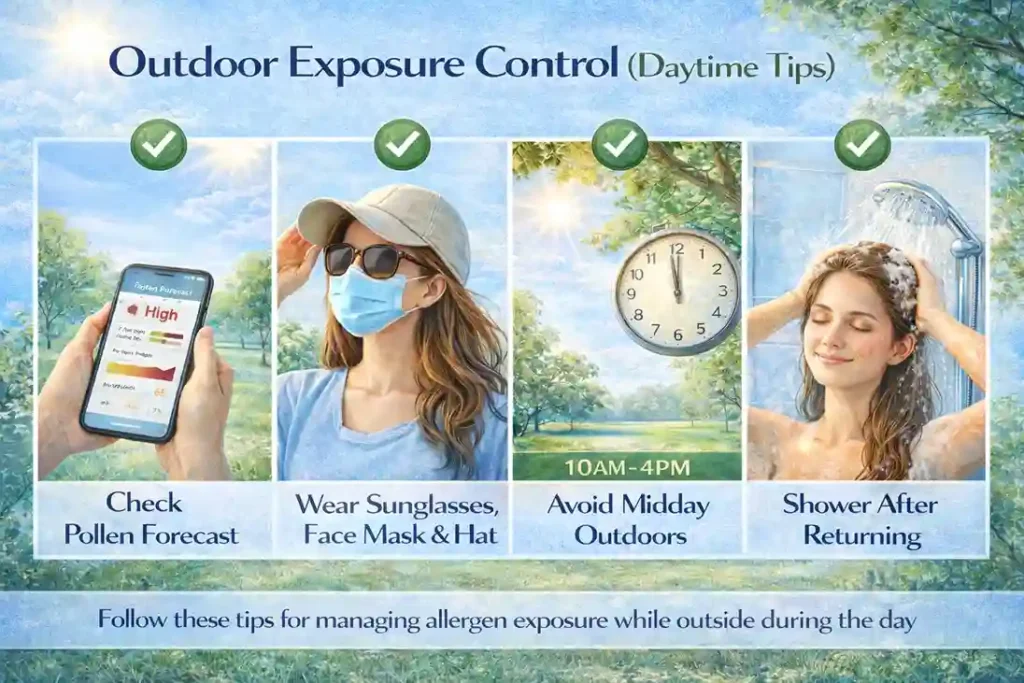
Outdoor allergens are a major trigger for seasonal allergic rhinitis.
Protective habits:
- Wear wraparound sunglasses to block pollen
- Use a mask on high-pollen or windy days
- Avoid outdoor activity during peak pollen hours (early morning)
- Shower and change clothes after prolonged outdoor exposure
Work & Home Environment Hygiene
Indoor irritants worsen nasal inflammation even in people without classic allergies.
Reduce triggers by:
- Avoiding strong perfumes, incense, and aerosols
- Keeping workspaces dust-free
- Using good ventilation
- Cleaning surfaces with damp microfiber cloths
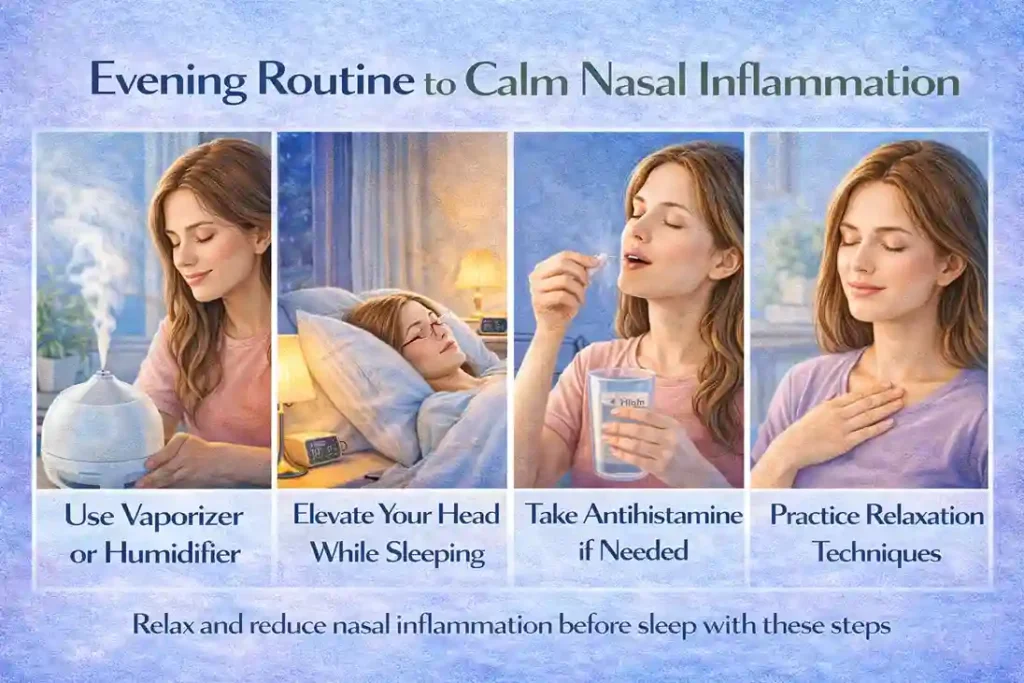
Evening Routine to Calm Nasal Inflammation
Post-Outdoor Decontamination
After returning home:
- Shower to remove pollen from skin and hair
- Change clothes immediately
- Avoid sitting on bedding with outdoor clothes
This prevents allergens from spreading indoors.
Evening Nasal & Sinus Care
If symptoms persist:
- Use a saline spray or gentle nasal rinse
- Optional warm steam inhalation (avoid burns)
Result:
Reduced nasal dryness, improved sinus drainage, and easier breathing before sleep.
This prevents allergens from spreading indoors.
Night Routine for Better Sleep With Allergies
Create an Allergy-Friendly Bedroom
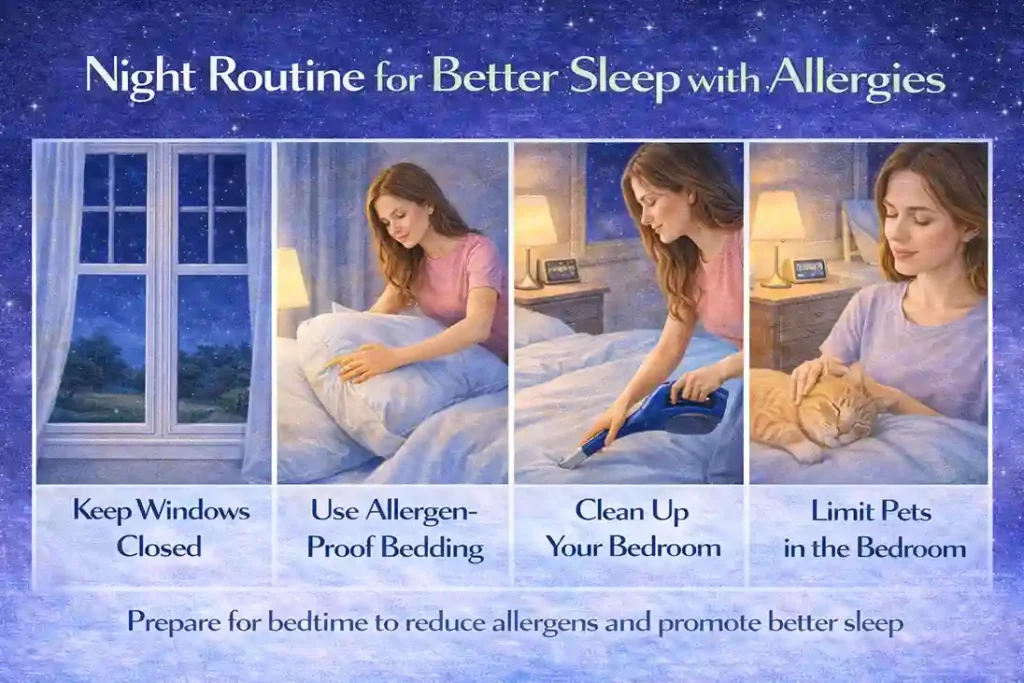
Sleep disruption is one of the biggest quality-of-life issues in allergic rhinitis.
Bedroom essentials:
- Dust-mite-proof mattress and pillow covers
- Wash bedding weekly in hot water (≥130°F / 54°C)
- HEPA air purifier near the bed
- Keep pets out of the bedroom.
Sleep Position & Breathing:
- Sleep with the head slightly elevated
- Practice nasal breathing
- Avoid sleeping flat if congestion is severe
Good sleep supports immune balance and symptom control.
the bedroom
Lifestyle Habits That Support Immune Balance
Rather than “boosting” immunity, the goal is immune regulation.
Helpful habits include:
- Consistent sleep schedule
- Light daily physical activity
- Stress reduction (breathing, stretching)
- Adequate hydration
- Balanced meals (anti-inflammatory patterns)
These habits reduce systemic inflammation and improve allergy resilience.
What This Routine Can and Cannot Do
This lifestyle routine:
- ✅ Reduces allergen exposure
- ✅ Improves nasal comfort
- ✅ Supports breathing and sleep
- ✅ Lowers symptom frequency
It does not:
- ❌ Replace prescribed medications
- ❌ Cure allergic rhinitis
- ❌ Eliminate severe allergies alone
People with moderate to severe symptoms should continue medical therapy and consult healthcare professionals.
When Lifestyle Changes Are Not Enough
You should seek medical care if:
- Symptoms persist despite consistent routine
- Sleep or daily function is affected
- Asthma symptoms appear
- Frequent sinus infections occur
Lifestyle and medical treatment work best together, not separately.
Medical Review Disclaimer
This article is for informational and educational purposes only and does not constitute medical advice. The content is written by a qualified healthcare professional and medically reviewed for accuracy. However, it should not be used as a substitute for professional medical diagnosis, treatment, or advice. Always consult a licensed healthcare provider regarding any medical condition or health concern.
Frequently Asked Questions (FAQs)
1.Can lifestyle changes really reduce allergic rhinitis symptoms?
Yes. Consistent environmental control, nasal hygiene, and breathing practices significantly reduce symptom burden.
2.How long does it take to see improvement?
Many people notice improvement within 1–2 weeks of consistent lifestyle changes.
3.Can lifestyle changes reduce medication use?
They may reduce symptom severity, but medication decisions should always be made with a doctor.
4.Is this routine safe for children and older adults?
Yes. Most steps are non-drug, gentle, and suitable for all ages.