

The Best Houseplants for Allergic Rhinitis: Low-Pollen Indoor Greenery
Written by: Dr. Muhammad Ihsan Ullah, PhD
Medically reviewed by: Dr. Jamal ud Din Khan, FCPS
Last updated on September 28, 2026

Indoor plants can transform a living space by adding natural beauty, improving comfort, and creating a calming atmosphere. However, for individuals with allergic rhinitis, selecting the right greenery is important because some plants may contribute to irritation through pollen, plant debris, dust accumulation, or mold growth in moist soil.
The ideal choices are usually foliage-based plants that produce little airborne pollen and are easy to maintain. By understanding plant characteristics and practising proper care, allergy-sensitive individuals can enjoy indoor greenery while reducing potential triggers.
The best choices for allergy-sensitive homes include snake plants, ZZ plants, spider plants, orchids, and certain palm varieties because they generally produce minimal airborne pollen indoors. Although no houseplant is completely allergy-proof, selecting low-pollen foliage plants, preventing excess moisture, and maintaining clean leaves can help create a more comfortable indoor environment.
Best Houseplants for Allergic Rhinitis: Low-Pollen Indoor Greenery for Sensitive Individuals
People with allergic rhinitis often look for indoor plants that add greenery without increasing exposure to common allergens. While most houseplants are not major pollen sources compared with outdoor wind-pollinated plants, certain characteristics make some varieties better suited for allergy-conscious homes.
Plants with these features are generally preferred:
- Minimal flowering indoors
- Limited airborne pollen release
- Easy leaf cleaning
- Lower risk of mold from excessive moisture
- Simple maintenance requirements
Foliage plants are often a practical choice because they focus more on leaf growth rather than producing large amounts of flowers and pollen.
Which Indoor Plants Produce the Least Pollen?
Indoor plants with the lowest pollen concerns are usually those that rarely flower indoors or do not release pollen easily into surrounding air. These plants may be suitable options for individuals looking for low-pollen houseplants for allergies.
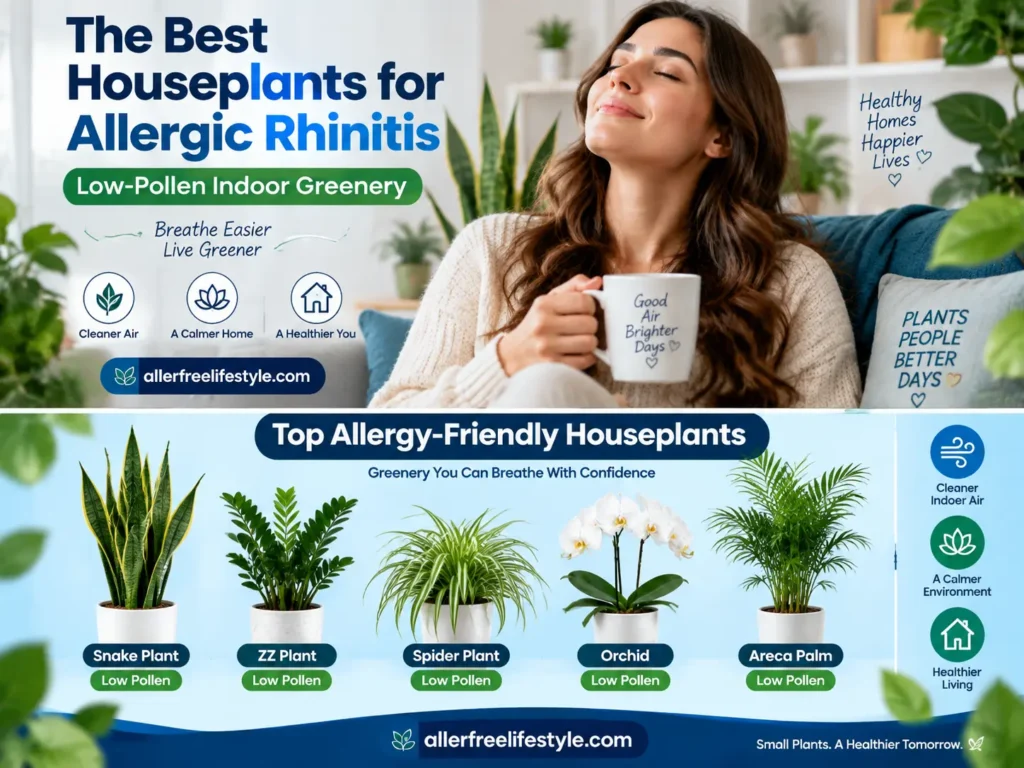
Some commonly preferred choices include:
Snake Plant (Sansevieria)
Snake plants are among the most popular options for allergy-sensitive households. They are hardy, require little watering, and rarely produce flowers indoors.
Their upright leaves make them easy to clean, which can help reduce dust accumulation. They are suitable for bedrooms, offices, and areas where low-maintenance greenery is desired.
ZZ Plant (Zamioculcas zamiifolia)
The ZZ plant is another low-maintenance indoor plant that may suit people looking for allergy-friendly greenery. It requires limited watering; reducing the chance of overly damp soil conditions that may encourage mold growth.
Its glossy leaves can also be cleaned easily, helping maintain a cleaner indoor environment.
Spider Plant (Chlorophytum comosum)
Spider plants are commonly grown indoors because they adapt well to different conditions and require minimal care.
They are mainly valued for their foliage and are generally considered a lower-pollen choice when compared with heavily flowering indoor plants.
Phalaenopsis Orchid
Many people with pollen sensitivity wonder whether orchids are suitable indoor plants. Orchids are often considered a better option because their pollen is usually contained in specialized structures rather than freely dispersed into the air like many wind-pollinated plants.
However, individual sensitivity varies, and any plant should be introduced carefully if someone has known plant allergies.
Areca Palm and Bamboo Palm
Palm varieties such as areca palm and bamboo palm provide attractive greenery with large leaves and are commonly selected for indoor spaces.
They are often used in homes and offices because they add visual appeal while generally having fewer pollen concerns compared with many flowering plants.
Comparison of Allergy-Friendly Indoor Plants
Houseplant | Pollen Concern | Maintenance Level | Suitable Areas |
Snake Plant | Low | Very easy | Bedroom, office |
ZZ Plant | Low | Very easy | Living room, workspace |
Spider Plant | Low | Easy | Shelves, hanging baskets |
Phalaenopsis Orchid | Low–Moderate | Moderate | Desk, living room |
Areca Palm | Low | Moderate | Large rooms |
Bamboo Palm | Low | Moderate | Office, living areas |
Peperomia | Low | Easy | Small indoor spaces |
Are There Houseplants That Do Not Trigger Allergies?
No houseplant can be guaranteed to be completely allergy-free. Allergic reactions depend on individual sensitivity and exposure levels.
Even plants considered low-pollen choices may contribute to irritation through:
- Mold spores from constantly wet soil
- Dust collected on leaves
- Decomposing plant material
- Natural plant proteins that may trigger sensitivity
For this reason, choosing the right plant is only one part of creating an allergy-conscious indoor environment. Proper plant care is equally important.
How to Maintain Houseplants without Increasing Indoor Allergens
Good maintenance practices can help reduce potential allergen exposure from indoor greenery.
Avoid Overwatering
Excess moisture in potting soil can encourage fungal growth. Allowing soil to dry appropriately between watering can help reduce conditions that support mold development.
Clean Plant Leaves Regularly
Large leaves can collect household dust over time. Gently wiping leaves with a damp cloth helps keep surfaces cleaner.
Remove Dead Leaves and Debris
Old plant material can collect dust and organic particles. Removing damaged leaves helps maintain healthier indoor conditions.
Improve Air Circulation
Good ventilation can help prevent excessive humidity around plants and reduce moisture-related concerns.
Choose Suitable Soil and Pots
Using clean potting materials and containers with proper drainage can help reduce unnecessary moisture buildup.
What Plants Should Allergy Sufferers Avoid Indoors?
Individuals with allergic rhinitis may want to be cautious with plants that produce abundant flowers, strong fragrances, or large amounts of airborne pollen.
Plants that may require extra consideration include:
- Highly flowering indoor plants
- Strongly scented varieties
- Plants that frequently develop damp soil conditions
- Species known to produce allergenic plant proteins in sensitive individuals
Some ornamental plants, including certain Ficus species, have been associated with allergic reactions in susceptible individuals due to plant proteins and exposure patterns (1).
This does not mean every allergy sufferer will react to these plants. Personal sensitivity, exposure level, and indoor conditions all influence whether symptoms occur.
Can Houseplants Help People With Allergic Rhinitis?
Houseplants can improve the appearance and comfort of indoor spaces, but they should not be considered a treatment for allergic rhinitis.
A healthier approach combines:
- Choosing low-pollen indoor plants
- Keeping plants clean
- Preventing excessive soil moisture
- Reducing dust accumulation
- Following appropriate medical care when allergy symptoms are significant
Indoor greenery can be part of a comfortable home environment when selected and maintained thoughtfully. Indoor allergen exposure is influenced by multiple factors, including pollen, dust, and fungal particles, rather than a single source alone (2).
Final Thoughts
The best houseplants for allergic rhinitis are usually low-pollen foliage plants that are easy to maintain and less likely to contribute to indoor allergen exposure.
Options such as snake plants, ZZ plants, spider plants, orchids, and palms can provide attractive greenery while keeping pollen concerns lower for many individuals.
The key is choosing plants carefully and maintaining them properly. A beautiful indoor garden and an allergy-conscious home can exist together when plant selection is combined with good environmental hygiene.
Medical Disclaimer
This article is intended for educational and informational purposes only and does not replace professional medical advice, diagnosis, or treatment. Individuals with allergic rhinitis, asthma, or known plant sensitivities should consult a qualified healthcare professional for personalized guidance regarding indoor allergens and environmental triggers.
Frequently Asked Questions
What are the best houseplants for allergic rhinitis?
Low-pollen plants such as snake plants, ZZ plants, spider plants, orchids, and some palm varieties are commonly preferred because they generally produce minimal airborne pollen indoors.
Are there completely hypoallergenic houseplants?
No plant is completely allergy-proof. Even low-pollen plants may contribute to irritation through dust, plant debris, or mold growth in damp soil.
Which indoor plants produce the least pollen?
Foliage plants that rarely flower indoors, including snake plants, ZZ plants, peperomia, and spider plants, are usually considered lower-pollen choices.
Can houseplants make allergic rhinitis worse?
Yes, certain plants may worsen symptoms in sensitive individuals, especially if they produce pollen, accumulate dust, or develop mold in moist soil.
How can I keep houseplants allergy-friendly?
Choose low-pollen plants, avoid overwatering, clean leaves regularly, remove dead plant material, and maintain good indoor ventilation.
References
- Axelsson IGK, Johansson SG, Zetterström O. A new indoor allergen from the rubber plant Ficus benjamina. Allergy. 1987. DOI: 10.1111/j.1398-9995.1987.tb00331.x
- D’Amato G, Vitale C, Lanza M, Molino A, D’Amato M. Climate change, air pollution, and allergic respiratory diseases. Journal of Investigational Allergology and Clinical Immunology. 2016. DOI: 10.18176/jiaci.0056