

Allergic Rhinitis Treatment (2026): Fast Relief & Long-Term Control | Allerfree Lifestyle
Written by: Dr.Muhammad Ihsan Ullah, PhD
Medically reviewed by: Dr. Jamal ud Din Khan, FCPS — Pulmonology
Medication safety reviewed by: Dr. Asma Fareed Khan, PhD — Clinical Pharmacy
ENT review: Dr. Ali Raza Dogar, MBBS, D-LO — ENT Specialist
Looking for the best allergic rhinitis treatment? The right plan depends on your symptoms, triggers, and severity. Fast relief may come from antihistamines, saline rinses, and intranasal antihistamine sprays, while long-term control usually depends on nasal steroid sprays, allergen avoidance, and in persistent cases, allergen immunotherapy.
Allergic rhinitis usually cannot be cured permanently with home remedies or tablets alone, but the right treatment plan can reduce sneezing, blocked nose, runny nose, itching, post-nasal drip, sleep problems, and allergy flare-ups (Dykewicz et al., 2020; Bousquet et al., 2020).
Quick Answer: Best Treatment for Allergic Rhinitis
Your symptom or problem | Best answer |
Best treatment for allergic rhinitis | Nasal steroid spray for overall control |
Fast relief from allergic rhinitis | Antihistamine, saline rinse, or intranasal antihistamine |
Allergic rhinitis medication | Nasal steroids, antihistamines, saline, selected decongestants |
Allergic rhinitis self-care | Allergen avoidance, HEPA filter, bedding control, saline rinse |
Blocked nose from allergic rhinitis | Nasal corticosteroid spray |
Sneezing and runny nose | Oral or intranasal antihistamine |
Long-term treatment | Allergen immunotherapy for selected patients |
Permanent cure | No guaranteed permanent cure, but immunotherapy may provide long-term improvement |
Symptoms not improving | See an allergist or ENT |
Treatment may include allergen avoidance, nasal corticosteroid sprays, antihistamines, decongestants for short-term use, and allergen immunotherapy when symptoms remain persistent. Nasal decongestant sprays should be used only short term because overuse can worsen congestion (Dykewicz et al., 2020; AAAAI, n.d.; ACAAI, n.d.).

Allergic Rhinitis Treatment Options by Severity
Allergic rhinitis treatment depends on how often symptoms occur, how severe they are, and how much they affect sleep, school, work, exercise, and daily life. Mild symptoms may need only allergen control, saline spray, or an antihistamine. Moderate or severe symptoms usually need a nasal corticosteroid spray used consistently.
A simple severity-based approach looks like this:
- Mild occasional symptoms: allergen avoidance, saline spray, and an oral antihistamine when needed
- Frequent sneezing, itching, or runny nose: oral antihistamine or intranasal antihistamine
- Blocked nose or daily congestion: nasal corticosteroid spray
- Moderate to severe symptoms: nasal corticosteroid spray, sometimes combined with intranasal antihistamine
- Persistent symptoms despite treatment: allergy testing, nasal spray technique review, trigger control, and specialist assessment
- Long-term recurring allergy: allergen immunotherapy may be considered if the trigger is confirmed
The best plan is not the strongest medicine for everyone. The best plan is the one that matches the main symptom, controls inflammation, and reduces exposure to the trigger.
Best Treatment for Mild, Moderate, and Severe Allergic Rhinitis
For mild allergic rhinitis, treatment may include saline spray, allergen avoidance, and a second-generation antihistamine. This approach may be enough when symptoms are occasional and do not disturb sleep or daily activities.
For moderate allergic rhinitis, a nasal corticosteroid spray is usually more effective because it treats inflammation inside the nose. It may help congestion, sneezing, itching, and runny nose when used correctly and consistently.
For severe allergic rhinitis, treatment may require a stronger plan. This can include a nasal corticosteroid spray, intranasal antihistamine, combination therapy, allergy testing, and possible immunotherapy. Severe symptoms should not be managed only with repeated antihistamines or short-term decongestant sprays.
A practical treatment rule:
- Sneezing and itching: antihistamines may help
- Blocked nose: nasal corticosteroid spray is usually better
- Thick mucus or post-nasal drip: saline rinse plus nasal inflammation control may help
- Symptoms every season or year-round: trigger control and long-term plan are needed
Symptoms despite correct treatment: see an allergist or ENT specialist
What Is the Best Treatment for Allergic Rhinitis?
The best treatment for allergic rhinitis is usually a nasal corticosteroid spray because it reduces inflammation inside the nose and helps congestion, sneezing, itching, and runny nose. For mild symptoms, oral antihistamines may be enough. For moderate to severe symptoms, a nasal steroid spray, intranasal antihistamine, or combination treatment may be needed. For long-term control, allergen immunotherapy may be considered (Dykewicz et al., 2020; ACAAI, n.d.; NICE Clinical Knowledge Summaries, n.d.).
NICE’s BNF treatment summary says moderate to severe allergic rhinitis can be relieved by topical nasal corticosteroids during allergen exposure
Do You Need an Allergy Test for Allergic Rhinitis?
Many people can start treatment based on symptoms and triggers, but allergy testing may help if symptoms are persistent, severe, unclear, or not improving with treatment. Testing can identify triggers such as pollen, dust mites, pet dander, mold, or cockroach allergens and may help decide whether immunotherapy is suitable (Dykewicz et al., 2020; AAAAI, n.d.).
Read more: Allergic Rhinitis Diagnosis and Tests: How Doctors Confirm Hay Fever
What Are the Goals of Allergic Rhinitis Treatment?
Doctors aim to:
- Reduce day-to-day symptoms
- Control inflammation inside the nose
- Prevent complications such as sinusitis, ear problems, and asthma flares
- Improve sleep, productivity, and quality of life
Consider immunotherapy for selected patients who need long-term control (Dykewicz et al., 2020; AAAAI, n.d.).
Fast Relief for Allergic Rhinitis Symptoms
Symptom | Fast relief option | Note |
Sneezing | Antihistamine | Useful for histamine symptoms |
Runny nose | Antihistamine or intranasal antihistamine | Faster than steroid spray |
Blocked nose | Saline rinse, nasal steroid, short-term decongestant | Steroid is better long-term |
Itchy nose/eyes | Antihistamine | Eye drops may be needed for eye symptoms |
Post-nasal drip | Saline rinse + nasal steroid | Helps mucus and inflammation |
Severe congestion at night | Short-term decongestant only if appropriate | Avoid overuse |
Important: Decongestant nasal sprays can unblock the nose quickly, but they should only be used short-term because overuse can cause rebound congestion (Linton et al., 2023; Dykewicz et al., 2020; NICE Clinical Knowledge Summaries, n.d.).
Read more: Best Antihistamine for Allergic Rhinitis: Non-Drowsy & Fast Relief
How to Treat Allergic Rhinitis Symptoms by Type
Different allergic rhinitis symptoms respond better to different treatments. Matching treatment to the symptom can prevent frustration and unnecessary medicine switching.
For sneezing:
Antihistamines, intranasal antihistamines, saline rinse, and pollen avoidance may help.
For runny nose:
Oral antihistamines or intranasal antihistamine sprays may work well, especially when symptoms are triggered by pollen, dust, pets, or mold.
For blocked nose:
Nasal corticosteroid sprays are usually more useful than oral antihistamines because congestion is mainly caused by nasal inflammation and swelling.
For itchy eyes:
Antihistamines may help, but allergy eye drops may be needed if eye symptoms are strong.
For post-nasal drip:
Saline rinse, nasal corticosteroid spray, and trigger control may help reduce mucus drainage and throat irritation.
For night symptoms:
Bedroom allergen control, dust-mite-proof covers, HEPA filtration, saline rinse, and consistent nasal treatment may help.
For symptoms during pollen season:
Start treatment before symptoms become severe, keep windows closed, shower after outdoor exposure, and avoid bringing pollen into the bedroom.
For mild allergic rhinitis, treatment may include saline spray, allergen avoidance, and a second-generation antihistamine. This approach may be enough when symptoms are occasional and do not disturb sleep or daily activities.
For moderate allergic rhinitis, a nasal corticosteroid spray is usually more effective because it treats inflammation inside the nose. It may help congestion, sneezing, itching, and runny nose when used correctly and consistently.
For severe allergic rhinitis, treatment may require a stronger plan. This can include a nasal corticosteroid spray, intranasal antihistamine, combination therapy, allergy testing, and possible immunotherapy. Severe symptoms should not be managed only with repeated antihistamines or short-term decongestant sprays.
A practical treatment rule:
- Sneezing and itching: antihistamines may help
- Blocked nose: nasal corticosteroid spray is usually better
- Thick mucus or post-nasal drip: saline rinse plus nasal inflammation control may help
- Symptoms every season or year-round: trigger control and long-term plan are needed
Symptoms despite correct treatment: see an allergist or ENT specialist
Step-By-Step Treatment Approach for Allergic Rhinitis
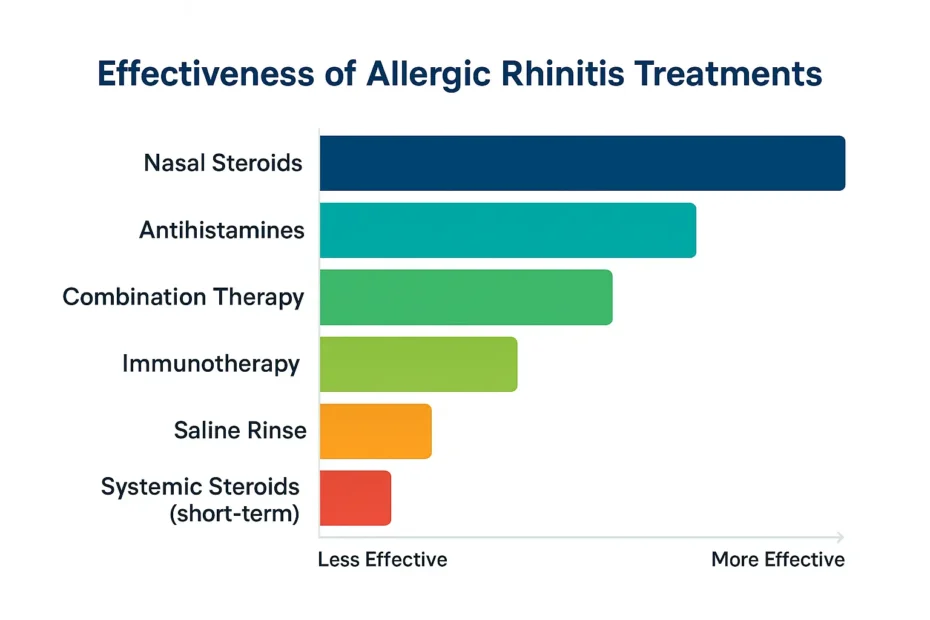
This evidence-based treatment plan follows AAAAI, ACAAI, and ARIA clinical guidelines (Bousquet et al., 2020).
Best Nasal Spray for Allergic Rhinitis
A nasal corticosteroid spray is usually the best nasal spray for allergic rhinitis because it reduces inflammation and helps blocked nose, sneezing, runny nose, and itching. Antihistamine nasal sprays may work faster for sneezing and runny nose, while saline sprays are useful for daily cleaning and mild symptoms (Soe et al., 2023; Sousa-Pinto et al., 2024; NICE Clinical Knowledge Summaries, n.d.).
Read more: Best Nasal Spray for Allergic Rhinitis
Best Medicines for Allergic Rhinitis
Medicine type | Best for | Examples | Main caution |
Nasal corticosteroid spray | Blocked nose, long-term control | Fluticasone, mometasone, budesonide | Needs regular use |
Oral antihistamine | Sneezing, itching, runny nose | Cetirizine, loratadine, fexofenadine | Some may cause drowsiness |
Intranasal antihistamine | Faster relief for sneezing/runny nose | Azelastine | Bitter taste possible |
Saline spray/rinse | Mucus, pollen, dryness | Saline spray, saline rinse | Use safe water for rinses |
Decongestant spray | Severe blocked nose | Oxymetazoline, xylometazoline | Short-term only |
Leukotriene receptor antagonist | Selected patients with asthma/allergy overlap | Montelukast | Doctor-guided use |
Immunotherapy | Long-term trigger control | Allergy shots/tablets | Needs specialist assessment |
The best medicine for allergic rhinitis depends on whether your main problem is congestion, sneezing, runny nose, itching, post-nasal drip, or long-term flare-ups (Dykewicz et al., 2020; Linton et al., 2023; Sousa-Pinto et al., 2024; Soe et al., 2023).
Not sure which allergy tablet is right for you? Read our full comparison of Claritin vs Zyrtec vs Allegra to see which option may work better for sneezing, runny nose, itching, and non-drowsy allergy relief.
Allergic Rhinitis Medication: Tablet, Nasal Spray, or Combination?
Allergic rhinitis medication can include tablets, nasal sprays, rinses, and in selected cases immunotherapy. The right choice depends on the symptom pattern.
Tablets such as cetirizine, loratadine, fexofenadine, or levocetirizine may help sneezing, itching, watery eyes, and runny nose. They are often convenient for mild or occasional symptoms.
Nasal corticosteroid sprays such as fluticasone, mometasone, budesonide, or beclomethasone are usually better for blocked nose and ongoing nasal inflammation. They need regular use and may take several days to show full benefit.
Intranasal antihistamine sprays may work faster for sneezing and runny nose and may be useful when rapid nasal symptom relief is needed.
Combination treatment may be considered when one medicine does not control symptoms well enough. For example, some patients may need a nasal corticosteroid plus an intranasal antihistamine. Combination treatment should be guided by symptom severity, age, other medicines, pregnancy status, and medical history.
Do not keep adding medicines randomly. If treatment is not working, check the diagnosis, trigger exposure, nasal spray technique, dose, consistency, and whether another condition such as sinusitis, non-allergic rhinitis, nasal polyps, or asthma is involved.
Allergic Rhinitis Self-Care and Allergen Avoidance
Allergic rhinitis self-care means reducing allergen exposure and supporting the nose every day. It works best when combined with the right medicine, especially during pollen season or when dust mites, pet dander, or mold are major triggers (Bousquet et al., 2020; AAAAI, n.d.).
Best self-care steps
- Keep windows closed on high-pollen days.
- Use a HEPA air purifier in the bedroom.
- Wash bedding weekly in hot water.
- Use dust-mite-proof pillow and mattress covers.
- Shower and change clothes after outdoor exposure.
- Keep pets out of the bedroom.
- Control indoor humidity.
- Use saline rinse or spray to remove allergens.
- Avoid smoke, incense, strong fragrances, and indoor pollutants.
Home Treatment and Natural Remedies for Allergic Rhinitis
Home treatment for allergic rhinitis can reduce symptoms, but it should not replace medical treatment when symptoms are moderate, severe, or persistent. The most useful home strategies include saline rinses, HEPA filtration, dust-mite control, pollen avoidance, humidity control, and bedroom cleaning (AAAAI, n.d.; NICE Clinical Knowledge Summaries, n.d.).
Home treatment | Helps with |
Saline nasal rinse | Mucus, pollen, congestion |
HEPA air purifier | Pollen, dust, pet dander |
Dust-mite bedding covers | Morning allergies |
Humidity control | Mold and nasal irritation |
Shower after outdoor exposure | Pollen removal |
Avoid smoke/fragrance | Irritant-triggered symptoms |
Read more: How to Treat Allergic Rhinitis at Home
Is Steam Inhalation Recommended for Allergic Rhinitis?
Steam inhalation may temporarily loosen mucus, but it does not treat the allergic inflammation that causes allergic rhinitis. Hot-water steam can also cause burns, especially in children. Safer options include saline spray, saline rinses, warm showers, proper humidity control, and medical treatment when needed (NICE Clinical Knowledge Summaries, n.d.).
Read more: Steam Inhalation for Allergies — Benefits, Burn Risks and Safer Options
Can Allergic Rhinitis Be Cured Permanently?
Allergic rhinitis usually cannot be permanently cured with tablets, nasal sprays, or home remedies alone. However, symptoms can often be controlled very well. For selected patients, allergen immunotherapy may provide long-term improvement by reducing the immune system’s sensitivity to specific allergens (Dykewicz et al., 2020; AAAAI, n.d.; Bousquet et al., 2020).
Be careful with any treatment that promises a guaranteed permanent cure for allergic rhinitis.
Read more: Can Allergic Rhinitis Be Cured Permanently?
Immunotherapy for Allergic Rhinitis
Allergen immunotherapy is a long-term treatment option for people whose symptoms remain troublesome despite avoidance measures and medicines. It may be considered when triggers are confirmed by allergy testing and symptoms affect sleep, school, work, asthma control, or quality of life (Dykewicz et al., 2020; AAAAI, n.d.; Bousquet et al., 2020).
Allergy shots and sublingual immunotherapy may help selected patients with confirmed allergic triggers and persistent symptoms despite standard treatment (AAAAI, n.d.; Dykewicz et al., 2020).
Read more: Can Immunotherapy Cure Allergies? Best Long-Term Treatment for Allergic Rhinitis
Allergic Rhinitis Treatment in Children
Children with allergic rhinitis need age-appropriate treatment. Saline spray, allergen control, and doctor-recommended antihistamines or nasal sprays may help. A child should be reviewed by a clinician if symptoms affect sleep, school performance, breathing, growth, or asthma control (Dykewicz et al., 2020; NICE Clinical Knowledge Summaries, n.d.).
Read more: Allergic Rhinitis Treatment in Children
Allergic Rhinitis Treatment During Pregnancy and Breastfeeding
During pregnancy or breastfeeding, saline spray and allergen avoidance are usually the safest first steps. Some antihistamines or nasal sprays may be suitable, but treatment should be confirmed with a clinician, especially if symptoms are severe or persistent (NICE Clinical Knowledge Summaries, n.d.).
Read more: Safe Allergy Medicines During Pregnancy and Breastfeeding
Why Your Allergic Rhinitis Treatment Is Not Working
Allergic rhinitis treatment may fail if the trigger is still present, the wrong medicine is being used, nasal spray technique is incorrect, treatment is stopped too early, or the condition is actually non-allergic rhinitis, sinusitis, nasal polyps, or another nasal problem (Dykewicz et al., 2020).
- Are you using the right treatment for your main symptom?
- Are you using nasal spray correctly?
- Are you using nasal steroid spray daily for enough time?
- Are you still exposed to dust mites, pets, pollen, or mold?
- Are you overusing decongestant spray?
- Do you need allergy testing?
How Long Does Allergic Rhinitis Treatment Take to Work?
The time needed for allergic rhinitis treatment to work depends on the treatment type.
Saline spray or saline rinse may give quick comfort by removing mucus, pollen, dust, and irritants from the nose. It can help the nose feel clearer, but it does not switch off allergic inflammation by itself.
Oral antihistamines may work relatively quickly for sneezing, itching, watery eyes, and runny nose. They may not fully relieve a blocked nose.
Intranasal antihistamine sprays may also work quickly for nasal symptoms such as sneezing and runny nose.
Nasal corticosteroid sprays may take several days to work well, and full benefit may take one to two weeks. They work best when used consistently, not only when symptoms are severe.
Allergen immunotherapy is a long-term treatment. It may take months to show meaningful improvement and usually requires a multi-year commitment.
If a treatment has not worked, do not assume it is useless immediately. Check whether it was used correctly, long enough, and for the right symptom.
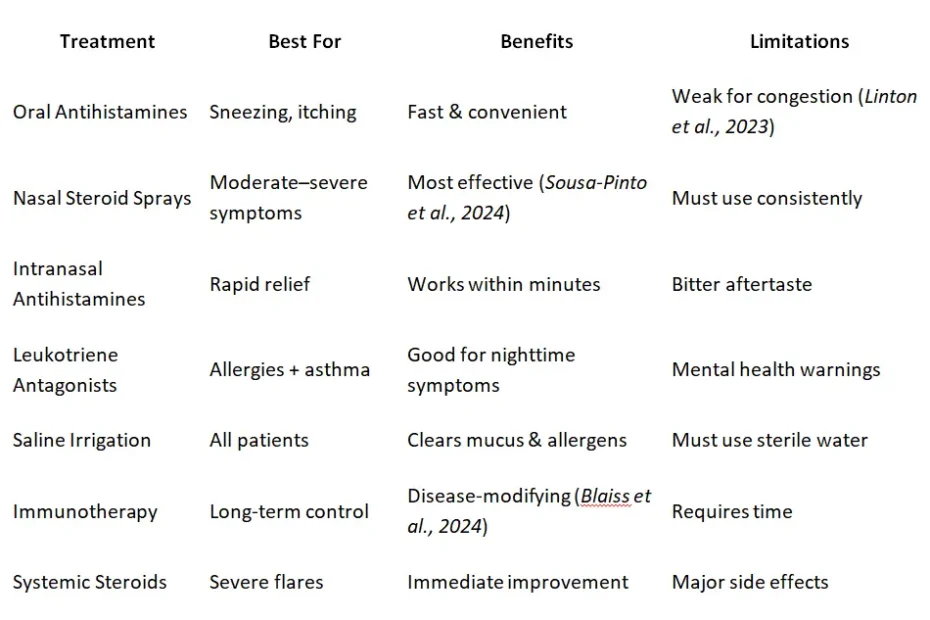
Main treatment options for allergic rhinitis
Allergen avoidance and environmental control
Oral or intranasal antihistamines
Intranasal corticosteroid sprays
Combination therapy for moderate to severe symptoms
Allergen immunotherapy for long-term relief
Step 1: Reduce Allergen Exposure (The Most Underrated Step)
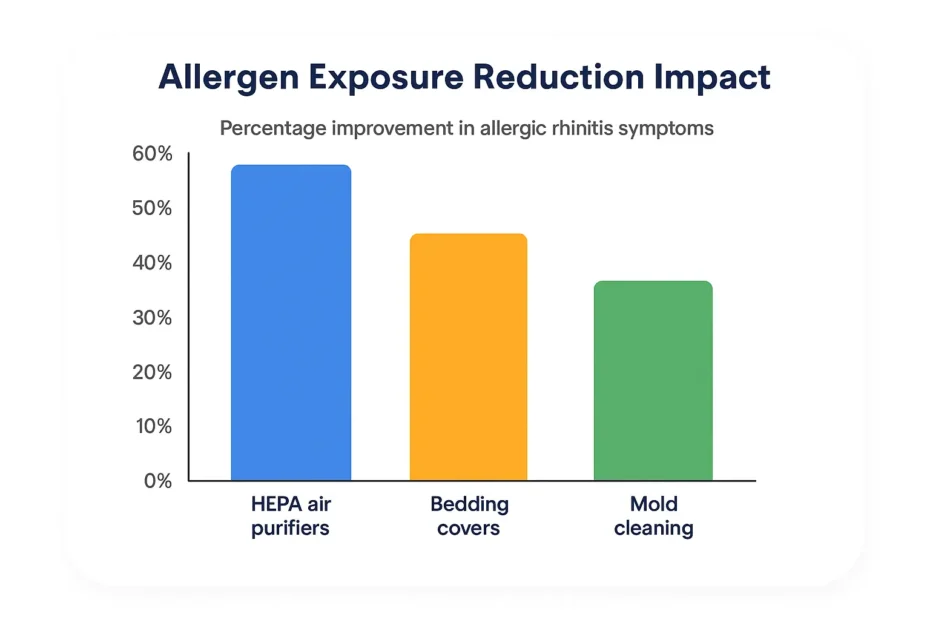
The studies have shown that environmental control significantly improves symptoms and reduces medication needs (Klimek et al., 2024).
Effective Strategies
- Keep windows closed on high-pollen days
- Use HEPA air purifiers, which reduce airborne allergens (Reisman et al., 1990)
- Wash bedding weekly in hot water (≥130°F / 54°C)
- Use dust-mite-proof mattress and pillow covers
- Avoid drying clothes outdoors
- Remove mold using cleaning solutions
- Check daily pollen forecast
Step 2: Best Non-drowsy Antihistamines for Allergic Rhinitis
Oral antihistamines relieve itching, sneezing, runny nose, and watery eyes (Linton et al., 2023).
Common non-drowsy antihistamines include:
- Cetirizine
- Levocetirizine
- Loratadine
- Desloratadine
- Fexofenadine
These medications are often considered the best antihistamines for allergic rhinitis due to their effectiveness and lower sedation risk.
Step 3: Best Nasal Corticosteroid Sprays for Allergic Rhinitis Congestion
Intranasal corticosteroids are first-line therapy for moderate to severe symptoms (Klimek et al., 2024; Sousa-Pinto et al., 2024).
Effective sprays:
- Fluticasone
- Mometasone
- Budesonide
- Beclomethasone
- Triamcinolone
They relieve:
- Congestion
- Sneezing
- Itching
- Runny nose Intranasal corticosteroids, commonly referred to as nasal steroid sprays for allergic rhinitis, are recommended for moderate to severe symptoms.
Step 4:Combination Therapy
In clinical settings it is often asked by the patients that should I combine nasal spray and antihistamine. According to guidelines when symptoms persist despite monotherapy, combination treatment is much helpful to relief symptoms (Sousa-Pinto et al., 2024).
Options include:
- Steroid spray + intranasal antihistamine (most effective combo)
- Steroid spray + oral antihistamine
- Montelukast (for selected asthma cases)
What is the best long-term treatment for allergic rhinitis?
The best long-term treatment for allergic rhinitis is allergen immunotherapy, which gradually reduces the immune system’s sensitivity to allergens. It is recommended for patients with persistent symptoms and can provide lasting relief even after treatment is completed.
Step 5: Allergen Immunotherapy (Long-Term Relief & Disease Modification)
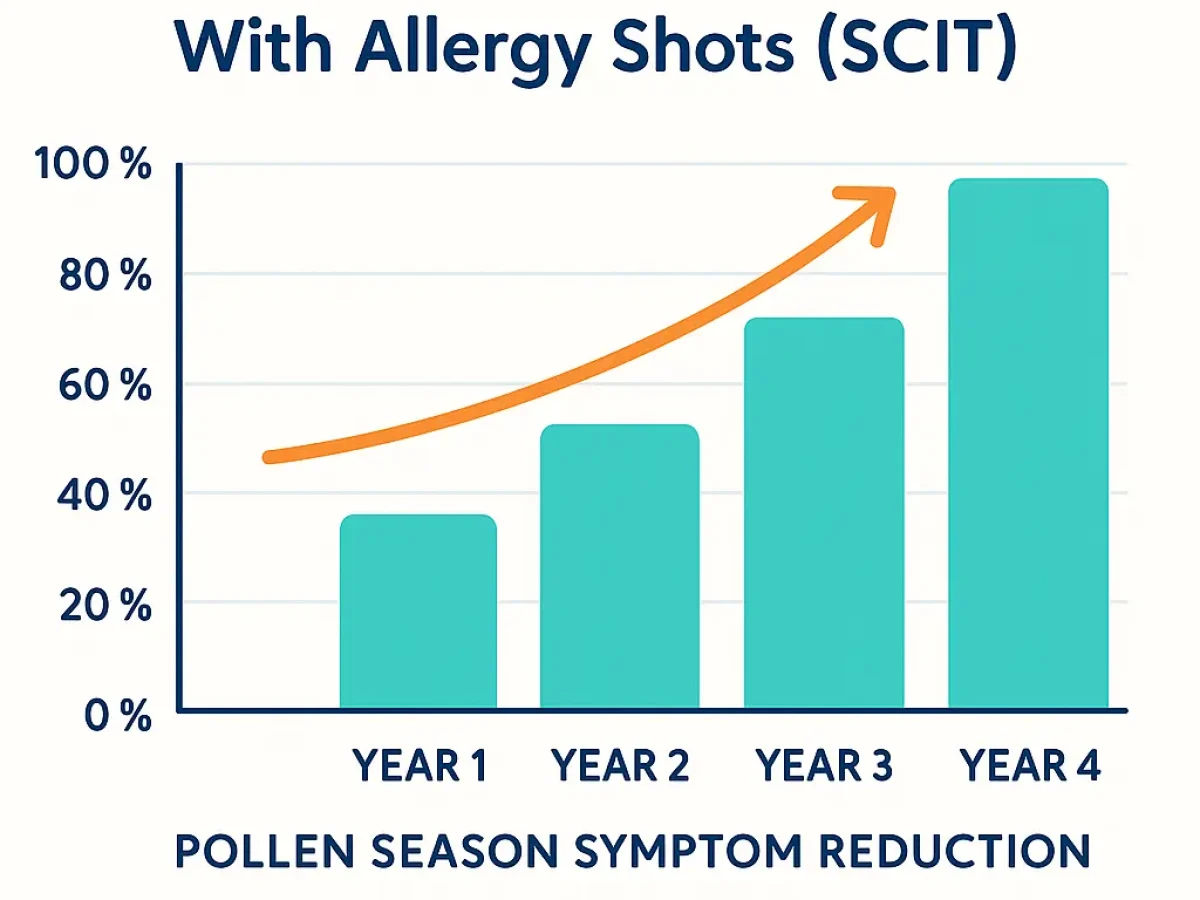
Allergen immunotherapy for allergic rhinitis is considered when symptoms remain uncontrolled despite standard therapy.During assessment patients also ask can allergen immunotherapy cure allergic rhinitis. Studies show that immunotherapy retrains the immune system and provides lasting improvement (Blaiss et al., 2024; Wang et al., 2025).
1. Allergy Shots (SCIT)
- Given at clinics
- Effective for pollen, dust mites, pet dander, and mold
- High success rates (Jin et al., 2025)
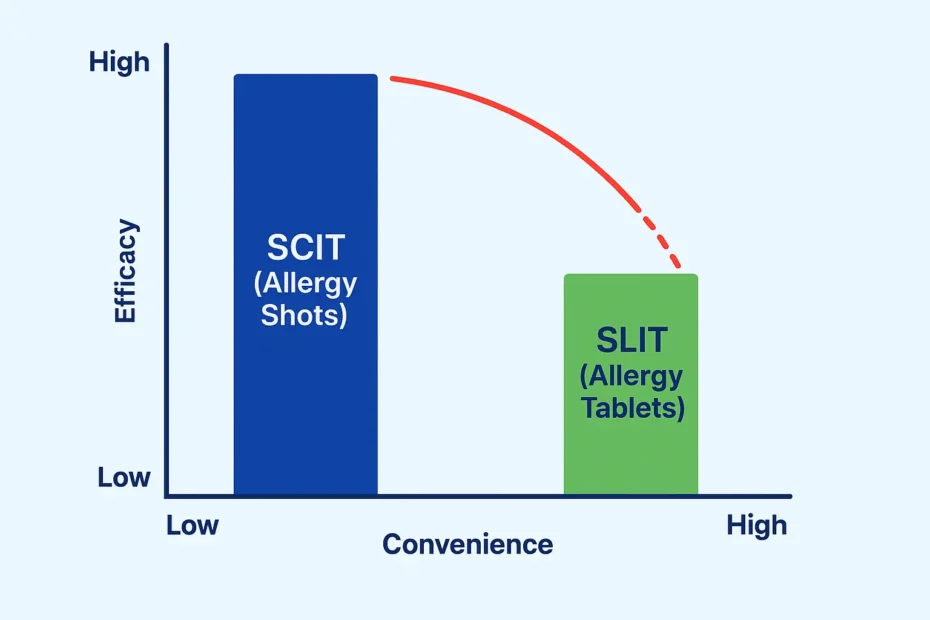
2. Sublingual Immunotherapy Tablets (SLIT)
- Melt under the tongue
- FDA-approved for:
- Dust mites
- Grass pollen
- Ragweed allergies
Step 6: Systemic Steroids (Short-Term Only)
Oral or injectable steroids provide powerful but temporary relief and must be used with caution (Klimek et al., 2024).
Comparison Table — Main Treatment Options
When to Start Treatment Before Allergy Season
Antihistamines may be started before expected allergen exposure or at the first sign of symptoms. Nasal steroid sprays often work best when started 1–2 weeks before pollen season or used consistently during allergen exposure. Do not stop nasal steroid sprays too early, because full benefit may take several days to one or two weeks (Bousquet et al., 2020; NICE Clinical Knowledge Summaries, n.d.).
Allergic Rhinitis Treatment Guidelines:
Most allergic rhinitis treatment guidelines follow the same basic logic: reduce allergen exposure, treat nasal inflammation, match medicine to symptoms, and consider immunotherapy when standard treatment is not enough.
A simple patient-friendly guideline is:
- Confirm the pattern: seasonal, year-round, indoor, outdoor, pet-related, dust-related, or mold-related.
- Reduce triggers: pollen control, dust-mite control, pet dander control, mold prevention, and clean indoor air.
- Start with safe basics: saline spray or rinse, bedroom control, and avoiding smoke or strong irritants.
- Use antihistamines for sneezing, itching, watery eyes, and runny nose.
- Use nasal corticosteroid sprays for blocked nose, daily symptoms, or moderate to severe allergic rhinitis.
- Consider combination treatment if one medicine is not enough.
- Avoid overusing decongestant nasal sprays because rebound congestion can occur.
- Ask about allergy testing if symptoms are persistent, severe, unclear, or recurring.
- Consider immunotherapy if confirmed allergies continue to affect sleep, school, work, asthma control, or quality of life.
- See an allergist or ENT specialist if treatment is not working or symptoms are unusual.
The goal is not just temporary relief. The goal is fewer flares, better sleep, easier breathing, less medicine dependence, and long-term control.
When to See an Allergist or ENT Specialist
Consult a specialist if:
- Symptoms last more than 4 weeks
- OTC medicines do not help
- You have asthma symptoms
- You experience frequent sinus infections
- You want to evaluate allergy testing or immunotherapy (Dykewicz et al., 2020; Bousquet et al., 2020).
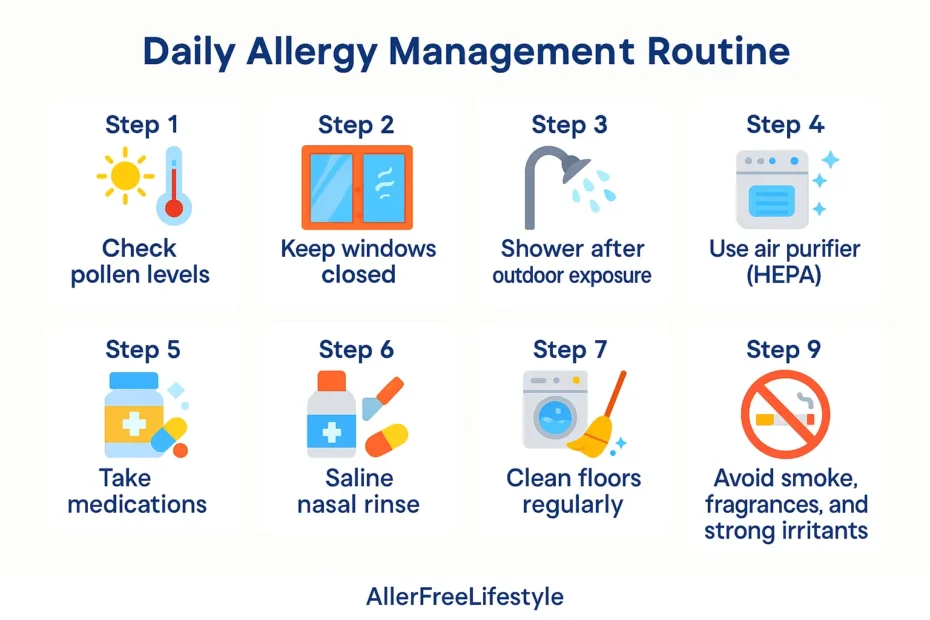
Daily Routine for Managing Allergic Rhinitis
Managing allergic rhinitis becomes much easier when you follow a consistent daily routine. Small habits throughout the day can significantly reduce exposure to allergens, improve nasal comfort, and enhance the effectiveness of your medications. Here is a simple, practical routine you can follow
Morning Routine
- Use your nasal steroid spray (if prescribed) to reduce inflammation and protect your nose before allergen exposure begins.
- Rinse your nose with saline to remove allergens and clear mucus.
- Check pollen levels on weather apps to plan your day.
- Keep windows closed while getting ready to avoid pollen entering your home.
Daytime Routine
- Avoid touching your nose and eyes, as this can worsen symptoms.
- Wear sunglasses outdoors to reduce exposure to airborne pollen.
- Use a mask during high-pollen seasons or when cleaning dusty areas.
- Stay hydrated, as it helps thin mucus and improves airflow.
Evening Routine
- Shower and change clothes after returning home to wash off pollen and dust.
- Use saline irrigation again if symptoms are worse in the evening.
- Turn on a HEPA air purifier in your bedroom to reduce dust mites, pet dander, and pollen.
- Avoid pets sleeping on your bed if you’re sensitive to pet dander.
Night Routine
- Use antihistamines (if recommended by your doctor), especially if nighttime symptoms disturb your sleep.
- Keep bedroom humidity between 40–50% to reduce mold and dust mite growth.
- Use dust-mite-proof covers on pillows and mattresses.
Weekly Checklist
- Wash bedding in hot water (≥130°F / 54°C).
- Vacuum carpets and sofas with a HEPA vacuum.
- Clean air purifier filters.
- Remove mold from bathrooms and damp areas.
Key Takeaways
Multiple treatment options for allergic rhinitis are available depending on symptom severity and individual response.
- Allergic rhinitis is highly treatable with the right plan.
- Intranasal steroids are the most effective first-line treatment.
- Oral antihistamines help itching/sneezing but not congestion (Linton et al., 2023).
- Trigger control boosts treatment success (Bousquet et al., 2020).
- Immunotherapy provides long-term symptom reduction (Wang et al., 2025).
- Systemic steroids should only be used briefly in severe cases.
Medical Review Disclaimer
This article is for informational and educational purposes only and does not constitute medical advice. The content is written by a qualified healthcare professional and medically reviewed for accuracy. However, it should not be used as a substitute for professional medical diagnosis, treatment, or advice. Always consult a licensed healthcare provider regarding any medical condition or health concern.
Frequently Asked Questions (FAQs)
What is the best treatment for allergic rhinitis?
The best treatment for allergic rhinitis is usually a nasal corticosteroid spray for overall control, especially when congestion is present. Mild symptoms may improve with antihistamines, saline rinses, and allergen avoidance.
What is the fastest treatment for allergic rhinitis?
Fast relief may come from saline rinses, oral antihistamines, or intranasal antihistamine sprays. Nasal decongestant sprays can unblock the nose quickly but should only be used short-term because overuse can worsen congestion.
What is the best medicine for allergic rhinitis?
The best medicine depends on symptoms. Nasal steroid sprays are usually best for congestion and inflammation, while antihistamines help sneezing, itching, runny nose, and watery eyes.
What is the first-line treatment for allergic rhinitis?
For moderate to severe allergic rhinitis, nasal corticosteroid sprays are often considered first-line treatment because they reduce inflammation and improve multiple nasal symptoms. Mild cases may start with antihistamines and self-care.
Which is better for allergic rhinitis: tablet or nasal spray?
A tablet may be better for sneezing, itching, watery eyes, and mild symptoms. A nasal spray, especially a nasal corticosteroid spray, is usually better for blocked nose, daily congestion, and moderate to severe allergic rhinitis.
How do you treat allergic rhinitis naturally?
Natural support includes saline rinses, allergen avoidance, dust-mite control, HEPA air filtration, humidity control, pollen avoidance, mold prevention, and avoiding smoke or strong fragrances. Natural methods help symptoms but may not replace medical treatment.
How long does allergic rhinitis treatment take to work?
Antihistamines may work relatively quickly for sneezing and itching. Saline rinses may give quick comfort. Nasal steroid sprays often need several days and may take one to two weeks for full benefit.
What if allergic rhinitis treatment is not working?
Check whether the trigger is still present, nasal spray technique is correct, medicine has been used long enough, and the diagnosis is accurate. Non-allergic rhinitis, sinusitis, nasal polyps, asthma, or medication overuse may also be involved.
Can allergic rhinitis be cured permanently with treatment?
Allergic rhinitis usually cannot be permanently cured with tablets, sprays, or home remedies alone. However, symptoms can often be controlled very well, and immunotherapy may provide long-term improvement in selected patients.
When should I see a doctor for allergic rhinitis treatment?
See a doctor if symptoms last more than four weeks, disturb sleep, affect daily life, cause wheezing or shortness of breath, keep returning despite treatment, or require frequent decongestant spray use.
References
Dykewicz, M. S., Wallace, D. V., Amrol, D. J., Baroody, F. M., Bernstein, J. A., Craig, T. J., et al. (2020). Rhinitis 2020: A practice parameter update. Journal of Allergy and Clinical Immunology, 146(4), 721–767. https://doi.org/10.1016/j.jaci.2020.07.007
Bousquet, J., Schünemann, H. J., Togias, A., Bachert, C., Erhola, M., Hellings, P. W., et al. (2020). Next-generation Allergic Rhinitis and Its Impact on Asthma (ARIA) guidelines for allergic rhinitis based on Grading of Recommendations Assessment, Development and Evaluation (GRADE) and real-world evidence. Journal of Allergy and Clinical Immunology, 145(1), 70–80.e3. https://doi.org/10.1016/j.jaci.2019.06.049
Sousa-Pinto, B., Vieira, R. J., Brożek, J. L., Cardoso-Fernandes, A., Lourenço-Silva, N., Ferreira-da-Silva, R., et al. (2024). Intranasal antihistamines and corticosteroids in allergic rhinitis: A systematic review and meta-analysis. Journal of Allergy and Clinical Immunology, 154(2), 340–354. https://doi.org/10.1016/j.jaci.2024.04.016
Soe, K. K., Krikeerati, T., Pheerapanyawaranun, C., Niyomnaitham, S., Phinyo, P., & Thongngarm, T. (2023). Comparative efficacy and acceptability of licensed dose intranasal corticosteroids for moderate-to-severe allergic rhinitis: A systematic review and network meta-analysis. Frontiers in Pharmacology, 14, 1184552. https://doi.org/10.3389/fphar.2023.1184552
Linton, S., Hossenbaccus, L., & Ellis, A. K. (2023). Evidence-based antihistamine use. Annals of Allergy, Asthma & Immunology, 131(4), 412–420. https://doi.org/10.1016/j.anai.2023.07.019
American Academy of Allergy, Asthma & Immunology. (n.d.). Hay fever/rhinitis: Symptoms, diagnosis, management and treatment. Accessed June 7, 2026. https://www.aaaai.org/conditions-treatments/allergies/hay-fever-rhinitis
American College of Allergy, Asthma & Immunology. (n.d.). Hay fever. Accessed June 7, 2026. https://acaai.org/allergies/allergic-conditions/hay-fever/
NICE Clinical Knowledge Summaries. (n.d.). Allergic rhinitis: Management. Accessed June 7, 2026. https://cks.nice.org.uk/topics/allergic-rhinitis/management/
NICE Clinical Knowledge Summaries. (n.d.). Allergic rhinitis: Intranasal corticosteroids. Accessed June 7, 2026. https://cks.nice.org.uk/topics/allergic-rhinitis/prescribing-information/intranasal-corticosteroids/
Derbyshire Medicines Management. (2025). Allergic rhinitis in adults and adolescents over 12 years of age. Accessed June 7, 2026. https://www.derbyshiremedicinesmanagement.org.uk/assets/Clinical_Guidelines/Formulary_by_BNF_chapter_prescribing_guidelines/BNF_chapter_12/Allergic_Rhinitis_pathway_inc_Dymista.pdf