

Does a Cool Mist Humidifier Help or Hurt Allergic Rhinitis Nasal Passages?
Written by: Dr.Muhammad Ihsan Ullah, PhD
Medically reviewed by: Dr. Jamal ud Din Khan, FCPS
Last updated on August 22, 2026
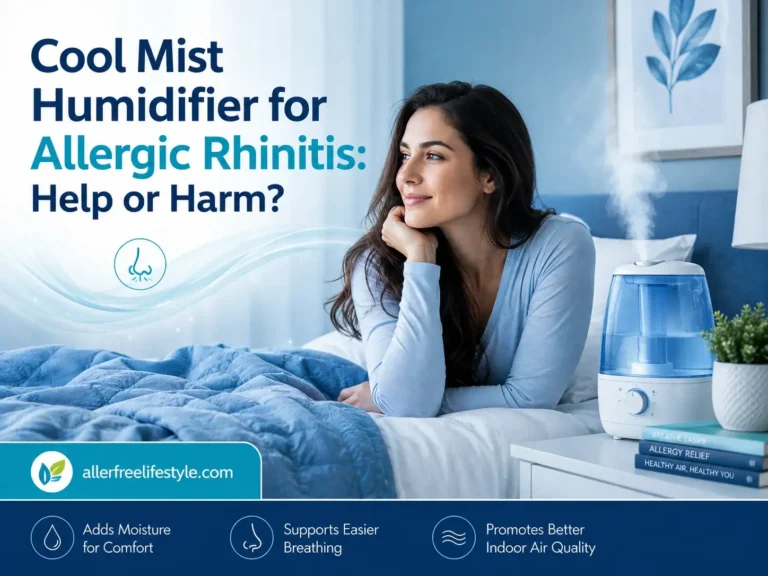
A cool mist humidifier can be helpful when allergic rhinitis nasal passages are irritated by genuinely dry indoor air, but it is not automatically beneficial for everyone with nasal allergies. The outcome depends largely on the existing room humidity, how much moisture is added, and how well the humidifier is maintained. Used appropriately, it may improve nasal comfort; used excessively or when contaminated, it may create an indoor environment that makes allergy control more difficult.
A cool mist humidifier may reduce dryness and irritation of the nasal passages when indoor air is too dry. It does not treat the underlying allergic reaction, and adding excessive moisture can encourage dampness, dust mites, or mold.
A practical approach is to keep indoor relative humidity around 30–50%, monitor it with a hygrometer, and reduce humidification if condensation or dampness appears. A clean humidifier and controlled humidity are more important than simply producing more mist.
Does Cool Mist Help Dry or Irritated Nasal Passages From Allergies?
The inside of the nose is lined by a moist nasal mucosa. This surface helps warm and humidify inhaled air and supports mucociliary clearance, one of the respiratory tract’s natural mechanisms for moving mucus and trapped particles.
When indoor air becomes excessively dry, the nose may feel dry, irritated, or uncomfortable. Research reviewing indoor-air humidity has found that low relative humidity is associated with increased acute airway dryness and reduced mucociliary clearance (1).
In this situation, modest humidification may make the nasal passages feel more comfortable.
The distinction is important, however: a humidifier changes the moisture content of the air; it does not switch off the allergic inflammation responsible for allergic rhinitis.
For that reason, cool mist is best considered a supportive environmental measure when dryness is present rather than a treatment for allergic rhinitis itself.
What Humidity Level Is Best for Allergic Rhinitis?
A useful household target is generally about 30–50% relative humidity (RH).
Rather than judging humidity by how the room feels, use an inexpensive digital hygrometer. This is particularly helpful in bedrooms, where a humidifier may operate for several hours.
Indoor Condition | Effect on the Nasal Environment | Practical Response |
Very dry air | May increase nasal dryness and irritation | Controlled humidification may improve comfort |
30–50% RH | Provides a practical balance between dryness and excess moisture | Maintain and monitor |
Above 50% RH | Increasing concern for excess moisture and allergen-friendly conditions | Reduce humidifier output |
Condensation or damp surfaces | Suggests over-humidification | Stop or reduce humidification and address moisture |
The goal is therefore comfortable moisture, not maximum humidity.

Can Too Much Humidity Worsen Nasal Allergies?
Yes. Once indoor air becomes persistently damp, the potential advantage of relieving nasal dryness may be outweighed by changes in the surrounding environment.
Moist conditions can favor house dust mites and mold, both of which are important indoor allergen sources. A 2024 systematic review and meta-analysis found significant associations between residential dampness indicators and rhinitis in children, strengthening the evidence that persistent indoor dampness should be avoided (2).
Signs that you may be adding too much moisture include:
- condensation on windows;
- damp walls or nearby furniture;
- musty odors;
- moisture around the humidifier;
- persistently elevated hygrometer readings.
For someone whose allergic rhinitis is triggered by dust mites or mold, deliberately keeping a bedroom very humid may therefore be counterproductive.
Can a Dirty Cool Mist Humidifier Irritate Nasal Passages?
A poorly maintained humidifier can introduce a different problem: the mist itself may carry material from the water reservoir into indoor air.
This is particularly relevant to ultrasonic cool mist humidifiers, which generate very fine droplets. Experimental research found that prolonged ultrasonic humidifier use with microbial growth in the reservoir could substantially increase airborne bacterial concentrations, especially during excessive humidification (3).
This does not mean ultrasonic humidifiers are inherently unsafe. It means maintenance matters.
To reduce avoidable exposure:
- empty old water rather than continually topping it up;
- allow components to dry as recommended;
- clean and disinfect the unit according to the manufacturer’s instructions;
- replace filters or cartridges when required;
- never allow visible slime, scale, or mold to accumulate.
A humidifier intended to soothe irritated nasal passages should not become an additional source of airborne contaminants.
Is Distilled Water Better in a Cool Mist Humidifier for Allergies?
For many ultrasonic humidifiers, distilled or demineralized water is a sensible choice, particularly when local tap water contains substantial dissolved minerals.
Ultrasonic devices can disperse mineral particles from tap water into the air, sometimes producing visible white dust on nearby surfaces.
Using lower-mineral water can reduce this problem, but it does not replace regular cleaning. Even distilled water should not be left standing indefinitely in a humidifier reservoir.
Always follow the instructions supplied with your specific device because humidifier designs differ.
Is Cool Mist or Warm Mist Better for Allergic Rhinitis?
There is no convincing reason to assume that warm mist treats allergic rhinitis better simply because the mist feels warmer.
Both cool-mist and warm-mist devices ultimately increase the amount of moisture in indoor air. For allergic rhinitis, the more meaningful questions are:
- Is the room actually too dry?
- What relative humidity is being maintained?
- Is the unit clean?
- Is the surrounding area staying dry?
- Is the device being used according to its instructions?
A cool mist humidifier can therefore be a reasonable choice, provided its output is controlled and the unit is maintained carefully.
How Should You Use a Cool Mist Humidifier for Nasal Allergies?
If dry air appears to be aggravating nasal discomfort, a simple controlled routine works better than running the humidifier continuously at maximum output.
- Measure humidity first.Check the room with a hygrometer before adding moisture.
- Use humidification only when needed.An already humid bedroom does not need additional moisture.
- Aim for roughly 30–50% RH.
- Watch for condensation.Moist windows, walls, or furniture indicate that output should be reduced.
- Use suitable water.Distilled or demineralized water may be preferable for many ultrasonic units.
- Change standing water regularly.
- Clean the humidifier exactly as directed by the manufacturer.
- Keep bedding and nearby surfaces dry.
This approach helps separate useful humidification from over-humidification, which is especially important in people sensitive to indoor allergens.
The Bottom Line
A cool mist humidifier can help allergic rhinitis nasal passages when the indoor environment is excessively dry, mainly by improving moisture around irritated nasal tissue.
It can hurt rather than help when the room becomes too humid, damp conditions develop, or the humidifier is contaminated.
The safest principle is simple:
Measure first, humidify only as needed, keep relative humidity controlled, and keep the device clean.
If the nose remains congested, inflamed, or uncomfortable despite appropriate humidity, increasing humidifier output is unlikely to address the underlying allergic rhinitis.
Medical Disclaimer
This article is for general educational purposes only and is not a substitute for professional medical advice, diagnosis, or treatment. If you have persistent or severe allergic rhinitis, breathing problems, or worsening nasal symptoms, consult a qualified healthcare professional.
Frequently Asked Questions(FAQs)
1. Does a cool mist humidifier help allergic rhinitis?
It may improve nasal dryness and comfort when indoor air is genuinely dry, but it does not treat the underlying allergic reaction.
2. What humidity level is best for nasal allergies?
A practical indoor target is approximately 30–50% relative humidity. A hygrometer can help prevent unnecessary over-humidification.
3. Can too much humidity make allergic rhinitis worse?
Yes. Excess moisture can promote conditions favorable to dust mites, mold, and indoor dampness, which may increase allergen exposure.
4. Can a dirty humidifier worsen nasal irritation?
Yes. A contaminated reservoir can potentially disperse microorganisms or other material into indoor air, particularly with some ultrasonic humidifiers.
5. Should I use distilled water in a cool mist humidifier?
Distilled or demineralized water can reduce mineral dispersion in many ultrasonic humidifiers, but regular cleaning is still essential.
References
- Wolkoff P. Indoor air humidity revisited: Impact on acute symptoms, work productivity, and risk of influenza and COVID-19 infection. International Journal of Hygiene and Environmental Health.2024;256:114313. DOI: 10.1016/j.ijheh.2023.114313.
- Cai J, Yang M, Zhang N, Chen Y, Wei J, Wang J, et al. Effects of residential damp indicators on asthma, rhinitis, and eczema among children: A systematic review and meta-analysis of the literature in the past 33 years. Building and Environment.2024;251:111226. DOI: 10.1016/j.buildenv.2024.111226.
- Yang Z, Chen LA, Yang C, Gu Y, Cao R, Zhong K. Portable ultrasonic humidifier exacerbates indoor bioaerosol risks by raising bacterial concentrations and fueling pathogenic genera. Indoor Air.2022;32(1):e12964. DOI: 10.1111/ina.12964.