

Gym Allergies: Why Working Out Indoors Triggers Sneezing and Congestion
Written by: Dr. Muhammad Ihsan Ullah, PhD
Medically reviewed by: Dr. Jamal ud Din Khan, FCPS
Last updated on September 27, 2026
Have you ever entered a gym ready for a productive workout but started sneezing, experiencing a runny nose, or feeling congested within minutes? For some people, indoor exercise environments can trigger uncomfortable nasal symptoms that make workouts frustrating.
Although exercise supports overall health, indoor gyms contain a mixture of environmental factors that may affect sensitive airways. Dust particles, mold spores, cleaning products, poor ventilation, and dry air from air conditioning systems can irritate the nasal passages or trigger an immune response.
Gym-related nasal symptoms may be caused by true allergies, environmental irritation, or exercise-induced rhinitis, a condition where physical activity itself contributes to symptoms such as sneezing, congestion, and runny nose (1).
Gym allergies can occur when indoor workout environments expose sensitive individuals to allergens or irritants such as dust, mold spores, cleaning chemicals, and poor air quality. These triggers may activate nasal inflammation, causing sneezing, runny nose, and congestion. Some people experience allergic rhinitis, while others have exercise-induced rhinitis, where physical activity causes nasal symptoms without a traditional allergy response.
Why Do I Sneeze Every Time I Go to the Gym?
If you notice sneezing every time you enter a gym, the environment may be exposing your nasal passages to airborne triggers.
The nose acts as a protective filter for the respiratory system. It traps particles, controls airflow temperature, and prevents many irritants from reaching deeper airways. When sensitive individuals inhale certain substances, the immune system may release inflammatory chemicals such as histamine, leading to sneezing, itching, and congestion.
Common indoor gym triggers include:
- Dust collected on machines, mats, and benches
- Mold spores from humid areas
- Strong disinfectant sprays
- Fragrances from personal care products
- Poor ventilation
- Air conditioning systems that circulate airborne particles
- Rubber flooring or equipment-related odors
Not every gym-related reaction is a true allergy. Some people have sensitive nasal tissues that react to environmental changes without involving a classic allergic immune response.
Why Does Working Out Indoors Make Me Sneeze?
Indoor workouts can increase exposure to airborne particles because exercise changes breathing patterns. During intense activity, people breathe faster and take in larger volumes of air, which may increase contact between the nasal passages and environmental irritants.
Indoor exercise may worsen symptoms when a gym has limited airflow or when allergens remain suspended in the air for longer periods.
Research studies on exercise-induced rhinitis show that nasal symptoms can occur during indoor exercise, with runny nose being one of the commonly reported complaints among affected individuals (1).
What Triggers Gym Allergies Inside Fitness Centers?
Indoor gyms contain several possible allergy and irritation sources. Unlike outdoor environments where pollen is often the main concern, gyms have unique indoor exposures.
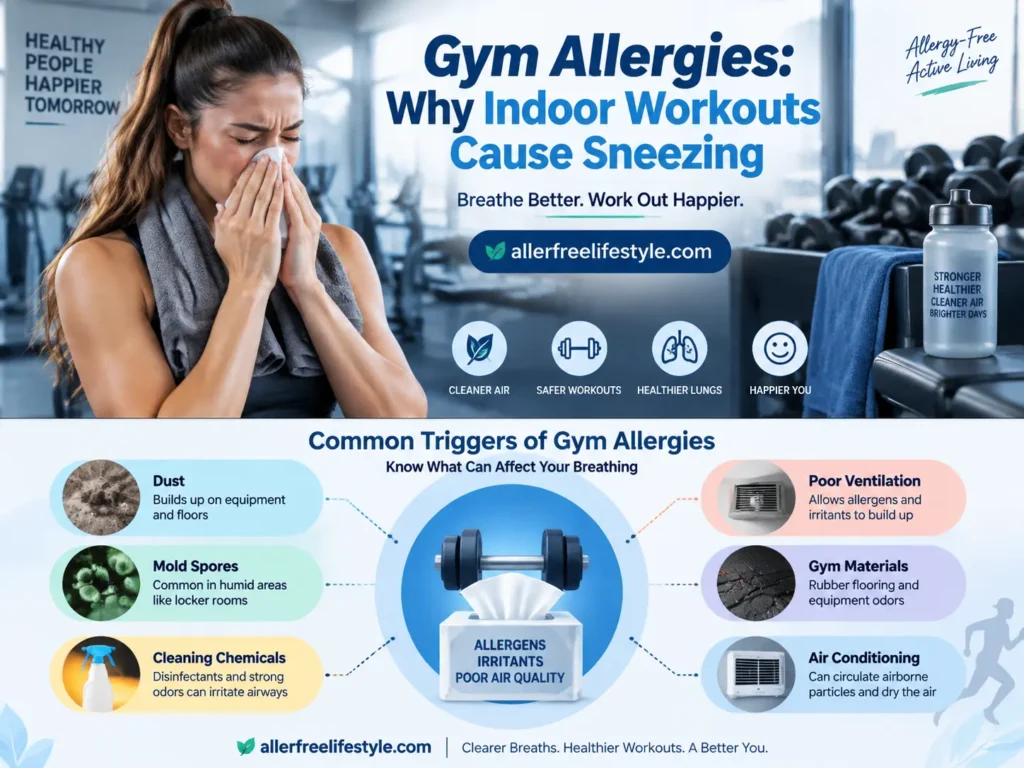
Dust and Dust Mites
Workout equipment, flooring, and fabric surfaces can collect dust over time. Dust mites and particles attached to dust may trigger symptoms in people with allergic rhinitis.
Mold Spores
Areas with moisture, such as locker rooms, showers, and poorly ventilated spaces, may encourage mold growth. Mold spores can become airborne and irritate sensitive respiratory systems.
Cleaning Chemicals
Regular cleaning is essential in gyms, but strong disinfectants and chemical fragrances may irritate the nasal lining. Some individuals experience sneezing, throat irritation, or congestion after exposure to these substances.
Poor Indoor Air Quality
Insufficient ventilation can allow airborne particles, odors, and irritants to accumulate. Indoor air quality plays an important role in how comfortable sensitive individuals feel during workouts.
Gym Allergies vs. Exercise-Induced Rhinitis vs. Environmental Irritation
Feature | Gym Allergies | Exercise-Induced Rhinitis | Environmental Irritation |
Main cause | Reaction to indoor allergens | Nasal response triggered by physical activity | Exposure to irritating substances |
Common triggers | Dust, mold, indoor allergens | Increased airflow and exercise-related changes | Chemicals, odors, dry air |
Immune involvement | Often involves allergic pathways and histamine release | May occur with or without allergy | Usually does not involve a true allergy |
Common symptoms | Sneezing, itching, watery eyes, congestion | Runny nose, congestion, sneezing during or after exercise | Burning sensation, irritation, coughing |
Typical timing | After exposure to gym triggers | During or shortly after exercise | Often begins after contact with irritants |
Why Do I Get a Stuffy Nose After Going to the Gym?
A stuffy nose after a workout can happen because exercise affects nasal airflow, blood flow, and mucus production.
Exercise-induced rhinitis involves temporary nasal symptoms related to physical activity. These symptoms may occur because of increased breathing rate, changes in airway moisture, and sensitivity of the nasal lining.
Common symptoms include:
- Nasal congestion
- Runny nose
- Sneezing
- Postnasal drip
- Nasal irritation
Exercise-induced rhinitis does not always mean someone has an allergy. Some people experience symptoms because their nasal passages are more reactive to exercise-related changes (2).
Why Does My Nose Run When I Work out at the Gym?
A runny nose during exercise is a common experience and does not always indicate illness.
During workouts, increased airflow through the nose can stimulate mucus production. This response helps protect the respiratory tract by keeping nasal tissues moist and trapping particles.
People may notice symptoms during:
- Cardio workouts
- Weight training
- High-intensity interval training
- Treadmill sessions
- Indoor cycling
If symptoms occur only in certain environments, such as one specific gym, environmental triggers may be contributing.
Is Sneezing After Exercise Always an Allergy?
No. Sneezing after exercise can have several explanations.
Possible causes include:
- Allergic rhinitis caused by indoor allergens
- Exercise-induced rhinitis
- Irritation from cleaning chemicals or fragrances
- Dry air exposure
- Changes in temperature or humidity
Understanding the difference is important because avoiding a trigger may be more helpful than treating every reaction as an allergy.
Why Does My Gym Make My Sinuses Worse?
Some people notice their sinus symptoms increase after spending time inside a gym because of environmental conditions.
Factors that may contribute include:
- Dry air from heating or cooling systems
- Increased exposure to airborne particles
- Poor ventilation
- Strong cleaning odors
- Existing nasal sensitivity
People with allergic rhinitis may be more likely to experience symptoms because their immune system reacts more strongly to harmless substances.
How Can I Reduce Allergy Symptoms During Gym Workouts?
You can often reduce symptoms without stopping exercise by improving your workout environment and reducing exposure to triggers.
Helpful strategies include:
- Choose gyms with good ventilation
- Clean equipment before use
- Avoid areas with strong chemical odors
- Wash workout clothes regularly
- Shower after workouts if exposed to dust or allergens
- Avoid exercising during crowded periods when possible
- Identify patterns that reveal specific triggers
If symptoms continue despite these changes, medical evaluation can help determine whether the problem involves allergies, rhinitis, asthma-related symptoms, or another condition.
When Should You See a Doctor About Gym-Related Allergy Symptoms?
Medical advice is recommended if gym symptoms are persistent, severe, or interfere with your ability to exercise.
Seek professional evaluation if you experience:
- Difficulty breathing during workouts
- Wheezing or chest tightness
- Persistent nasal blockage
- Frequent sinus problems
- Symptoms that continue outside the gym environment
A healthcare professional can assess possible triggers and recommend appropriate management.
Key Takeaway
If your gym consistently leaves you sneezing, congested, or dealing with a runny nose, the cause may be related to indoor allergens, environmental irritants, or exercise-induced rhinitis. Identifying the specific trigger can help you continue exercising comfortably while protecting your respiratory health.
A gym should support your wellness goals, not become a source of repeated nasal discomfort.
Medical Disclaimer
The information provided in this article is for educational purposes only and is not a substitute for professional medical advice, diagnosis, or treatment. If you experience persistent allergy symptoms, breathing difficulties, or worsening respiratory problems during exercise, consult a qualified healthcare professional for proper evaluation and personalized guidance.
Frequently Asked Questions
Why do I sneeze when I go to the gym?
Indoor gyms may contain triggers such as dust, mold spores, cleaning chemicals, or poor air circulation that irritate the nasal passages and cause sneezing.
Can a gym environment cause allergies?
Yes. Indoor workout spaces can expose sensitive individuals to allergens and irritants that may trigger symptoms similar to allergic rhinitis.
Why do I get a stuffy nose after working out?
Exercise can increase airflow through the nasal passages and may trigger inflammation or increased mucus production, leading to congestion.
Is sneezing after exercise always an allergy?
No. Sneezing after workouts can result from allergic rhinitis, exercise-induced rhinitis, or irritation from environmental factors.
How can I reduce allergy symptoms during gym workouts?
Improving ventilation, cleaning equipment before use, avoiding strong chemical odors, and identifying personal triggers may help reduce symptoms.
References
- Silvers WS. Exercise-induced rhinitis: a common disorder that adversely affects allergic and nonallergic athletes. Annals of Allergy, Asthma & Immunology. 2006;96(3):345-350. doi:10.1016/S1081-1206(10)60907-9.
- Surda P, Eccles R. Prevalence of rhinitis in athletes: systematic review. Clinical Otolaryngology. 2017;42(6):1151-1160. doi:10.1111/coa.12918.
- Khalid H, Tait JE, North AS, Lakhani R. The Practical Management of Rhinitis in Athletes. Frontiers in Allergy. 2024. doi:10.3389/falgy.2024.1421282.