

Nasal Polyps vs. Allergic Rhinitis: Visual, Symptom, and Structural Differences
Written by: Dr. Muhammad Ihsan Ullah, PhD
Medically reviewed by: Dr. Ali Raza Dogar, MBBS, D-LO — ENT Specialist
Last updated on September 25, 2026
A blocked nose, difficulty breathing, or reduced ability to smell can have several causes, and two conditions that are often confused are nasal polyps and allergic rhinitis. Although both can affect nasal airflow, they develop in different ways and produce different patterns of symptoms.
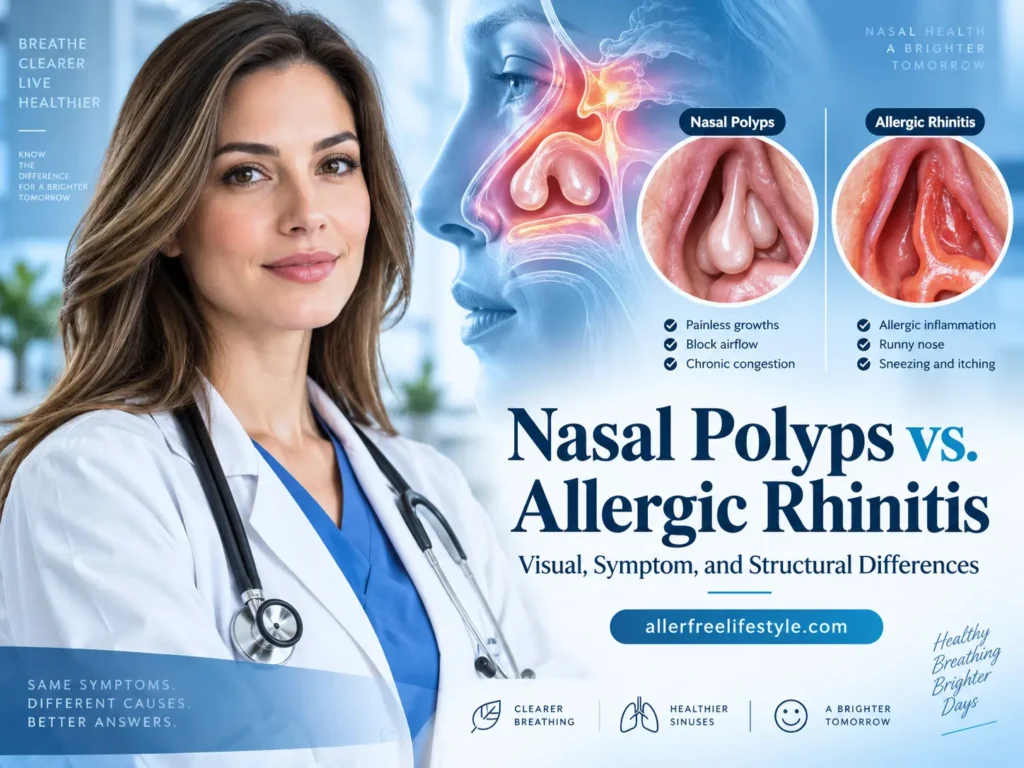
Nasal polyps are soft, noncancerous inflammatory growths that develop from the lining of the nasal cavity or sinuses. Allergic rhinitis, commonly known as nasal allergy, occurs when the immune system reacts to allergens such as pollen, dust mites, mold, or pet dander, causing inflammation of the nasal lining.
Nasal polyps and allergic rhinitis are different inflammatory conditions. Nasal polyps are soft tissue growths that develop inside the nasal cavity or sinuses and may cause persistent blockage and reduced sense of smell. Allergic rhinitis is an allergic response that causes swelling of the nasal lining, sneezing, itching, and watery eyes. While both conditions may cause congestion, nasal polyps create a physical obstruction, whereas allergic rhinitis mainly causes inflammatory swelling.
Understanding the Difference between Nasal Polyps and Allergic Rhinitis
The main difference between nasal polyps and allergic rhinitis is the type of change occurring inside the nose.
Nasal polyps involve the formation of additional inflammatory tissue within the nasal passages or sinus cavities. These growths can occupy space inside the nose, interfere with airflow, and affect normal drainage from the sinuses.
Allergic rhinitis does not create a separate growth. Instead, allergens trigger an immune response that causes swelling of the nasal mucosa, increased mucus production, and irritation. This inflammation can narrow the nasal passages but does not produce a tissue mass (1).
Nasal Polyps vs. Allergic Rhinitis: Key Visual, Symptom, and Structural Differences
Feature | Nasal Polyps | Allergic Rhinitis |
Basic nature | Soft inflammatory tissue growths inside the nasal cavity or sinuses | Immune-related inflammation of the nasal lining |
Structural change | Extra tissue develops and may physically block airflow. | Existing nasal tissues become swollen and inflamed. |
Appearance inside the nose | Smooth, pale, translucent, grape-like growths | Pale, swollen nasal lining with mucus production |
Main symptoms | Persistent blockage and reduced sense of smell | Sneezing, itching, watery eyes, and congestion |
Cause of blockage | Physical obstruction from polyp tissue | Swelling caused by allergic inflammation |
Smell changes | Common due to blocked airflow to smell receptors | Usually temporary during severe congestion |
Eye symptoms | Less common | Common during allergy exposure |
Typical triggers | Chronic inflammatory changes | Pollen, dust, mold, pets, and other allergens |
How Do Nasal Polyps and Allergic Rhinitis Look Different Inside the Nose?
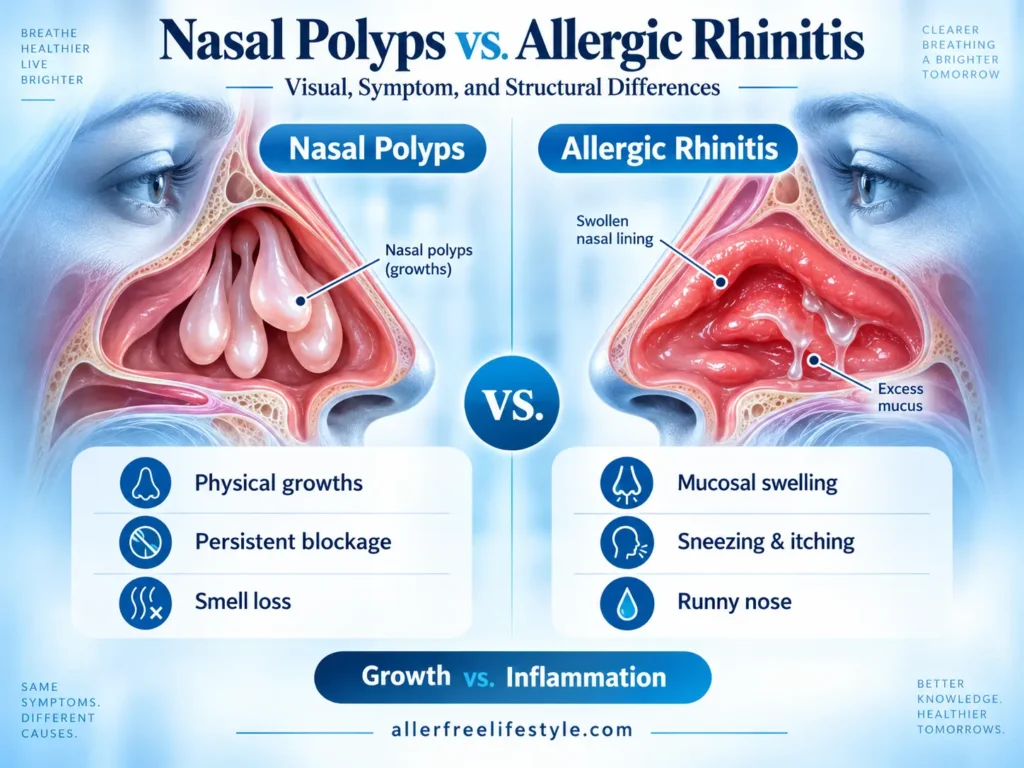
The visual difference between nasal polyps and allergic rhinitis is related to whether there is a physical growth or only inflammation of the nasal lining.
Nasal polyps usually appear as soft, smooth, pale, or translucent structures inside the nasal passages. They may have a grape-like appearance and commonly develop from inflamed tissue in the sinus and nasal lining.
In contrast, allergic rhinitis causes changes in the appearance of the nasal mucosa. The lining may become pale, swollen, and enlarged, particularly around the turbinates. Unlike nasal polyps, allergic rhinitis does not create a separate mass inside the nasal cavity (2).
This structural difference explains why people with nasal polyps often describe a feeling of something physically blocking the nose, while people with allergic rhinitis often notice symptoms that fluctuate with allergen exposure.
Nasal Polyps vs. Allergies Symptoms: Recognizing the Key Differences
Because nasal polyps and allergic rhinitis share some symptoms, it can be difficult to identify the underlying cause based only on congestion.
Nasal polyps are more commonly associated with:
- Persistent nasal blockage
- Difficulty breathing through the nose
- Reduced or lost sense of smell
- Chronic postnasal drainage
- A sensation of nasal obstruction
Allergic rhinitis is more commonly associated with:
- Frequent sneezing
- Nose and eye itching
- Clear watery nasal discharge
- Watery or irritated eyes
- Symptoms triggered by environmental allergens
The symptom pattern can provide important clues. A person with mainly itching and sneezing is more likely to have allergic rhinitis, while persistent blockage combined with smell reduction may suggest nasal polyps (3).
Why Do Nasal Polyps Cause Smell Loss More Often Than Allergic Rhinitis?
Reduced smell is one of the important differences between nasal polyps and allergic rhinitis.
The ability to smell depends on airflow reaching specialized smell receptors located in the upper part of the nasal cavity. When nasal polyps grow in this area, they can physically interfere with airflow and reduce odor detection.
Allergic rhinitis may also temporarily reduce smell because swollen nasal tissues limit airflow. However, smell changes are usually less prominent and often improve when the allergic inflammation decreases.
For this reason, persistent loss of smell is considered a symptom that deserves further evaluation, especially when it occurs with long-term nasal blockage.
Do Nasal Polyps Cause Itching and Sneezing Like Allergies?
Nasal polyps usually do not produce the classic allergy pattern of itching and repeated sneezing.
People with allergic rhinitis often describe symptoms such as an itchy nose, frequent sneezing episodes, watery eyes, and clear nasal discharge. These symptoms occur because allergens activate immune pathways that release inflammatory chemicals.
People with nasal polyps more commonly report a blocked nose, reduced smell, mouth breathing, or difficulty getting enough airflow through the nasal passages.
However, both conditions can occur in the same person. Someone with nasal polyps may also have allergic rhinitis, making symptoms overlap.
Can Someone Have Both Nasal Polyps and Allergic Rhinitis?
Yes, nasal polyps and allergic rhinitis can occur together.
Both conditions involve inflammation of the upper airway, although the underlying mechanisms are different. Allergic rhinitis is driven mainly by allergen-triggered immune responses, while nasal polyps are associated with chronic inflammatory changes within nasal and sinus tissues.
When both conditions are present, a person may experience a combination of:
- Persistent nasal congestion
- Sneezing and itching
- Reduced smell
- Nasal drainage
- Difficulty breathing through the nose
A healthcare professional can help distinguish whether symptoms are caused by allergies, nasal polyps, or both.
Nasal Blockage from Allergies or Polyps: Understanding the Structural Difference
A simple way to understand the difference is
Allergic rhinitis:
Allergen exposure → immune response → nasal lining swelling → congestion
Nasal polyps:
Chronic inflammation → tissue changes → polyp formation → physical blockage
In allergic rhinitis, the nasal passage becomes narrower because existing tissues become swollen. In nasal polyps, additional inflammatory tissue develops inside the passage and occupies physical space.
This difference explains why some people continue to feel blocked even when typical allergy symptoms are controlled.
When Should You Seek Medical Evaluation?
Not every blocked nose is caused by allergies. Persistent symptoms may require assessment by a healthcare professional.
Medical evaluation is especially important if you experience:
- Long-lasting nasal obstruction
- Reduced or absent sense of smell
- Symptoms that do not improve with usual allergy management
- Recurrent sinus-related problems
- Difficulty sleeping because of nasal blockage
An ENT specialist or allergy professional can examine the nasal passages and determine whether symptoms are related to allergic inflammation, nasal polyps, or another condition (1).
Medical Disclaimer
This article is intended for educational and informational purposes only and should not replace professional medical advice, diagnosis, or treatment. If you experience persistent nasal blockage, reduced sense of smell, facial discomfort, or ongoing allergy-related symptoms, consult a qualified healthcare professional for appropriate evaluation.
Frequently Asked Questions
Are nasal polyps the same as allergic rhinitis?
No. Nasal polyps are inflammatory tissue growths inside the nose or sinuses, while allergic rhinitis is an immune response that causes swelling of the nasal lining.
How can you tell the difference between nasal polyps and allergies?
Nasal polyps commonly cause persistent blockage and smell changes, whereas allergies usually cause sneezing, itching, watery eyes, and clear nasal discharge.
Can someone have both nasal polyps and allergic rhinitis?
Yes. Some people can have both conditions because chronic inflammation and allergic responses may occur together.
Do nasal polyps cause itching and sneezing like allergies?
Usually not. Itching and frequent sneezing are more typical of allergic rhinitis, while nasal polyps are more associated with obstruction and smell reduction.
Why do nasal polyps affect the sense of smell?
Nasal polyps can block airflow to the upper nasal cavity where smell receptors are located, reducing the ability to detect odors.
References
- Fokkens WJ, Lund VJ, Hopkins C, et al. European Position Paper on Rhinosinusitis and Nasal Polyps 2020. Rhinology. 2020;58(Suppl S29):1-464. doi:10.4193/Rhin20.600.
- Scadding GK, Kariyawasam HH, Scadding GW, et al. BSACI guideline for the diagnosis and management of allergic and non-allergic rhinitis. Clinical & Experimental Allergy. 2017;47(7):856-889. doi:10.1111/cea.12953.
- Dykewicz MS, Wallace DV, Amrol DJ, et al. Rhinitis 2020: A practice parameter update. Journal of Allergy and Clinical Immunology. 2020;146(4):721-767. doi:10.1016/j.jaci.2020.07.007.